
MOST READED

NARRATED ARTICLES

NEWSLETTER

Luxury boating stories, delivered to your inbox every week.

EDITOR'S CHOICE

PRINT EDITION

ONBOARD ESSENTIALS

Pure originality. A gift collection for the individual who has it all and values distinction above all else.

Scroll
Cruising Logbook · Twelve Days at Sea

The Long Way Around
the Bahamas

A circular route from Miami through Bimini, Eleuthera, the Exumas and the Berry Islands — and the case, told quietly, for never crossing direct.

USA Onboard Editorial · Route Report · 2026 · Reading · 16 min

There is a version of the Bahamas that fits onto a single chart and a single afternoon — fifty miles of Gulf Stream, a flag raised over Bimini, a celebratory drink before sunset. And there is the other version: a loop, drawn in five legs across twelve days, that begins and ends in Florida and treats each crossing as a separate question.

Owners new to the archipelago tend to ask the wrong opening question. How fast can we get to the Exumas? The honest answer — that a sixty-foot motor yacht with the right window and the right tanks could, in theory, raise the northern Exumas in a single very long day — is also the misleading one. It is correct in geometry and wrong in seamanship. The straight line from Miami to Highbourne Cay crosses customs, currents, coral and convection, in that order, and it asks more of an unfamiliar boat and an unfamiliar crew than the trip is worth.

The five-leg loop replaces that question with a better one. Where do we make landfall first, and what does each crossing actually demand? Bimini answers the customs question on day one and resets the trip into local time, local water, local rhythm. From there the route opens east through the Northeast Providence Channel to Eleuthera, drops south into the Exuma Sound, climbs back through the Berry Islands and runs the Northwest Providence Channel home. Five crossings, five different conversations with the sea, and twelve days that earn their length by paying out variety rather than mileage.

What follows is not a charter brochure. It is a working logbook for owners and captains preparing to take their own boat across — written for those who already know what a sixty-foot vessel costs to run for two weeks, and want to know, before they leave, exactly what the route is asking of them.

400nm
Minimum Range · The Operating Premise

The minimum useful fuel autonomy for a Bahamas loop of this scale, with a working reserve of at least thirty percent. Below that figure the route still exists; what disappears is the margin to wait out a front, divert to a closer harbor, or arrive at a marina whose pumps are not running at the published hour.USA Onboard · Editorial Standard

The Route · Five Crossings, One Loop

Five different conversations
with the same sea

The Bahamas is often spoken of as a single destination. The chart says otherwise. Between Miami and any northern Exuma anchorage lie at least three distinct bodies of water — the Gulf Stream, the open Northeast Providence Channel, the broken bank between New Providence and the Exuma Cays — and each of them behaves like a different ocean. Treating the loop as five short crossings rather than one long voyage is not a stylistic choice. It is the only honest way to plan it.

Each leg has its own dominant variable. The first asks about the Gulf Stream and the wind direction. The second asks about distance and engine hours, with two open channels and a reef approach at the end. The third asks about cuts and tides. The fourth asks about coral visibility on the way out of the Exuma Bank. The fifth asks, again, about the Gulf Stream — but in reverse, with the current now an ally on the way home rather than an obstacle on the way out.

A captain who plans the loop as five distinct crossings — each with its own weather window, departure time and back-up harbor — runs the route quietly. A captain who plans it as one continuous itinerary discovers, somewhere between Bimini and Eleuthera, that they have been making the same forecast judgment four times in a row.

— Leg I —
Miami
Bimini
~50 nm
2 – 3 h
— Leg II —
Bimini
Eleuthera
~190 nm
8 – 10 h
— Leg III —
Eleuthera
Exumas
~30 – 60 nm
2 – 4 h
— Leg IV —
Exumas
Berry Islands
~100 nm
4 – 5 h
— Leg V —
Berry Islands
Miami
~150 nm
7 – 8 h
Why Bimini, First
The case for entering through Bimini is not romantic, it is bureaucratic. Bahamian Customs and Immigration clear yachts through a defined list of ports of entry, and Bimini is the closest of them to Florida — under three hours at planning speed. Clearing in there resets the trip into local time on the first day, removes the obligation to push deeper before the paperwork is done, and leaves the more interesting passages for crews already settled into the rhythm of the boat.
The Stream · First Question
The Loop · At a Glance

Twelve days, five crossings,
one return to Miami

From a small marina on the Florida side, the route describes a counter-clockwise circle that touches every register the Bahamas has to offer — bureaucratic, contemplative, scenic, technical and, on the way home, fast.
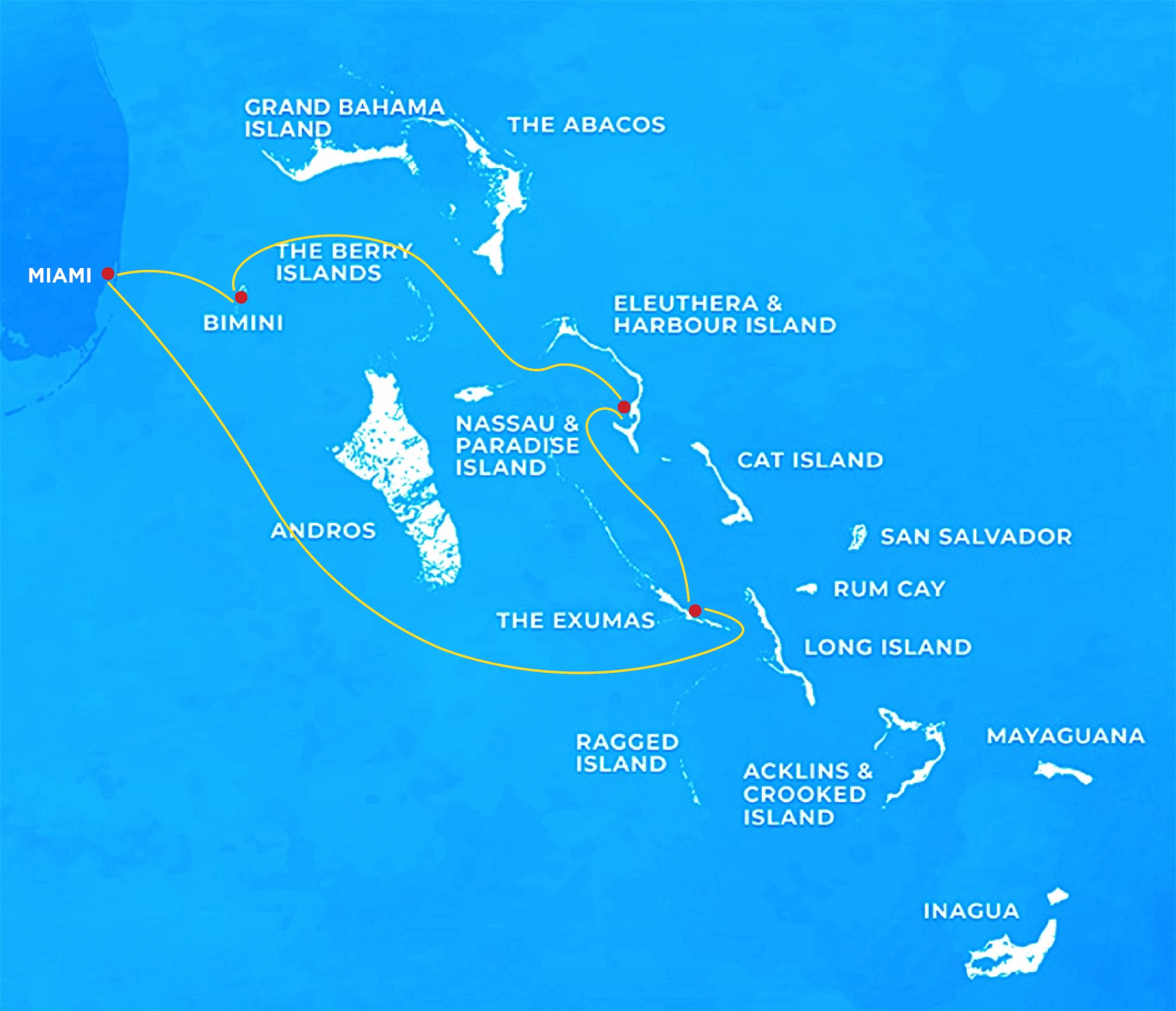
Map of the route from Miami through Bimini, Eleuthera and Harbour Island, the Exumas, the Berry Islands and back to Miami
Route Map · Miami → Bimini → Eleuthera → Exumas → Berry Islands → Miami
Annotated Diagram

How a captain reads the dawn before each crossing

A simplified map of the question tree that runs, almost silently, in the head of the skipper at first light, before any line is cast off.

— NORTHERLY — — EAST OR LIGHT — CLEAN CORAL ON ROUTE 0 Forecast read at dawn The crossing day begins 1 2 3 4 Hold in port Wait for the wind to clock 5 Depart at first light Open water, no coral hazard 6 Delay to mid-morning Sun high, coral readable
01

What is the wind doing in the next twelve hours?

The first question is direction, not strength. Any northerly component against the Gulf Stream — or against the prevailing easterlies in the Sound — produces seas that punish the schedule far more than the chart suggests.

02

Is a clean window present, or only a partial one?

A four-hour window into rising weather is not a window. The route keeps a back-up harbor in mind for every leg, and a captain who has already named it the night before makes the call at dawn without hesitation.

03

Does the route ahead require visual reading of the bottom?

The crossings into and out of the Exuma Bank, and any approach over the Yellow or White Banks, demand the sun high enough to throw shadows. Predawn departures fail this test; mid-morning departures pass it.

04

Hold in port.

Northerlies against current. The boat stays alongside, the day becomes a landed one, and the loop absorbs the delay because twelve days were planned with this kind of delay in mind.

05

Depart at first light.

Open-water passage, deep route, no coral on the approach. The crew is moving before breakfast, the tanks are full, and the boat clears the harbor while the lagoon is still glass.

06

Delay to mid-morning.

A clean window, but the route crosses banks dotted with coral heads. The captain waits until 09:30 or later — the sun comes up behind the boat, the heads cast shadow, the path through the bank reads as a chart written in water.

Logbook · Twelve Days

A working day-by-day,
written for the planning desk

Hours, distances and decisions for a representative twelve-day loop on a sixty-foot motor yacht. Conservative, not aggressive.

— Day 01 · The Stream —
~50 nm Miami → Bimini
Cross, clear in, settle
First light departure from a Miami inlet on a forecast clean of any northerly component. Two to three hours across the Stream at planning speed. Customs and Immigration cleared at Bimini Big Game Club or Resorts World. The afternoon is the boat's first quiet hour in foreign water.
Northerlies forbid departure
— Day 02 · A Landed Day —
0 nm Bimini
Adjust to the archipelago
A planned rest day. Tanks topped, water replenished, weather windows looked at twice. The longest leg of the loop departs the next morning, and crews that arrive at Eleuthera tired tend not to remember the arrival.
— Day 03 · The Channels —
~190 nm Bimini → Eleuthera
The long crossing east
Pre-dawn departure for the eight-to-ten-hour run east. Across the Great Bahama Bank, into the deep water of the Northwest Providence Channel, then the Northeast Providence Channel toward Spanish Wells. Approach to Spanish Wells calls for a local pilot if the Devil's Backbone is in the route.
Local pilot · Devil's Backbone
— Day 04 · Pink Sand —
~12 nm Spanish Wells → Harbour Island
A short, technical hop
Pilot still aboard, the boat threads the reef-lined approach to Harbour Island. Dock at Romora Bay or Valentines. The afternoon is golf cart, pink sand, dinner ashore. The most photographed beach in the Bahamas earns its reputation in person.
— Day 05 · Eleuthera Coast —
~50 nm Harbour Island → Cape Eleuthera
South down the lee shore
A relaxed leg along the western, sheltered side of Eleuthera. Glass Window Bridge passes to port. Anchor options at Ten Bay or Governor's Harbor for a long lunch. Berthing at Cape Eleuthera Resort & Marina before sunset.
— Day 06 · The Sound —
~30 nm Cape Eleuthera → Highbourne Cay
Crossing Exuma Sound
Three to four hours of open water, deep blue, often glassy in the morning. Highbourne Cay marina is the gateway to the Exumas — fuel, water, a restaurant on the dock. The Exumas begin at the gangway.
— Day 07 · The Park —
~25 nm Highbourne → Warderick Wells
Into the Land & Sea Park
Short bank passage south to the headquarters of the Exuma Cays Land & Sea Park. Mooring ball, no anchor. A protected reserve where nothing is taken — the snorkeling does the speaking.
— Day 08 · Pigs & Grotto —
~22 nm Warderick → Staniel Cay
Thunderball, Big Major
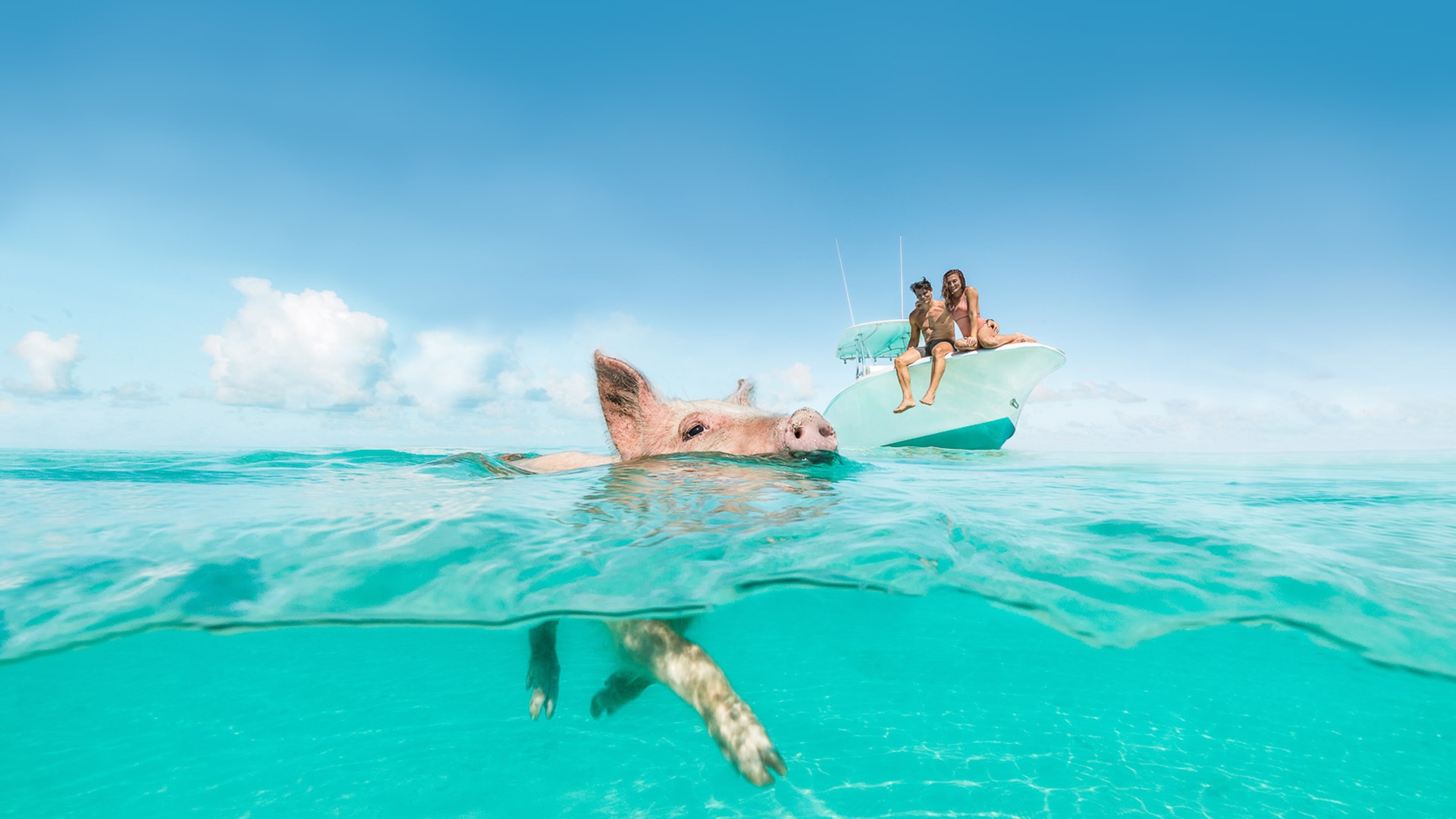
A leisurely run further south to Staniel Cay Yacht Club. Thunderball Grotto at slack tide; the swimming pigs of Big Major Spot in the afternoon. The two most photographed scenes of the chain, on a single day.
— Day 09 · Northbound —
~50 nm Staniel → Highbourne
Returning to the gateway
Slow run back north along the western bank, past Compass Cay's natural harbor, reverse-tracing the cuts and anchorages. Top tanks at Highbourne. The crew sleeps on board for the early start the next day.
— Day 10 · Coral Out —
~100 nm Highbourne → Great Harbour Cay
Across to the Berrys
Mid-morning departure — sun high, coral heads readable on the way out of the Exuma Bank. Northwest across the Tongue of the Ocean and into the Berry Islands. Great Harbour Cay Marina, a quiet, deeply protected basin few first-time visitors ever see.
Sun-up departure for coral visibility
— Day 11 · The Quiet Day —
0 nm Berry Islands
A rest before the run home
The Berrys are the loop's restorative pause. Empty beaches, deserted coves, a marina that feels like a coastal village from another decade. One full day at anchor or alongside before the final push west.
— Day 12 · Stream West —
~150 nm Berry Islands → Miami
The final crossing
First light departure across the Northwest Providence Channel, then the Gulf Stream — this time as an ally, with the current pushing roughly north and the boat's ground track curving toward Miami. CBP ROAM clearance on arrival. The loop closes where it opened.
CBP ROAM check-in on arrival
Eleuthera · Four Registers

The island that changes vocabulary
every fifteen miles

Eleuthera is a long sliver of land — narrow enough that on certain afternoons one can stand on a single road and see two different oceans. The boat sees four.
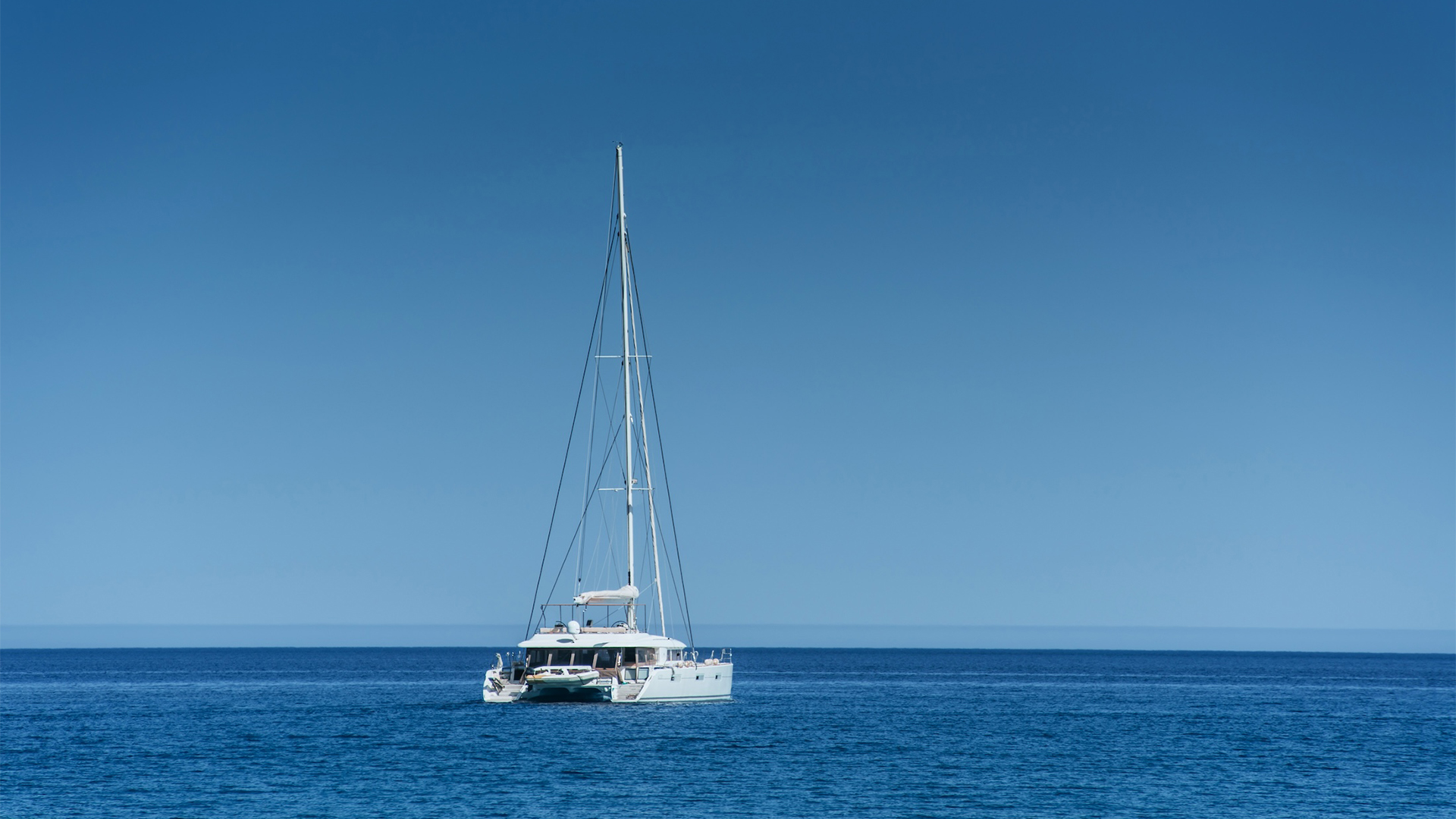
A white catamaran at anchor in deep blue water off Eleuthera
— Register I · Approach —

The first open-water sight

After a long Northeast Providence Channel passage, Eleuthera rises slowly on the bow as a low, narrow line. The water deepens to royal blue, the wind tends to lay down, and the silhouette of the island confirms what the chart promised hours earlier.
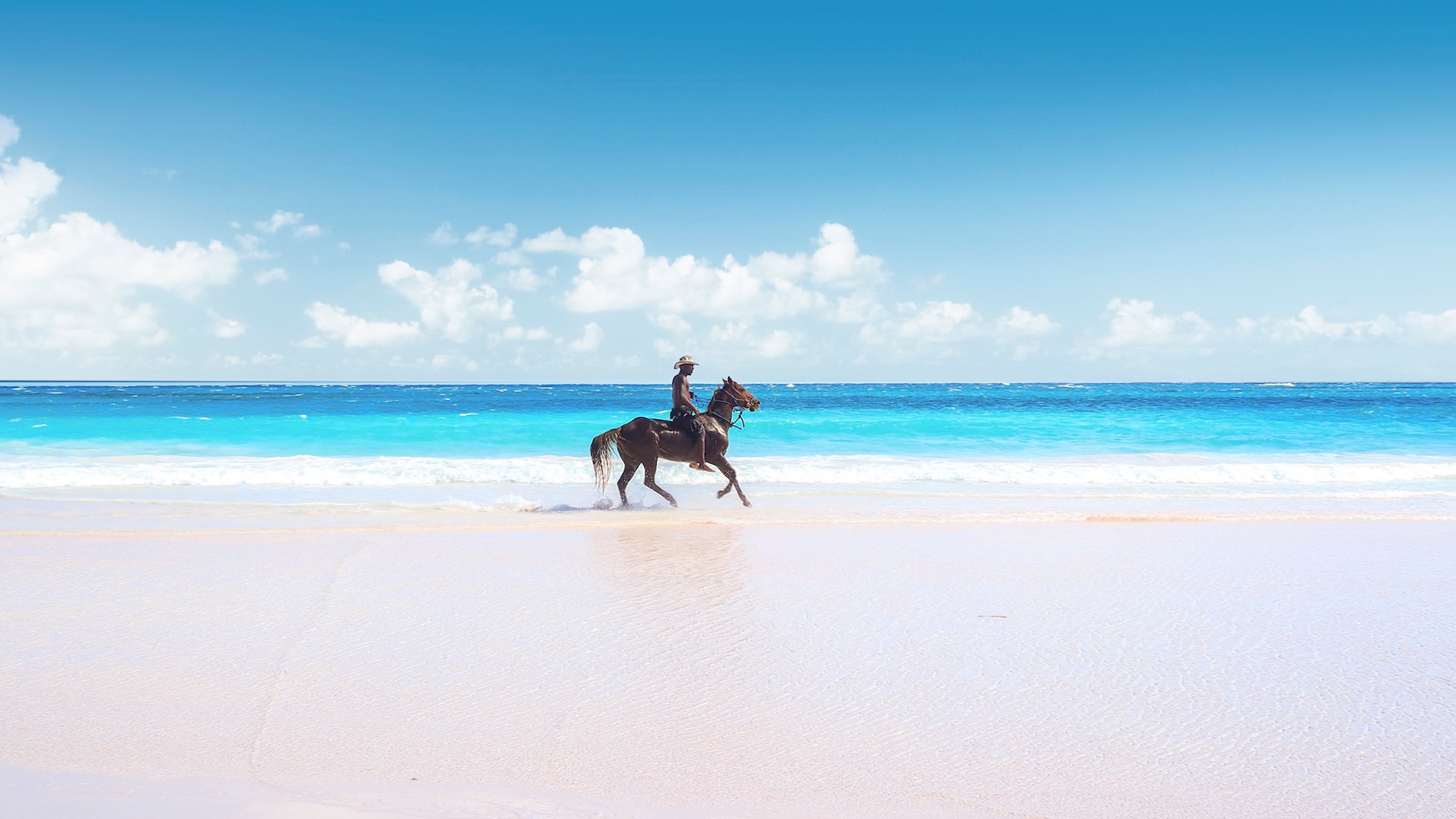
A horse and rider on the pink sand of Harbour Island, Eleuthera
— Register II · Pink Sand —

A beach worth the technical approach

Harbour Island's three-mile pink sand beach is reached only after a piloted passage through the Devil's Backbone reef. The technical price is real, and so is the reward: a stretch of coast that holds its color in person better than in any photograph.
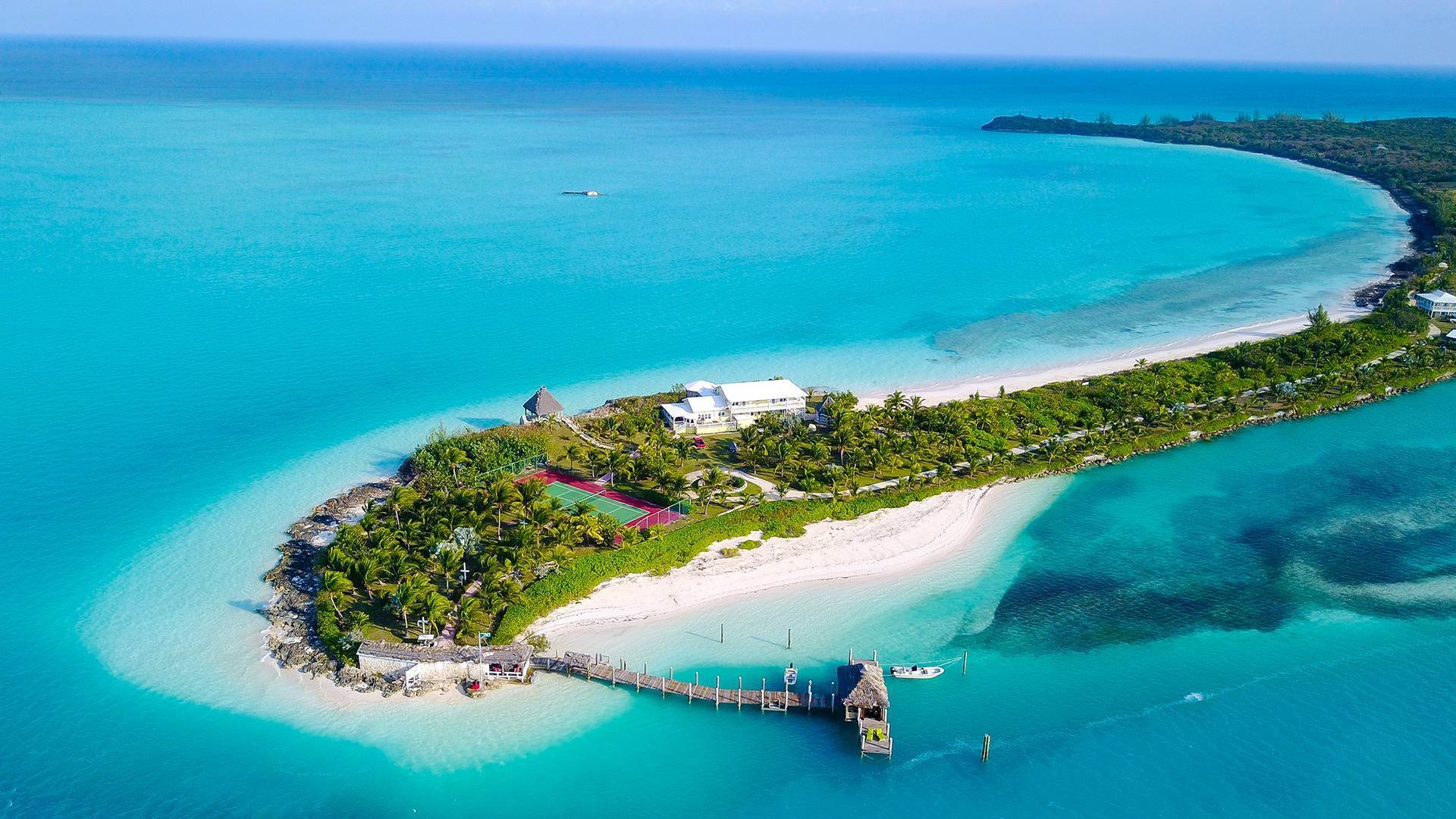
Aerial view of a private estate on Eleuthera with tennis court, dock and small craft
— Register III · Private Eleuthera —

The architecture of quiet ownership

From the deck, the western shore of Eleuthera reads as a sequence of coves, low-built houses, and private docks announcing nothing. The island has been an address of preference for a long time, and the absence of signage is part of the language.
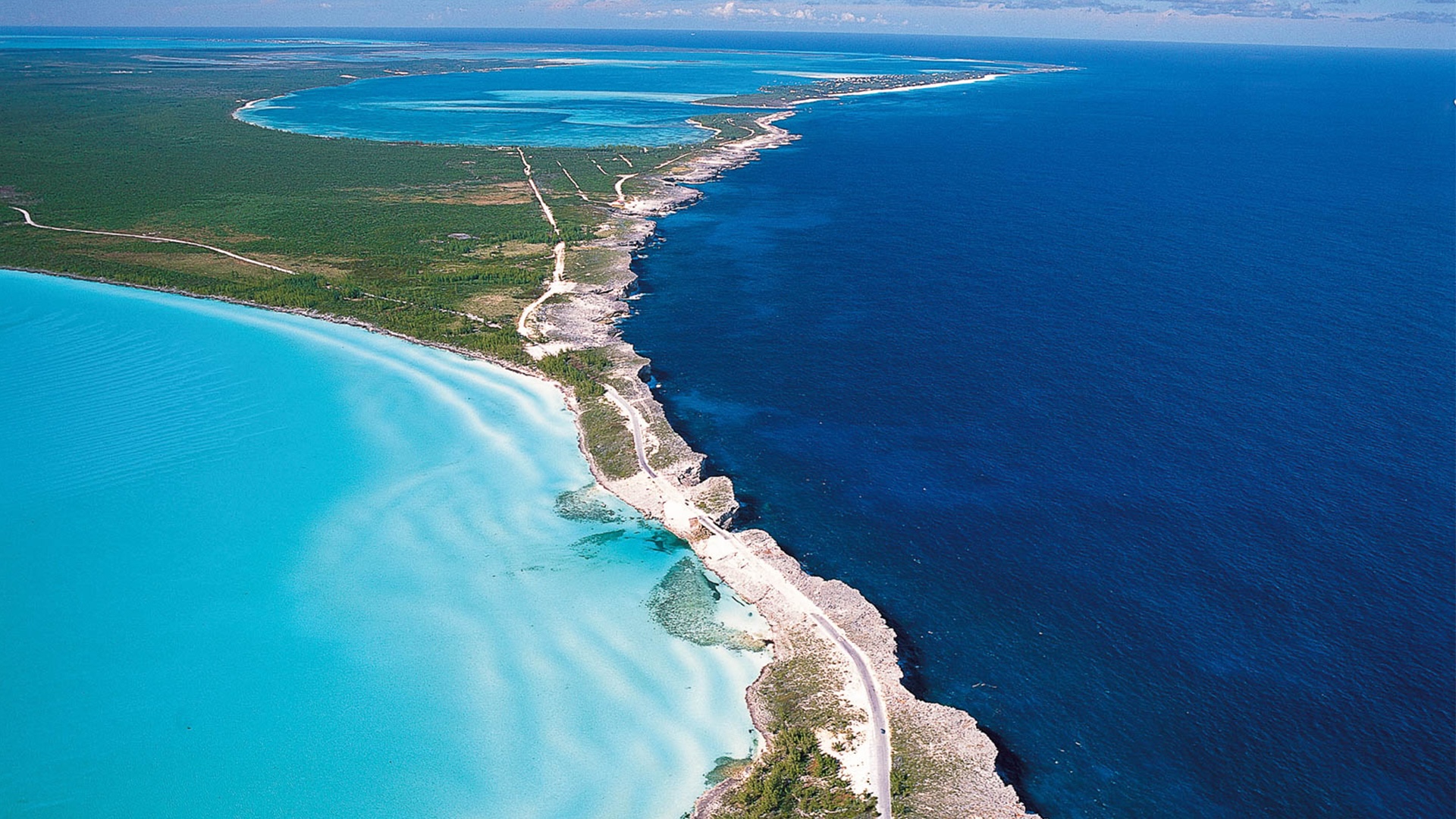
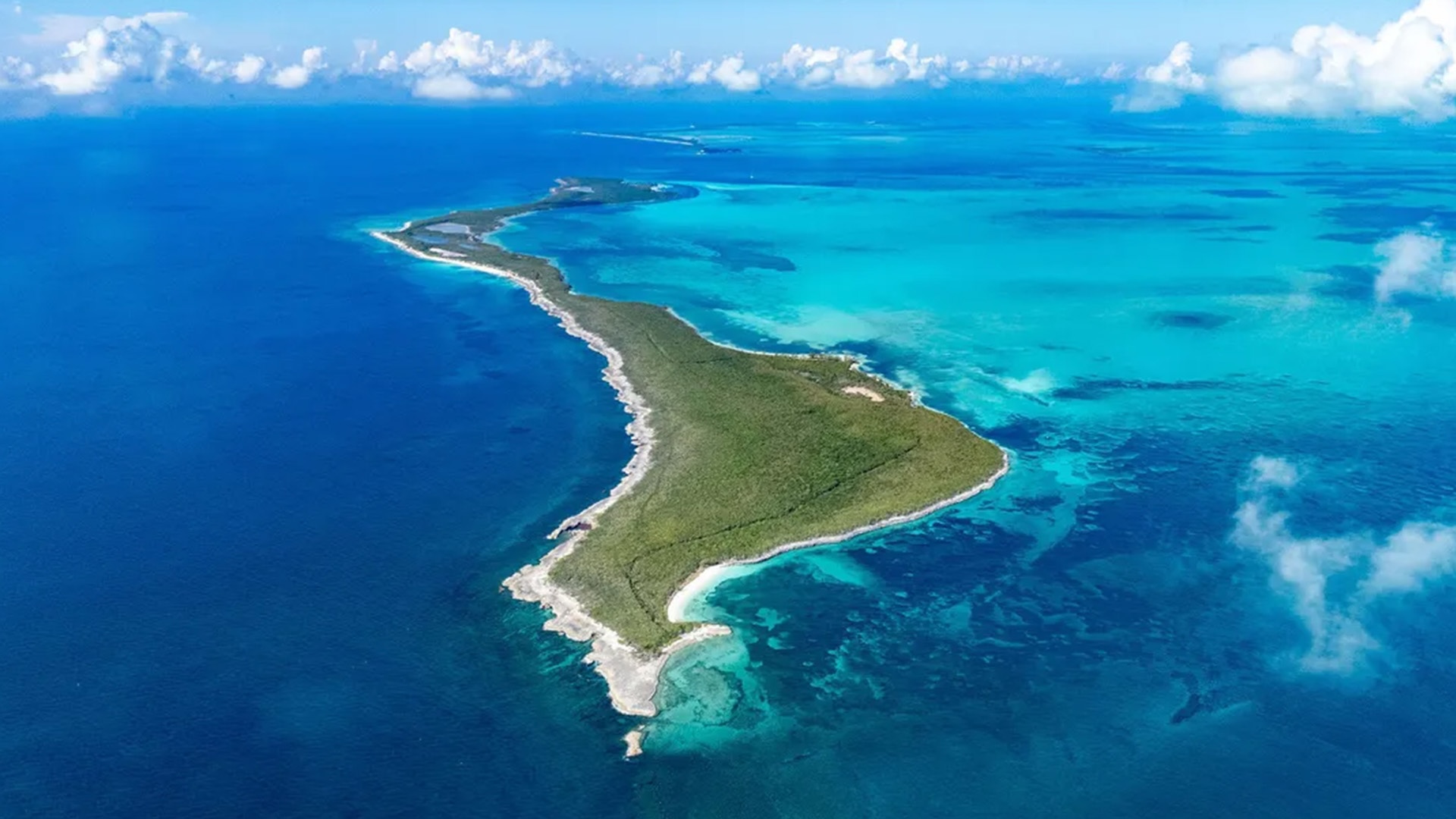
Aerial view of Eleuthera, a thin strip of land between two oceans of contrasting color
— Register IV · Two Waters —

The island where the oceans differ

The Glass Window — a narrow rock bridge near the northern end — is the place where the Atlantic on one side and the Bight on the other sit so close that the contrast in color, depth and behavior is visible from a single viewpoint. The chart already says this. Standing there, the sentence reads differently.

Exumas · Visual Field

The color does not exaggerate

A five-frame scroll across the chain — the same water at five different hours, on five different days, doing what it does best when nobody is looking.
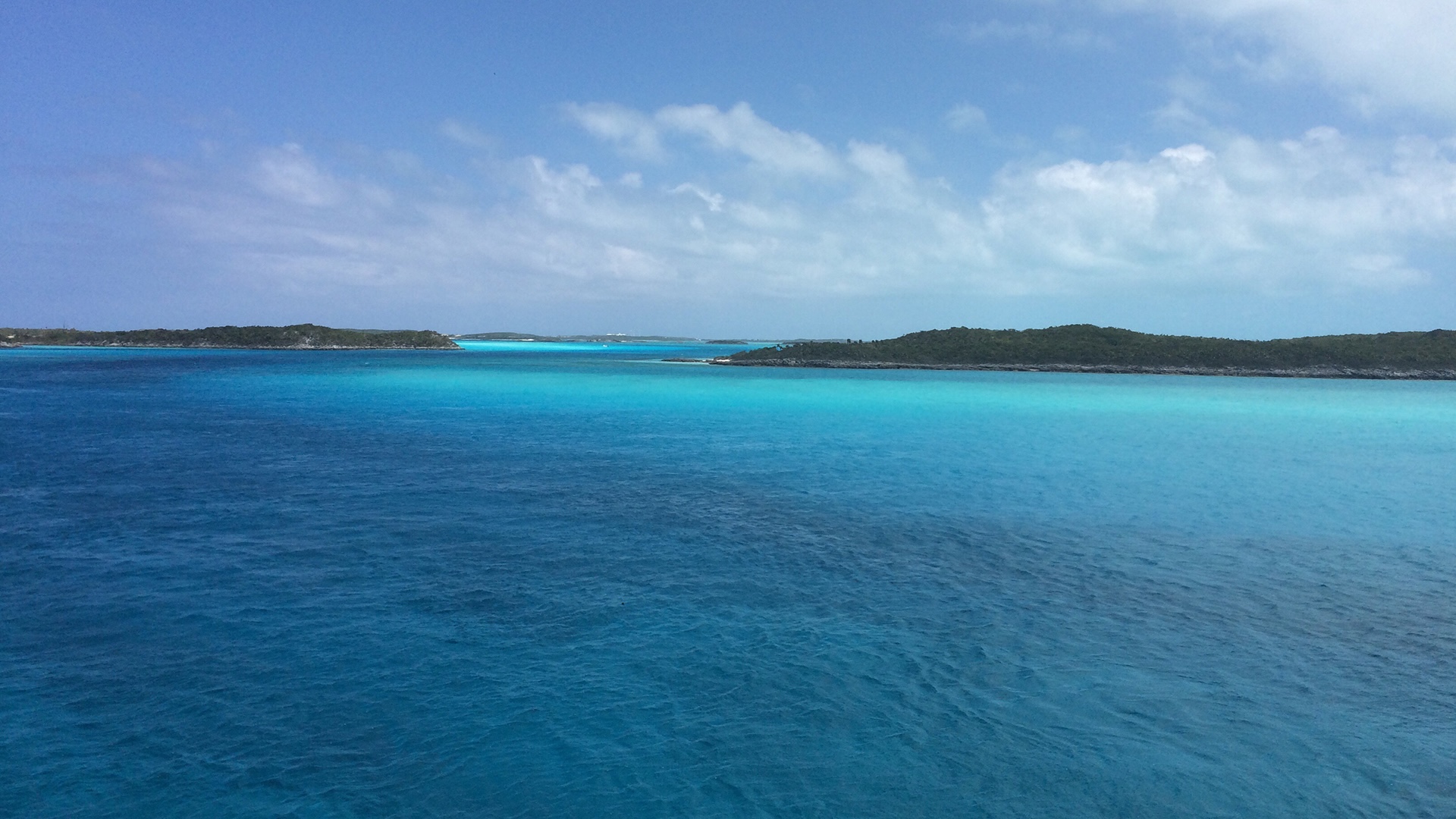
Open water with low cays in the distance, Exumas approach
Open Water · Approach
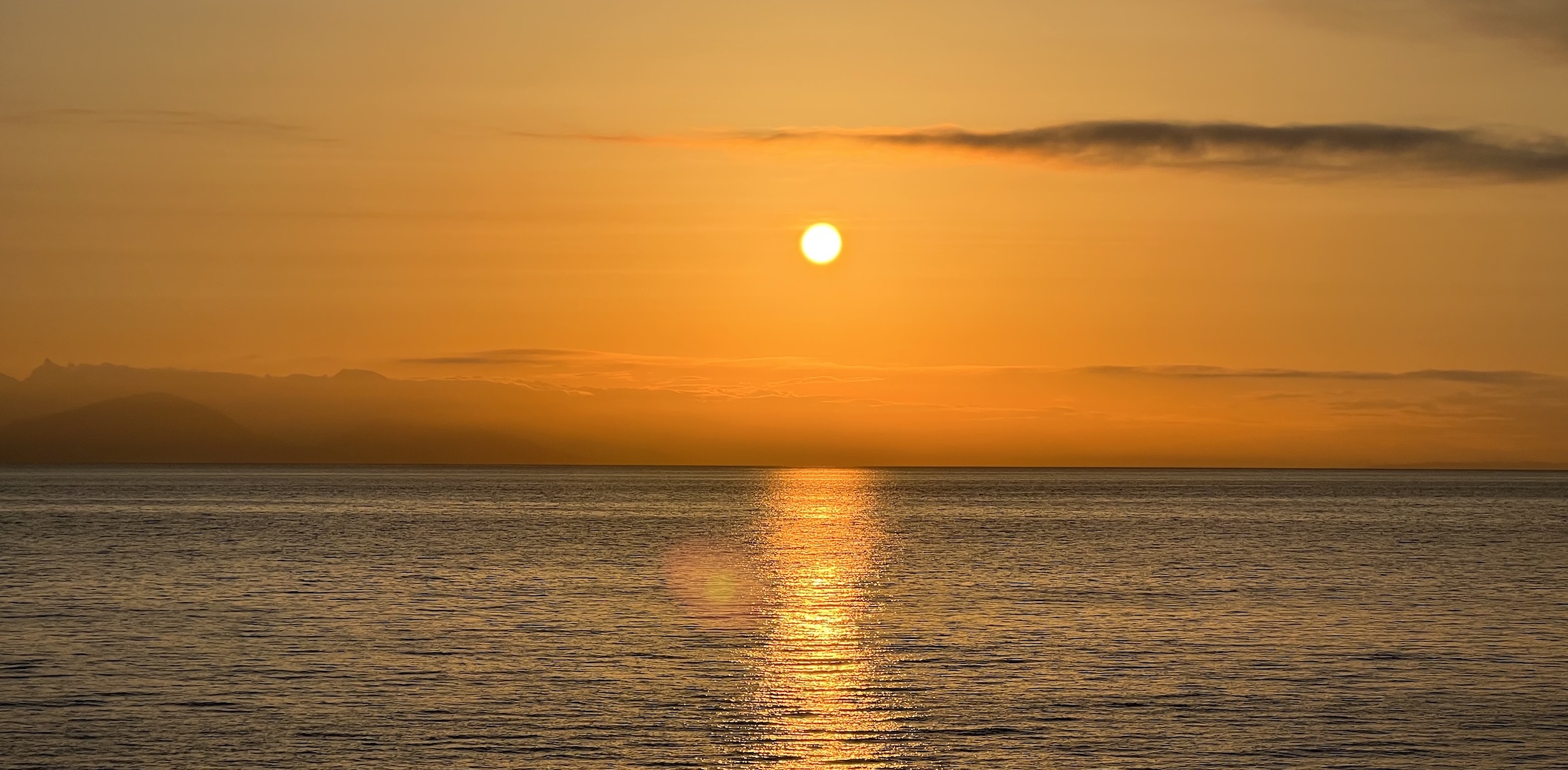
Sunset over the Exumas with golden light reflected on water
First Evening
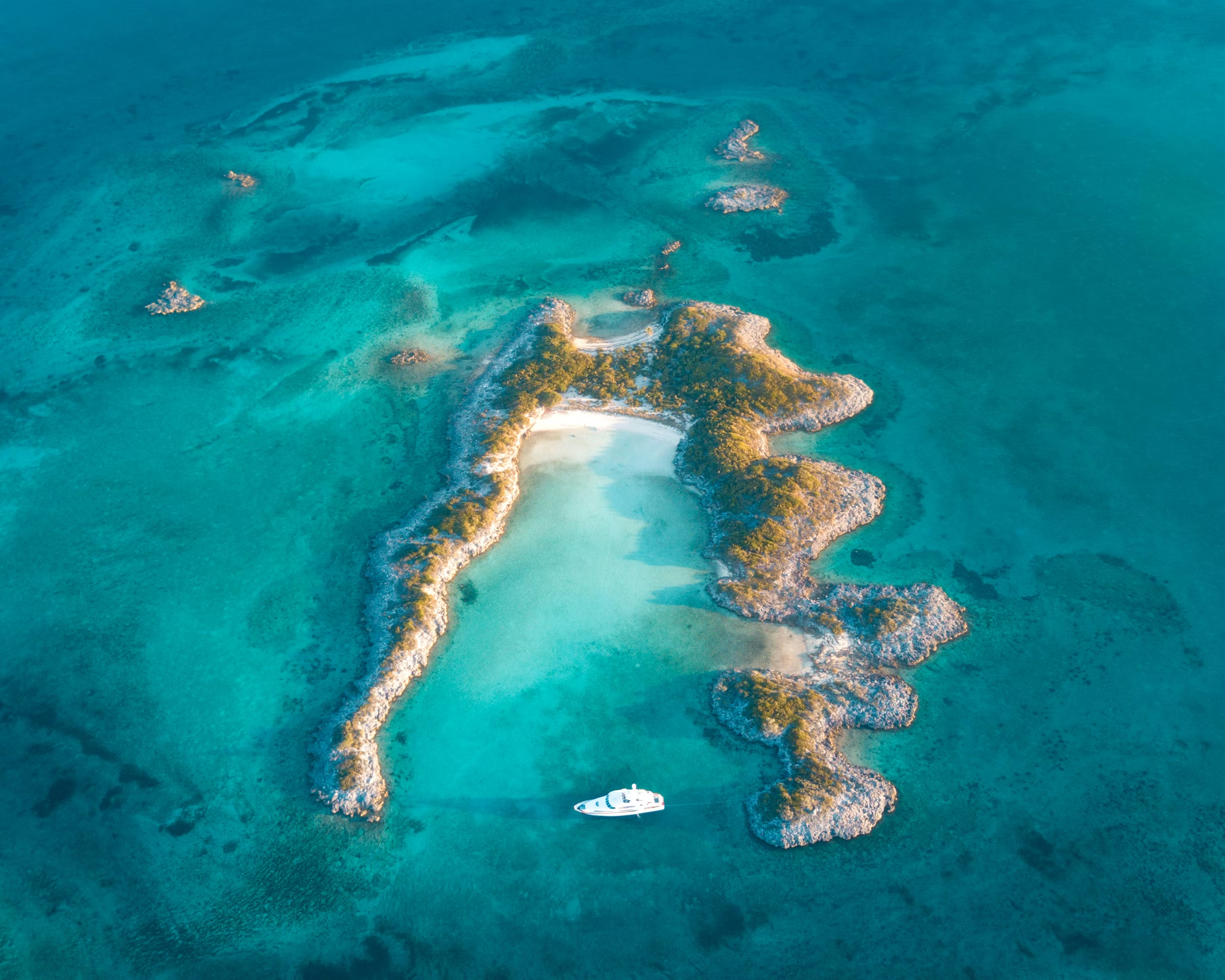
Aerial view of a yacht anchored in turquoise shallows surrounded by sandbars
Aerial · At Anchor
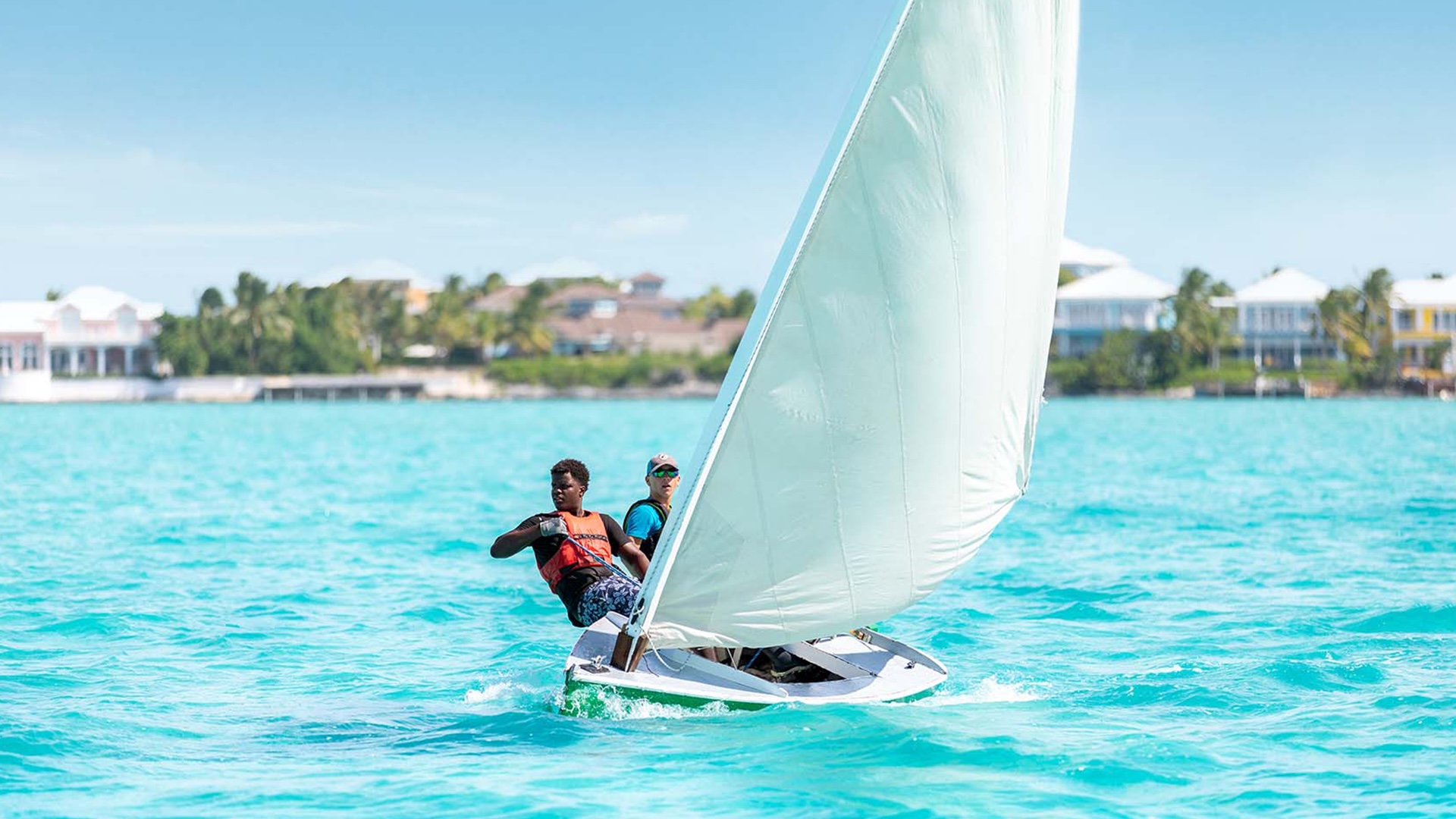
Two young people sailing a small dinghy in turquoise water with palm-lined shore
A Small Sail
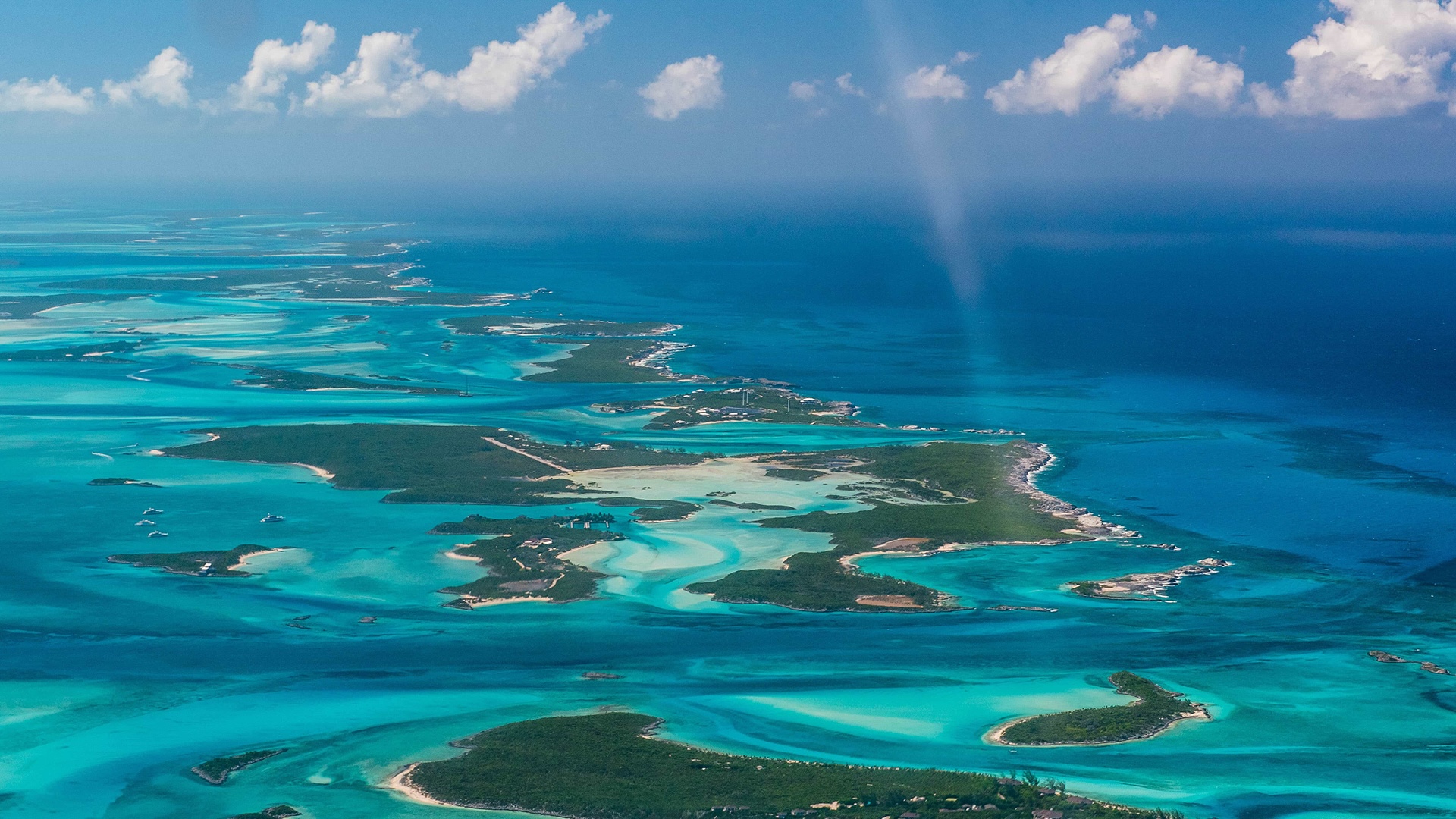
Wide aerial of the northern Exumas with multiple low cays and sandbars
The Chain
— Drag, swipe, or tap to enlarge —
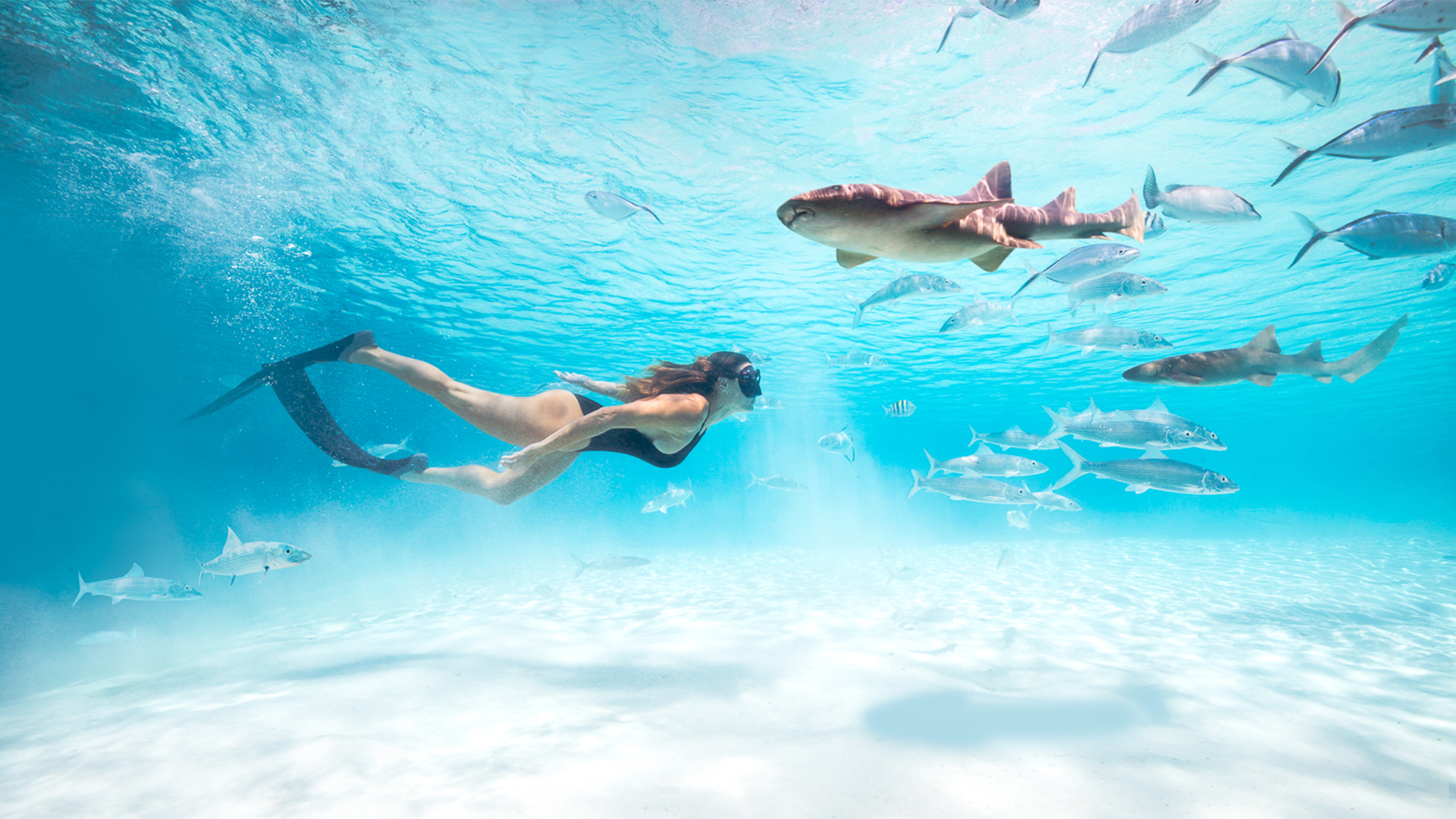
A snorkeller in clear shallow water surrounded by reef fish and a small shark
The Reward · Underwater Exuma

The right boat changes the question. Not can we cross, but when does the wind let us.

USA Onboard · Editorial
The Argument · Loop versus Direct

Why the circle beats
the straight line

There is a temptation, on a fast yacht with a clean forecast, to read the chart as a single arrow: Miami to the Exumas, two-hundred-odd nautical miles east-southeast, one very long day, no stops. The geometry permits it. The seamanship rarely does. The Bahamas does not reward shortcuts; it rewards plans that already accept where the boat will not be on a given afternoon.

The five-leg loop spends slightly more fuel and slightly more time on the water than the direct dash, and gains, in exchange, three things the straight line cannot offer. It begins inside the customs system rather than scrambling to clear in at a remote port. It distributes weather risk across five short windows instead of betting the entire trip on one long one. And it lets the crew arrive at the most photographed water in the western Atlantic — the Exuma chain — already adjusted to local time, local water, and the specific dialogue between a sixty-foot boat and a four-foot bank.

What follows is the comparison set out plainly. Two trips, the same boat, the same week, two very different sets of memories on the way home.

Direct vs. Loop

Two ways to spend twelve days
in the Bahamas

A comparative ledger, kept honestly. What the direct crossing promises, and what the circular route actually delivers.

— The Direct Run
One ten- to twelve-hour open-water leg. A single departure, often pre-dawn, into open water with no land within sight for the entire morning. The crossing is its own day, with very little capacity for adjustment once underway.
Customs cleared at a remote port of entry. Arrival at a small Exumas marina or anchorage means clearing in by phone or app, with paperwork and timing pressures layered onto a crew that has just finished a long offshore run.
Single weather window required. The entire trip depends on one good day. A late front, a delayed departure, a forecast that softens overnight — and the run becomes either a delay alongside in Florida or a passage made into worse weather than was promised.
No intermediate harbors. Bimini, Chub Cay, Nassau — all bypassed. Mechanical issues, fuel doubts or crew fatigue have nowhere to land short of the destination.
The reward is speed. One day to the Exumas, eleven days on the chain, one day home. For the right boat with the right window, this works. For most owners considering the trip for the first time, it does not.
— The Five-Leg Loop
Five short crossings, none longer than ten hours. Each leg is its own decision. A bad forecast on day three doesn't compromise the trip — it simply extends day two. The plan is built to absorb its own delays.
Customs cleared on day one at Bimini. The closest port of entry to Florida. Tanks topped, paperwork done, the crew settled into local time before the more interesting passages begin.
Five independent weather windows. The route can be paused, slowed, or reversed at any point without losing the trip. Fronts that would cancel a direct run only displace a leg of the loop.
A different island every two or three days. Bimini, Eleuthera, the Exumas, the Berrys. Four distinct registers — port-of-entry, contemplative, scenic, restorative — instead of a single destination repeated.
The reward is variety. The boat covers more ocean, the crew sees more of the archipelago, and the loop's final crossing — a fast Berrys-to-Miami run with the Stream behind — is the kind of arrival that ends a trip on the right note.
Exumas · Extended Field

The chain in five more frames

Beyond the postcard images, the Exumas hold scenes that move differently — a grotto only reachable at slack tide, a sandbar that exists for ninety minutes a day, a beach that has, by accident, become world-famous for its pigs.
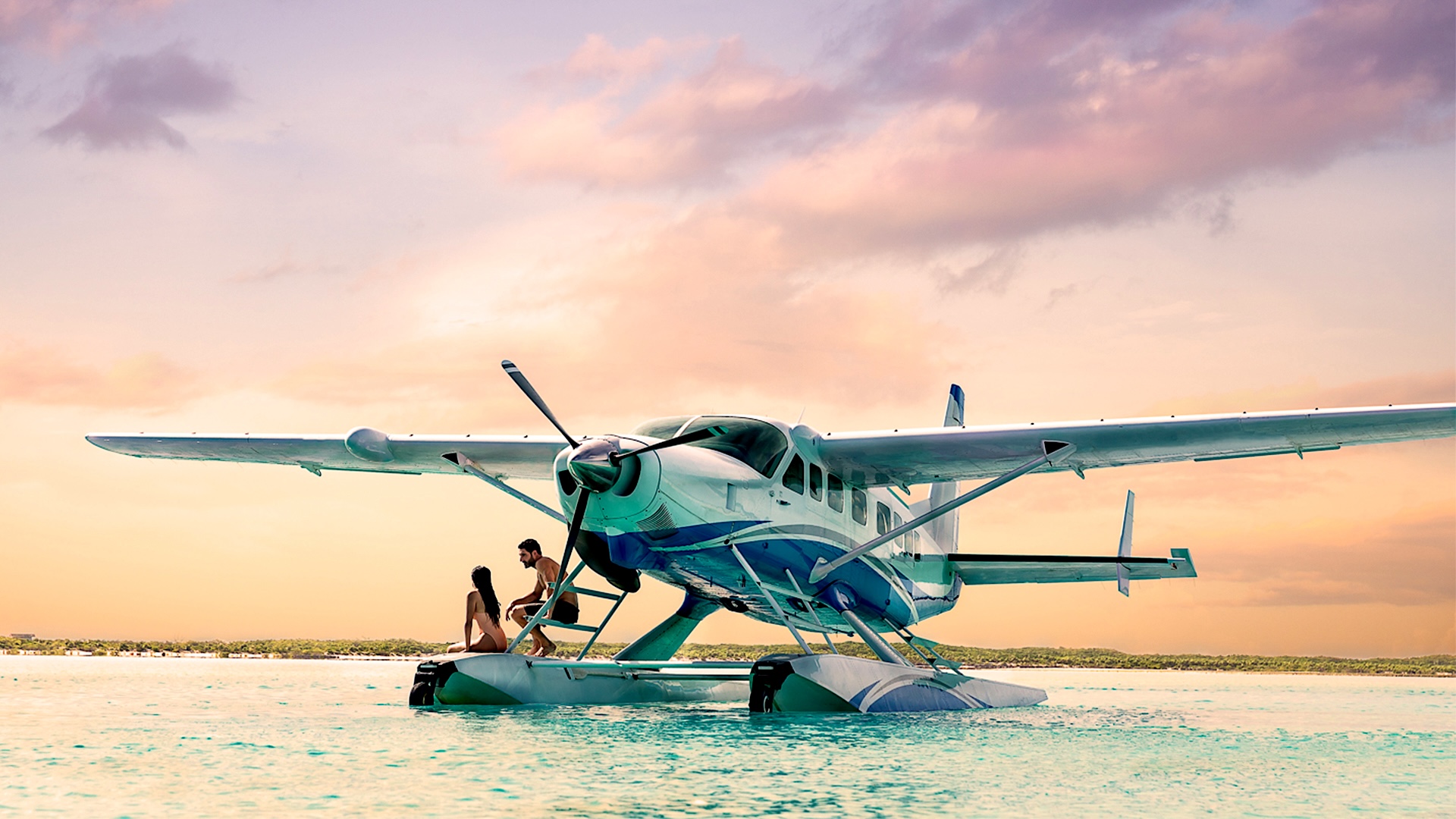
A seaplane resting on shallow turquoise water at dusk in the Exumas
Seaplane on the Bank
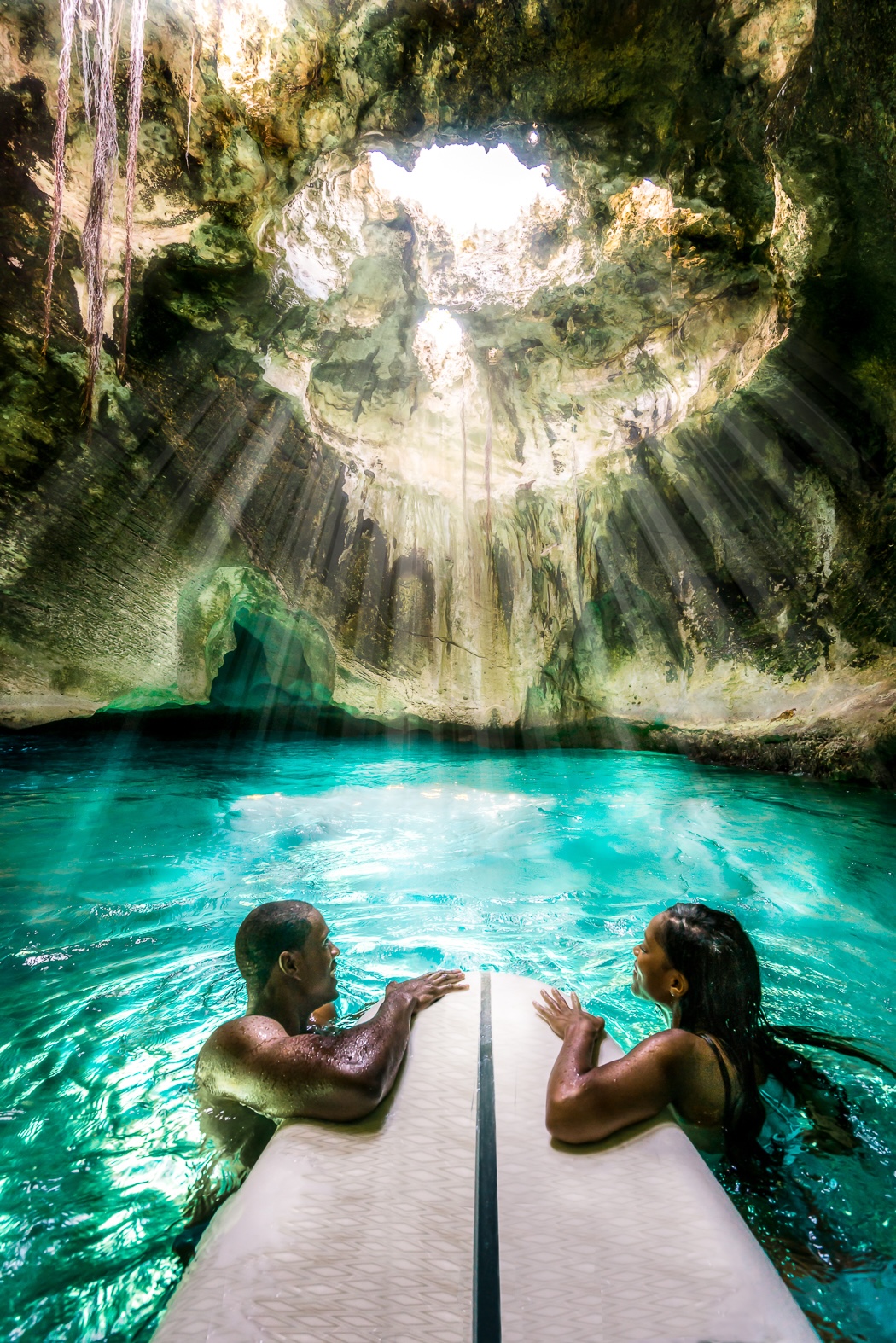
Two figures inside a sea grotto with light entering from above through a roof opening
Sea Cave · Light Above
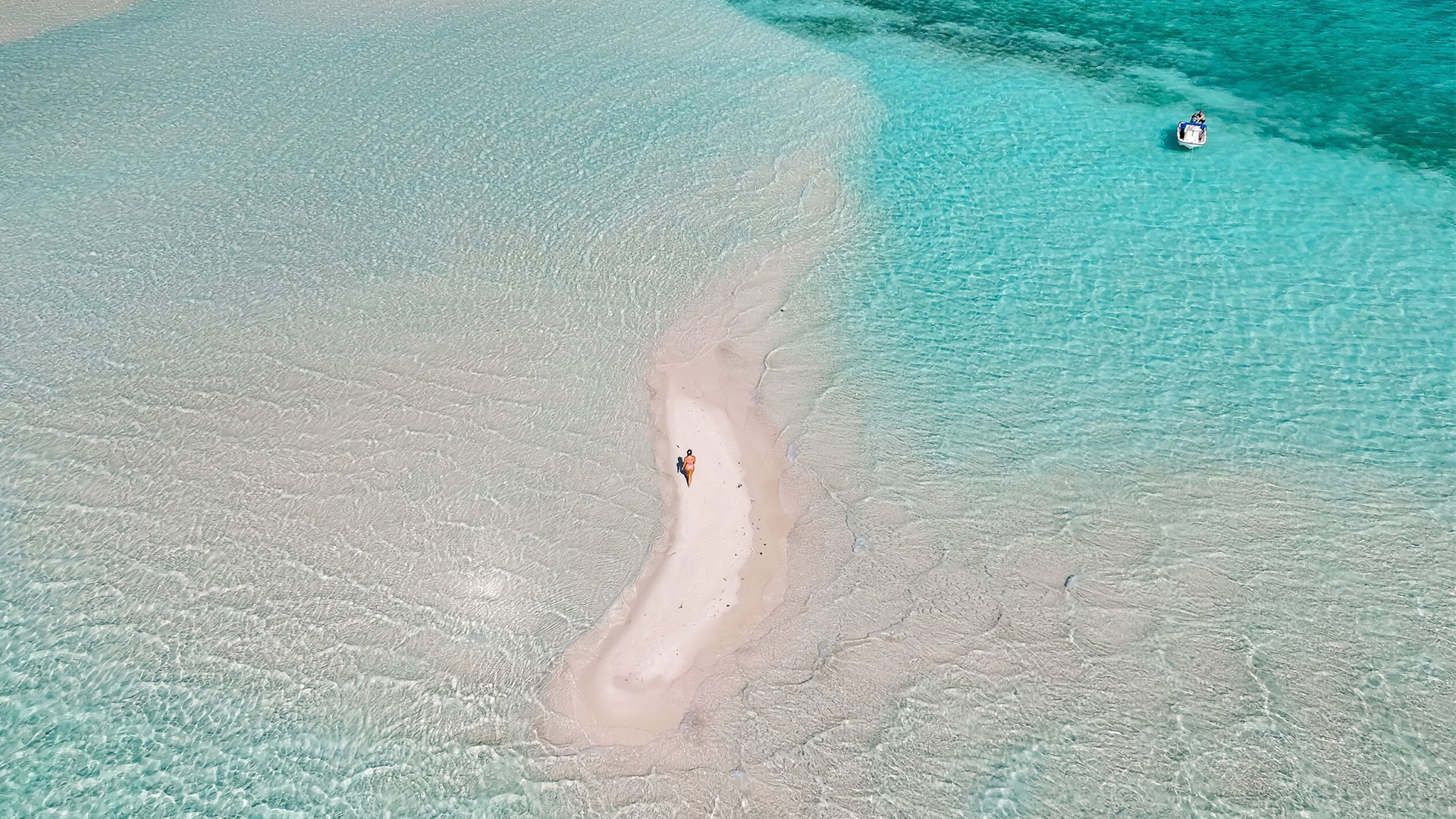
An aerial view of a sandbar at low tide with a small figure walking on it
Sandbar at Half Tide
A swimming pig in turquoise water near a small boat at Big Major Cay
Big Major · Pig Beach
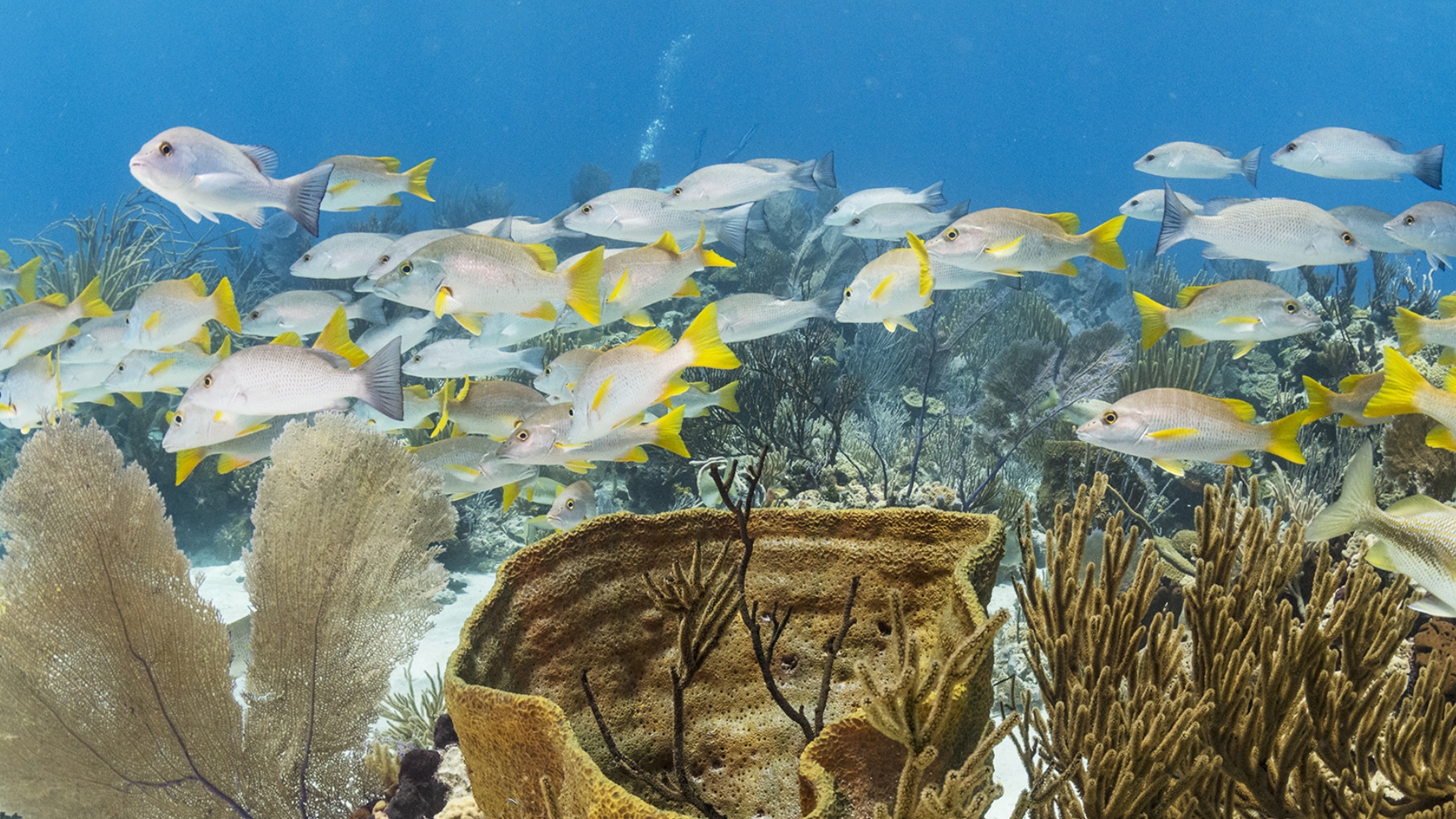
An underwater reef scene with reef fish, sponges and corals in the Exuma Cays Land and Sea Park
Reef in the Park
— Drag, swipe, or tap to enlarge —
The Quiet Detour

The Berry Islands, found by accident

Most loops collapse the Berrys into a fuel stop. The route on these pages keeps a full day there, and treats the islands as the trip's restorative pause before the long run home.
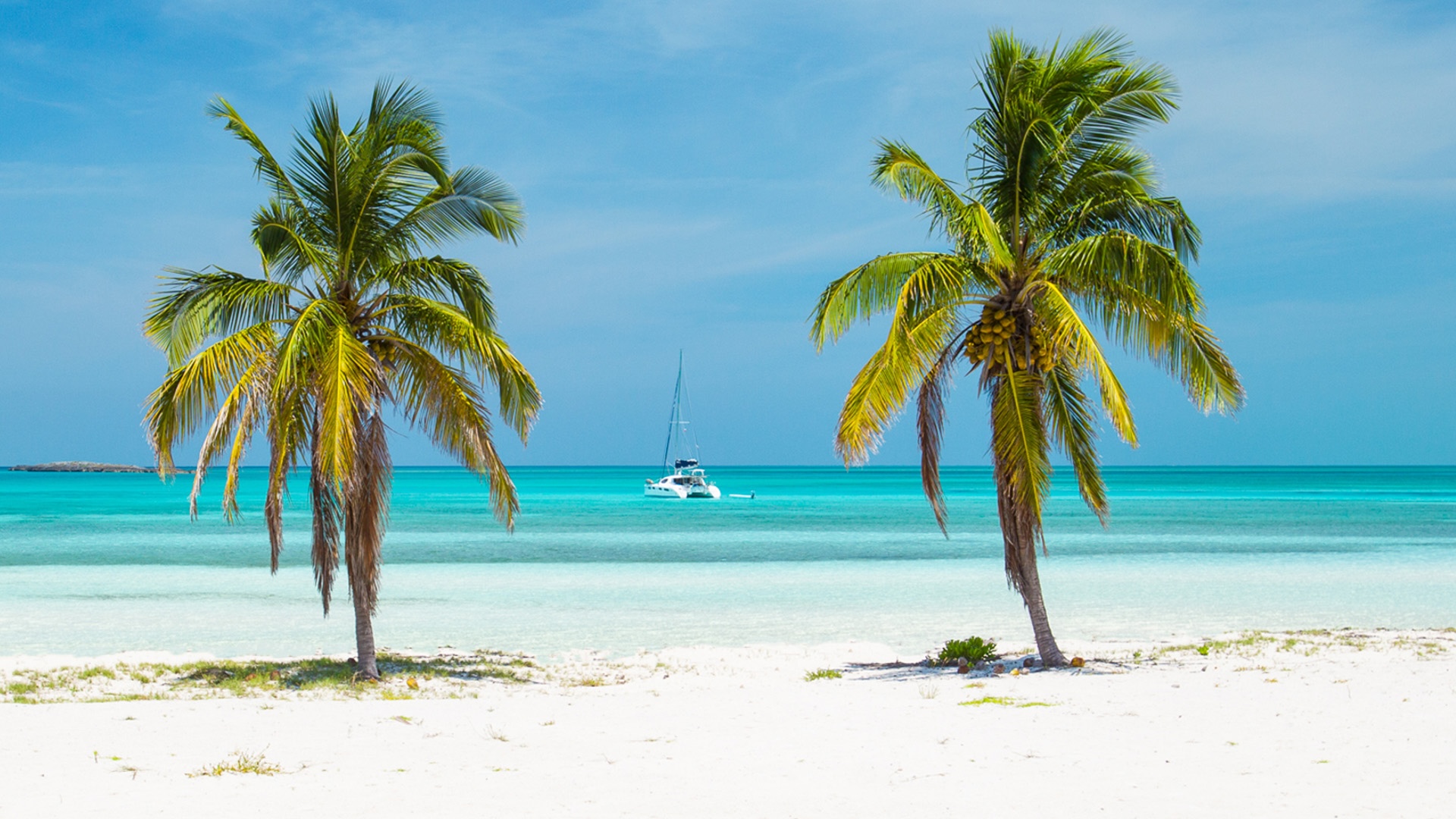
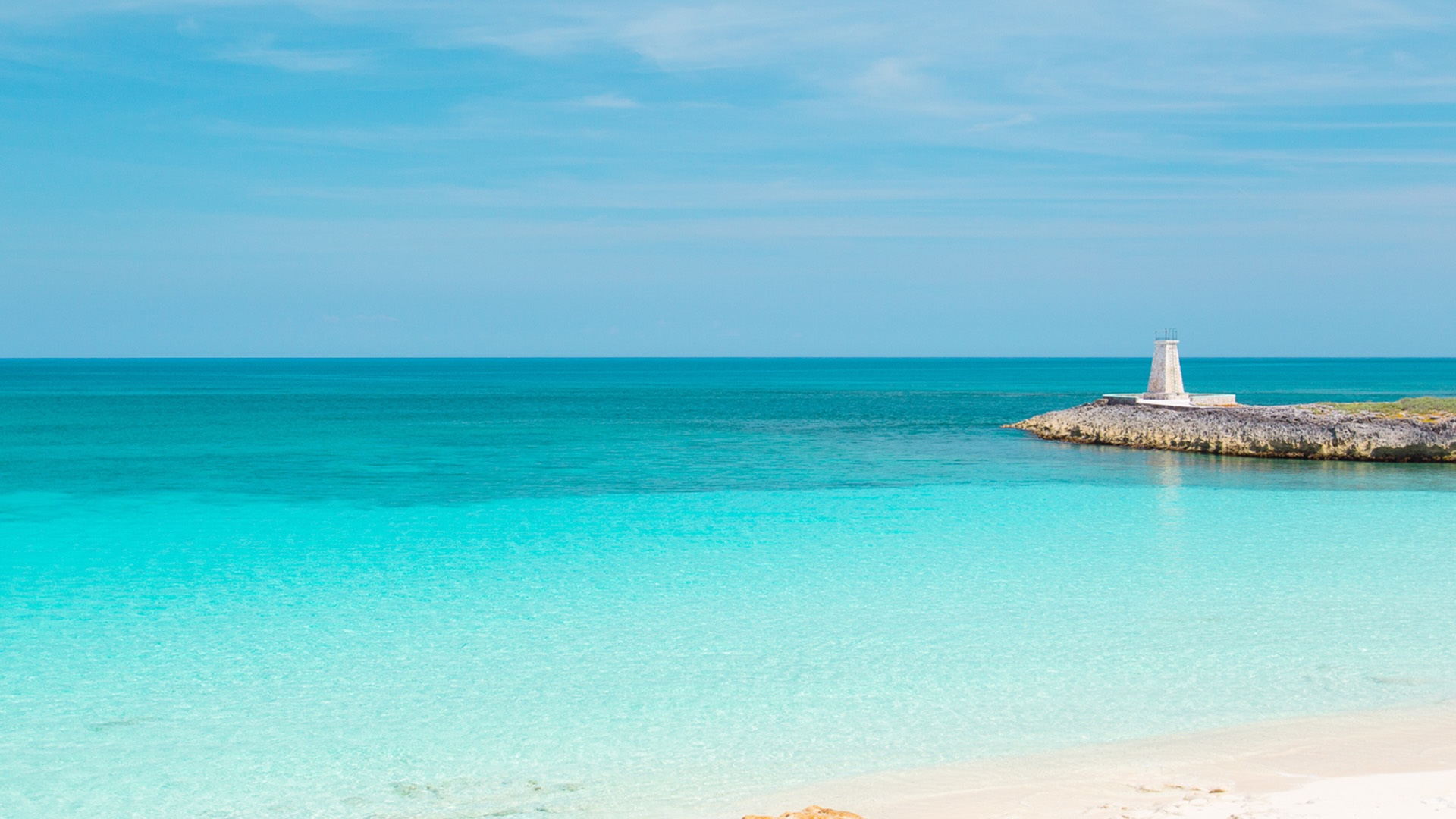
A view from a white sand beach in the Berry Islands, framed by two palm trees with a large catamaran anchored offshore
From Shore
The entrance to a sheltered bay in the Berry Islands, viewed from the open ocean
Bay Entrance
An aerial view of one of the Berry Islands surrounded by clear water
Aerial · Small Cay

The Berrys do not announce themselves. The chain reads, on a chart, as a string of small cays north of New Providence — Great Harbour Cay, Chub Cay, Little Stirrup, Bond's Cay — most of them uninhabited, none of them photographed often, none of them on the standard Bahamas itinerary that flies from Miami to Nassau and ends in the Exumas. They are precisely what is missing from that itinerary.

The marina at Great Harbour Cay sits inside an enclosed natural basin, accessed through a marked cut. Inside, the holding is excellent and the swell forgets the boat exists. Ashore, the settlement is small enough to walk in an afternoon, and the beaches that ring the cay are the kind that show no footprints by sunrise. After eight days of weather watching, customs, cuts and coral, the Berrys offer a rare permission slip: do nothing in particular.

The strategic value is real as well. Great Harbour Cay places the boat roughly 150 nautical miles from Miami, with the Northwest Providence Channel as a clean deep-water route home. The final leg of the loop departs from a marina that has rested its crew, topped its tanks and read its forecast carefully — the right state in which to begin a Gulf Stream crossing.

30cays
The Chain
A scattered group of mostly uninhabited islands between the Bahama Banks and the Northeast Providence Channel.
~150nm
Run to Miami
Great Harbour Cay sits in clean range of Florida via the Northwest Providence Channel and the Gulf Stream.
1day
Stay, Honestly
A single restorative day on the loop. Not a destination on its own; a quiet, deliberate pause before the run home.
Preparation · The Crossing Kit

What the loop asks before departure

Three columns, in three registers — physical on the boat, digital in the hand, mental in the captain's head. None of them is optional, and none of them is improvised on the day it is needed.

01
On the boat
Physical · already aboard
i.Fuel reserves above 50% at every leg, with absolute minimum range of 400 nautical miles plus 30% reserve. Range is the physical form of flexibility.
ii.Two anchors of different design — a primary plough or new-generation type for sand, a secondary suited to harder bottoms — with adequate scope for ten-foot bank anchorages.
iii.Provisions for two extra days beyond the longest planned passage. Unscheduled nights aboard need to eat, and Bahamian provisioning outside Nassau is genuinely limited.
iv.A serviceable repair kit for the small failures — fuel filters, impellers, fuses, hose clamps — with contents known to more than one person on board.
v.Tender, snorkeling gear, fishing license purchased in advance. The Exumas reward the boat that is ready to leave the boat.
02
In the hand
Digital · redundant, offline
i.Two weather services with overlapping models — typically a GFS-leaning app and an ECMWF-leaning one — plus a routing service such as PredictWind for crossing-day decisions.
ii.Explorer Charts downloaded for offline use across the entire region — Bimini, Berrys, Eleuthera, the full Exuma chain. Aqua Map is a standard companion.
iii.Pilot service contacts for Spanish Wells and Harbour Island booked in advance. The Devil's Backbone is not a passage to attempt unguided on a first visit.
iv.Marina list with VHF channels and GPS coordinates for every harbor within a day's range — Bimini Big Game Club, Spanish Wells Yacht Haven, Cape Eleuthera, Highbourne Cay, Compass Cay, Great Harbour Cay.
v.CBP ROAM installed and pre-registered for the return leg. Bahamian Customs and Immigration paperwork prepared before crossing in.
03
In the head
Mental · rehearsed before sailing
i.Three back-up harbors identified for every crossing, reviewed the night before. The crossing day is too late to start naming them.
ii.The hurricane plan, kept simple. If a serious system threatens, divert to Hurricane Hole Superyacht Marina or Atlantis Marina on Paradise Island — the most secure refuges in the central Bahamas for vessels of this size.
iii.Coral-visibility discipline. Departures over banks happen mid-morning, not predawn. The sun behind the boat reads the bottom; before it does, the chart alone is not enough.
iv.A clear sense of which legs are committing and which are reversible. Bimini-to-Eleuthera is committing; Eleuthera-to-Exumas is short and reversible.
v.A crew briefing before departure — the loop is twelve days, the plan is a proposal, the weather will rewrite at least one leg, and that will be welcome rather than a problem.

A trip planned as a single dash arrives at one place. A trip planned as a loop arrives at five. The first kind is a passage; the second is a cruise. The Bahamas, more than most archipelagos, is built to reward the second.

USA Onboard · The Bahamas Loop
Notes & References
1. Distances. Figures in this article are nautical miles, calculated as navigable distances along practical cruising routes rather than great-circle airline distances. Miami–Bimini is given as ~50 nm; Bimini–Eleuthera (via the Northwest and Northeast Providence Channels) as ~190 nm; Eleuthera–Highbourne Cay as ~30 to 60 nm depending on point of departure; Highbourne–Great Harbour Cay as ~100 nm; Great Harbour Cay–Miami as ~150 nm.
2. Vessel and range premise. The article is written for an owner-operated motor yacht of approximately sixty to eighty feet, with a planning cruise of twenty to twenty-five knots and minimum useful range of 400 nautical miles plus a working reserve of at least 30%.
3. Customs and Immigration. Bahamian regulations require clearance at a designated port of entry on first arrival and a separate clearance out before returning to the United States. Bimini, Nassau, Spanish Wells and Great Harbour Cay are among the standard ports used by yachts of this size. CBP ROAM handles the U.S. side on return.
4. Gulf Stream considerations. The Gulf Stream sets roughly north at two to four knots and is consistently identified by professional weather routers as inadvisable to cross with any northerly wind component above light. Light easterlies or southerlies are the standard preferred window.
5. Devil's Backbone. The reef-strewn passage along the north coast of Eleuthera approaching Harbour Island is consistently described in Bahamian cruising guides as requiring a local pilot for first-time transits. Pilots can be arranged in advance via Spanish Wells or Harbour Island marinas.
6. Coral visibility on bank passages. The Yellow Bank and White Bank between New Providence and the Exumas, and the cuts in and out of the Exuma Bank, contain coral heads that require visual reading rather than chart-only navigation. A high sun behind the vessel produces the necessary contrast; predawn and sunset transits are not appropriate for these segments.
7. Hurricane refuge. The Atlantic hurricane season formally runs from June through November. In the event of a serious system in proximity to the route, Hurricane Hole Superyacht Marina and Atlantis Marina on Paradise Island, Nassau, are the most fully developed superyacht-grade refuges in the central Bahamas.
8. Editorial note. This article is a route reflection and not a navigational document. All decisions at sea remain the responsibility of the captain, informed by official forecasts, current charts, local pilot advice and the actual condition of the vessel and crew on the day.