



Dogs On Board
Most dogs adapt to life on the water more easily than their owners expect. With a measure of preparation, the right gear, and a few quiet rules of the boat, the family's best friend becomes one of the finest cruising companions a captain can ask for.
For many owners, leaving the dog behind feels like leaving a member of the family at the dock. The good news is that the boat is, more often than not, a place dogs come to love. They are adaptable, responsive to training, and naturally drawn to water and open air. Watching a dog run free along an empty beach at the end of a day's cruise is one of those moments that, in the recollection of a season, tends to outlast the meals and the marinas.
A successful crossing with a dog rests on the same discipline as any well‑run cruise: preparation, attention, and the willingness to slow down when the situation asks for it. The animal does not understand fiberglass, salt water or the subtle motion of a hull at anchor on its own — but it learns each of those things quickly, particularly when the introduction is made before the boat has left the slip.
What follows is a working summary of the practices most experienced cruising owners eventually arrive at, organized into the three moments where the dog's wellbeing is most at stake: before the lines come off, while the boat is under way, and on the return — when salt, sun and a long day in the air have to be undone before the next crossing begins.
life jacket
fronts on board
are acceptable
temperature, °C
An introduction made at the dock
A dog's first encounter with a boat should not be at sea. Long before the engines start, let the animal come aboard while the boat is alongside — once, twice, several times. Allow it to walk the deck, sniff the saloon, settle near the spot where it will eventually rest. The familiarity that develops in those quiet visits is what makes the difference, weeks later, when the dock disappears astern and the floor begins to move.
When the first short cruise does happen, keep it brief. An hour or two near the harbor is plenty; what matters is that the experience be confidence‑building, not endurance‑testing. A dog that learns the boat in stages adapts permanently. A dog overwhelmed on day one tends to remember.
Equipment, in this stage, is straightforward. The single non‑negotiable item is a properly fitted canine life jacket — one with strong lifting handles for hauling the dog out of the water, with a bright color visible at distance, and with straps and buckles checked for chafe before every outing. Most chandleries and pet supply stores carry several models; the fit matters more than the brand. As with the boat itself, the jacket benefits from being introduced ashore: a session in the family pool, in jacket, before the first sea swim is among the most useful hours an owner can invest.
A second item, often overlooked, is a GPS pet locator attached to the collar. Devices of the type made by Raymarine LifeTag and several competitors transmit a position the moment the animal goes overboard, and they have, in more than one cruising story, been the difference between a recovered dog and a search that ran out of light. The cost is modest. The peace of mind, considerable.
One final point worth saying directly. Most dogs swim well, and many swim happily. But the sea is fatiguing in a way that pools are not — the chop, the salt, the temperature, the distance from the visible bank. Even strong swimmers tire. Confidence in the water is not a substitute for the jacket. It is the reason the jacket exists.
A dog reads its owner before it reads the water
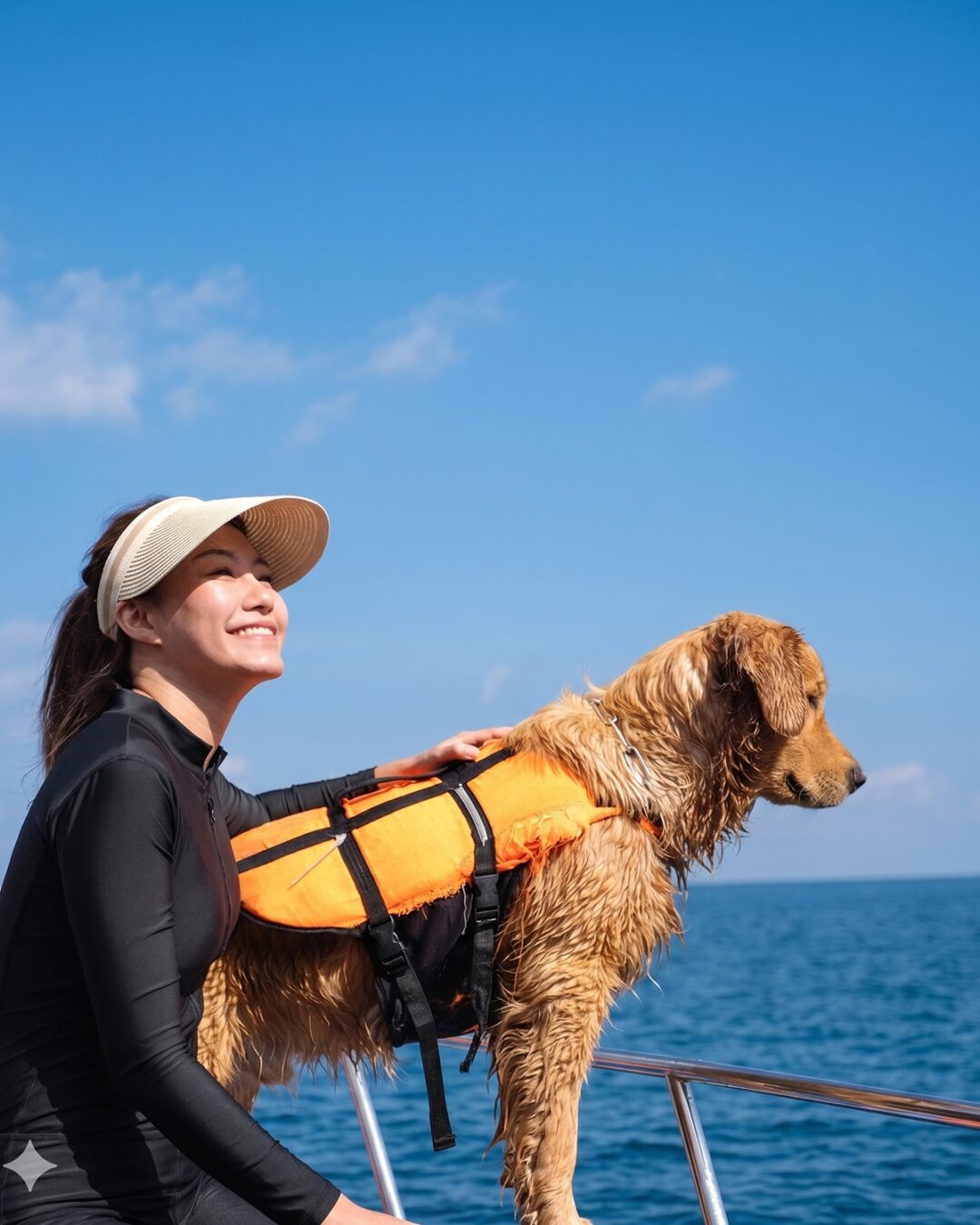
More than any single piece of equipment, what determines a dog's ease at sea is the demeanor of the people around it. Dogs read tension immediately — a hurried boarding, a raised voice, a tightened leash — and they read calm just as quickly. An owner who moves through the maneuver with deliberate, unhurried gestures gives the animal the steadier reference it needs.
The first sea outings are not a test of the dog. They are a test of how confidently the people on board carry themselves. The dog will follow the lead set; the lead set sets the day.
The life jacket is not a courtesy
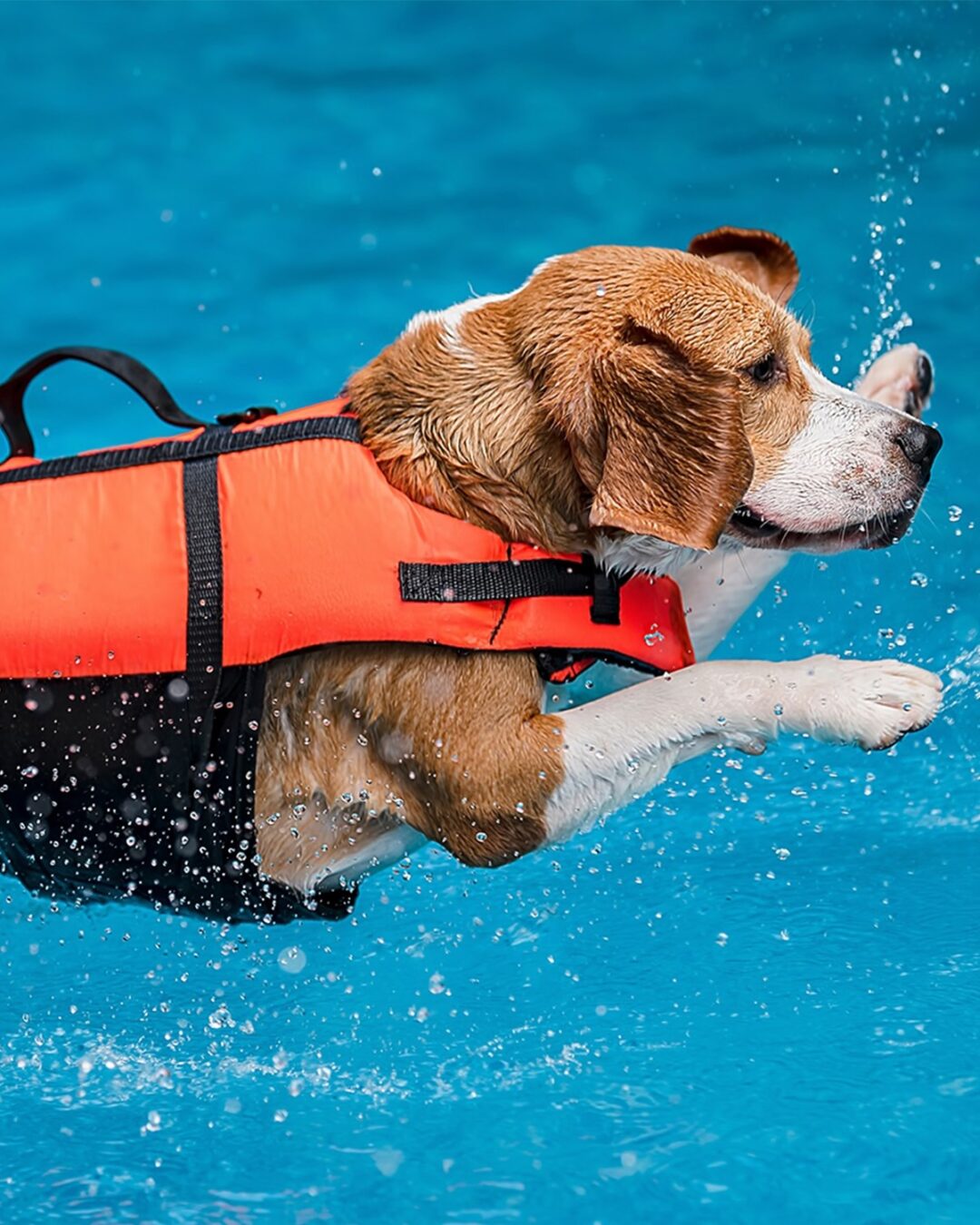
There is a tendency, on calm days, to leave the dog's jacket below — the dog seems comfortable, the water seems benign, the gear seems excessive. The jacket exists for the unexpected, not the routine: an unexpected wake from a passing motor yacht, a sudden roll, a slip on a wet teak deck. The same calm sea that makes a jacket seem unnecessary is the one that gives no warning before it isn't.
A properly fitted jacket should be snug enough to remain in place if the dog rolls in the water, loose enough to allow free leg movement, and equipped with handles strong enough to lift the animal cleanly out of the water from a swim platform or from a tender alongside.
What a captain watches for
Salt water · not a drink
A dog should never drink seawater. Even moderate quantities cause severe dehydration, vomiting, and in concentrated doses, salt poisoning that requires veterinary care.
A bowl of fresh, cool water should be available at all times on board, refilled often. Before any swim, offer the dog a long drink ashore or on deck. Carry a small bottle of fresh water on the tender for top‑ups during the swim.
Sun and heat · relentless at sea
The atmosphere offshore is warm, dry and reflective; both heat and UV reach the dog from the sky and from the surface of the water at once. Provide a permanent shaded area on deck — under a hardtop, a bimini, or a purpose‑rigged awning.
When a dog feels overheated, it will instinctively seek shade. The owner's job is to make sure that shade exists before the dog has to look for it.
Paw pads · the silent burn
Dogs absorb heat through the pads of their paws. Flat surfaces of yachts — teak, fiberglass, treated decking — can become uncomfortably hot under direct sun, especially around midday.
A practical test: if the surface is too hot for the back of the owner's hand for five seconds, it is too hot for the dog. Booties, paw wax, or simply moving the dog to shaded teak resolves the problem before it becomes an injury.
Hydration · the running thread
Salt air and the activity of a long day at sea dehydrate dogs faster than they dehydrate their owners. Encourage frequent drinking. Cool, never iced, fresh water is the standard. Several smaller drinks throughout the day are better than one long one at the end.
A dog that suddenly stops drinking, or that ignores a full bowl, is asking for closer attention.
A dog at sea needs a place to disappear
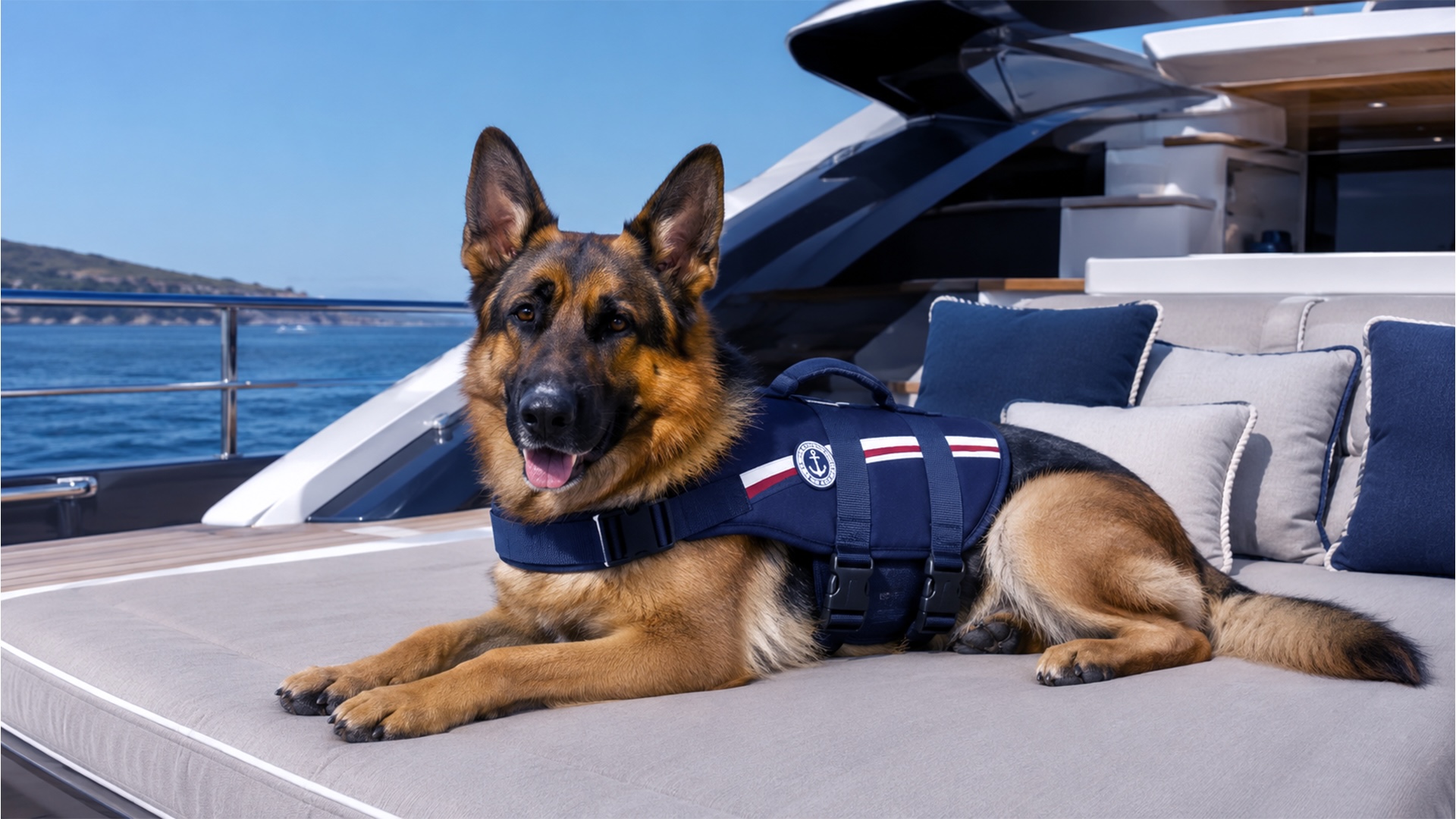
Even an animal that loves the boat needs a corner that is unambiguously its own. A bed, a folded blanket, a familiar towel — placed in a spot that is shaded, ventilated, and away from the busiest paths of crew movement. Dogs settle when they have somewhere predictable to settle.
For longer cruises, owners often dedicate a specific outdoor area on deck — sometimes lined with a piece of synthetic turf — as the place where the dog relieves itself. Walked ashore before boarding, trained early to associate the spot with the function, and equipped with bags, paper towels and an odor neutralizer in the kit, the arrangement keeps the rest of the boat clean for everyone aboard.
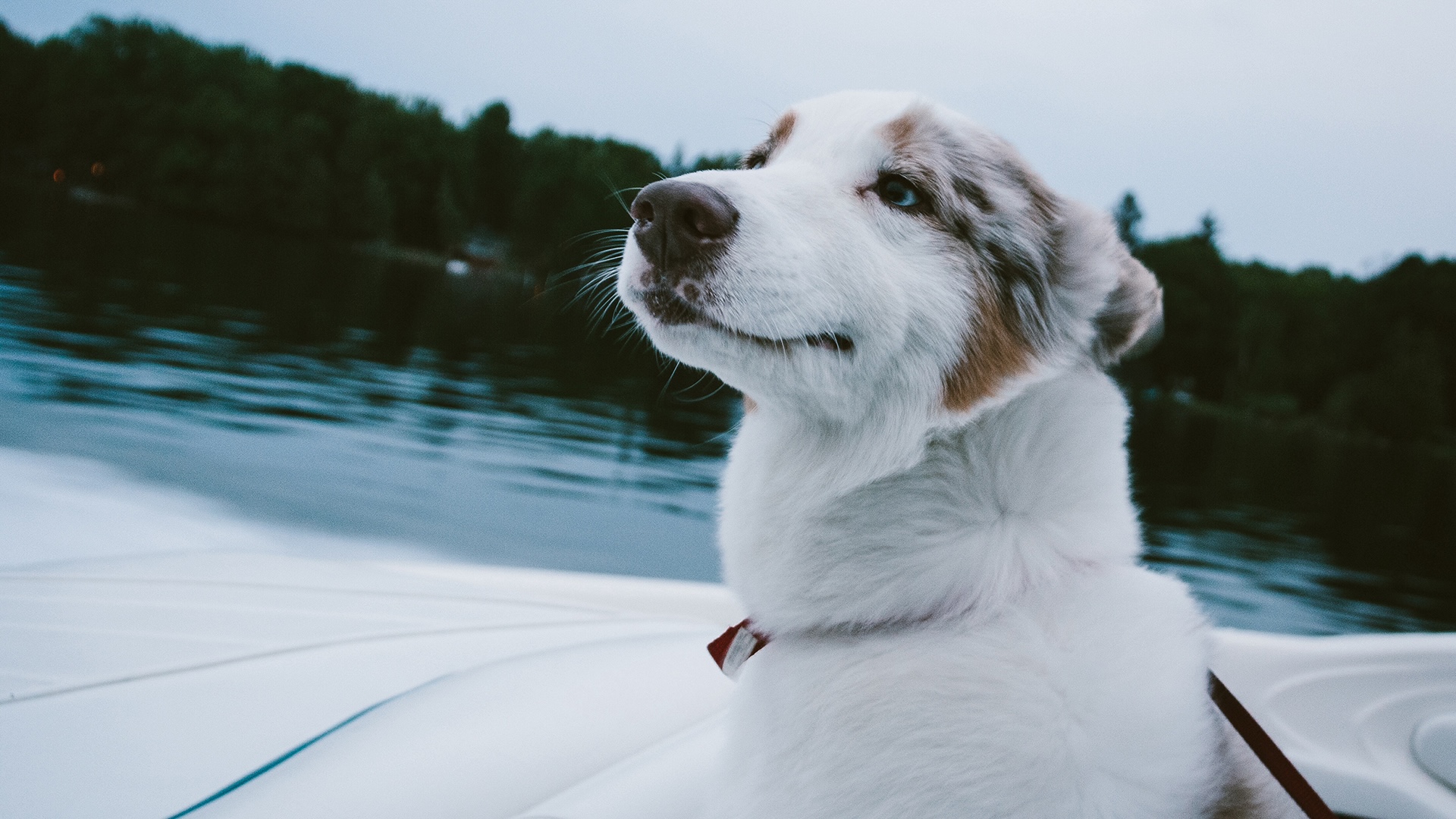
When the dog wants to swim
If there is a single image that summarizes why so many people want their dog on a boat, it is the one of an animal swimming in clear water at the end of a long, slow afternoon. The pleasure is real, on both sides of the leash. The discipline that surrounds it is what makes it sustainable.
A few principles, drawn from owners who have done it through many seasons. Always swim with the jacket on — even on still days, even close to the boat. Watch for fatigue: a strong swimmer can tire surprisingly fast in salt water, particularly with current or chop. Keep entries and exits planned — a dog will jump in eagerly and worry about getting out later, and it is the owner who has to think about “later” in advance.
Many modern yachts can be retrofitted with a dedicated dog ladder off the swim platform — a set of broad steps, lower in pitch than a human boarding ladder, that allows the animal to walk back aboard rather than be lifted. Where the boat does not yet have one, a folding gangway with non‑slip steps performs the same function. The investment is not large; the difference, particularly with a heavy or aging dog, is significant.
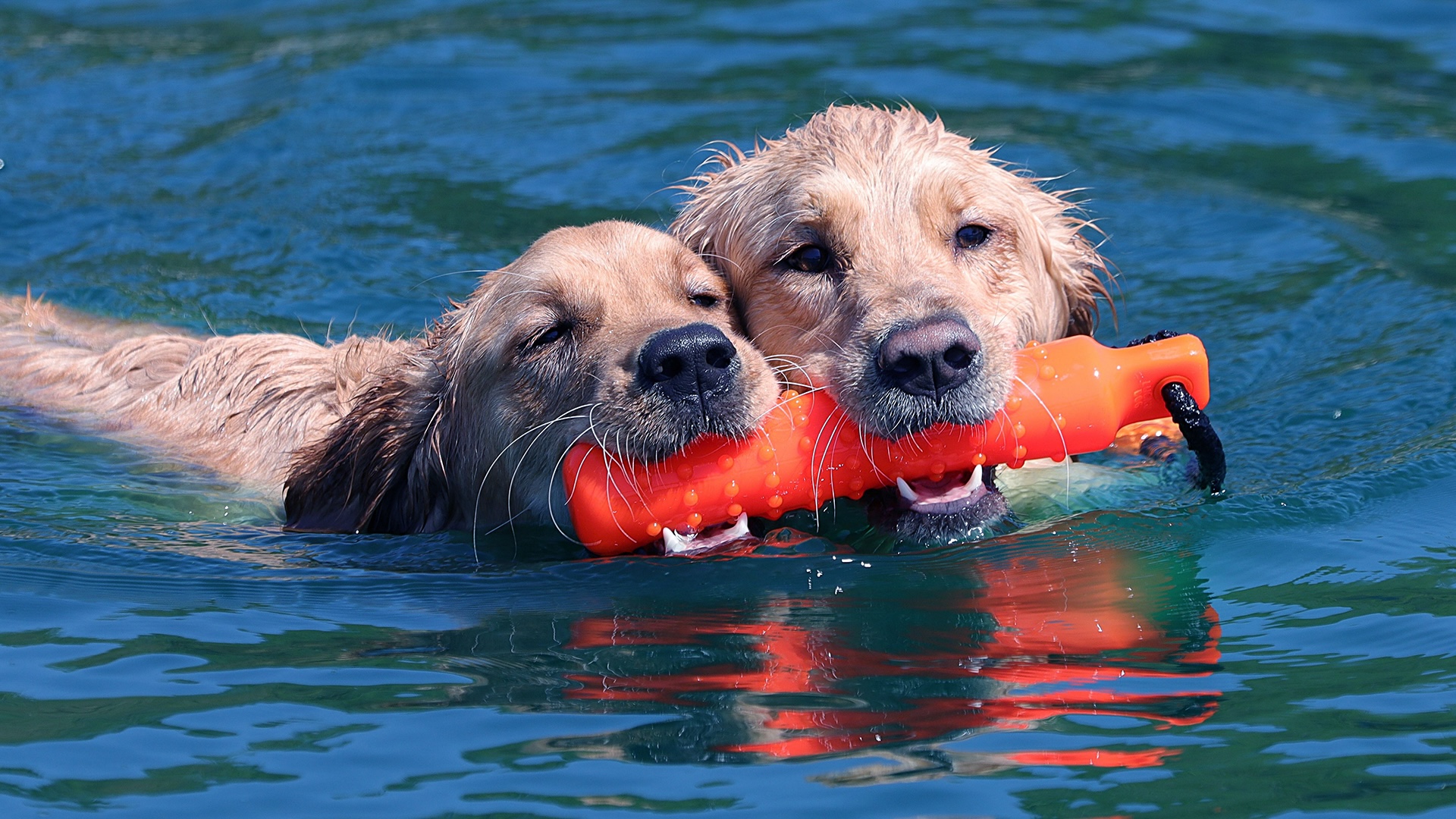
Sea fatigue does not announce itself
Two retrievers swimming side by side, a toy between them, looks like the most natural moment in the world — and is. It is also the moment to remember that a dog at play is also a dog spending energy in salt water against current and chop, and that fatigue at sea arrives more quickly than fatigue in a pool.
Limit swims to short, repeated sessions rather than one long one. Watch for the dog that begins to swim lower in the water, or that turns toward the boat without being called. Both are the early signs that say: enough for now.
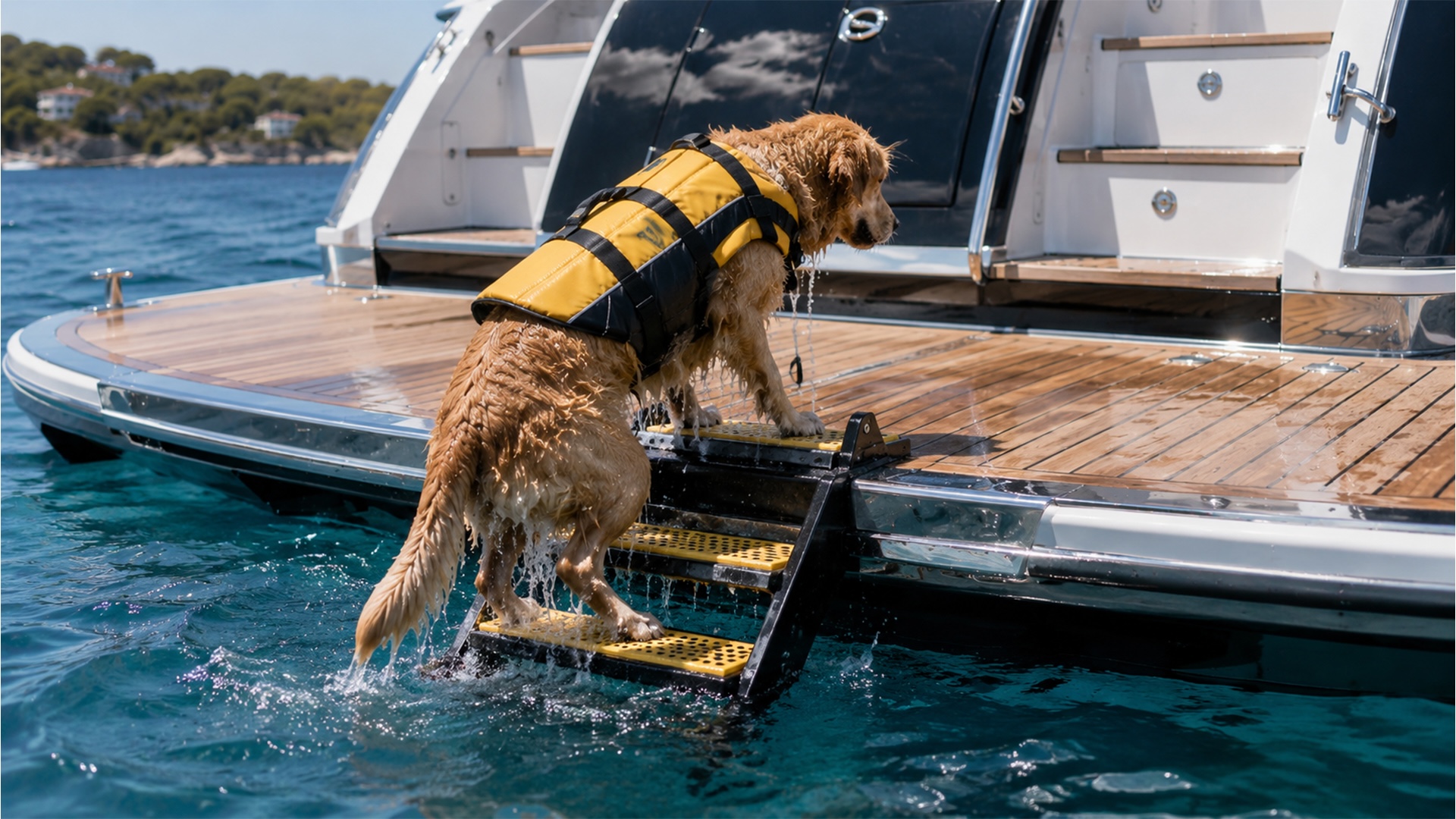
Back on deck, before the salt sets
The moment a dog comes back aboard from a swim is the most underrated point of the day for its skin and coat. Salt left to dry on fur causes itch, dryness and over time, irritation; sand left between toes works its way into pads. Rinse the dog with fresh water as soon as it is on deck, paying particular attention to belly, paws, tail and ears.
For longer cruises, a deck shower with a handheld spray is the best of small luxuries — for the boat as much as for the dog. Follow the rinse with a session of mild dog shampoo every few days, never daily. A short summer haircut, taken before the season begins, reduces the amount of salt and sand the dog brings into the saloon by a significant margin.
No vets at sea
Records & identification
Vaccination records, microchip number, photograph, owner contact details, and the local veterinarian's information at the destination port. A laminated card with everything in one place is the simplest version of this.
Cuts · scrapes · pads
Saline solution, sterile gauze, self-adhesive bandages that do not pull fur, blunt-tipped scissors, and a tube of pet-safe antiseptic. Salt water and rough surfaces produce small injuries; treated early, none of them ruin a cruise.
Water · cooling cloths
A dedicated reservoir of fresh water for the dog, a collapsible bowl, electrolyte powder formulated for dogs, and damp cooling towels for emergency use. Not iced water, not human electrolyte drinks.
Routine · and grooming
Existing prescription medications in their original containers, a nail clipper, mild dog shampoo, ear-cleaning solution, waste bags, paper towels, and an odor neutralizer for the dedicated relief area on deck.
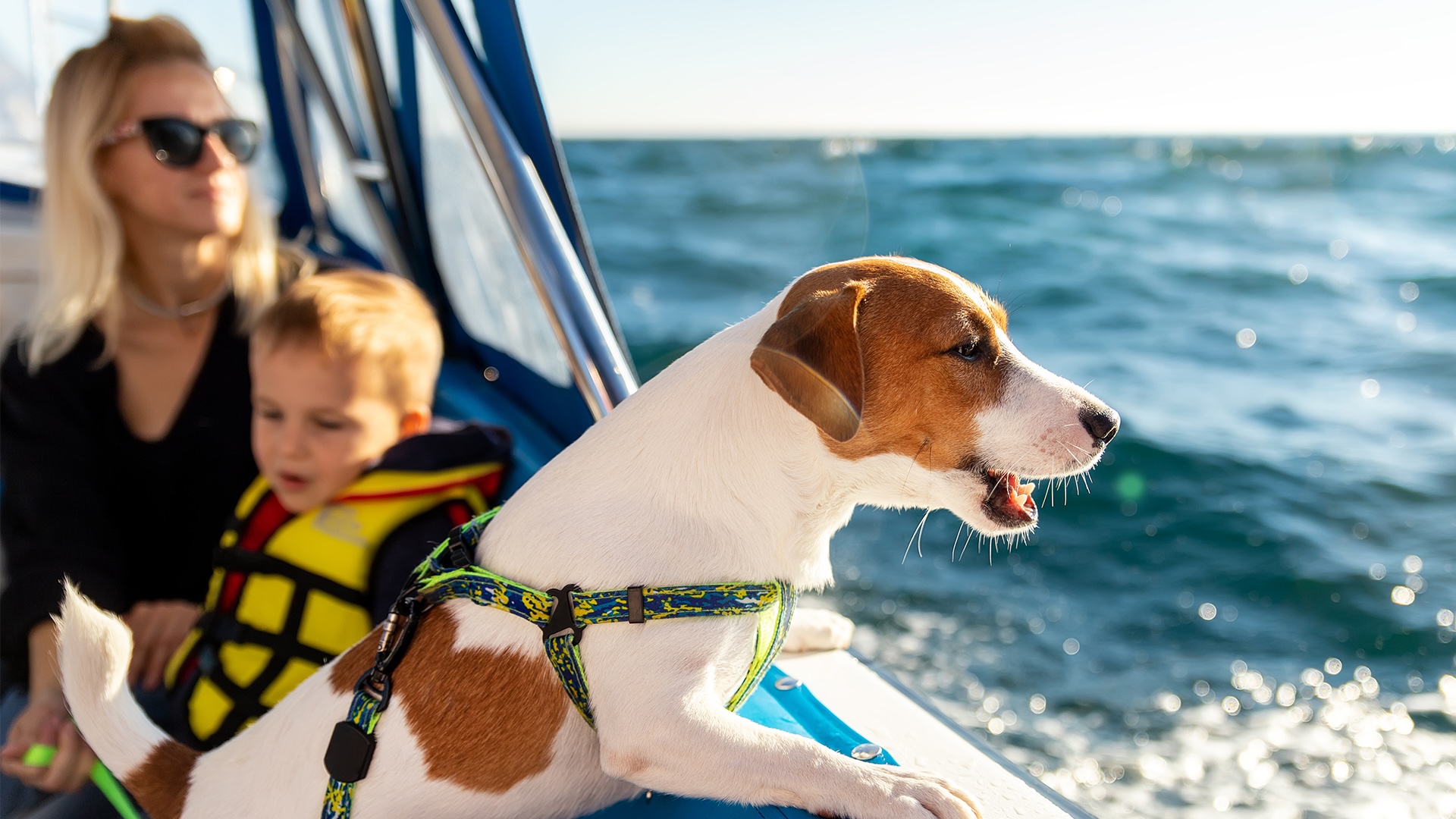
A dog brought aboard with care becomes part of the boat. The boat, in return, becomes part of the dog. The rest is just the work of giving them both the days they came for.