

Flying Over
Water
A sport built from wind, a composite kite, a control bar and a small board — and, on a good day, the strangest sensation in watersports: the feeling that the ocean has briefly released its hold. From a French patent in 1984 to its Olympic debut in Paris.
There is a moment, the first time a kite lifts you clear of a wave crest, when the geometry of the sport becomes suddenly obvious. The board is no longer pressing against the water. The harness is no longer pulling against your waist. The line between swimming and flying thins to nothing, and for two or three seconds you are a passenger of the wind.
Kitesurfing — or kiteboarding, the two names are interchangeable in the English-speaking world — is a young discipline with old ingredients. A propulsive kite. A harness worn close to the body. A control bar that meters power with the pressure of two fingers. A board, either bidirectional (twintip), directional (surfboard-shaped), race, or a carbon hydrofoil that lifts the rider a metre clear of the surface. Individually, none of these pieces are novel. Assembled as a system, they produce something that no other watersport delivers: a vessel that is powered by weather rather than by gasoline, muscle or paddle, and that rewards restraint more than force.
The numbers suggest how far the proposition has traveled. The International Kiteboarding Organization, founded in 2001 in the Dominican Republic, has certified more than 600,000 riders and now affiliates over 350 schools in 60-plus countries. In the summer of 2024, Formula Kite made its Olympic debut in Marseille — the first time a sailing-class kite event appeared on the Games program. And at the extreme end of the sport, British rider Jake Scrace was towed 1,587 feet above the Needles at the Isle of Wight in 2024, a Guinness-recognized altitude record that reframes what the word "kitesurfing" can mean.
What follows is not a how-to. It is a map — of the sport's origins, of the equipment that defines it, of the coast it has colonized across the United States, and of the learning curve that separates the first dragged body from the first clean jump. The wind is the author. The rider is, at best, the editor.
A patent, a bay, and the brothers who waited ten years
The modern kite has two credited inventors, both French, and one obstinate bay on the Atlantic coast where the experiments that mattered were actually carried out. Bruno and Dominique Legaignoux, competitive dinghy sailors turned surfers, began testing traction kites in the late 1970s and filed the patent for the first inflatable-leading-edge kite in November 1984. The design — an arc-shaped wing with air bladders that keep its form on the water and allow it to be relaunched after a crash — is the direct ancestor of virtually every kite sold today.
What the brothers lacked was not design. It was an industry willing to listen. For nearly a decade after the Brest International Speed Week demonstration in 1985, no windsurfing manufacturer would take on the license. The Legaignoux continued alone — refining materials, rebuilding prototypes — while in parallel an American father-and-son team, Bill and Cory Roeseler of Oregon, developed and patented the KiteSki system: a two-line delta kite pulling a pair of water skis, controlled through a bar-mounted winch. By 1994, the KiteSki was commercially available. By 1997, the Legaignoux had launched Wipika, the first kite brand built around their inflatable design. The sport finally had hardware to match the idea.
The first organized competition took place on Maui in September 1998, won by Flash Austin. A year later, Robby Naish and Neil Pryde — two of the biggest names in windsurfing — entered the market with dedicated kite lines, and the sport accelerated. In 2001, two kiteboarding professionals, Frédéric Bené and Eric Beaudonnat, founded the International Kiteboarding Organization from Cabarete, in the Dominican Republic — the windy bay on the north coast that remains, a quarter-century later, one of the sport's spiritual capitals. The IKO's mandate was specific and useful: a progressive, brand-independent teaching system that would let a rider certified in Cabarete rent equipment in Tarifa, Hatteras or Boracay and be recognized on the spot.
Kites are a fantastic vehicle — probably impossible to beat on efficiency, packed size and cost.
Bruno Legaignoux · Co-inventor of the inflatable kiteThree ways to ride the same wind
The default mode, and the entry point for most riders. A twintip board, a moderate kite, flat or lightly chopped water, and the kind of run that produces the first clean carves and the first jumps. Freeride is how most sessions start and how most holidays end — the discipline that teaches the others.
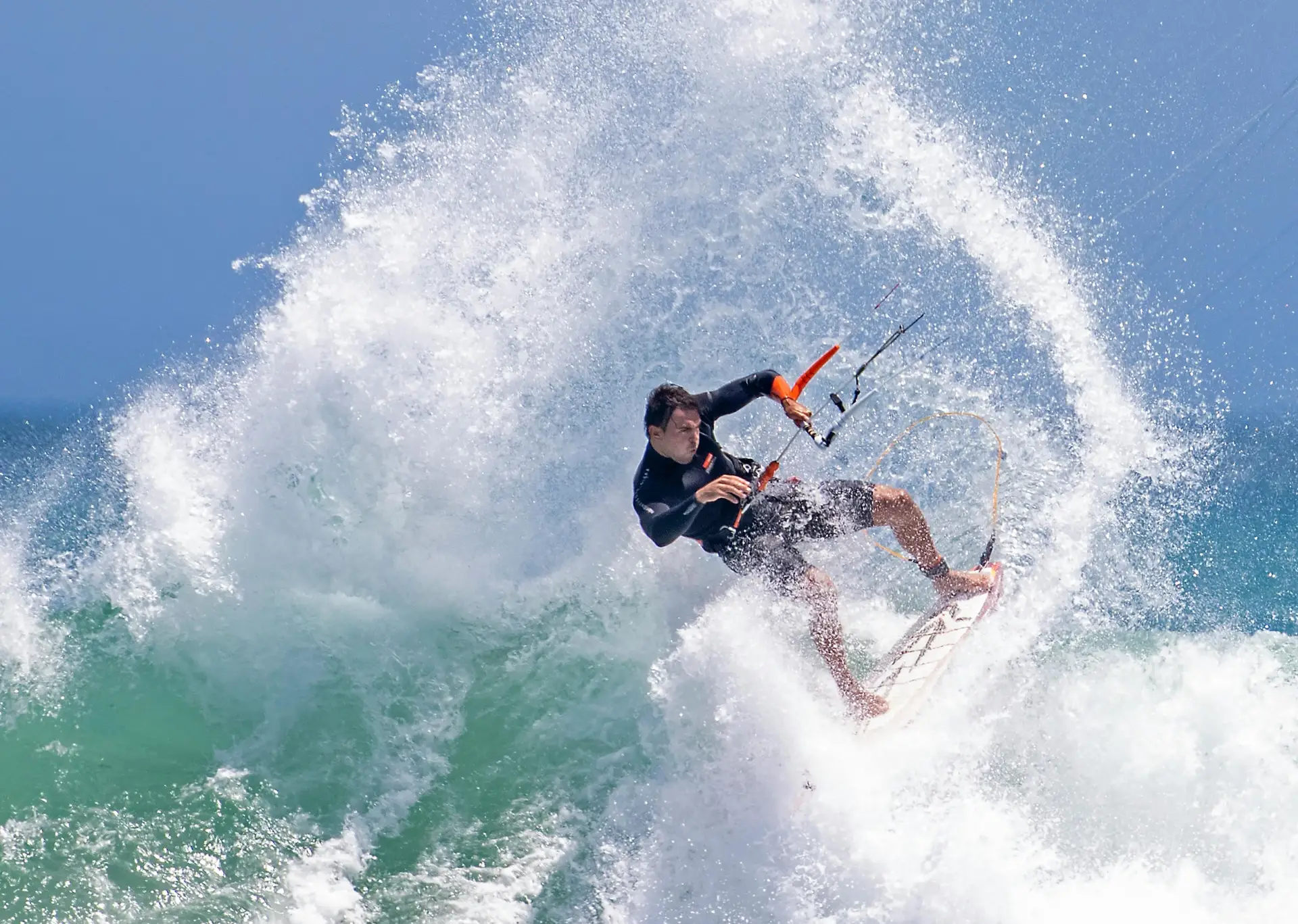
A directional board, an ocean swell, and a kite held just above the power zone so the wave can do the work. Wave kiting reads as a conversation between two forces — the kite supplying forward drive, the wave supplying shape. Hatteras in fall, the North Shore in winter: the sport at its most surf-adjacent.
A hydrofoil beneath the board lifts the rider a metre clear of the surface, and everything changes: silence where there was slap, range where there was chop, and light-wind sessions that were previously impossible. Foil is the discipline that carried kitesurfing into the Olympic program as Formula Kite.
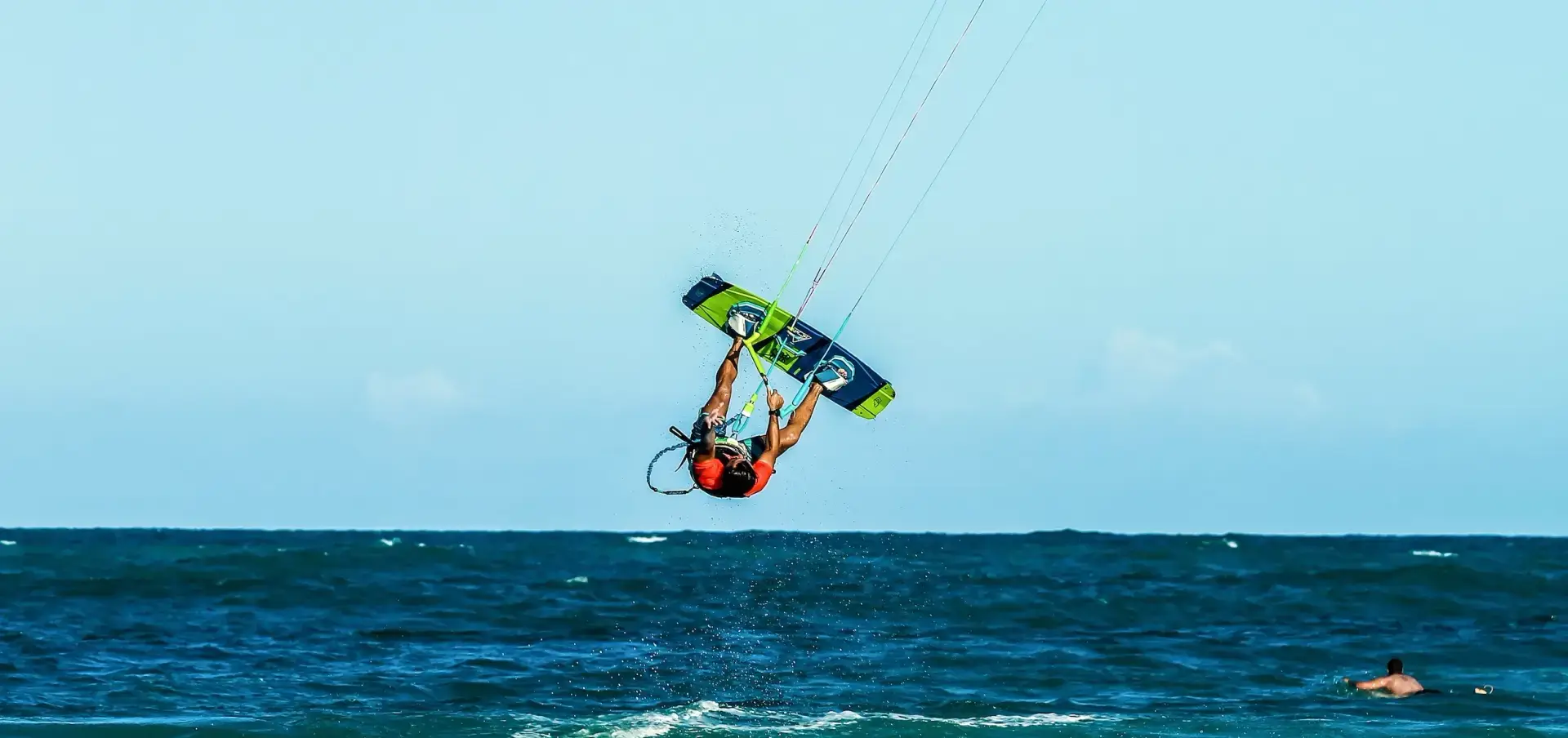
A kite, a bar, a harness, a board
The modern kit is spare. A kite — typically an inflatable leading-edge design descended directly from the 1984 Legaignoux patent, with ampliTex-style bladders that keep its shape on the water and allow water relaunch. A control bar, four or five lines, with a depower system that spills wind the instant the rider releases pressure. A harness, worn at the waist or seated lower, that transfers the kite's pull from the arms to the core. And a board — twintip for most, a directional shape for waves, a carbon foil for the Olympic discipline.
The engineering secret is the bar. Every modern kite can be de-powered by pushing the bar forward — up to 100% on the bow-kite design Bruno Legaignoux patented in 2005. It is what transformed the sport from the adrenaline curiosity of the late nineties, when the equipment was notoriously unforgiving, into something a sixteen-year-old can learn safely in a week.
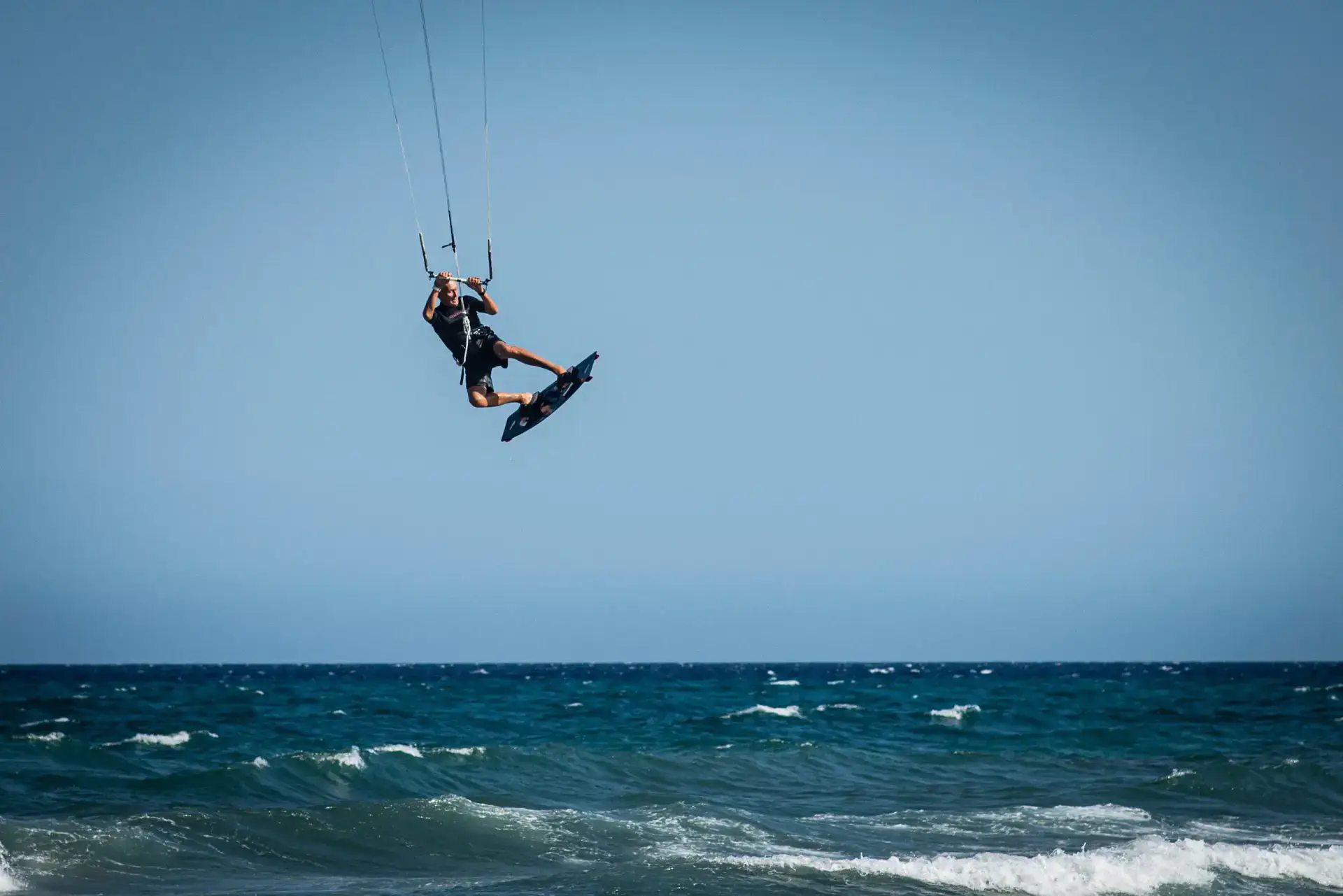
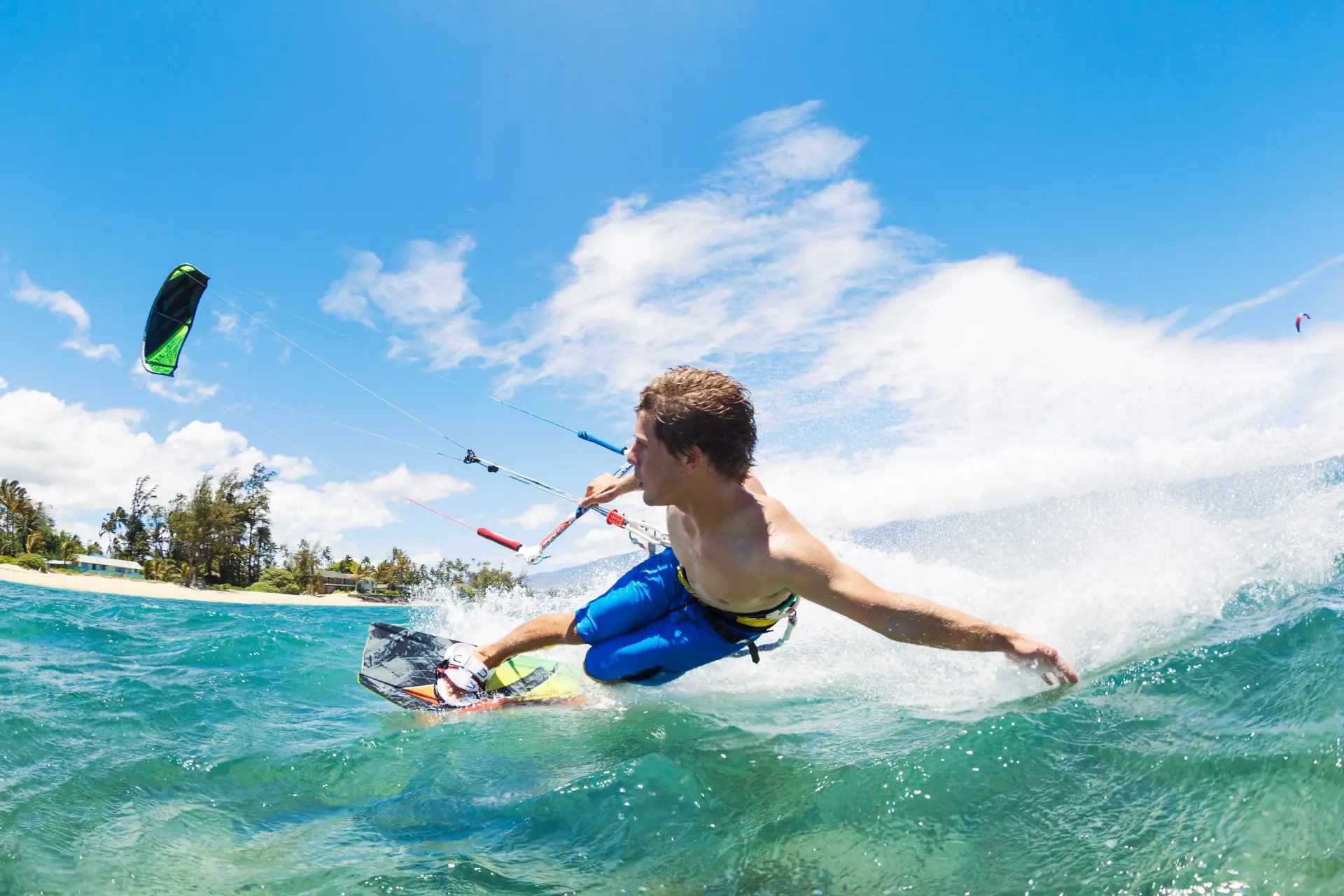
Shape, light, horizon
The learning curve, step by step
The sport divides into a small number of recognizable stages, and every certified school in the world teaches them in the same order. First comes the kite, on land, with a small trainer wing — the hours spent here pay out for the rest of a rider's life. Then the body drag: in the water, without the board, using the body itself as a keel while the rider learns how the kite behaves in the lift and power zones. Only after body-dragging upwind comfortably does the board appear.
The first water start is the session every rider remembers — a short, slightly ridiculous ride across the wind, usually ending in a spectacular fall. From there: riding upwind in both directions, controlled stopping, the toeside turn, the first small jump. IKO's progressive path runs from Level 1 (Discovery) to Level 4 (Advanced), and most riders reach independent riding in five to ten days of instruction. What takes longer — years, for many — is the point where the sport stops feeling athletic and starts feeling musical.
The sport should be voted on by its own community — kitesurf, kiteboard, the name matters less than the sensation.
Bruno Legaignoux · On naming the discipline
A country built for the kite
Few nations offer the kitesurfer a more complete map. Cape Hatteras, on the Outer Banks of North Carolina, is the sport's East Coast capital — a thin barrier island with the Atlantic on one side and the shallow Pamlico Sound on the other, which gives a rider a wave break and a flat-water lagoon within a short drive. Kite Point, Frisco, the REAL Slick: a geography that has produced some of the most documented footage in the sport and hosted the Triple-S Invitational, for years the defining Big Air contest on the continent.
West, the sport reads differently. Hood River, in the Columbia River Gorge, sits at the narrow funnel where cool Pacific air is drawn east toward the high desert — a natural wind tunnel that produces reliable thermal breezes from May to September. The town, not incidentally, is also a design and R&D hub for some of the sport's largest brands. Further south, Crissy Field in San Francisco offers a harder, more technical session: stronger winds, heavier currents, container-ship traffic in the bay, and a line of kites framed against the Golden Gate. It is a cold-water, experts-only stage for much of the year, and it photographs like nowhere else.
Florida and the Gulf write the sport's third chapter. Jupiter, north of Palm Beach, mixes flat and wave conditions under a consistent fall-through-spring breeze. Key West and the Keys offer shallow turquoise water and coral-reef geometry. Miami, Pompano, Cocoa Beach, St. Petersburg and Tigertail on Marco Island each have their own microclimates. On the Texas coast, South Padre Island — a barrier island with ocean, harbor and consistent 17-knot trades — runs year-round. And on the West Coast, Long Beach has been selected as the venue for the Formula Kite event at the Los Angeles 2028 Olympic Games, a decision that will bring unprecedented attention to a spot that has long been a working rider's break.
From Maui ’98 to Marseille ’24
The first kiteboarding event took place on Maui in September 1998, won by Flash Austin in front of a crowd of curious windsurfers. A decade later, the sport was rewriting the open-water speed record: on 3 October 2008 at the Lüderitz Speed Challenge in Namibia, Frenchman Sébastien Cattelan became the first sailor of any kind to cross the 50-knot barrier on a kite. The record has moved many times since, but the gesture — a kite faster than the boats that chased it — stuck.
In the summer of 2024, Formula Kite made its Olympic debut in Marseille. The discipline uses a hydrofoil board and a racing kite, the rider reaching speeds a conventional twintip would struggle to hold. In the same year, British rider Jake Scrace was towed by a helicopter to 1,587 feet (483.7 metres) above the Needles on the Isle of Wight, releasing his chute for a kite descent that Guinness certified as a world altitude record. The sport has its jockeys and its pilots, and both belong to the same discipline.
The sport, in numbers
A visual tour through the sport
 01 · Session
Rider on the waves
01 · Session
Rider on the waves
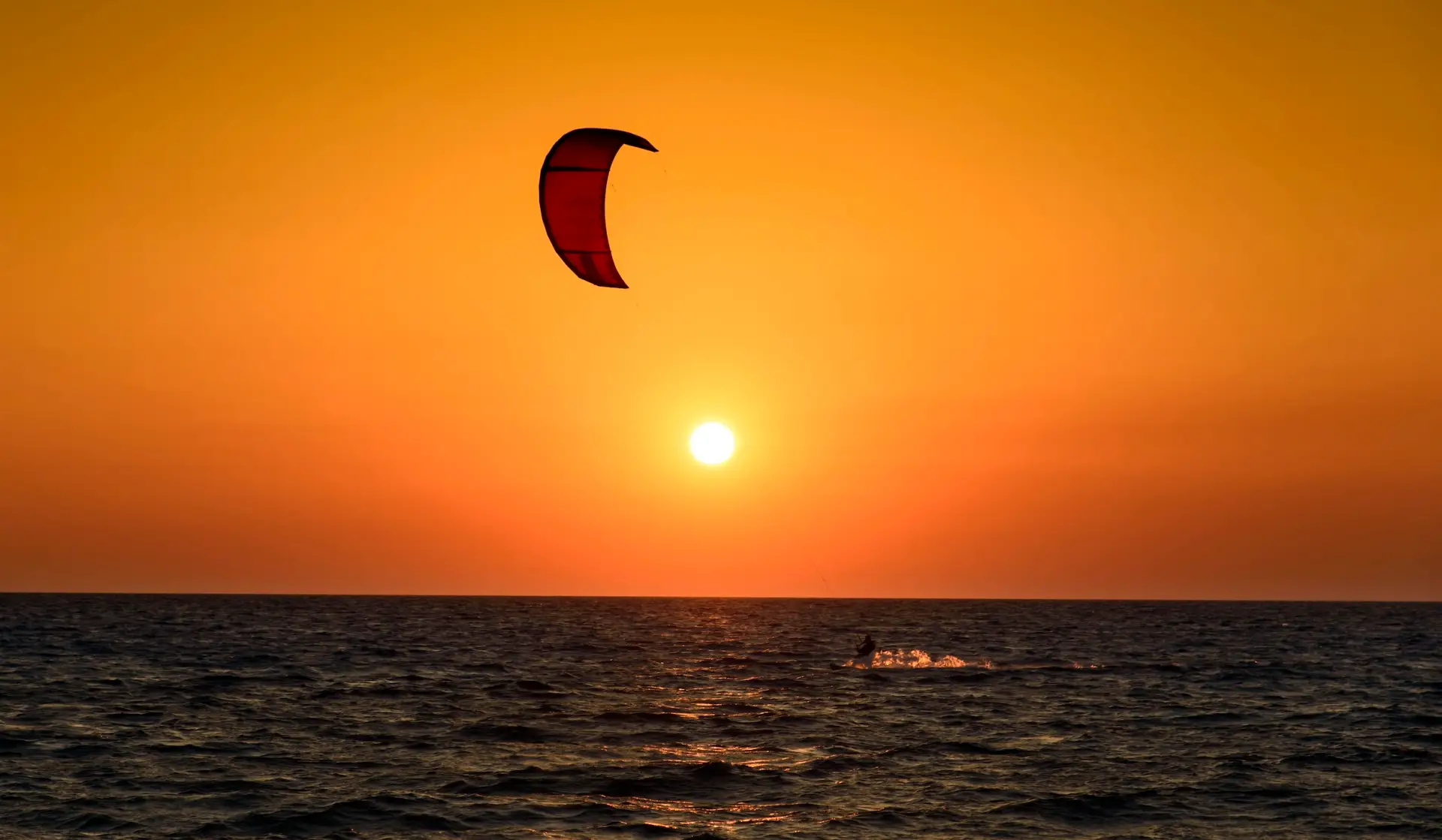
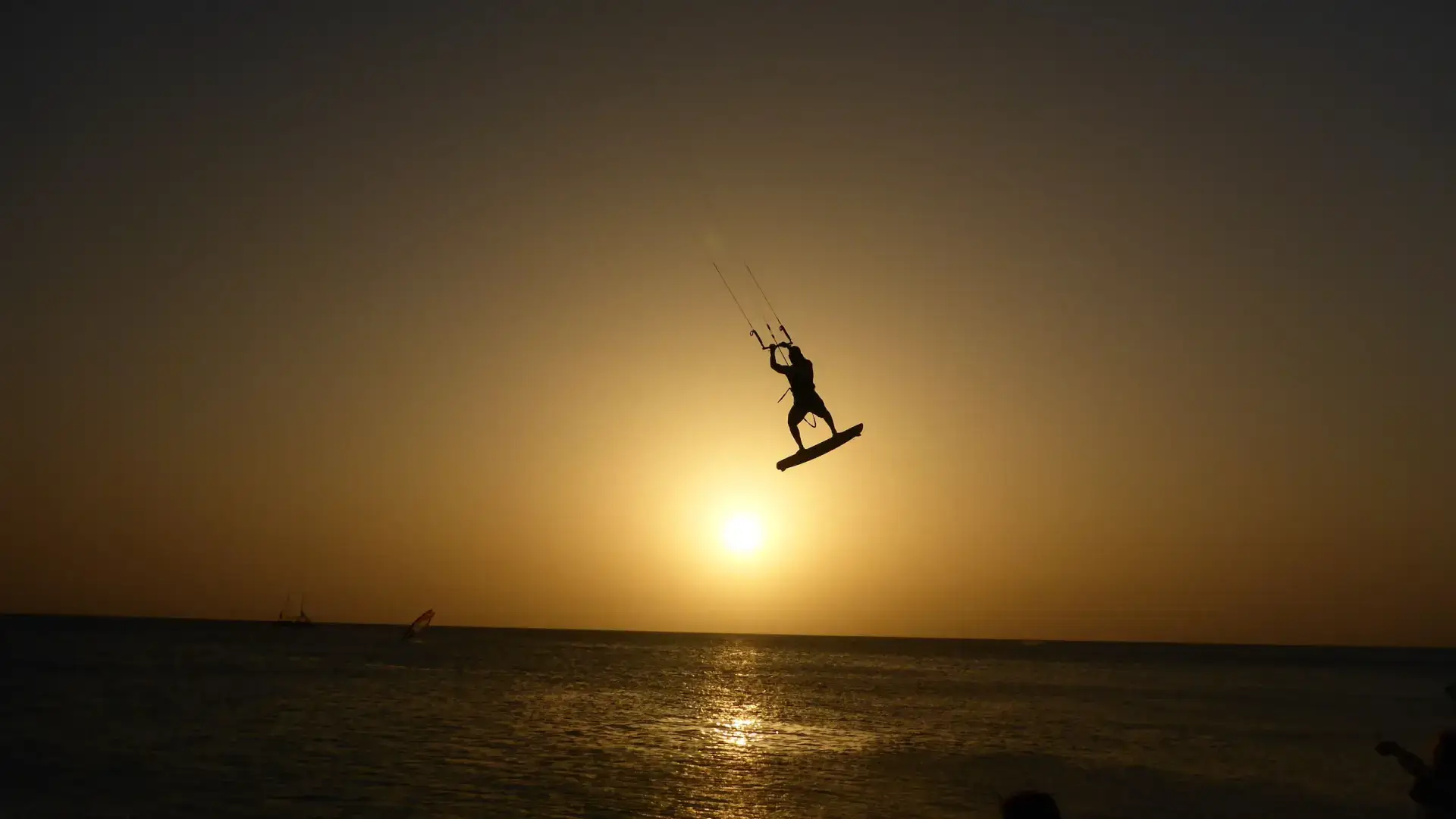 02 · Light
Silhouette
02 · Light
Silhouette
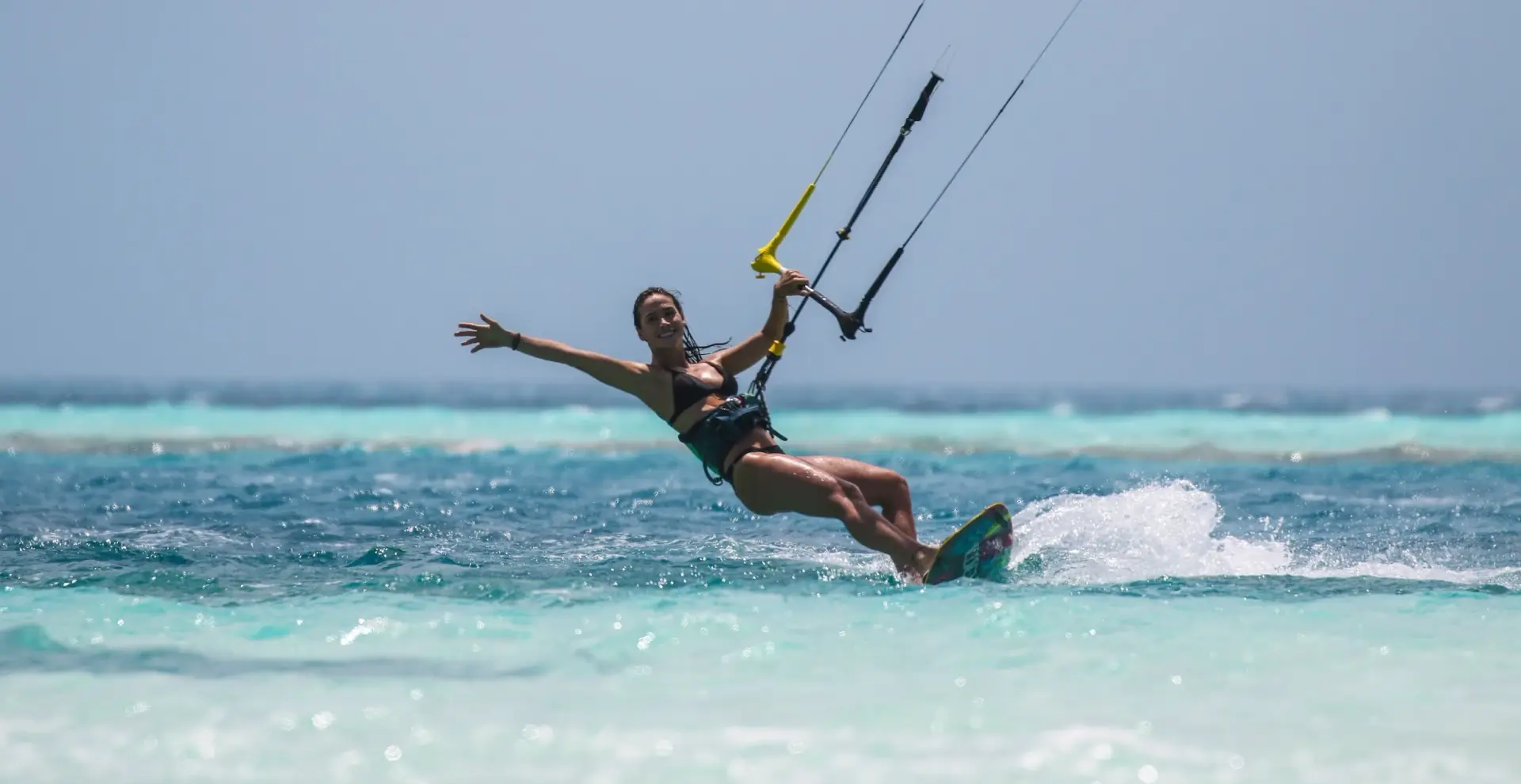 03 · Reach
Broad reach
03 · Reach
Broad reach
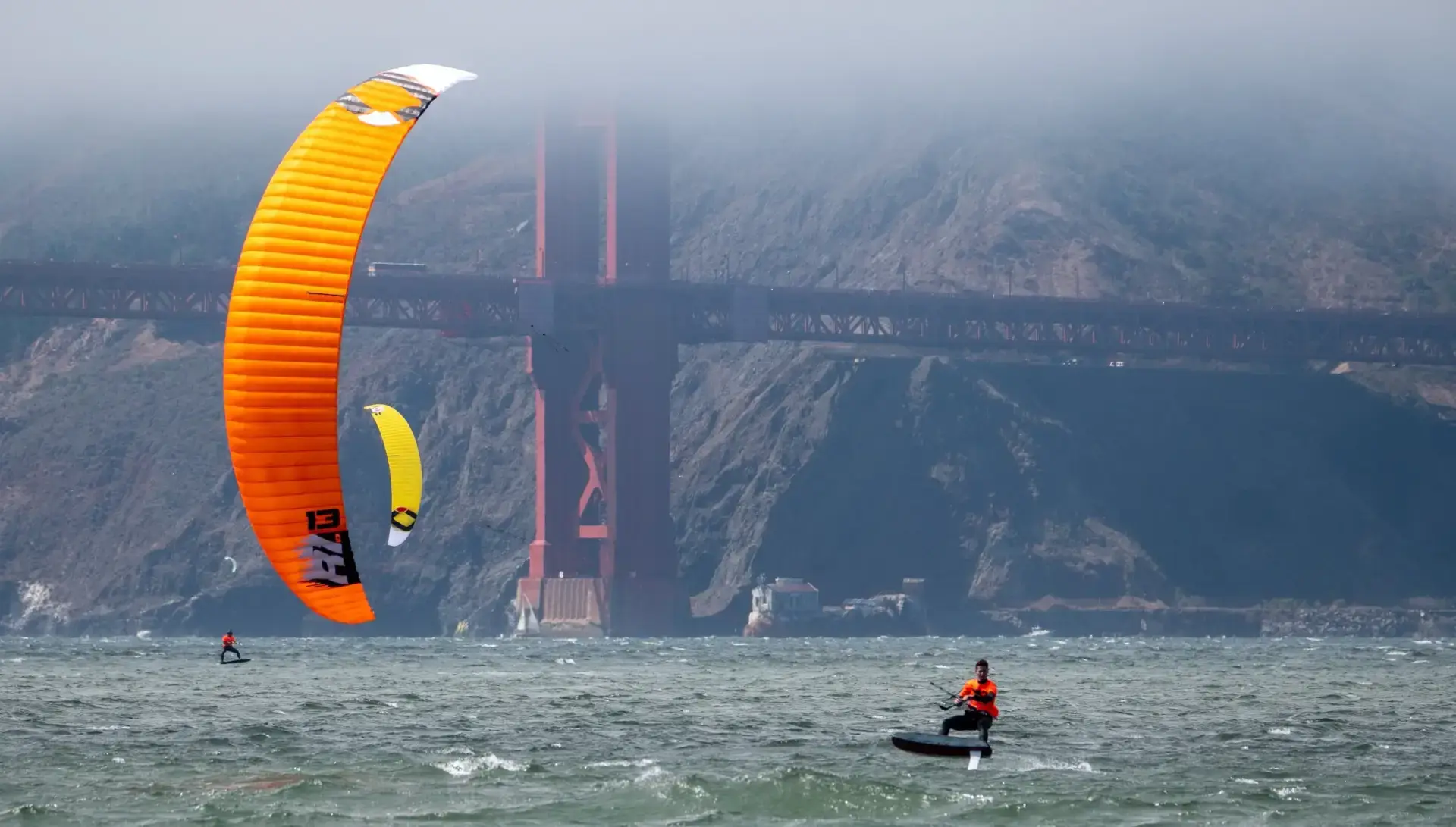 04 · San Francisco
Golden Gate
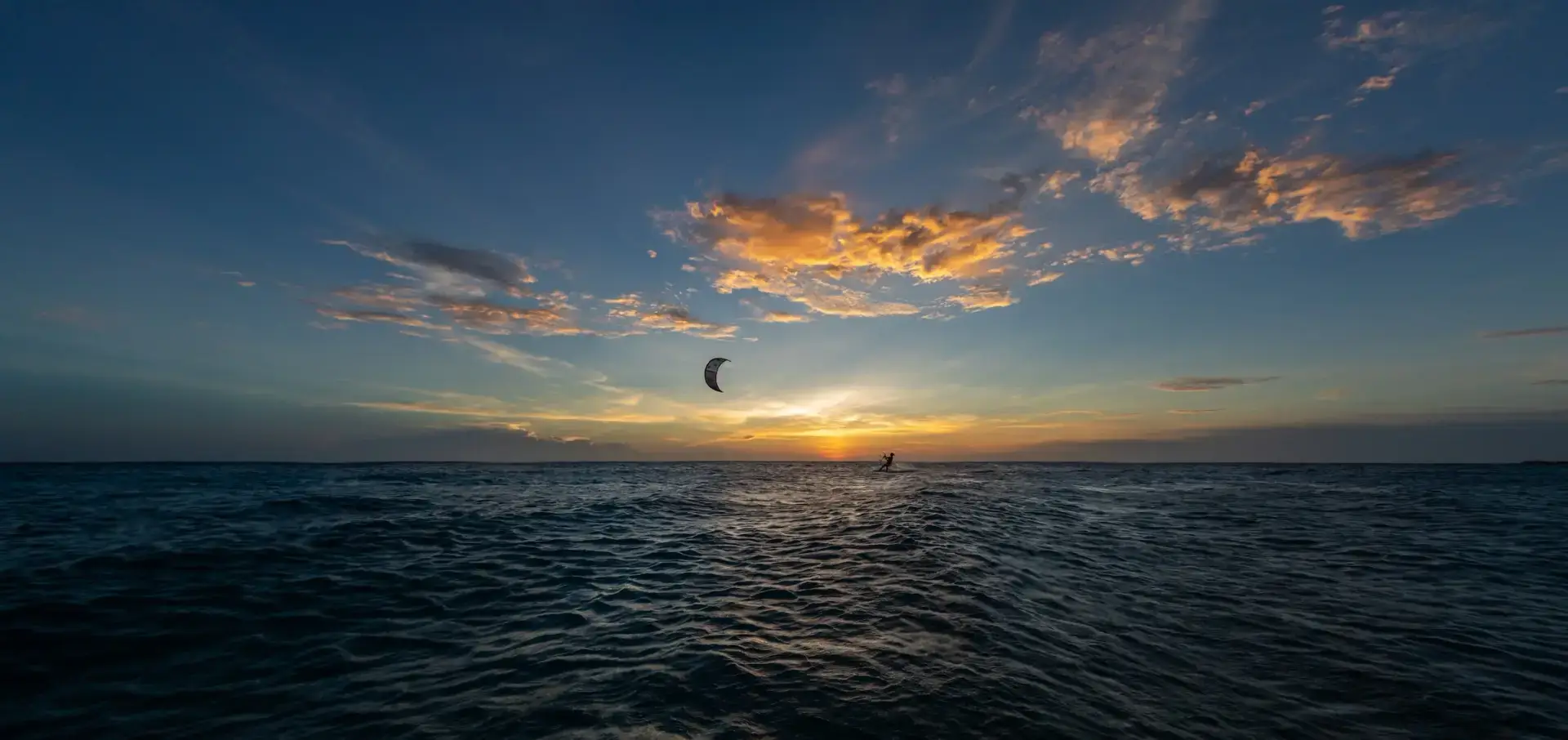
05 · Dusk
Sunset session
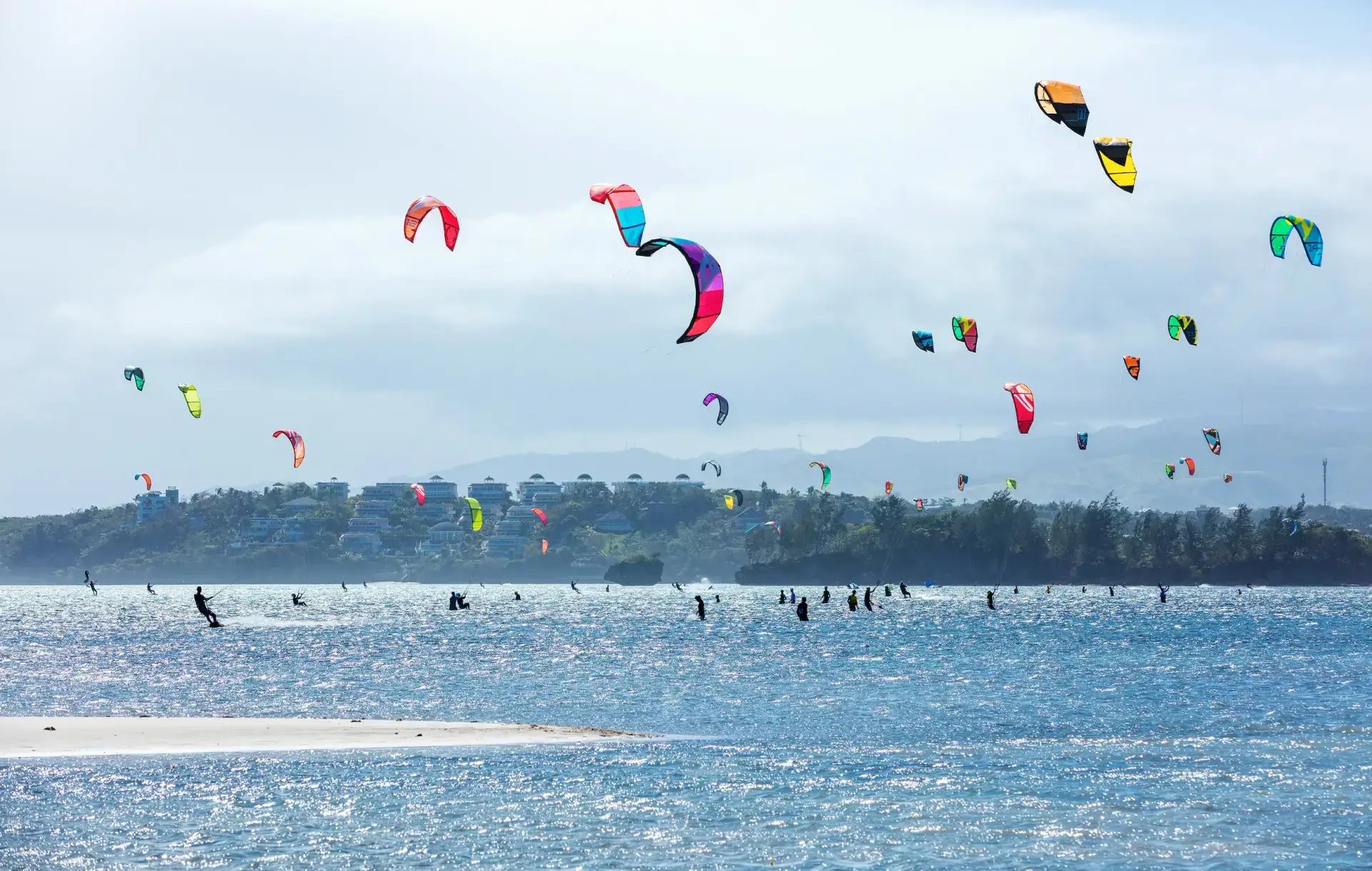
06 · Flat water
Multiple riders
07 · Big Air
Altitude hold
08 · Airborne
Kite loaded
09 · Sunset
Wave session
10 · Wave
Carve
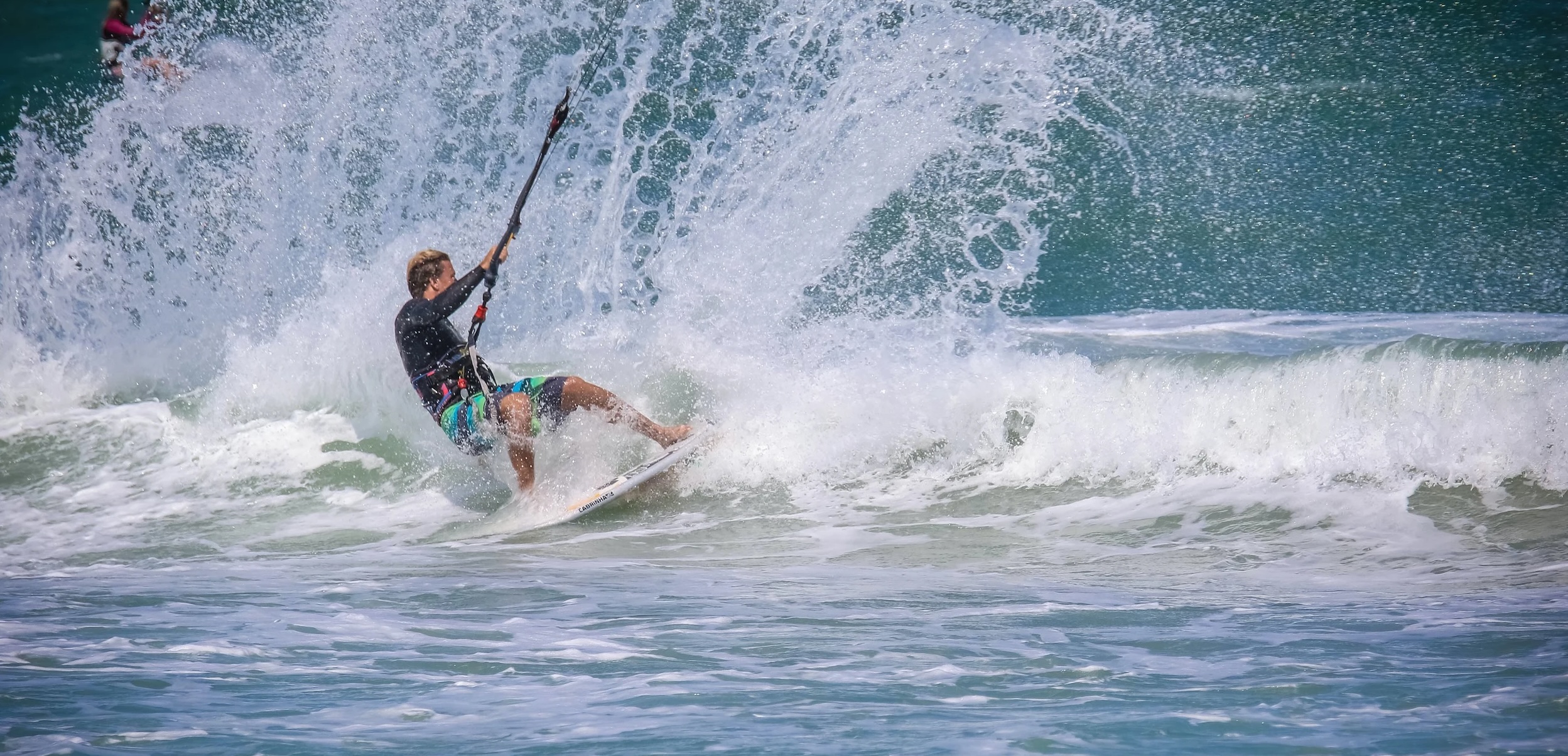
11 · Shorebreak
Spray
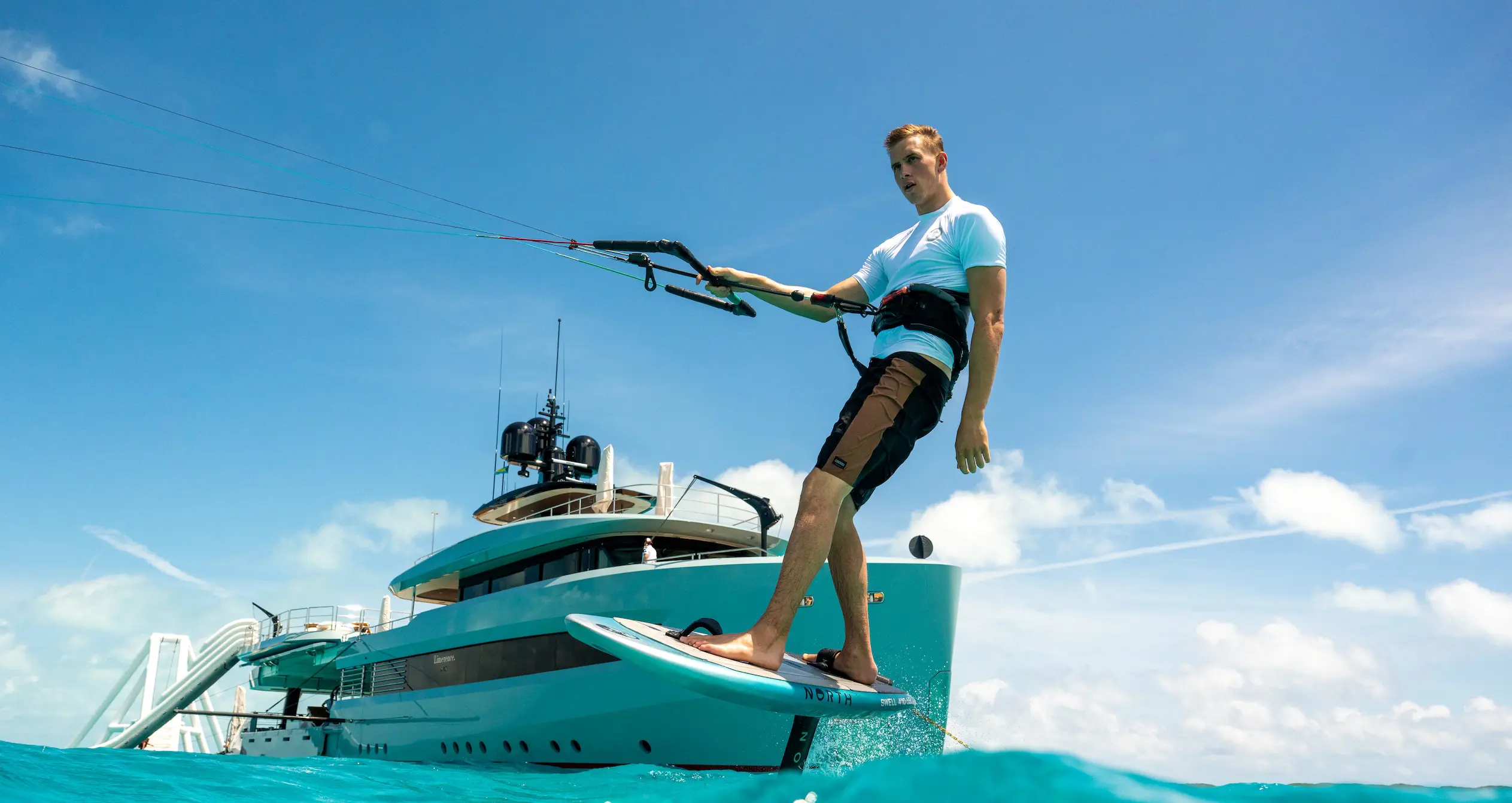
12 · Crossing
Kite and yacht
04 · San Francisco
Golden Gate
05 · Dusk
Sunset session
06 · Flat water
Multiple riders
07 · Big Air
Altitude hold
08 · Airborne
Kite loaded
09 · Sunset
Wave session
10 · Wave
Carve
11 · Shorebreak
Spray
12 · Crossing
Kite and yacht
A kite, a bar, a harness, a board — and a coast generous enough to carry all of it. Kitesurfing is an old idea assembled from young parts, and the United States is the long, windy canvas on which its next chapter is being drawn.