

From the Engine Room
to a Yacht in Gold
A deckhand from Perth who became an industrialist, then turned the proceeds into a 41-metre Palmer Johnson finished in 24-karat gold leaf. Aaron Fidler's story is the rarer one in superyachting: ownership built from below.
There are men who learn to read the wind, and men who eventually decide to redraw it. Aaron Fidler began by scrubbing other people's decks. He ended up owning one finished in twenty-four-karat gold.
Between those two points sits a life of unusually deliberate trajectory. A boy from Perth — the most isolated capital city on the planet — who studied electronics in the mid-nineties, watched his coursework go obsolete before he could apply it, and chose the world over the mining industry that pays Western Australia's bills. A backpacker through the Amazon and the Atacama. A deckhand on Fort Lauderdale's docks. Engineer. Founder. And, eventually, the owner of AK Royalty, a 41.4-metre Palmer Johnson reborn in Dubai under a coat of real gold powder.
The arc is what makes the yacht legible. Without it, the gold reads as ostentation. With it, the gold reads as argument: a deckhand's signature, written in the most expensive ink on Earth, on the kind of vessel he once polished for someone else.
This is not a story about wealth. It is a story about route. About a generation of crew who looked across the foredeck at the owner's chair and decided that the chair, eventually, was for them.
A childhood drawn at the edge of the map
Perth is closer to Jakarta than to Sydney. Growing up there in the eighties meant living far from every reference point that would later matter — far from Silicon Valley, far from the Mediterranean superyacht circuit, far from the kind of capital that makes men into owners. For most who grew up on that coast, distance is a sentence. For Fidler, it became fuel.
In the mid-nineties he studied electronics and computer engineering at a local technology center. The discipline taught him something more durable than any specification sheet: by the time he graduated, much of what he had learned was already obsolete. The conclusion was not nostalgic. It was operational. Adaptability, he understood early, would matter more than credentials.
When the choice came — feed the mining industry that runs Western Australia's economy, or leave — he left. With a backpack and no defined plan, he traveled through the Amazon, the Atacama, and the old harbors of Europe. He was not running from something. He was looking for a route. In South America, a circle of working sailors gave him the address that would change everything: Fort Lauderdale. Walk the docks.
Ten years on other people's decks, three times around the world
He registered with a yacht agency and took the lowest job on the ladder: deckhand on the Feadship Solemates, a 52-metre. The progression was unusually fast. An American owner building Sea Bowld — a 53-metre Oceanfast then under construction in Perth, Fidler's own home port — recruited him for the project. That yacht carried him across the Indian Ocean, the South Pacific, and the Panama Canal. Happy Days, a 50-metre Delta, came next; in two years aboard, he climbed from deckhand to chief engineer. By the end of the decade he had logged enough sea miles for three full circumnavigations.
The years on other men's yachts taught him the specification that would later define his own. He had seen, from inside the engine room, exactly how owners managed their vessels — and exactly how they did not. He had watched the hierarchies of crew, the small inefficiencies of provisioning, the gap between what the brochure promised and what the daily reality looked like at four in the morning with a generator down. None of it would be lost on him.
I wanted to be the one drinking cocktails on the aft deck.
Aaron Fidler · On the turning point at twenty-sixA failed phone cable, and the lesson that funded a yacht
The engineering instinct came first. As a chief engineer, Fidler had seen, repeatedly, how badly the shore-power systems in marinas were drawn. He pulled together his crew savings, designed a circuit, and flew to China to learn how to manufacture it at scale. He invested roughly a hundred thousand dollars producing a phone cable. By the time it reached the market, mobile telephony had made the product commercially irrelevant.
A total failure on paper. But Fidler had learned something far more valuable than any cable could ever sell: he now knew how to manufacture in China. That knowledge would compound for the next two decades.
In 2002, with his brother Matt — also a marine engineer with superyacht experience — he founded Furrion. The company began with electrical accessories for the marine industry. Then it pivoted, hard, into a market the Fidlers saw before most of their competitors: the U.S. recreational vehicle sector, where buyers were hungry for premium technology — vibration-resistant televisions, audio systems, smart appliances, rear-view cameras, and eventually, AI-powered yacht systems. The pivot defined the next twenty years.
Furrion was acquired by Lippert Components in August 2021, with forecasted sales of roughly $230 million for that year — the deal value was not disclosed publicly. For a decade leading up to the sale, Fidler had paid himself thirty-five thousand dollars a year, a modest figure for the founder of a company of that scale. He reinvested everything else. The motivation, he has said plainly, was always the same: he wanted his own boat.
Moves that defined the trajectory
Long before the rest of the U.S. RV industry treated Chinese manufacturing as a strategic asset, Fidler had already learned the supply chain from the inside. The failed phone cable paid the tuition. Furrion would compound the lesson for the next twenty years.
After four years of distribution partnership, Fidler chose independence at the height of U.S.–China tariff uncertainty. Many in the industry called it a misstep. Two years later, Lippert came back to the table — this time to acquire Furrion outright.
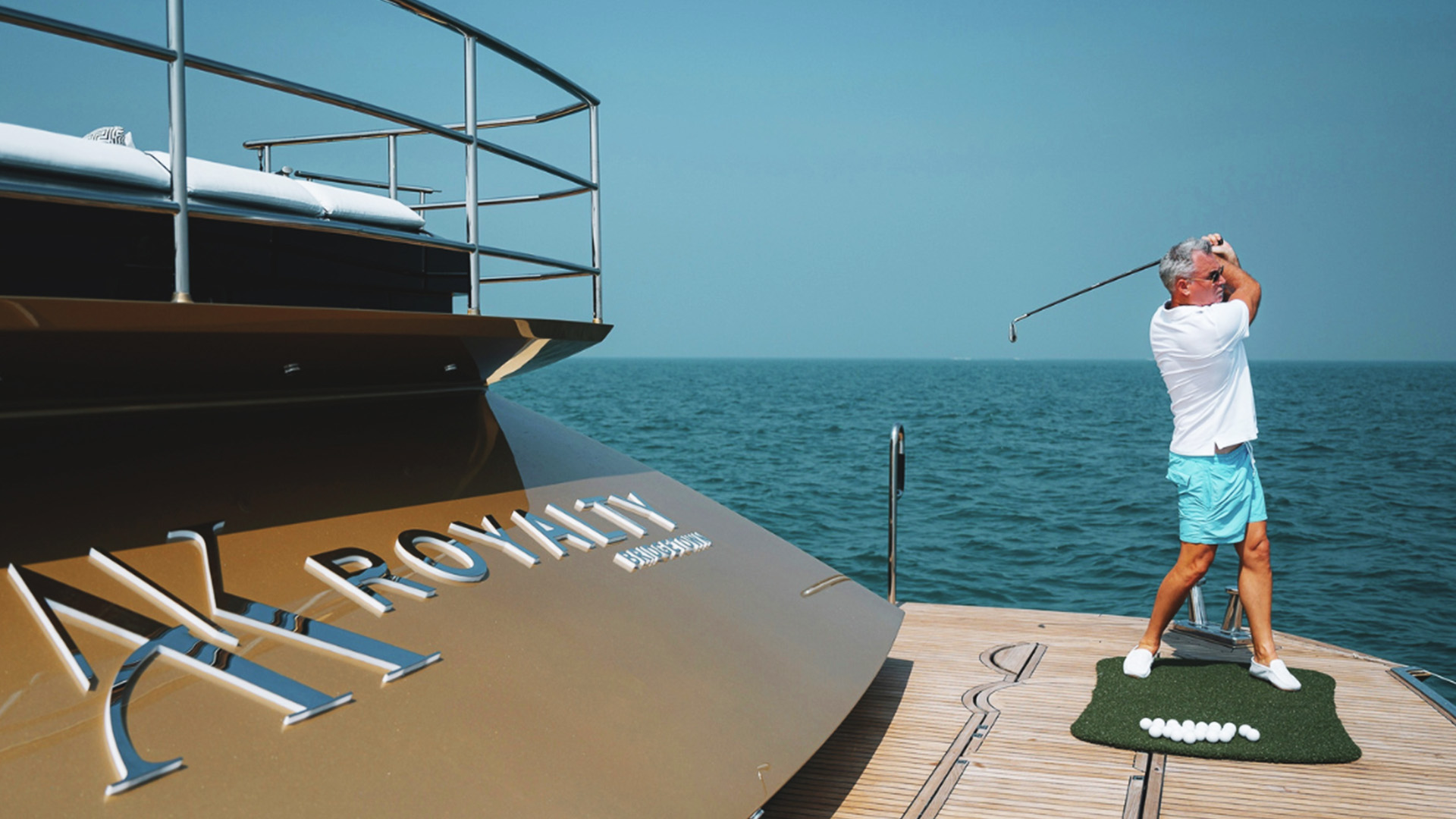
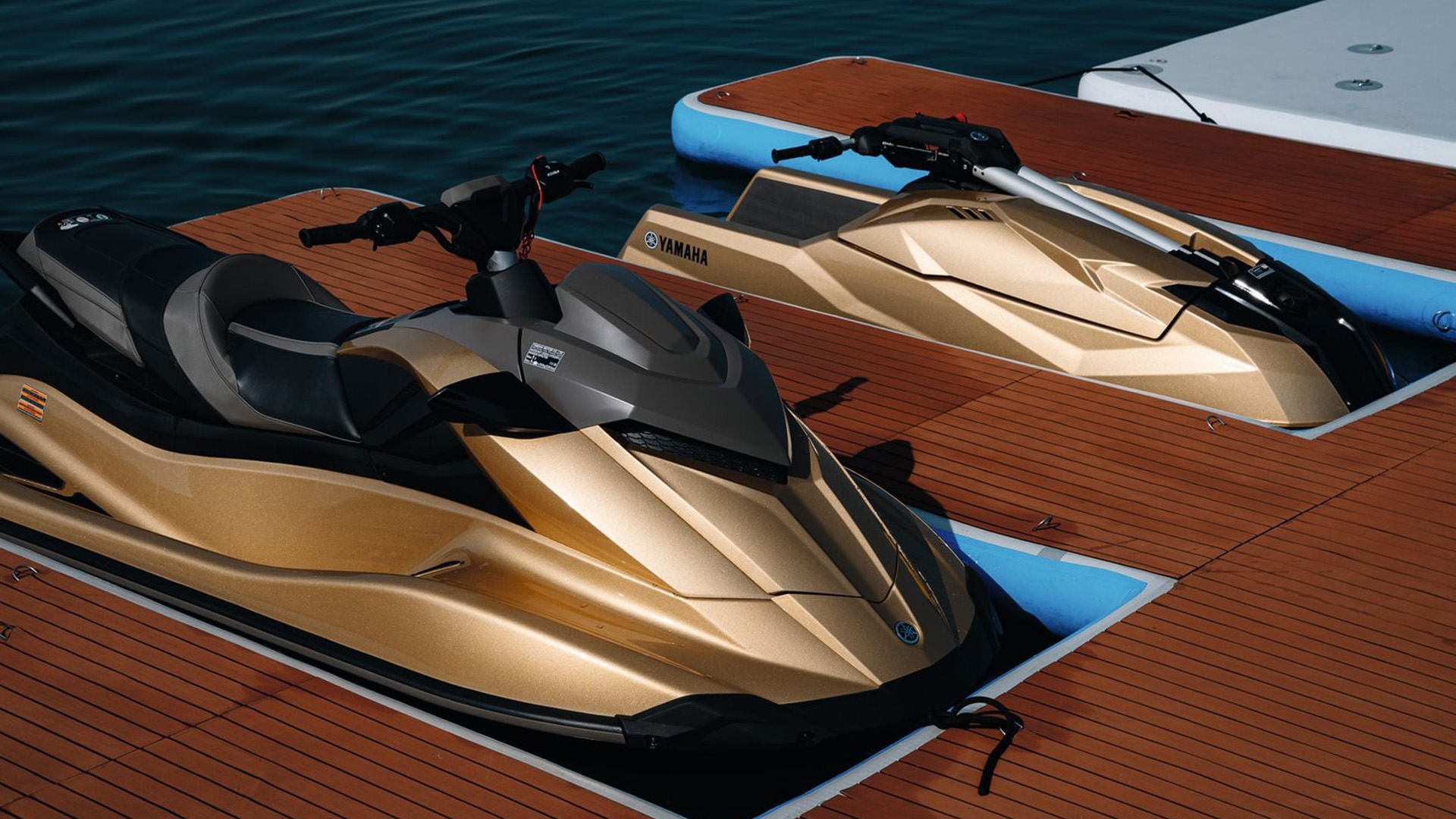
In an industry where good taste is conventionally tied to discretion, Fidler did the opposite. The 24-karat gold-leaf finish on AK Royalty's hull, jet skis, and Seabobs is impossible to ignore in any harbor in the Gulf — and that is precisely the point. The gold is the message.
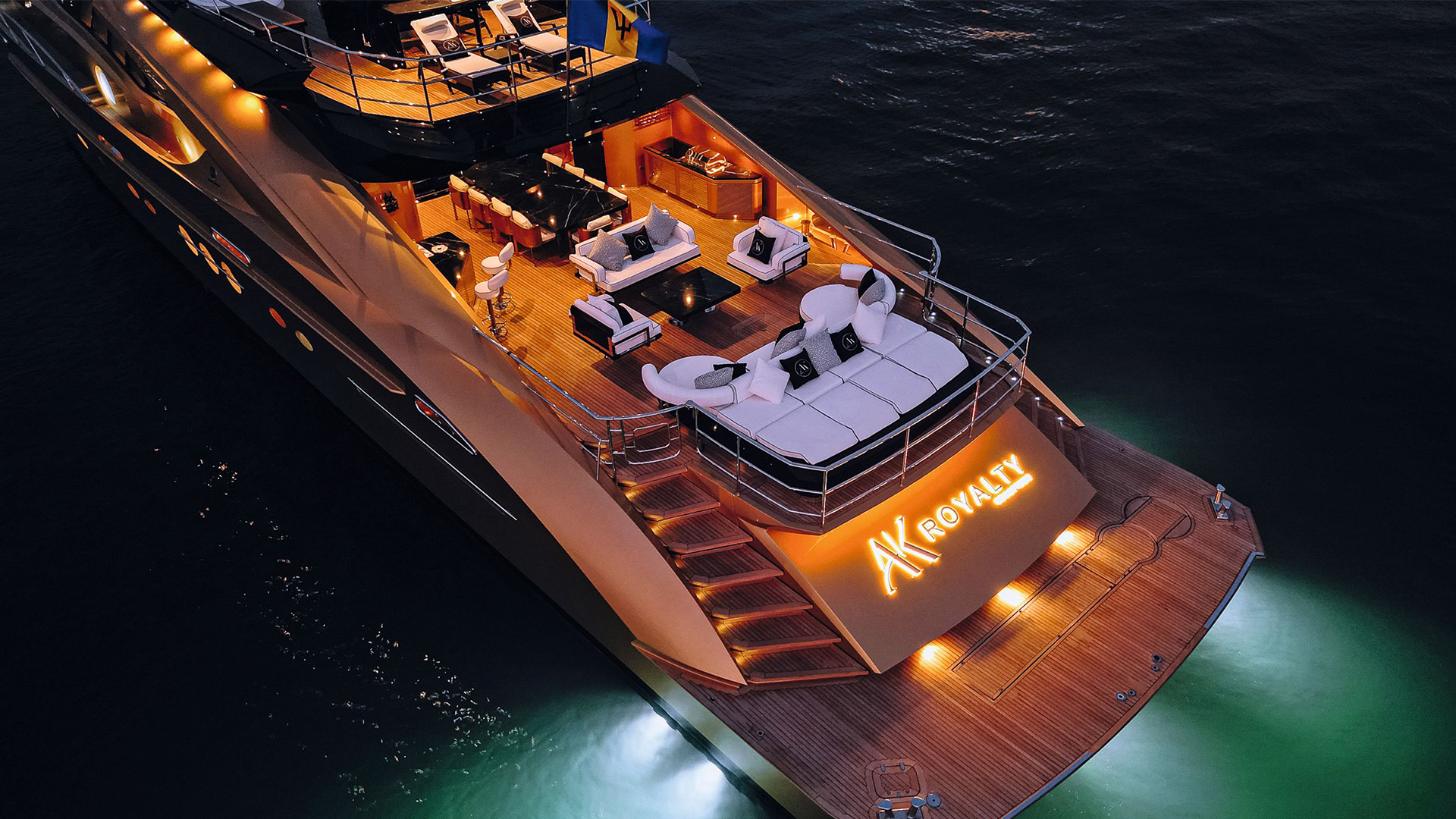
A 41-metre Palmer Johnson, recoded in Dubai
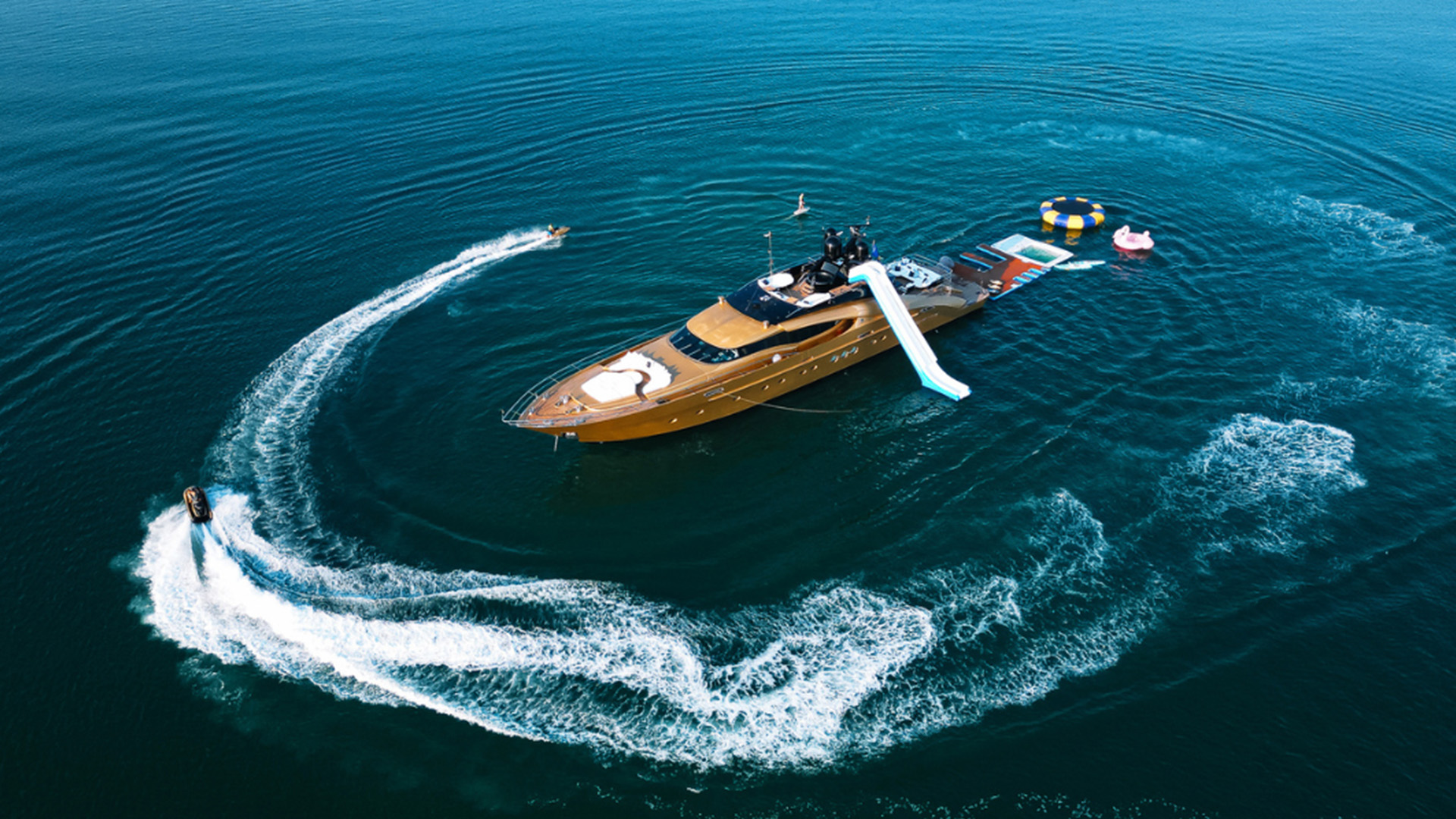
AK Royalty was built in 2009 by Palmer Johnson, originally christened Plus Too. She measures 41.4 metres — 136 feet — and is among the most recognizable superyachts cruising the Persian Gulf. Fidler acquired her in 2022 and put her through a year-long refit that he has described, in his own words, as costing "several million."
The vessel was shipped from France to Dubai, where Fidler lives with his wife Ksenia. There, the metamorphosis began: new engineering systems, a complete air-conditioning overhaul, redundant navigation backup for remote-water cruising. And then the gesture that made her one-of-a-kind in the world — an exterior repainted with real 24-karat gold powder.
An interior at the edge of restraint
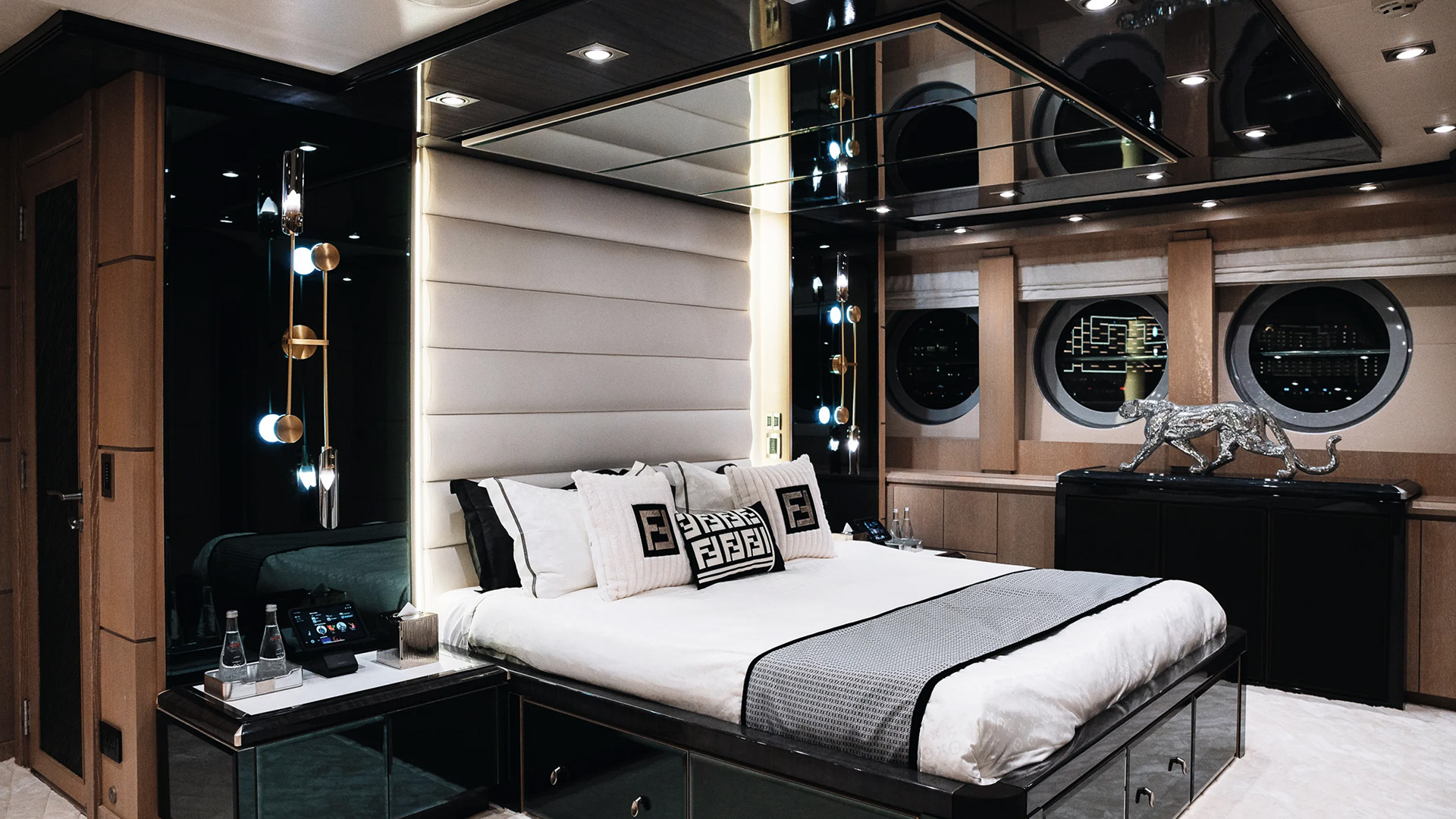
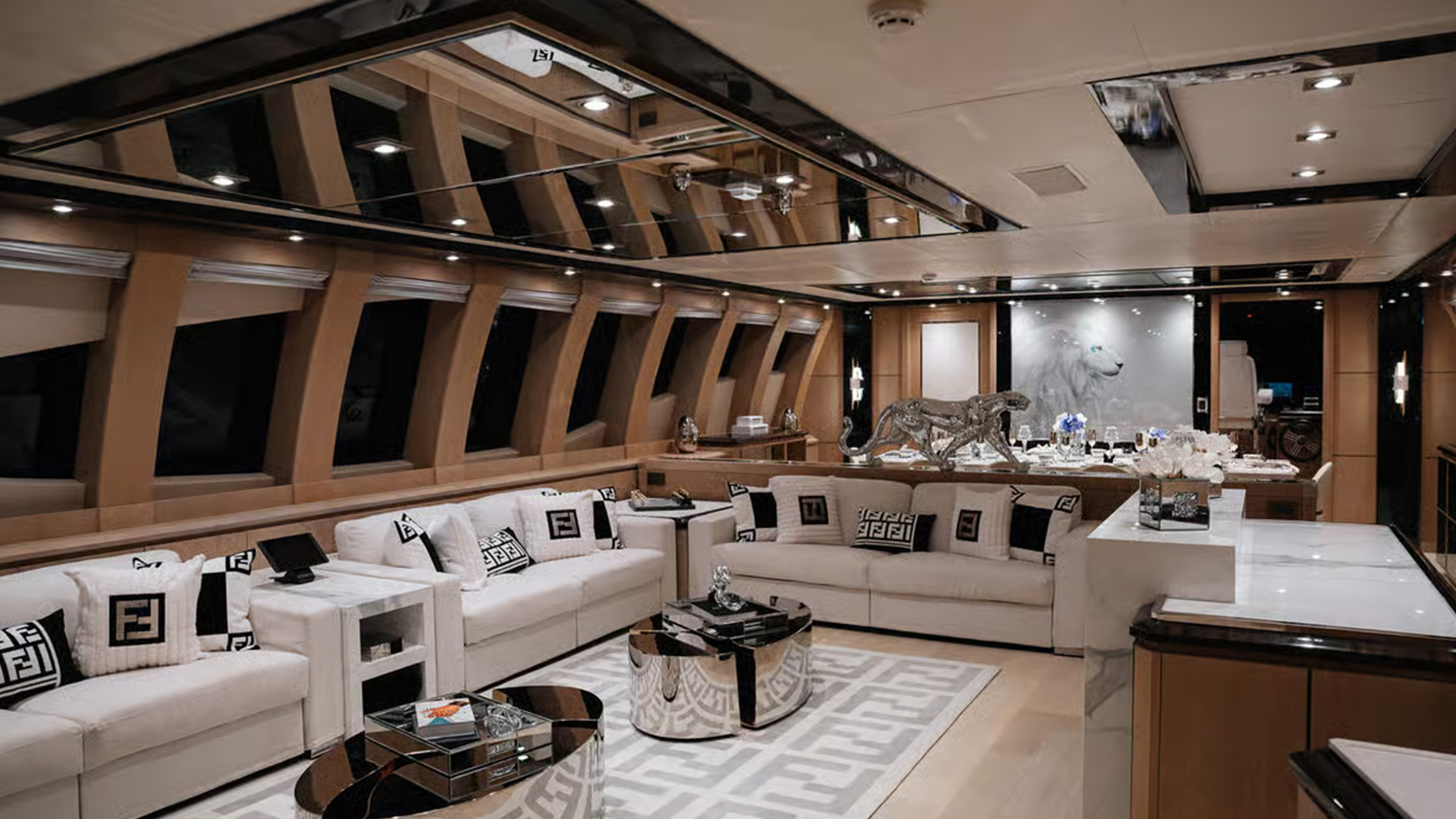
Gold as marketing, not ornament
The yacht is named after Ksenia Fidler's fashion label — AK, her initials — and she designed the interior herself. The references draw from European high-end style: mirrored ceilings, a full-size acrylic bathtub, premium materials in every finish. The result lives at the edge between contained luxury and the unapologetic opulence that defines Dubai's yachting culture.
The gold-leaf exterior, applied not only to the hull but to the matching jet skis and Seabobs, is not decoration. In the harbors of the Emirates — where the visual competition between superyachts is relentless — AK Royalty cannot be ignored. Fidler also drives a gold Lamborghini as part of the same brand language. The visual coherence is total, and entirely deliberate. The gold is not the gesture. It is the strategy.
I always dreamed of owning a Palmer Johnson. The most beautiful boats in the world.
Aaron Fidler · Owner, AK RoyaltyEight licensed captains, one ship
The most striking detail about AK Royalty is invisible from the dock. Fidler — who spent a decade as deckhand, then as chief engineer — knows better than most owners what well-treated talent is worth. He made an unusual decision: every member of his eight-strong crew, from the deckhand to the chief engineer, holds a captain's license. It is a personnel structure that would seem extravagant on paper, and reads as obvious common sense once you remember who the owner is.
At the head of the team is captain Pedro Argote, born in Chile, with three decades at sea — half of them in the service of the Dubai royal family. The hire signals the standard Fidler is reaching for: not the man who does the bare minimum, but the one who can do everything.
In the galley, the brief is equally unsubtle. Chef Luca Napoleone, whose private clientele has included the royal family of Abu Dhabi, runs the kitchen. The yacht entered the charter market under Burgess in December 2023 and surpassed twenty bookings within months, including single-day charters that the harbor's competing fleet rarely sees on a vessel of this profile.
A vessel recoded
The most sophisticated tool he built — and chose not to use
Among the products Furrion developed during Fidler's tenure was Angel, an AI-powered yacht intelligence system installed on the Numarine 78HTS Adonis in 2019. Angel managed audio and video, smart-galley operations, the onboard drone, and could even advise guests on what to wear given the weather. It was, at the time, one of the most advanced systems of its kind on the water.
Angel is not on board AK Royalty. Not because Fidler does not believe in it — it is his own technology — but because operating it requires a full-time dedicated software engineer. And Fidler is no longer interested in working for anything. Not even, as it turns out, for the most sophisticated tool he ever produced.
It is perhaps the most eloquent gesture in his entire trajectory: voluntarily declining the most refined instrument of his own creation, because he no longer wants to spend his time managing systems. He wants to live on the boat, not administer it.
The blueprint of a different kind of owner
Aaron Fidler embodies something the superyacht industry has not previously seen with this much clarity: the deliberate transition from crew to ownership as a designed life strategy, not as a stroke of luck. He did not inherit money. He did not sell a software startup at twenty-eight. He built a manufacturing company over twenty years, paid himself a salary that no founder of his eventual scale should have accepted, and turned every failure — that hundred-thousand-dollar phone cable, the partnership ruptures, the years of restraint — into compound learning.
Today, AK Royalty is at once his home, his office, his calling card, and his investment portfolio. She cruises under the Dubai sun with eight licensed captains, a chef who has cooked for Gulf royalty, and a finish that catches the light from kilometers away. The yacht is also confirmed for an upcoming Bollywood production — a deliberate calculation toward one of the fastest-growing luxury markets on Earth. Nothing on this vessel is incidental.
For the new generation of crew who dream of something more than a salary at the end of the month, Fidler offers something more useful than an instruction manual. He offers a precedent. A documented route from the engine room to the aft deck, with a cocktail in hand and the Persian Gulf in the background. The gold is, in the end, just the punctuation. The sentence was written long before.
A visual tour of the vessel
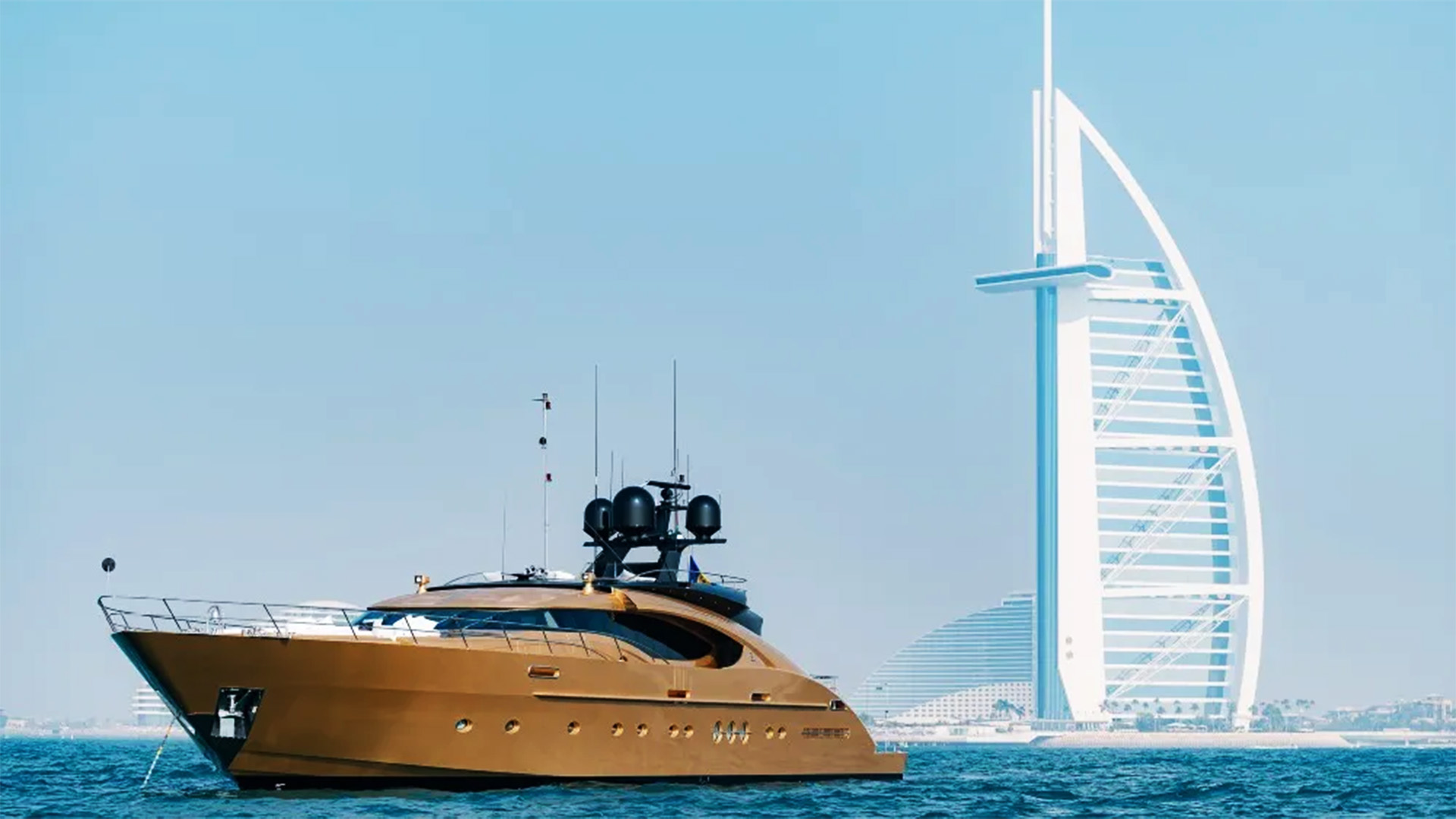 01 · Dubai
Cruising · Burj Al Arab beyond
01 · Dubai
Cruising · Burj Al Arab beyond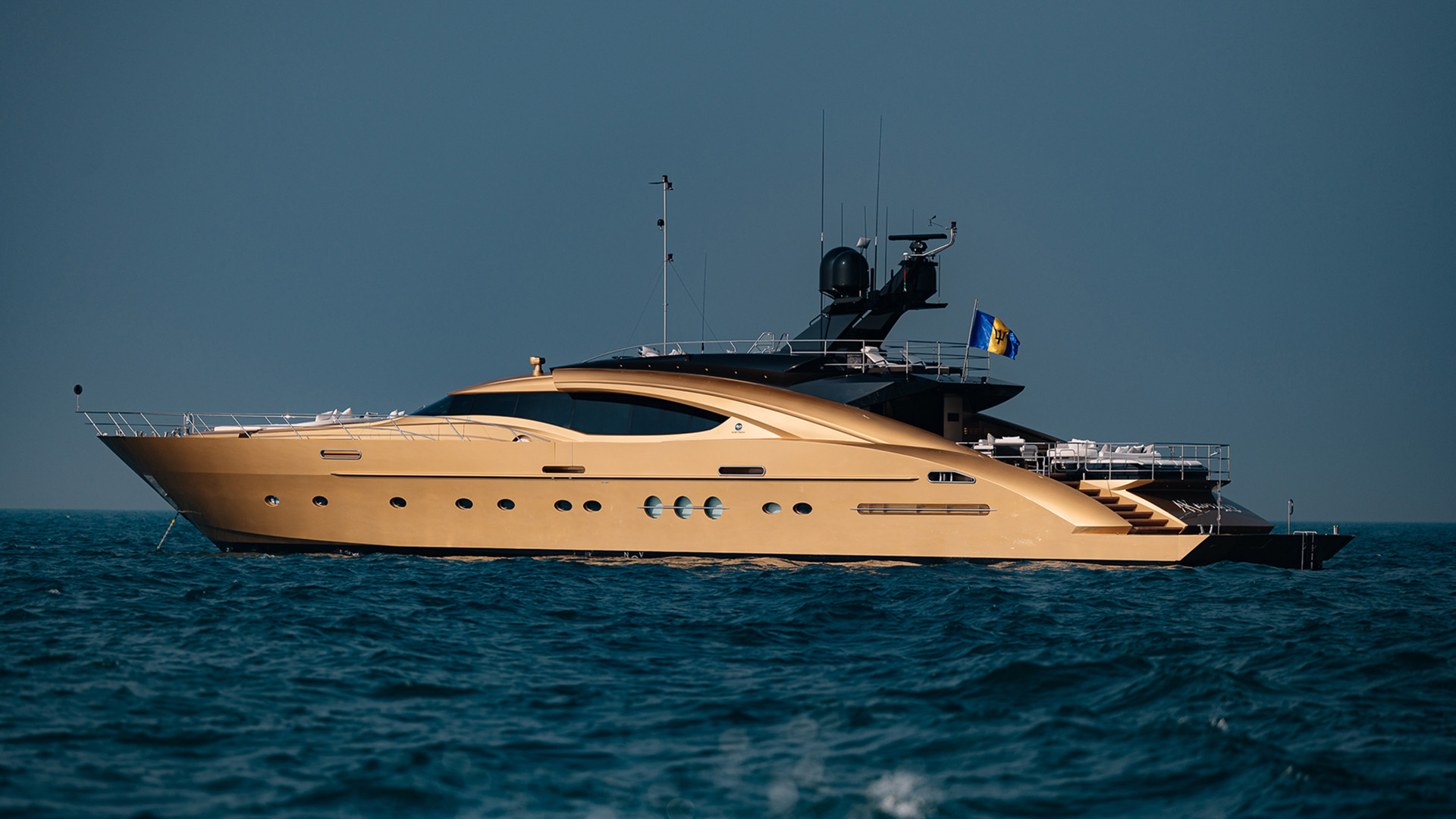 02 · Open water
Underway
03 · Stern
After dark
04 · Owner
Aft platform · Golf
05 · Aerial
Charter · Fully equipped
06 · Toys
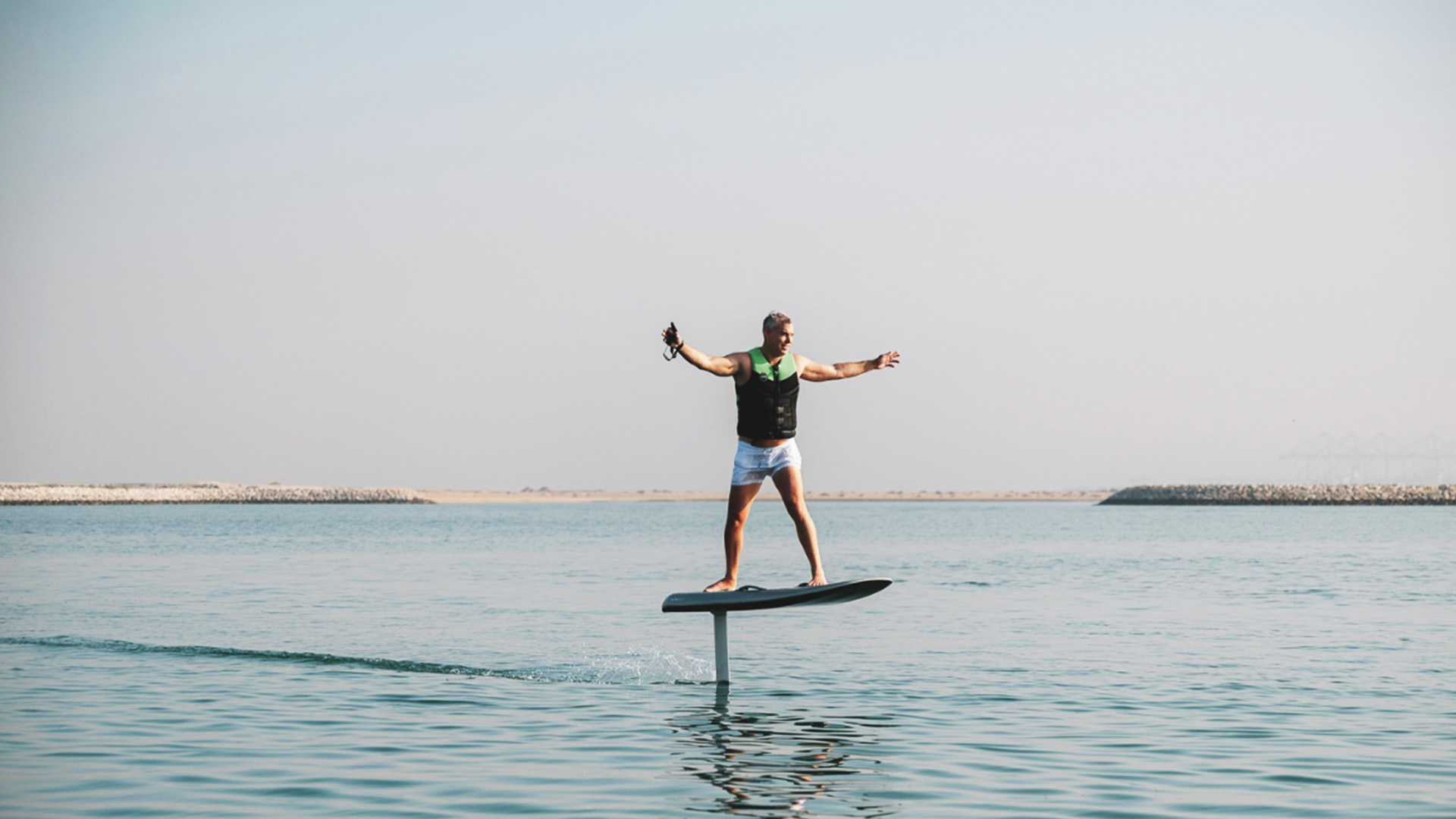
Electric surf board
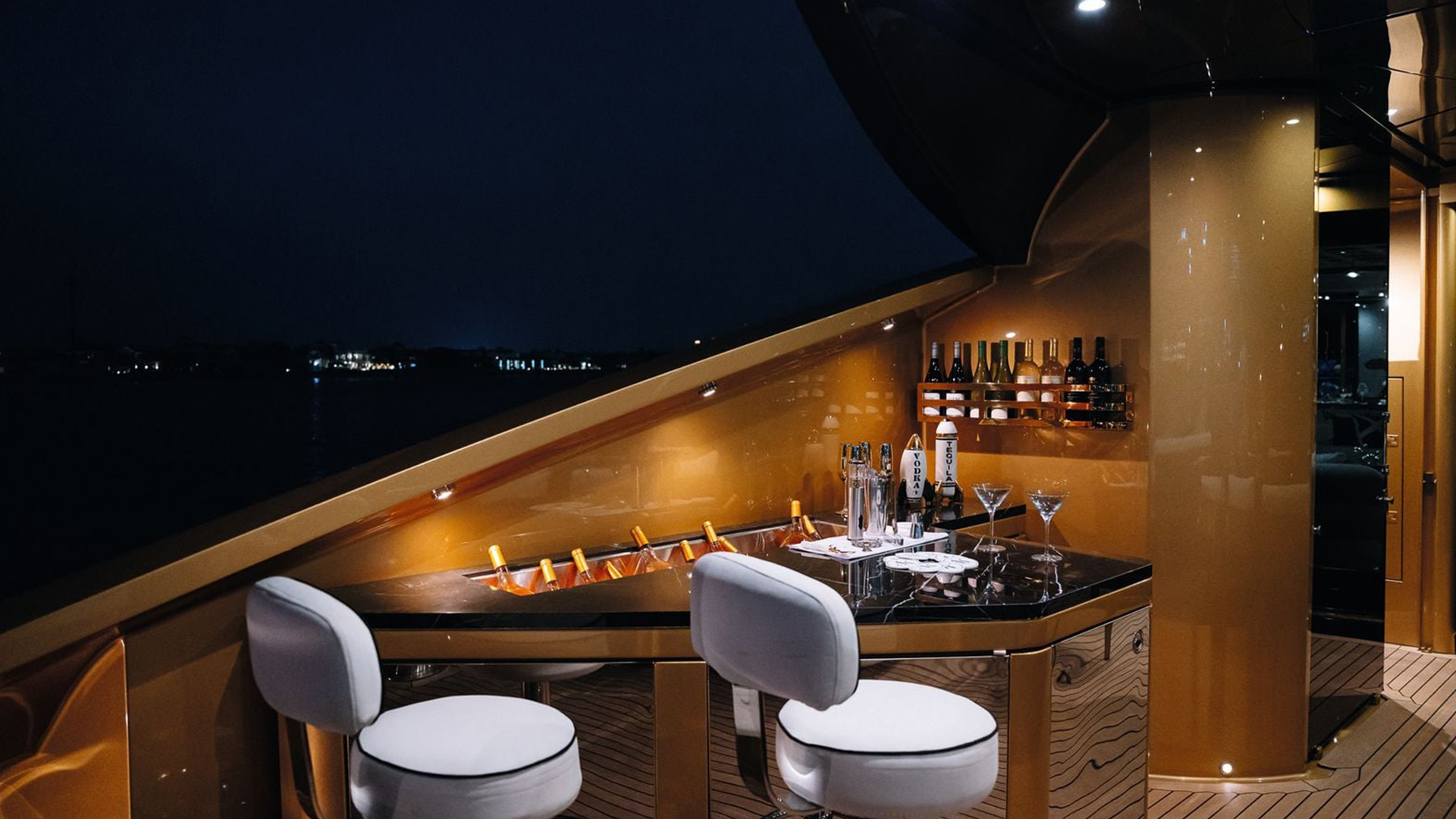
07 · Bar
Aft cockpit · Night
08 · Master
Master cabin
09 · Toys
Gold WaveRunner · SUP
10 · Salon
Main salon
02 · Open water
Underway
03 · Stern
After dark
04 · Owner
Aft platform · Golf
05 · Aerial
Charter · Fully equipped
06 · Toys
Electric surf board
07 · Bar
Aft cockpit · Night
08 · Master
Master cabin
09 · Toys
Gold WaveRunner · SUP
10 · Salon
Main salon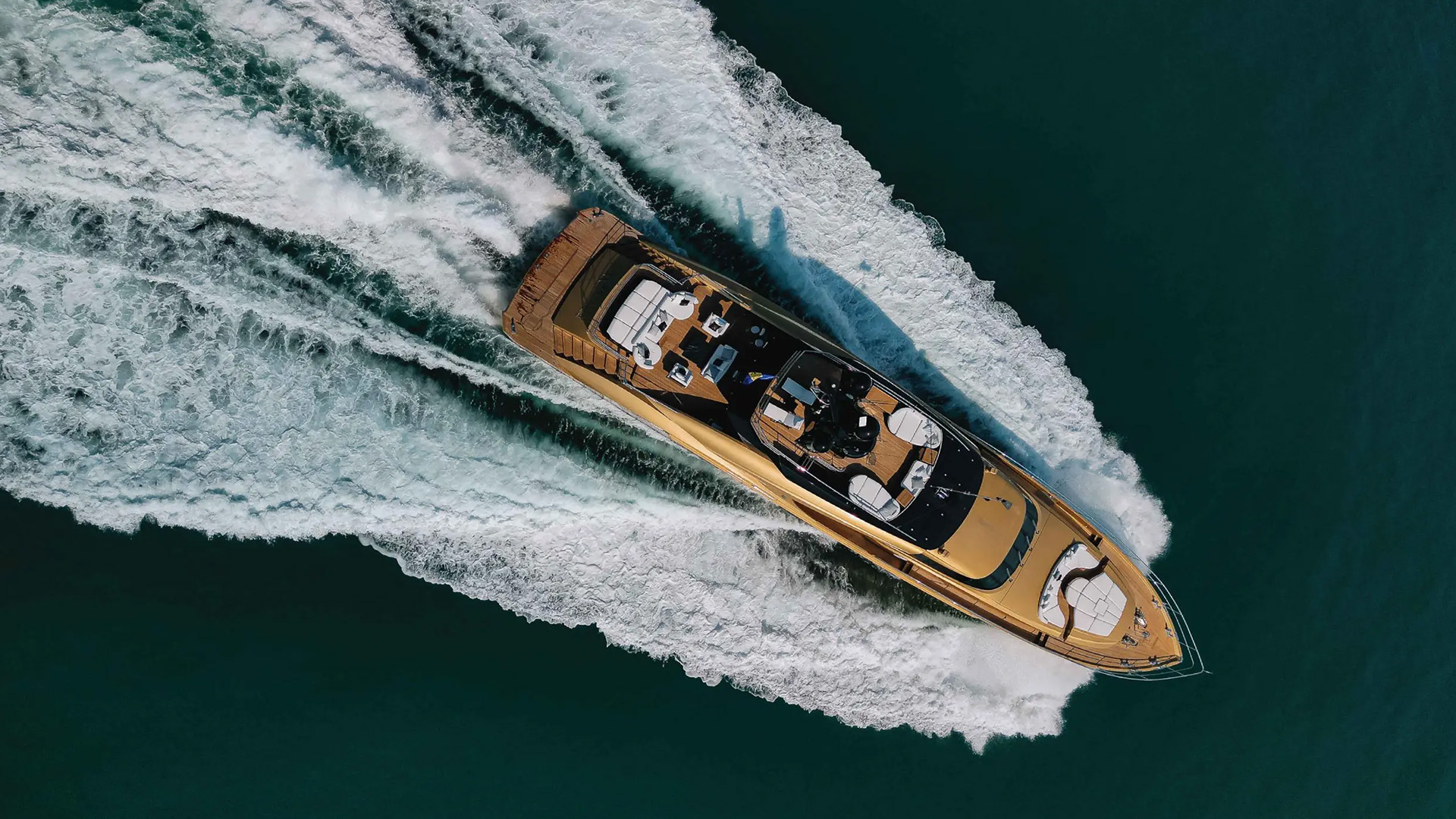 11 · Aerial
Underway
11 · Aerial
UnderwayA deckhand from Perth who learned to build, learned to wait, and eventually wrote his signature in 24-karat gold across a 41-metre Palmer Johnson — a route, not a windfall.