

A Yacht
From Another Planet
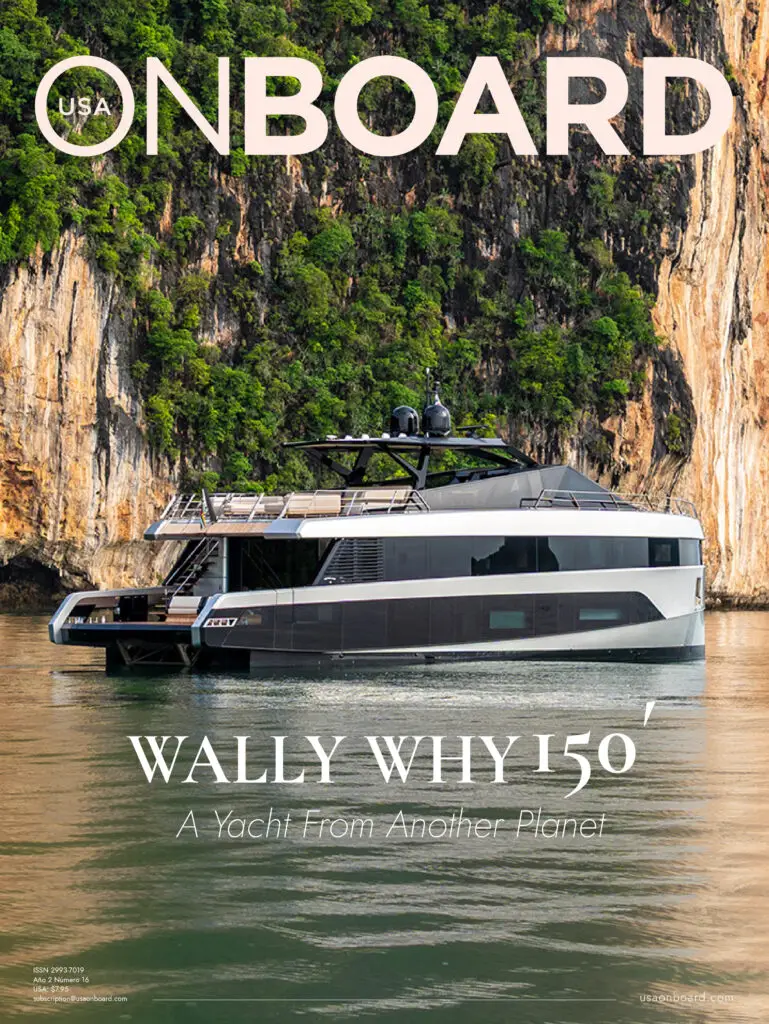
A 24-metre motor yacht that takes the volumetric grammar of the WHY 200 and compresses it into a smaller, sharper proposition — the second chapter of Wally's most uncompromising motor-yacht series.
Some yachts arrive as iterations. The Wally WHY 150 arrives as a position — a 24-metre argument for what living at sea can be when the hull is drawn around the volume, rather than the other way around.
The yacht made its American debut at the Fort Lauderdale International Boat Show, where the WHY series — born of a long collaboration between Luca Bassani, Wally's founder and chief designer, and the engineering apparatus of Ferretti Group — gained its second production model. The first, the WHY 200, was a 27-metre rewrite of the conventions of the contemporary motor yacht. The 150 is the same idea, sharpened.
Both models were conceived in parallel four years ago, and the family resemblance is structural rather than cosmetic. A forward master suite raised to main-deck level. A two-tier saloon that opens onto a sea-level aft terrace. A flybridge that reads as a third living room beneath the signature angular hardtop. The 150 carries the entire vocabulary forward; what changes is the scale, and the discipline that smaller scale demands.
Wally has never built for everyone. From the first carbon-fibre racing sloops of the early 1990s through the maxi-motoryachts of the 2000s, the house has worked in the same posture: push the function of design to its edge, and let the edges do the persuading. The WHY 150 is the most concentrated expression of that posture in the current range — a yacht with no neutral notes.
A suite drawn at the prow, not below it
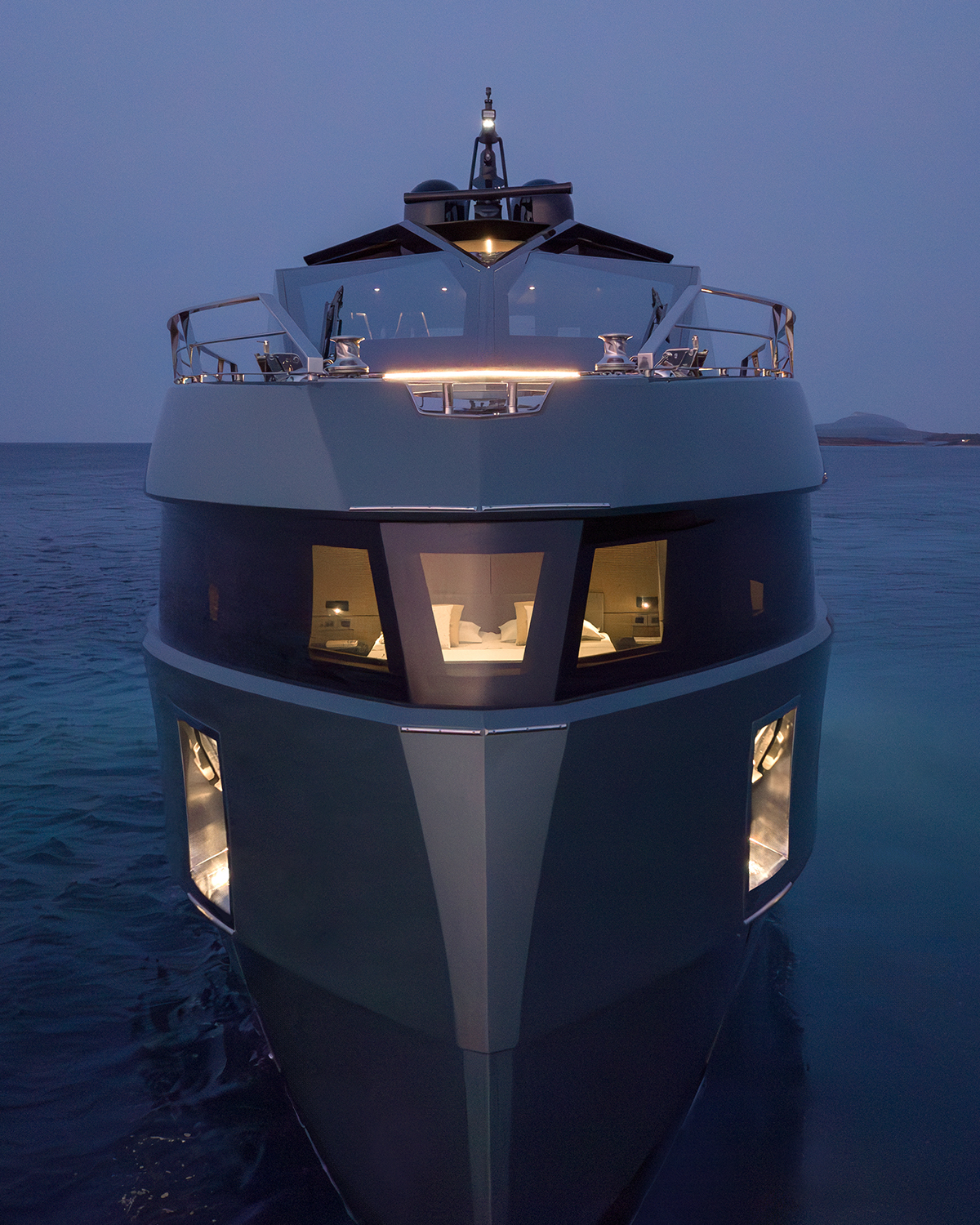
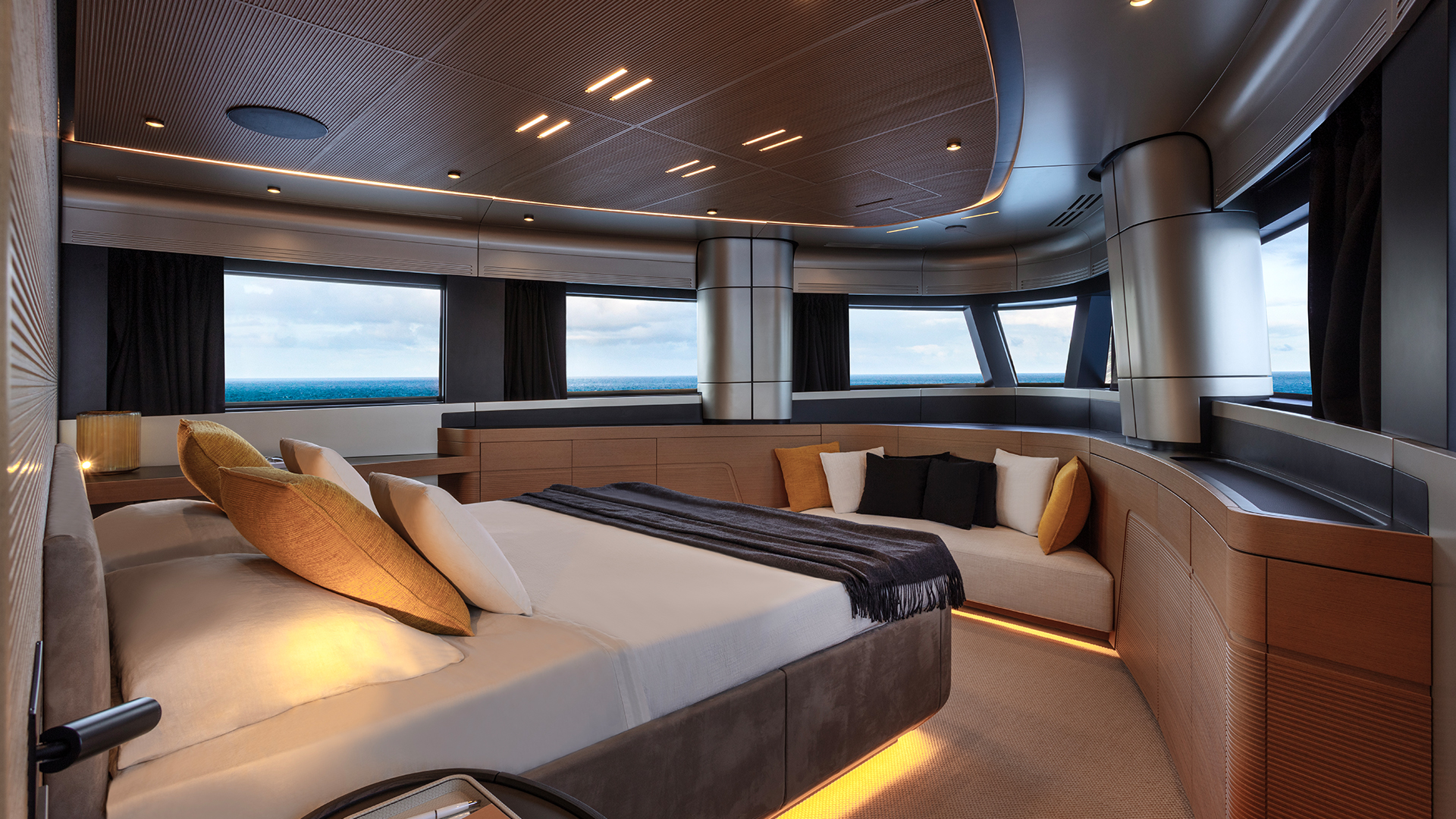
The most consequential gesture on the WHY 150 is also the most visible from outside the hull. The owner's suite sits forward on the main deck, lifted to the level of the captain and the guests rather than buried below it. From the bed, the yacht's wraparound bow glazing opens onto a 270-degree panorama — what Wally calls, with quiet accuracy, a private amphitheatre of sky and sea.
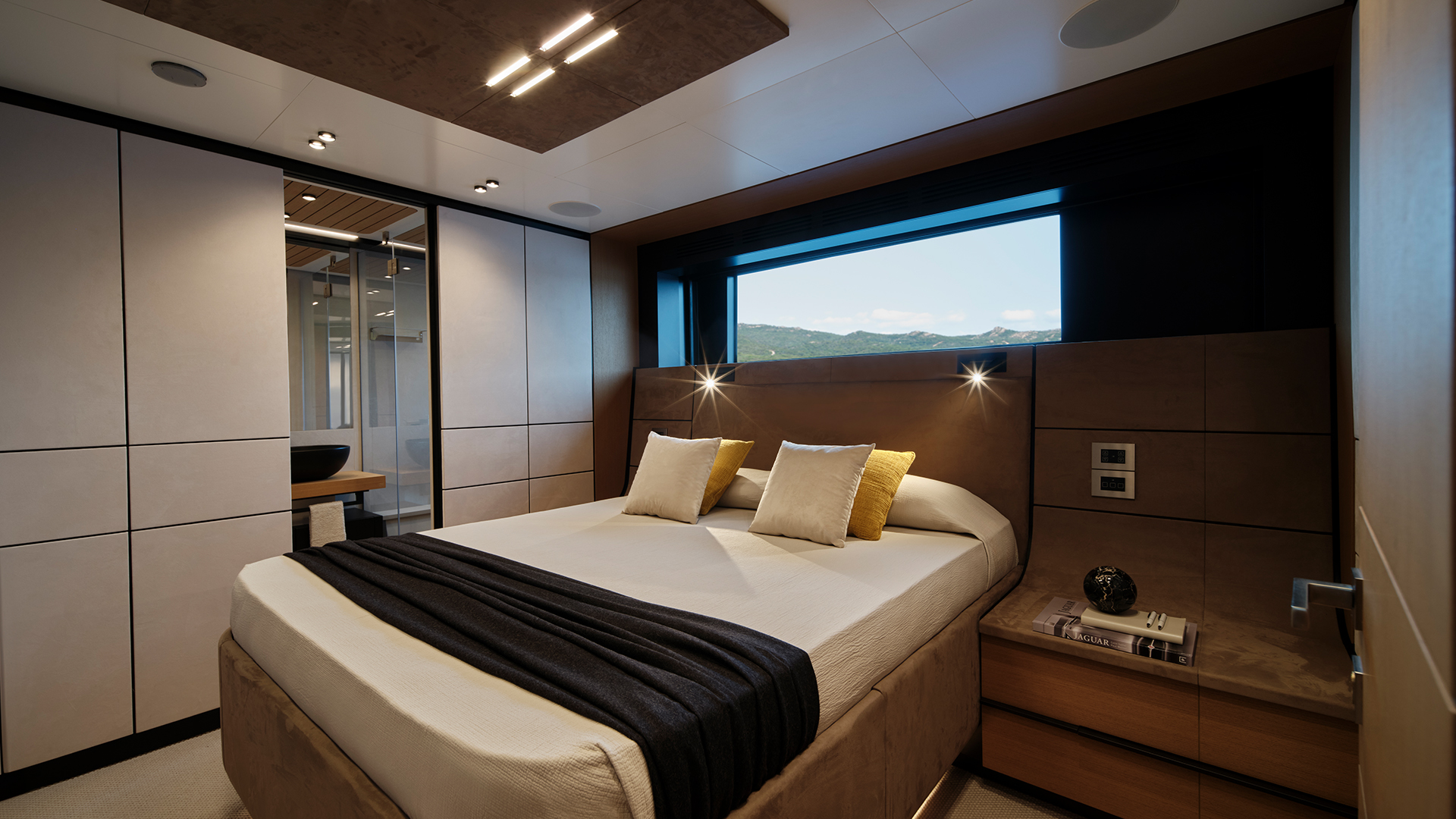
The amenity is real, but the engineering it requires is more interesting. To carry that much glass at that height, the WHY 150 uses pane thicknesses normally specified for yachts of 50 to 60 metres. The structural envelope is, in effect, a glass cage — generously transparent at the top and braced for it everywhere else. Below the master, the lower deck offers either a VIP plus a guest double or a twin-VIP arrangement; in both cases, hull-wide glazing keeps daylight working overtime.
That terrace over the sea is as much Wally DNA as carbon fibre.
Luca Bassani · Founder & Chief Designer, WallyThree moves that reorder the yacht
Lifted to main-deck level rather than buried below it, the owner's suite carries the 270-degree wraparound glazing that defines the WHY series. The double bed has its walking space; the horizon does the rest of the work. Below, two cabin arrangements adapt the lower deck to family or charter logic.
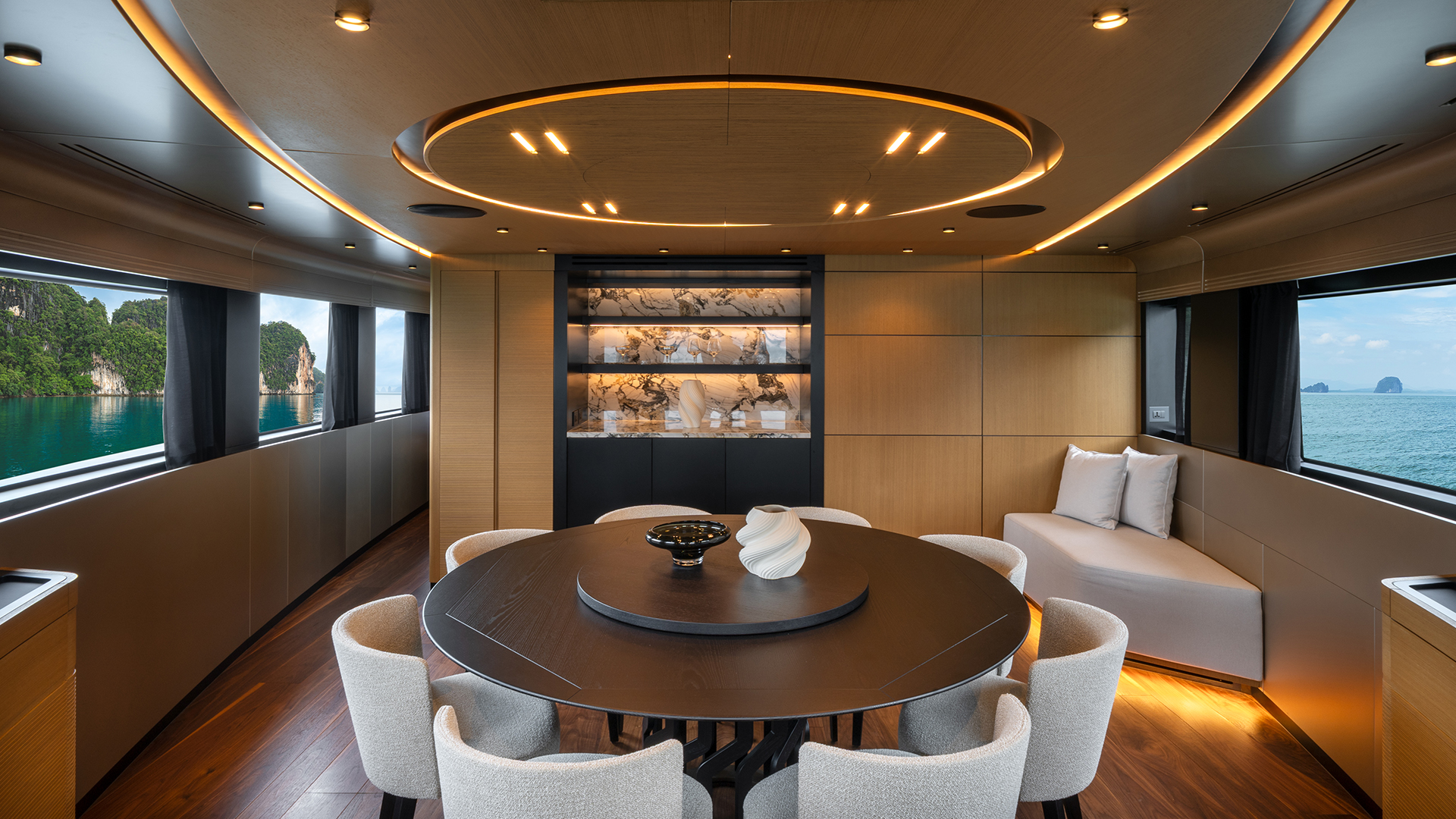
Inside, the main-deck saloon splits across two heights connected by low steps — a lounge on the upper plane, dining on the lower, with the layout left deliberately unfixed. Wally treats it as a near-blank canvas, configurable to the owner's preferences in furniture, materials and circulation.
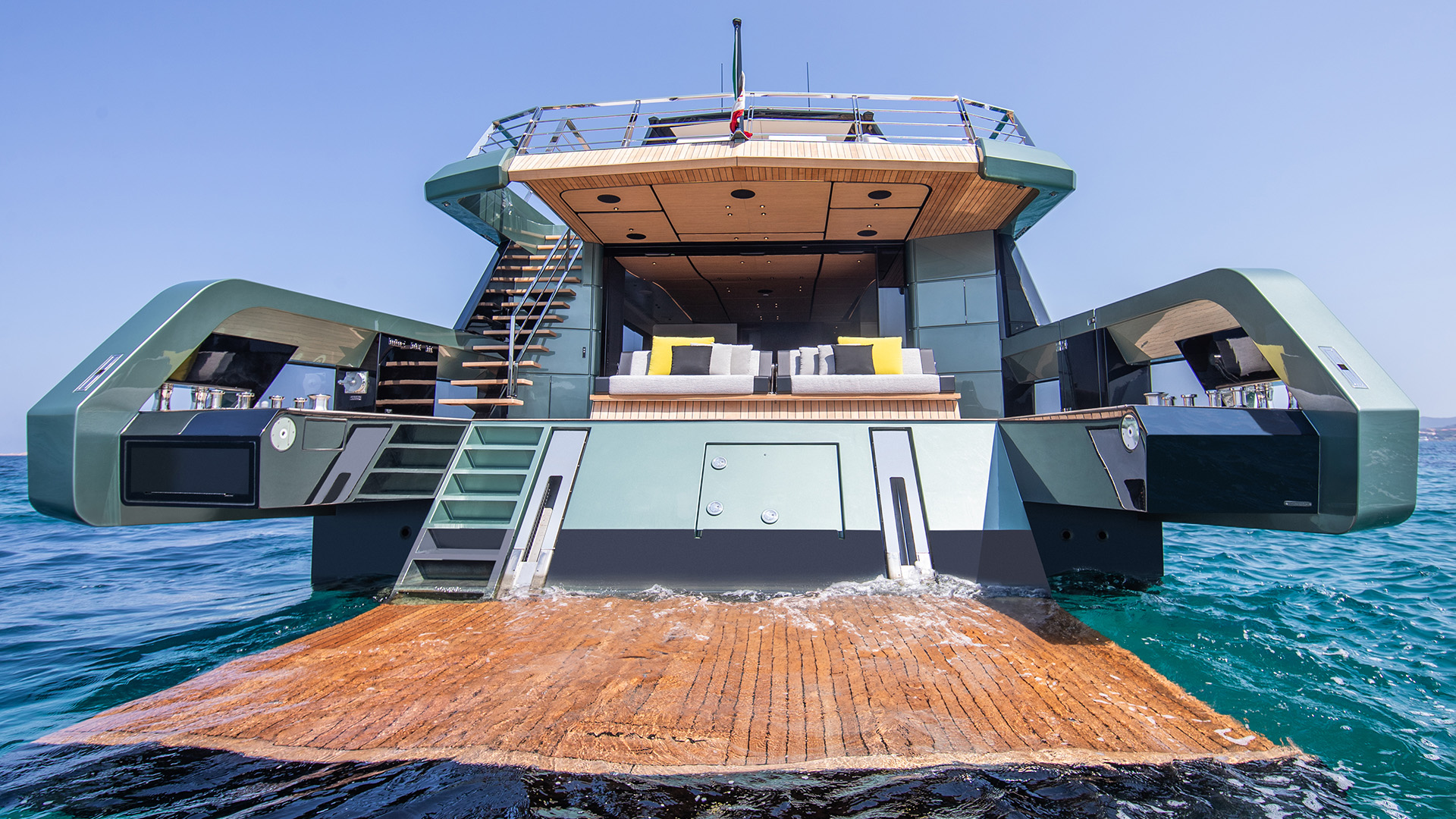
The lower saloon flows out into a vast covered terrace that opens uninterrupted to the water. A hydraulic stern platform can launch a 3.9-metre tender or submerge to become a beach surface — the connection between guest area and sea kept generous and continuous.
A living room drawn under a dome
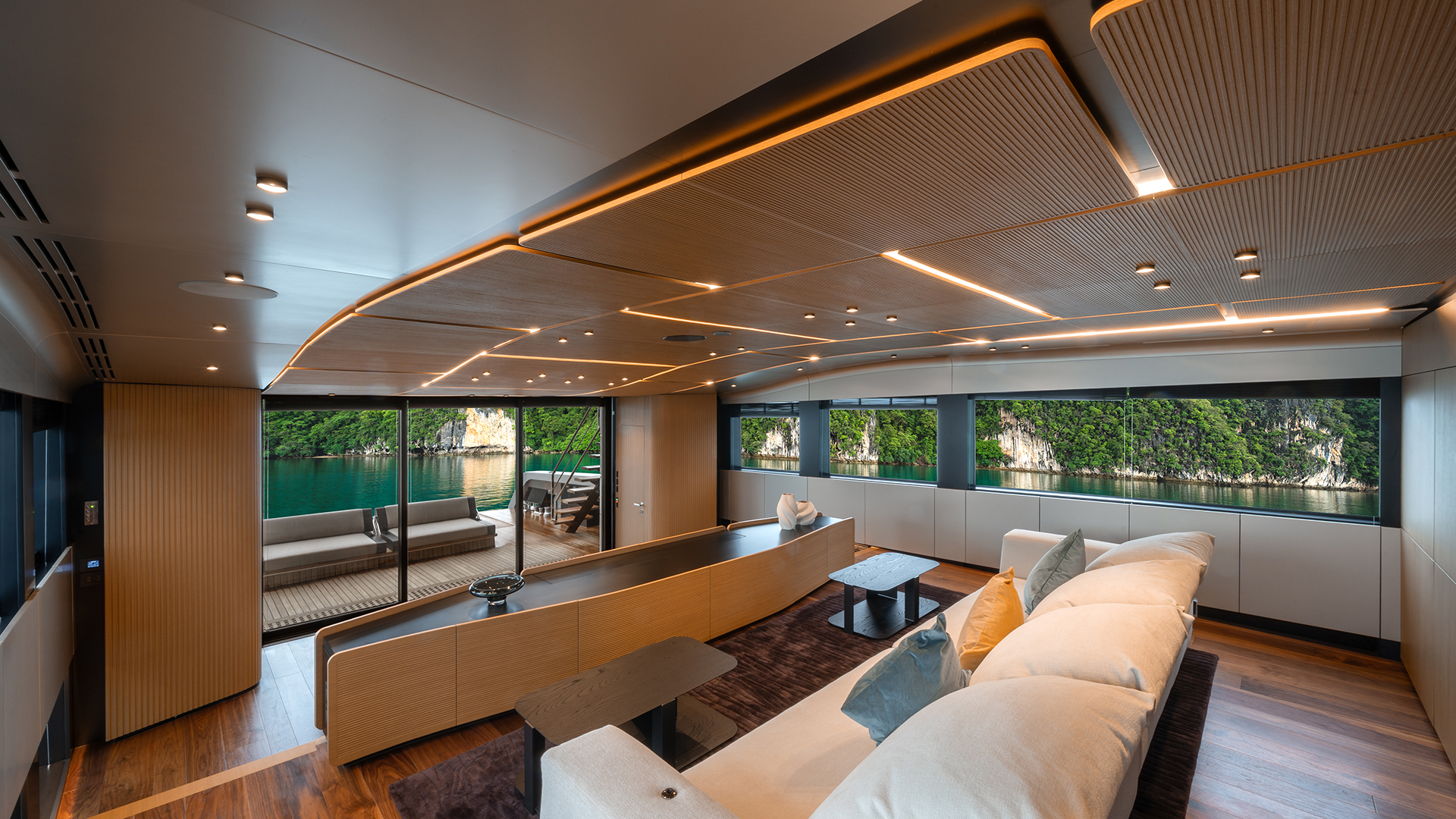
The main-deck saloon is the first room that makes the yacht's argument unarguable. Split across two levels by a low staircase, it carries a saloon-and-dining split that the owner can flip at will: lounge above and table below, or the inverse. The flexibility is not an upgrade. It is the shipyard's standing brief — let people's imagination fly, in Wally's own phrase.
Overhead, the ceiling rises to more than 2.5 metres — a generous number on a 24-metre hull — and curves on two axes, bow to stern and athwartships, producing the soft dome that gives the room its acoustic and visual calm. The two-storey glazing that wraps the saloon turns the horizon into the dominant material on board.
A glass cage in motion
Carbon overhead, glass at the waterline
The structural ambition behind the WHY 150 is not advertised, but it is everywhere visible. The superstructure is built in carbon fibre to reduce weight aloft — a Wally hallmark drawn from three decades of ultralight composite sailing yachts — while the hull below carries glazing that runs floor-to-ceiling across the two-storey saloon and wraps the forward master in a single continuous panorama.
The yacht's behaviour at sea reflects the calculation. Stability comes from the warped-hull geometry, from the lowered centre of gravity, and from optional active stabilisers that keep the deck quiet both underway and at rest. The engineering brief brought together Wally's own experience in geometrically complex composite hulls and the broader resources of Ferretti Group's engineering teams — an alliance whose footprint is, finally, structural.
Basically, it's a glass cage — with everything that has to live inside it.
Stefano de Vivo · Managing Director, Wally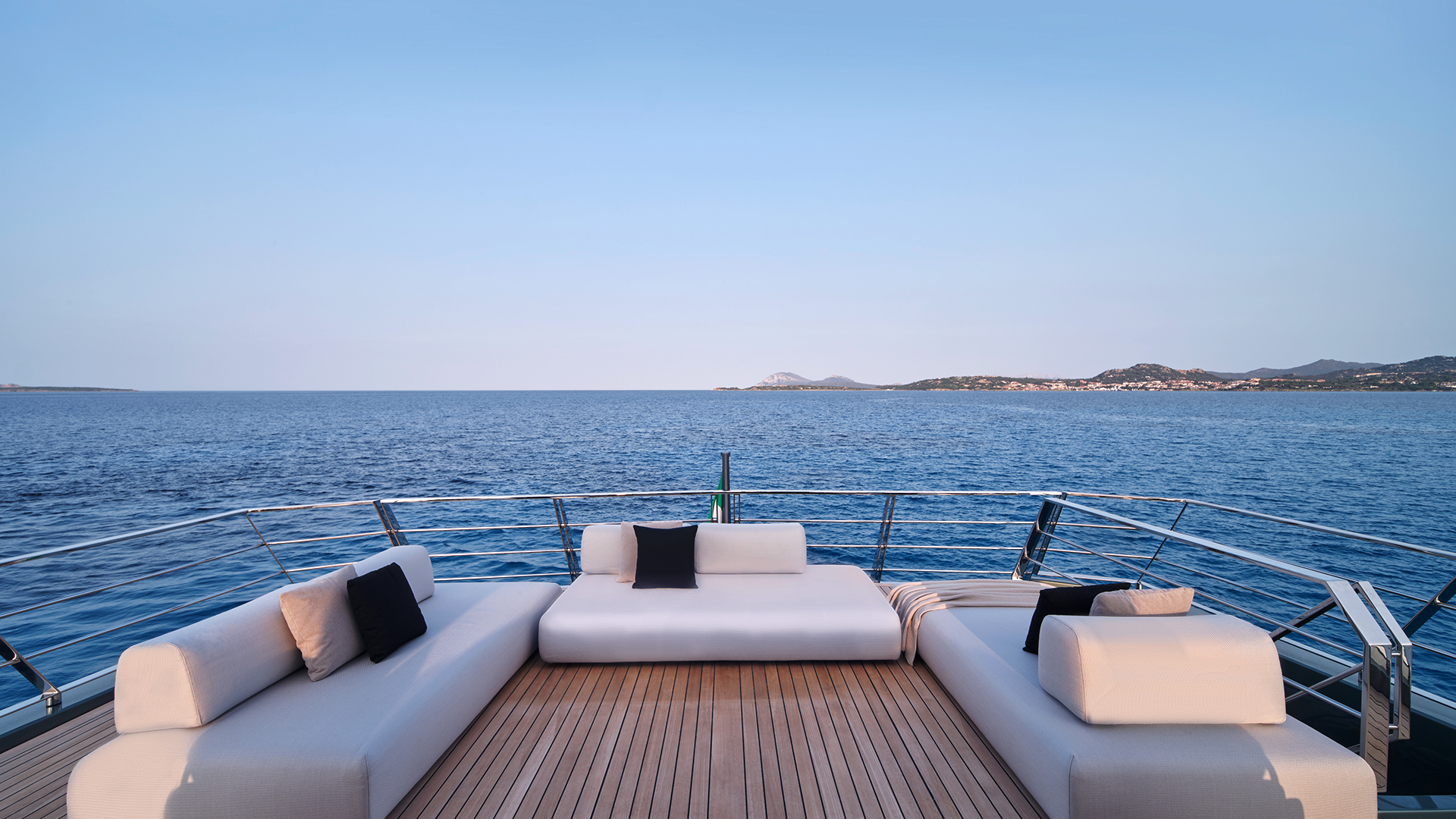
The terrace where the yacht meets the sea
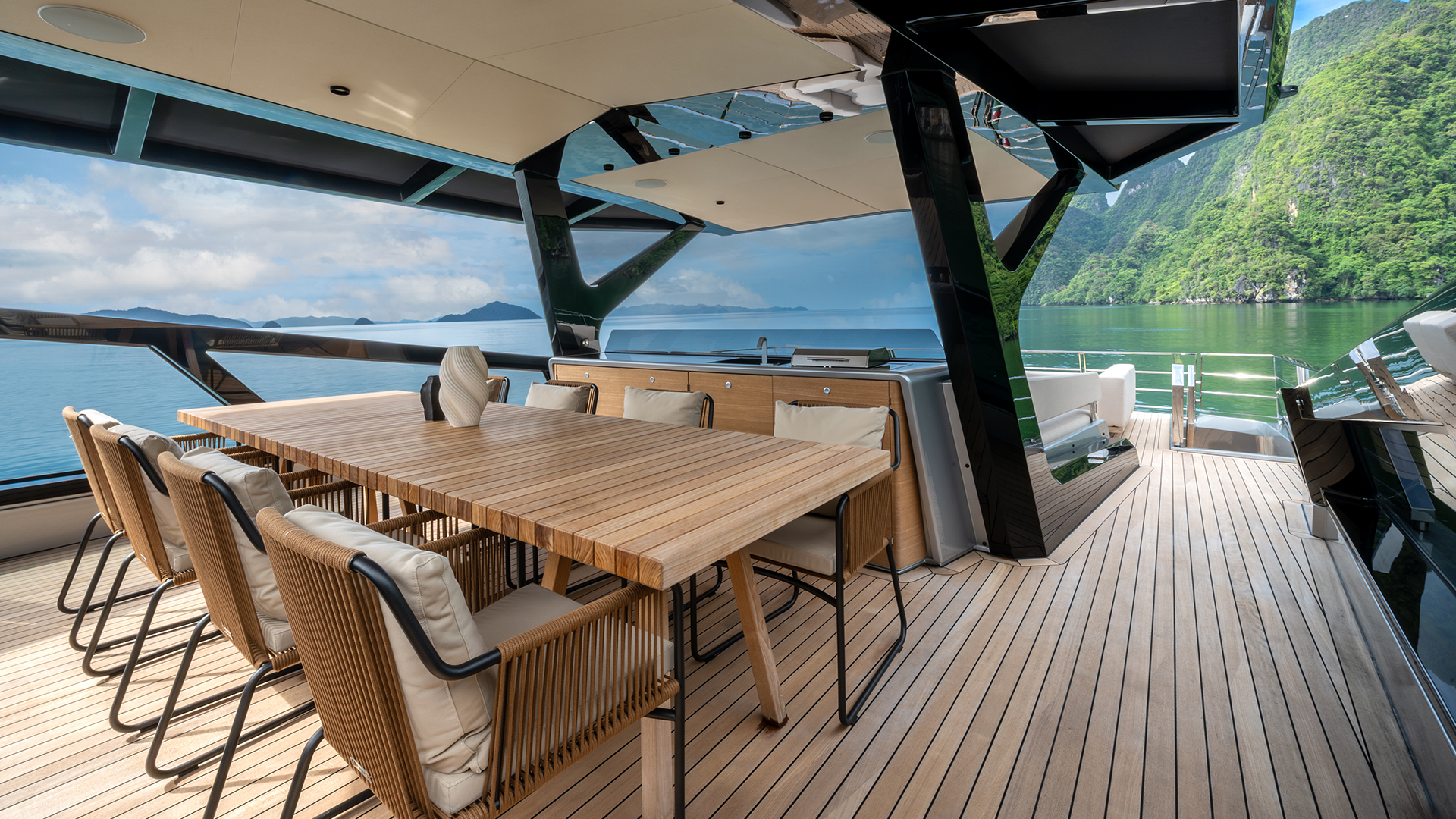
On a yacht that resists conventional gestures at almost every turn, the aft terrace is, by Wally's own account, where the house code is clearest. The lower-saloon volume flows out into a vast covered terrace that runs uninterrupted from the saloon glazing to the open water — a single continuous room with the horizon as its back wall.
Below that terrace, the hydraulic stern platform handles two duties without compromise. It launches the on-board tender — sized at up to 3.9 metres — and, lowered further, submerges to become a beach surface for swimming, boarding and the inventory of water toys the platform is engineered to carry. The connection between guest area and water is treated not as a feature, but as the yacht's standing posture.
Triple Volvo IPS, and a quiet temperament
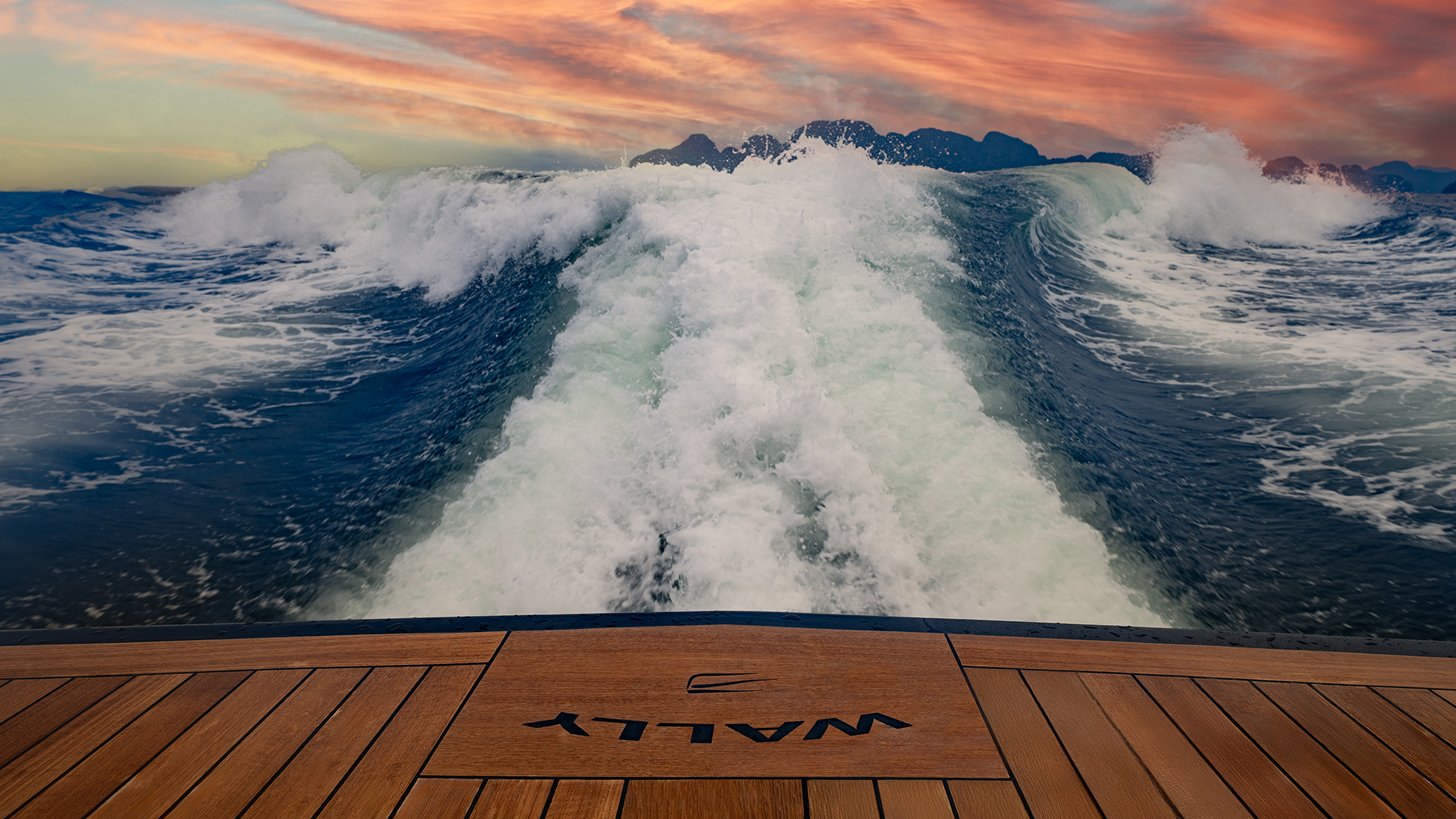
Power comes from a triple-engine Volvo Penta IPS arrangement. The standard configuration runs three D13 IPS1200 units at 900 mhp each, returning a top speed of 21 knots and a cruise of 18. The optional IPS1350 setup — three D13s at 1,000 mhp — lifts top speed to 23 knots and cruise to 20. At an economic 10-knot pace, range on either configuration reaches 1,000 nautical miles, enough for the kind of extended-itinerary use the layout anticipates.
The numbers matter less than the temperament. The WHY 150 has a clean, planted feel at sea, owed in roughly equal measure to its warped hull with spray rails, the carbon-fibre superstructure, and an optional stabiliser package that keeps the saloon settled at anchor — the comfort metric Wally cares about most, both underway and at rest.
At a glance
The WHY 150, in context
What separates this yacht from the rest of the 24-metre motor-yacht market is not length and it is not power. It is the willingness to treat the interior as the lead specification — and to engineer the hull around it. The forward master, the two-storey glazing, the ceiling that domes above the saloon, the aft terrace that reads as a third living room: each of these is a structural decision before it is a styling one.
It is also a yacht built inside a particular institutional arrangement. Wally, founded by Luca Bassani in 1994 and now part of Ferretti Group, has spent three decades resisting the conventions of its own industry — and now does so with the engineering depth of one of the largest builder groups in luxury yachting behind it. The WHY 150 is the most visible product of that combination so far.
The breadth of the WHY range — Bassani himself notes that it has surprised the house — suggests a category that is still finding its shape. Wally has never been for everyone, the founder allows; the WHY 150 is for the audience that wants the boldness of the larger model in a hull that handles a wider range of marinas and a longer list of itineraries. Seen, walked, sat in, it is — and the language is the shipyard's, not ours — a yacht from another planet.
A visual tour through the vessel
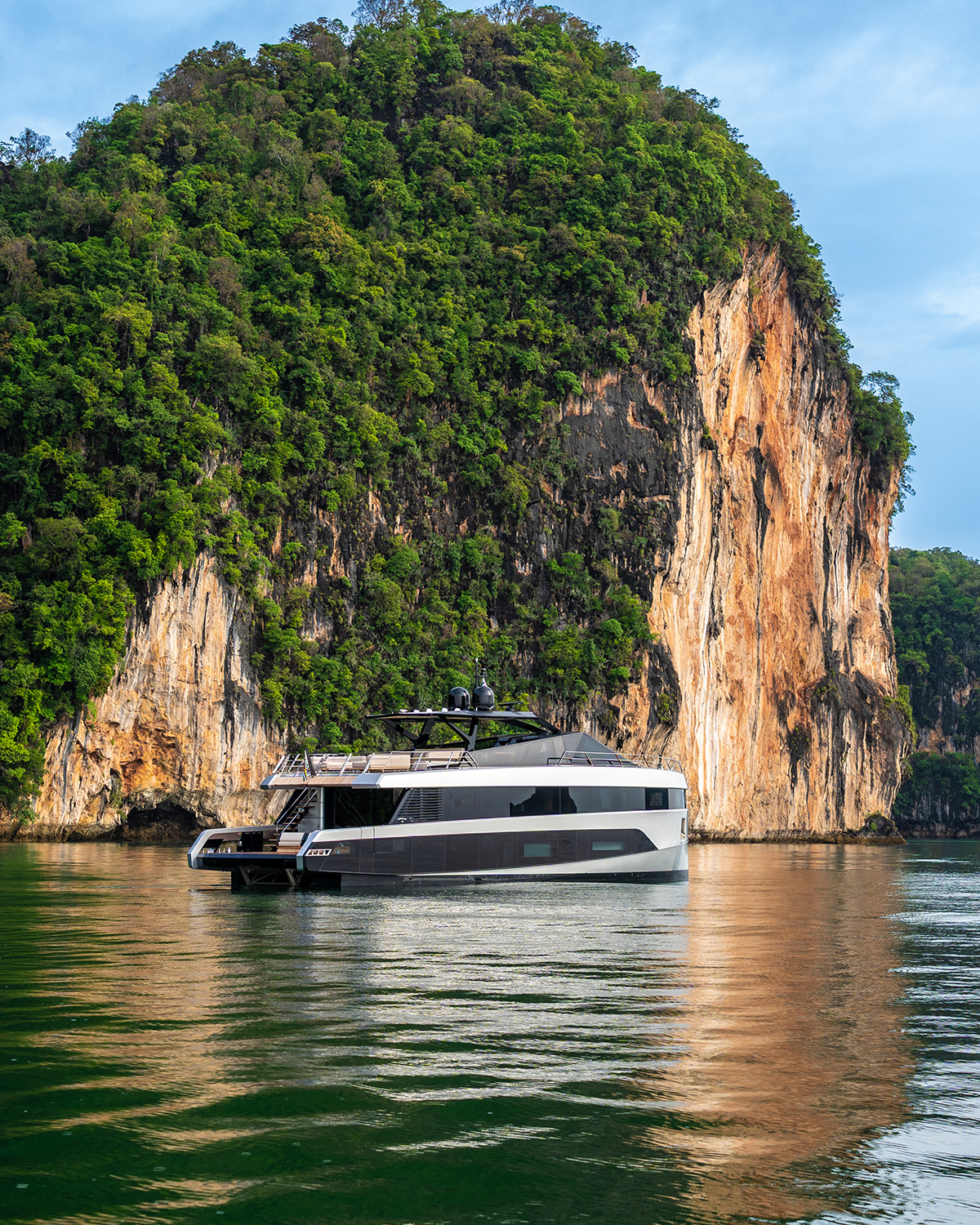
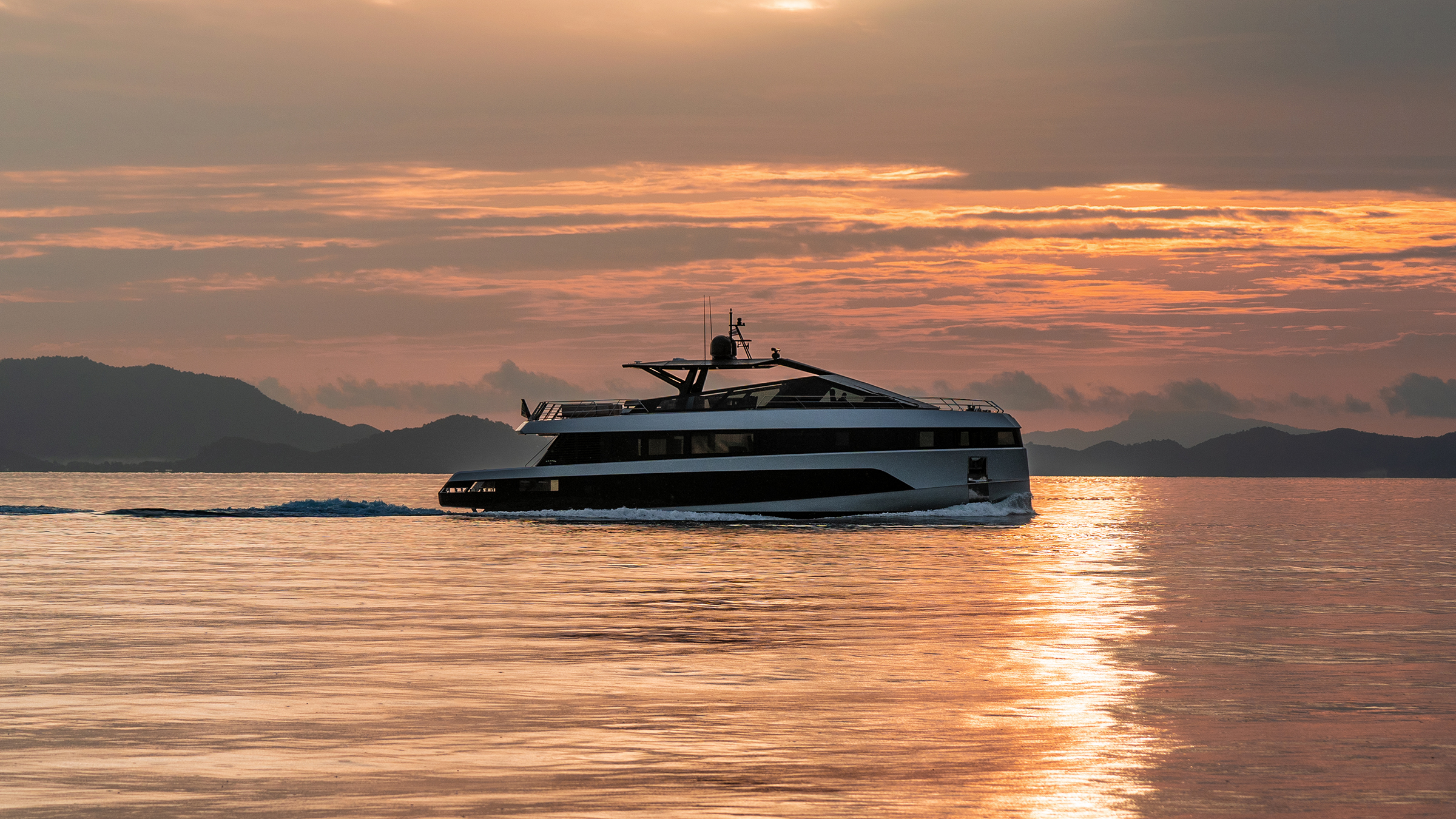 01 · Profile
Underway · Sunset
01 · Profile
Underway · Sunset
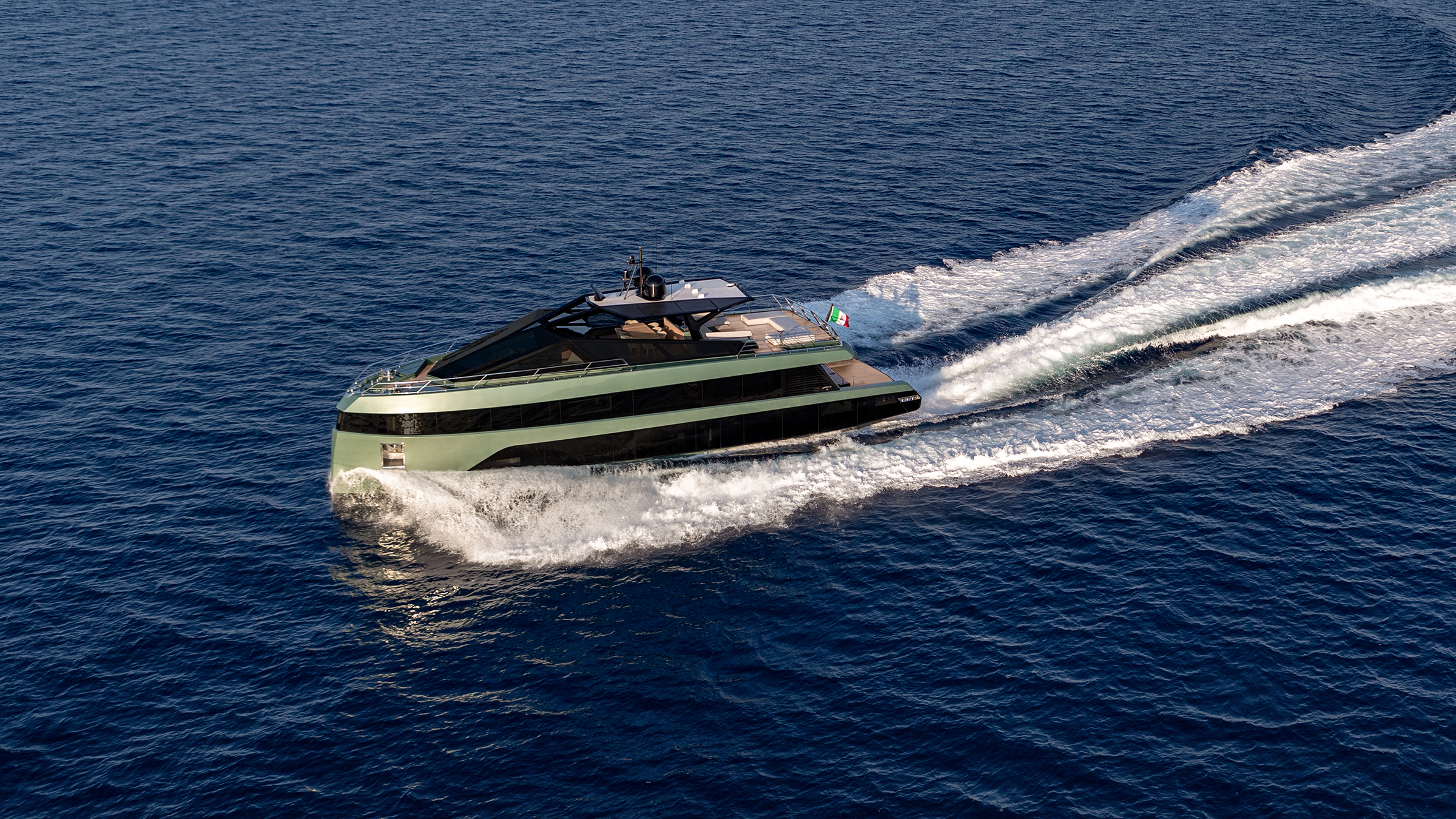 02 · Aerial
Wake · Open water
03 · Bow
Master · Panoramic glazing
02 · Aerial
Wake · Open water
03 · Bow
Master · Panoramic glazing
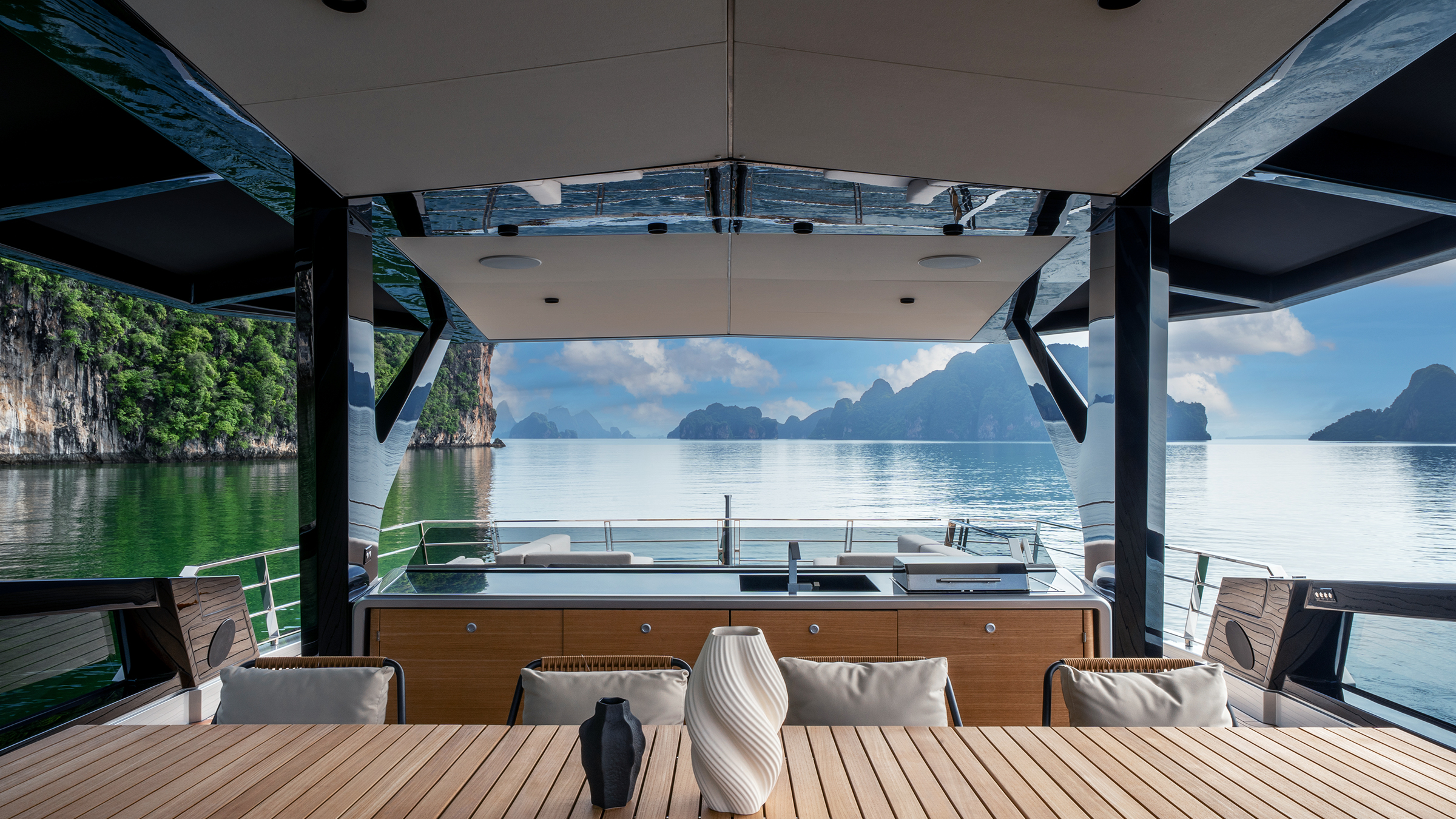 04 · Aft deck
Open dining
05 · Saloon
Two-level living
06 · Dining
Interior · Lower level
07 · Master
Forward suite
08 · Guest
Lower-deck cabin
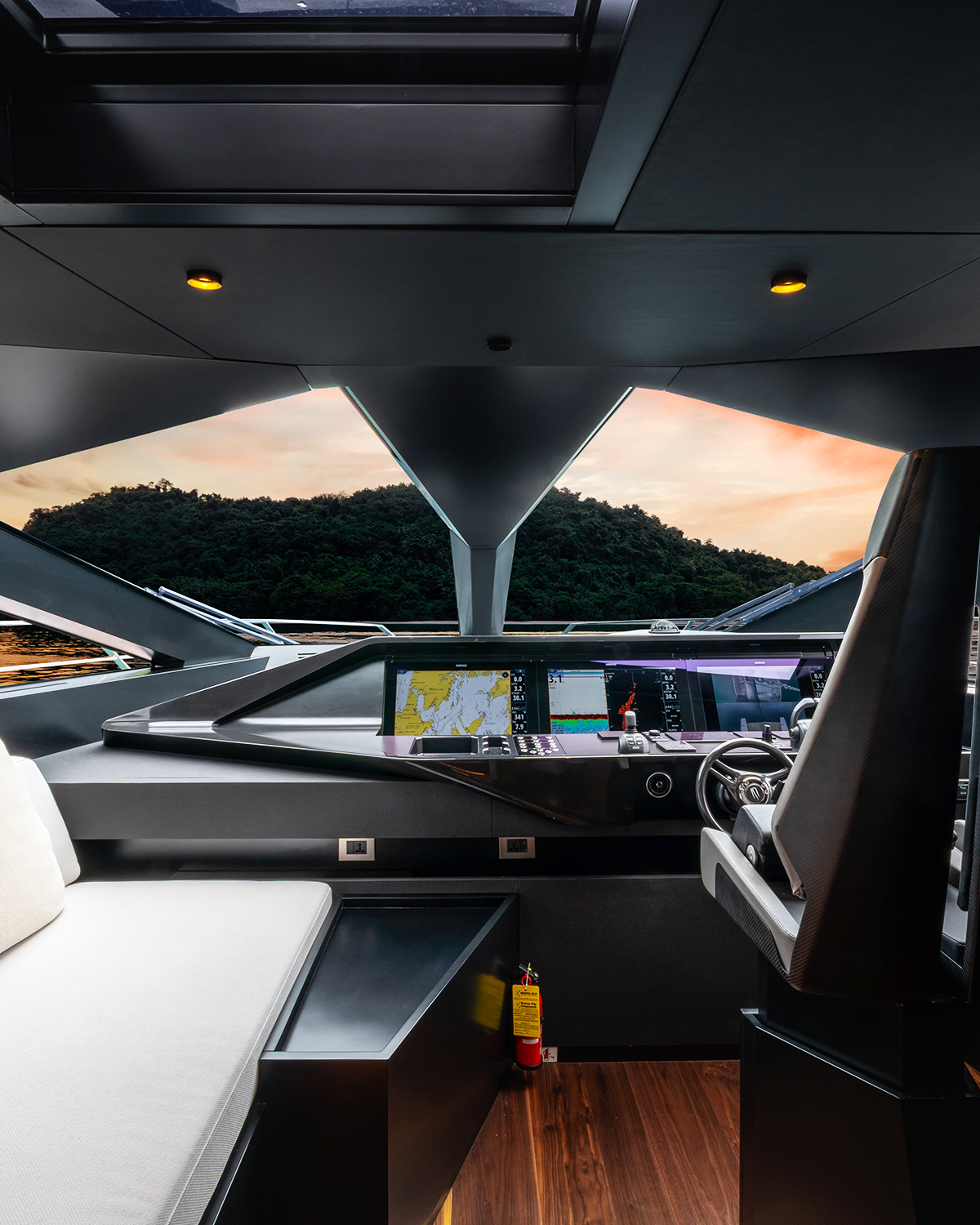
09 · Wheelhouse
Interior helm
10 · Flybridge
Aft lounge
11 · Launch
Flybridge · Dining
12 · Stern
Hydraulic platform
13 · Wake
Stern · Sunset
14 · Coast
Profile · Anchorage
04 · Aft deck
Open dining
05 · Saloon
Two-level living
06 · Dining
Interior · Lower level
07 · Master
Forward suite
08 · Guest
Lower-deck cabin
09 · Wheelhouse
Interior helm
10 · Flybridge
Aft lounge
11 · Launch
Flybridge · Dining
12 · Stern
Hydraulic platform
13 · Wake
Stern · Sunset
14 · Coast
Profile · Anchorage
A 24-metre motor yacht with a 270-degree master at the bow, a domed two-level saloon at its centre, and a sea-level terrace at its stern — the WHY series at its most concentrated, and the most unmistakable Wally in the current fleet.