


Bering 92 — A True Explorer
A steel‑hulled, full‑displacement expedition yacht built to the discipline of distance — twenty‑nine metres of self‑sufficient platform, transatlantic in capability, and unmistakably designed to be lived in for months at a time.
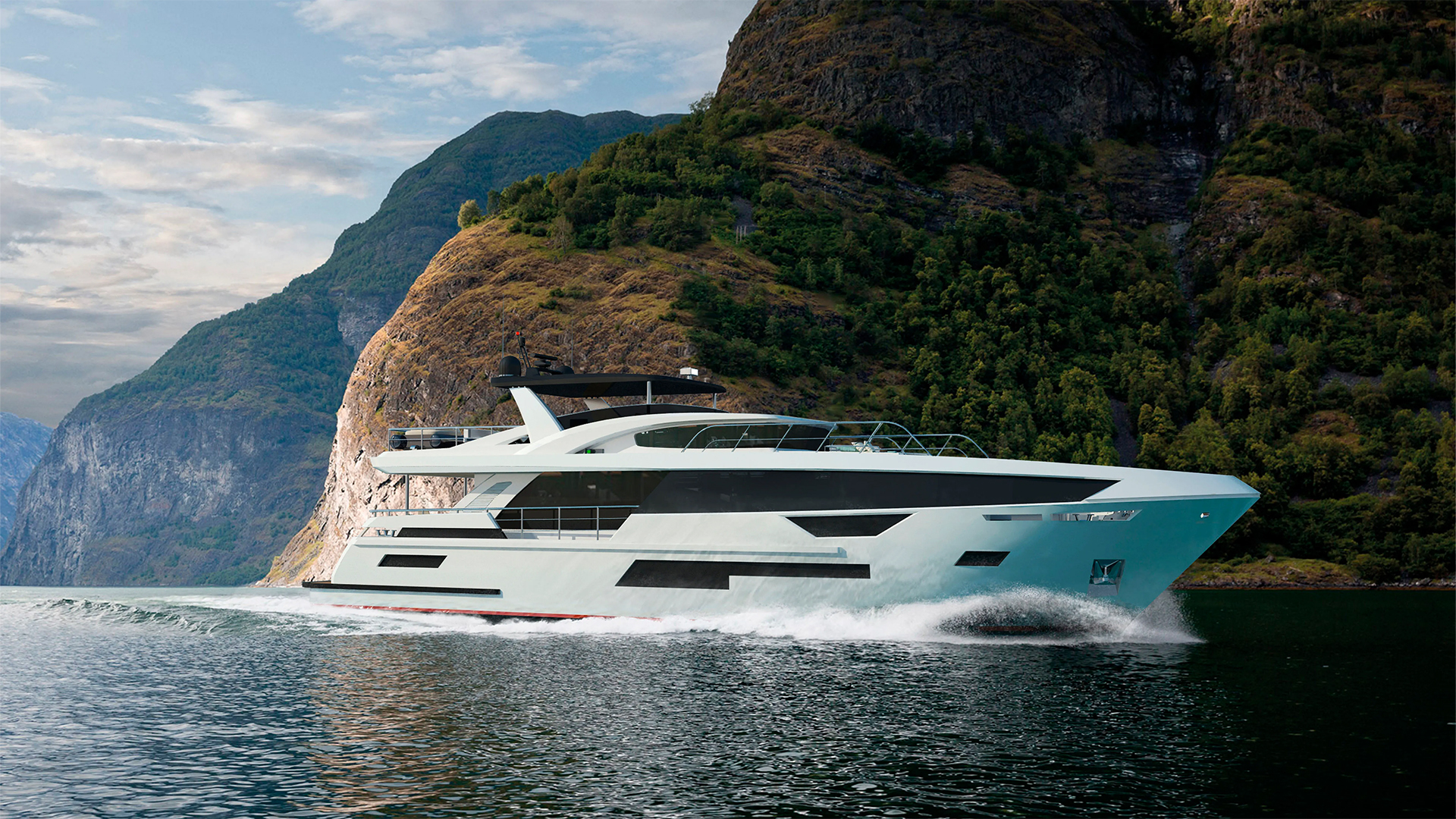
There is a category of yacht that resists the soft vocabulary the rest of the market depends on. The Bering 92 is one of them. Built in steel and aluminium, designed to cross oceans and to anchor at points where no fuel dock will appear for a thousand miles, she belongs to a genre that has only recently regained its prestige — the true expedition yacht, built not to look capable, but to be it.
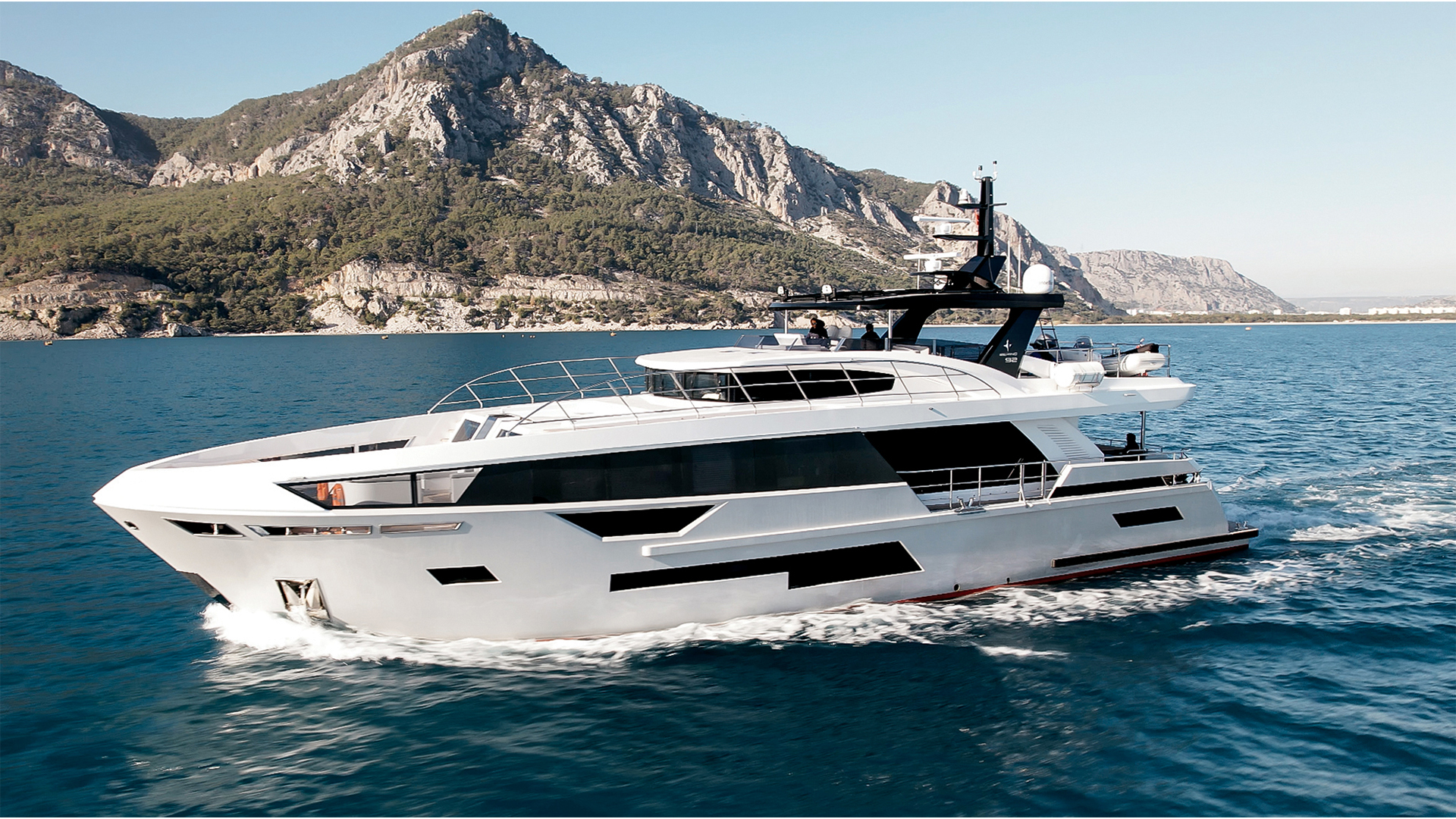
At first inspection she radiates a kind of utilitarian charm: the high bulwarks, the proper Portuguese bridge, the quiet competence of an exterior that does not posture. Look longer and the choices become legible. Steel hull, aluminium superstructure, a full‑displacement form, twenty‑three thousand litres of fuel, transatlantic range — the architecture of a vessel that takes weather, distance and self‑sufficiency as its founding constraints rather than as marketing copy.
The Bering 92 belongs to the compact end of the serious explorer category — twenty‑nine metres of length overall, with a displacement, fuel volume and structural specification closer to those of yachts half her size again. The numbers, in other words, point inward rather than outward. Her ambition is not to be the largest boat in the marina. It is to be the most capable one at distance.
Overall
Range
Displacement
and Crew
A philosophy of steel
Bering Yachts was founded in 2007 by Alexei Mikhailov, a former hydrogeologist born on the Sea of Okhotsk who could not find the small steel explorer he wanted to own and decided, eventually, to build it himself. The company's name borrows from the Bering Strait — a body of water known for sudden storms and difficult seas — and the choice was less branding than statement. Every Bering above sixty‑five feet is built with a steel hull and an aluminium superstructure, with hull plates engineered beyond classification minimums and skegs to protect propellers from floating logs and ice.
The conviction is biographical. Mikhailov lost a fibreglass sport‑fisher to a fire that, by his own account, escalated from first smoke to fireball in minutes. He has built nothing in plastic since. Non‑flammable materials, redundant systems, the metacentric height tuned for predictable motion rather than maximum stability — these are not features bolted onto a Bering hull. They are the brief.
There is a second consequence of the steel decision, less often noticed than the safety case. A 24‑metre fibreglass yacht might displace one hundred tonnes; a Bering of the same size displaces twice that. The mass changes how the yacht moves. Heavier hulls travel through a sea state rather than over it, and the resulting motion is the defining argument for owners who plan to live aboard for months. The boat does not push you away.
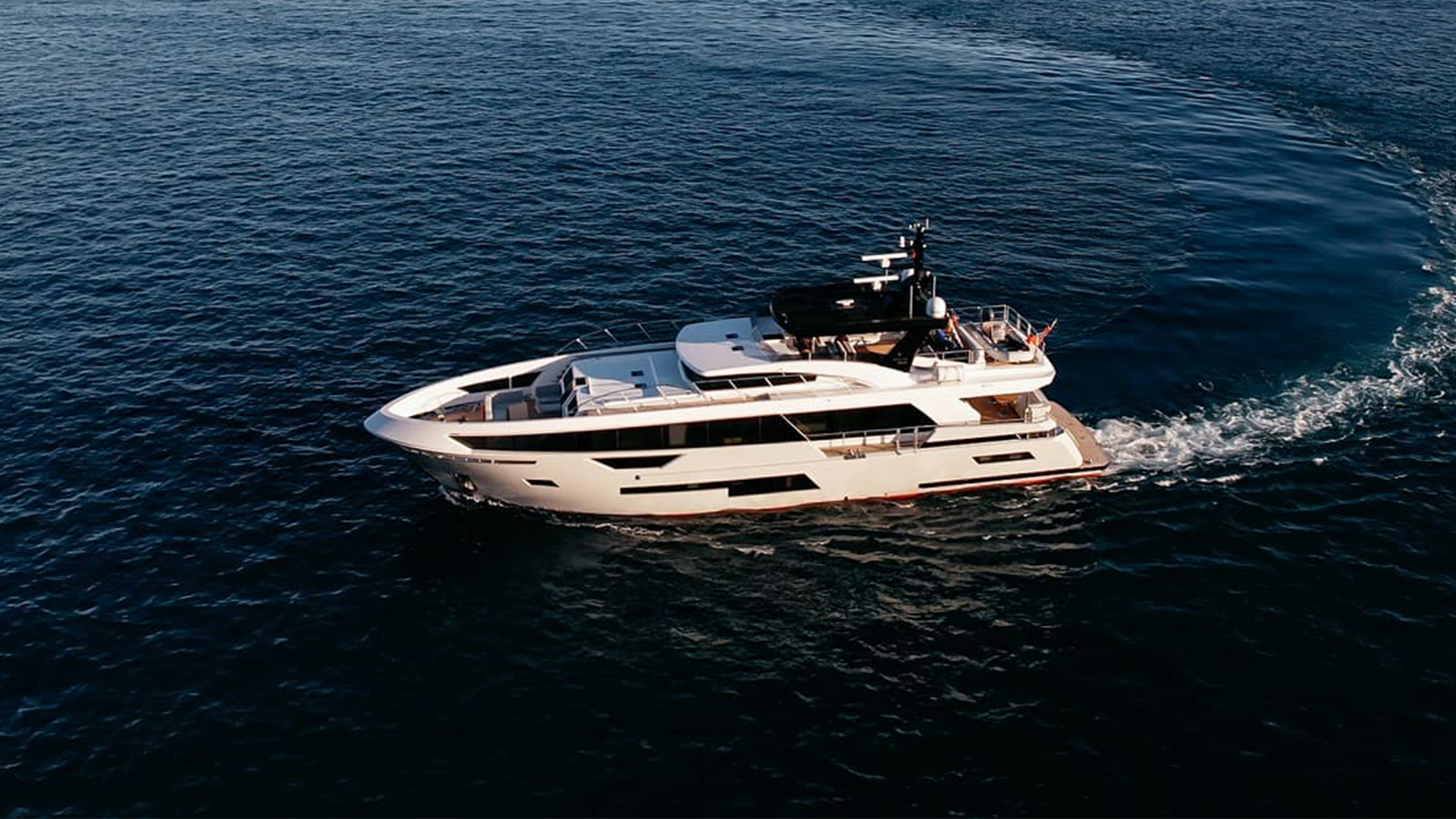
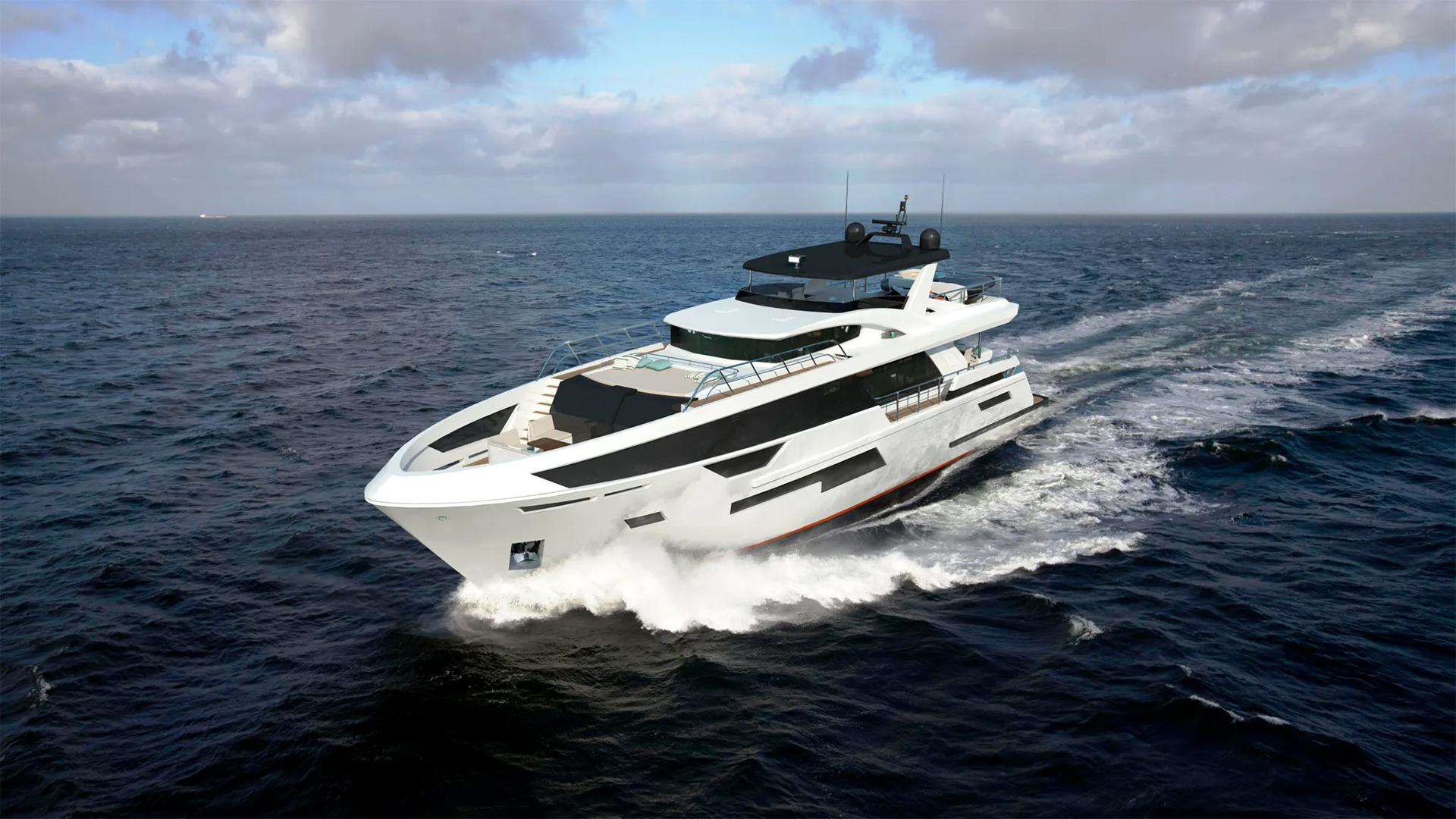
From the air the Bering 92's full‑displacement form reveals itself as a compromise of its own — a hull designed to push water aside rather than plane on top, settling into the sea at nine to ten knots with the metronomic efficiency that long‑range cruising demands. Top speed at half load reaches twelve knots in trials; the cruise number, however, is the one that matters. At nine knots she will hold three thousand five hundred nautical miles of range, enough to cross the Atlantic without theatre and to reach the Arctic without anxiety.
Under the waterline, the protection is unfashionably thorough. The hull is divided into five watertight compartments by four bulkheads — meaning that even in the event of a breach, the yacht can remain afloat, stable and under control. ICCP cathodic protection guards the steel against electrochemical corrosion. Three layers of antifouling cover everything below the waterline. None of this is glamorous. All of it is the difference between a boat that crosses oceans and one that simply suggests it could.
What defines her
A 10mm plate hull built to deflect floating debris, with skegs to protect the propeller. Aluminium superstructure to keep weight low. Non‑flammable materials throughout — the structural argument behind every other choice on board.
Twenty‑three thousand litres of fuel, three thousand five hundred nautical miles at nine knots, an onboard watermaker, and storage discipline measured in weeks. The yacht is engineered to disappear from the grid for as long as the owner cares to.
Heavier hulls move differently. The Bering 92 displaces 175 metric tonnes at full load — roughly twice a fibreglass yacht of comparable length. The result is a yacht that travels through the sea state rather than over it, with motion that does not push the people inside her away.
Five watertight compartments. Active cathodic protection. Duplicated critical systems. The hull and its survival logic are designed for vessels that intend to be out of sight of land, often, and for long periods — not for the convenience of marina life.
An interior built for extended life on board
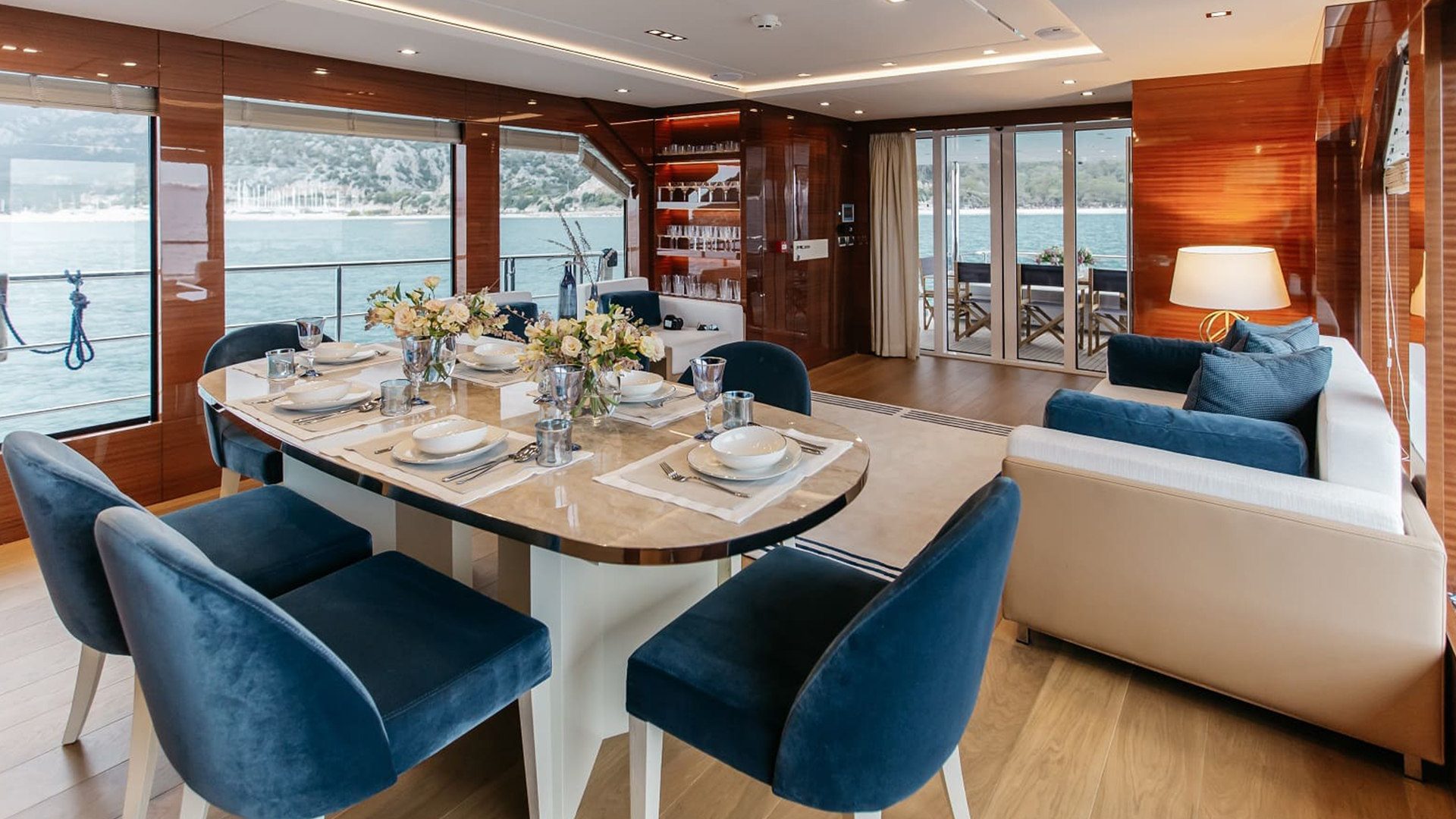
The main deck is laid out around a single editorial decision: this is a yacht meant to be lived in for weeks at a time, not visited for an afternoon. The salon opens directly through to the formal dining area, with floor‑to‑ceiling glazing along both sides — a panoramic register that, on a steel boat, is a structural achievement as much as an aesthetic one.
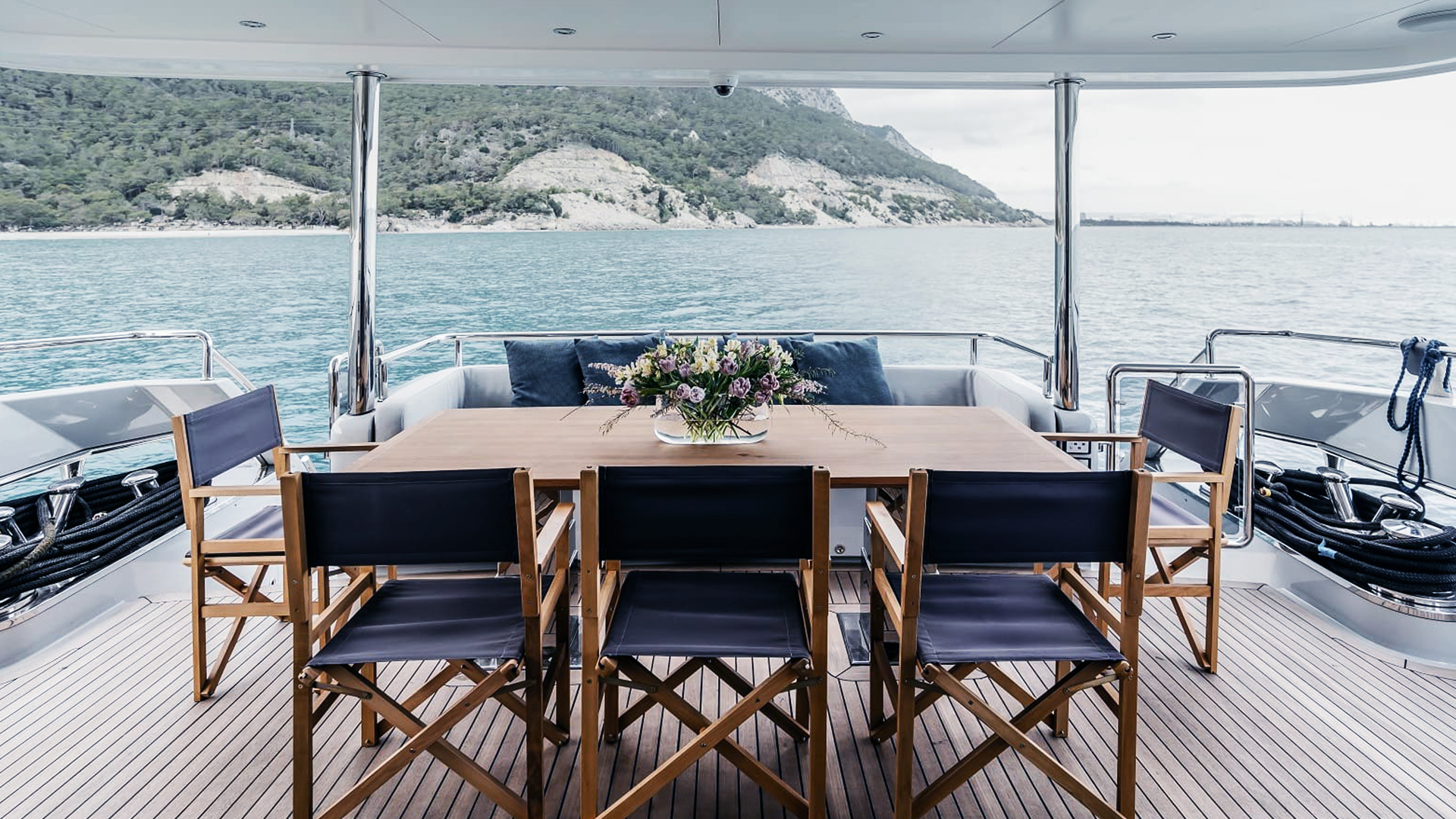
Materials throughout are quiet and durable: matte timbers, soft leathers, fabric tones drawn from earth and water rather than fashion. There are no design gestures competing with the view. The aft cockpit, shaded under the deck above, sets a long dining table at the threshold between interior and exterior — the daily ritual that matters most on a long crossing, set where the air is.
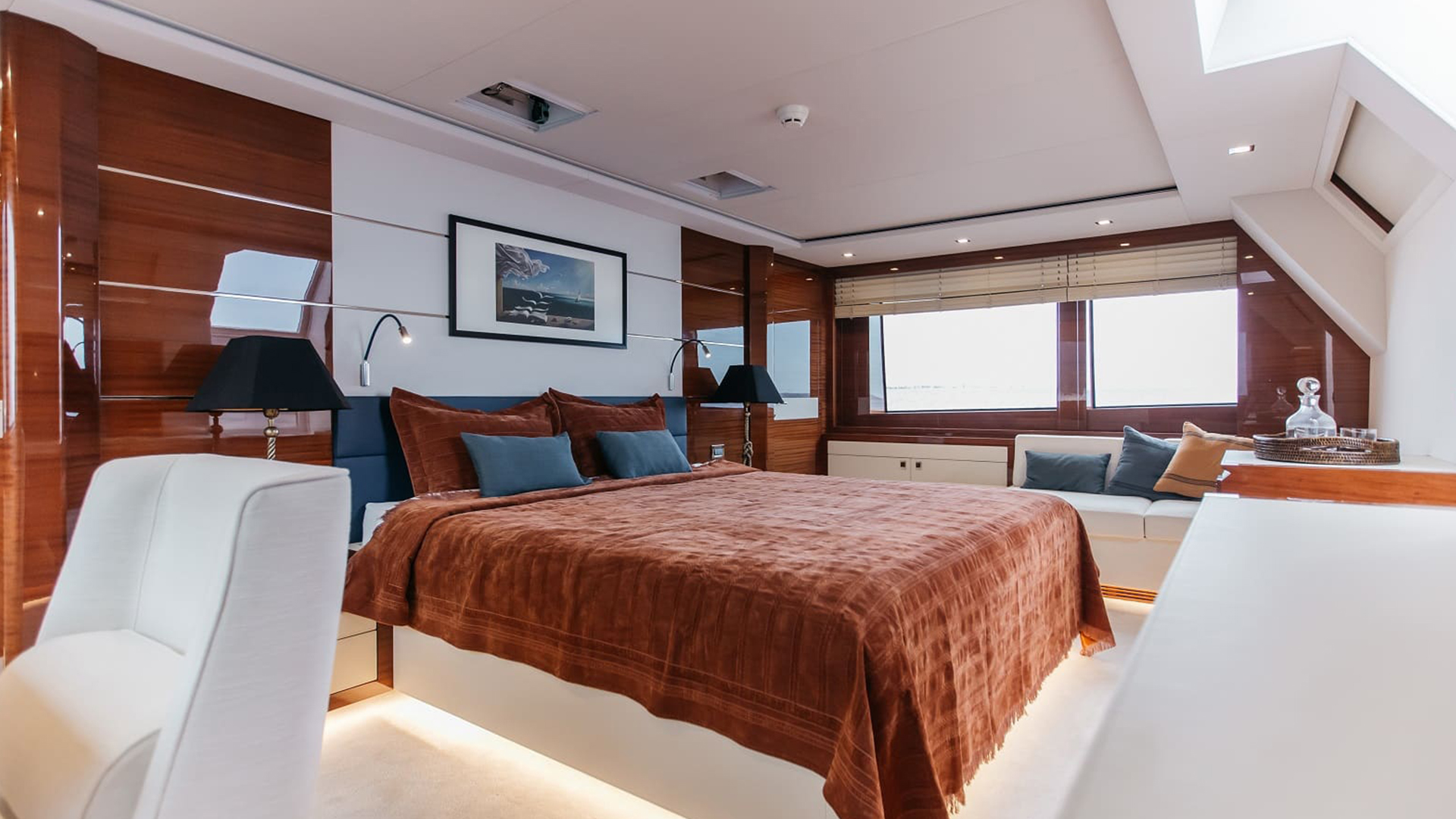
A full‑beam owner's volume, sized for months
The master suite is treated as a primary residence rather than a bedroom. The full‑beam volume yields a sleeping area, a generous dressing space and a private en‑suite with the proportions of a small spa — the kind of cabin that survives long passages because it is sized to absorb them.
The galley, often cited by Mikhailov as a yardstick of seriousness, is sized to commercial standards and given the floor area normally reserved for a dining room. Industrial extraction, separate refrigeration and freezer banks, and prep surfaces designed for an at‑sea kitchen rather than a marina one — all of it pointing back to the same calculation: the boat is the home. The galley is its kitchen.
Surfaces, volumes, light
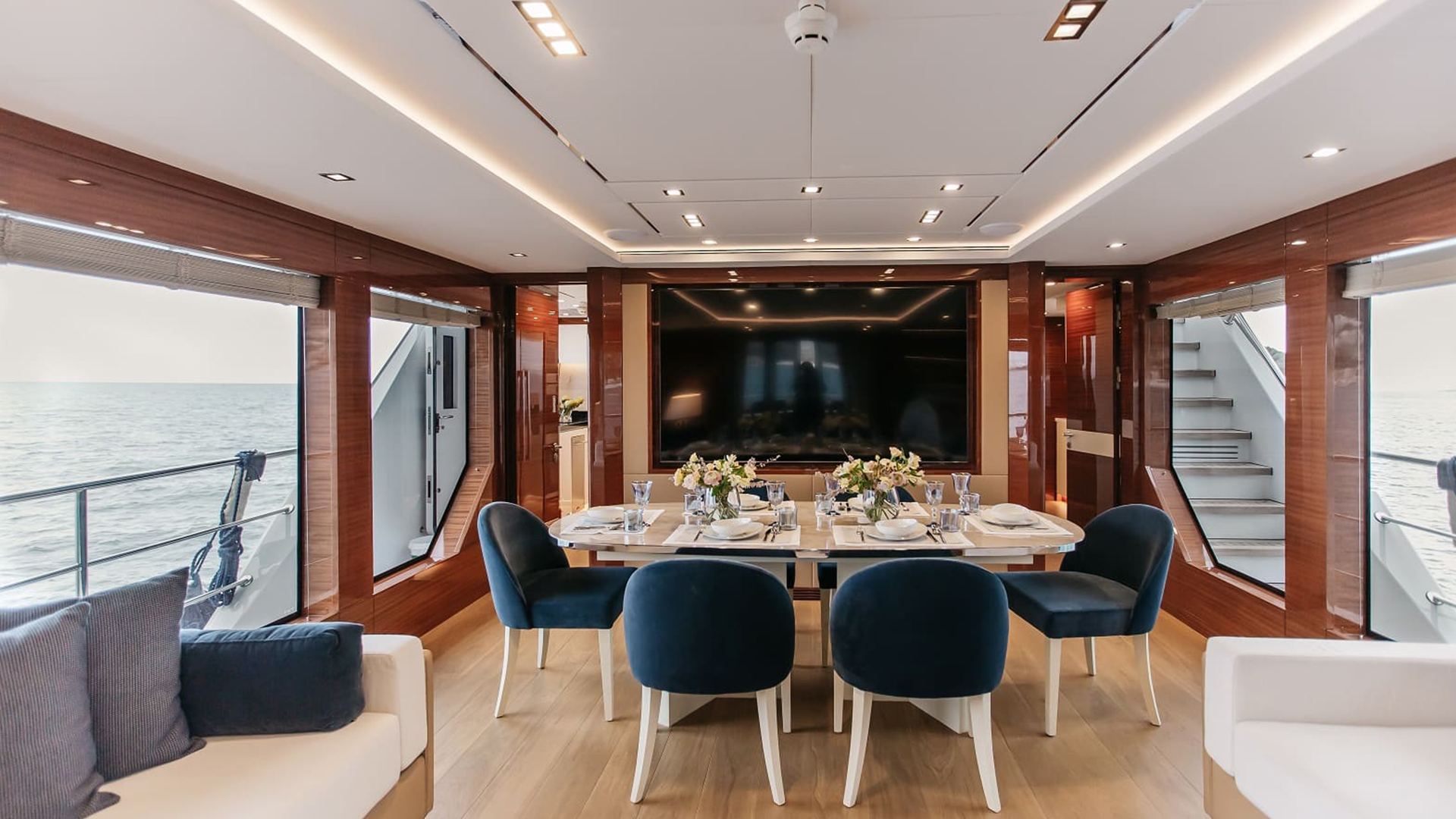
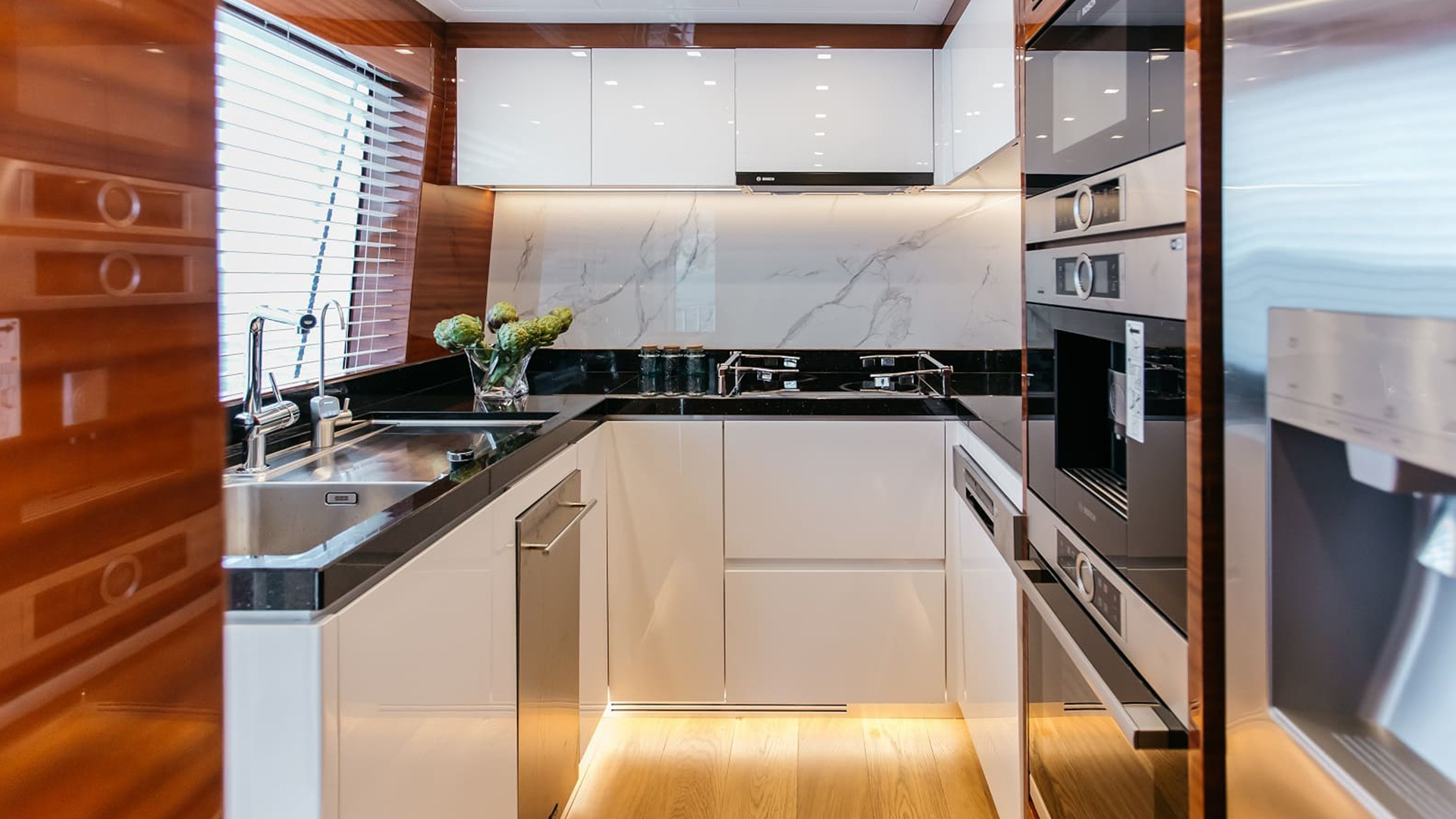
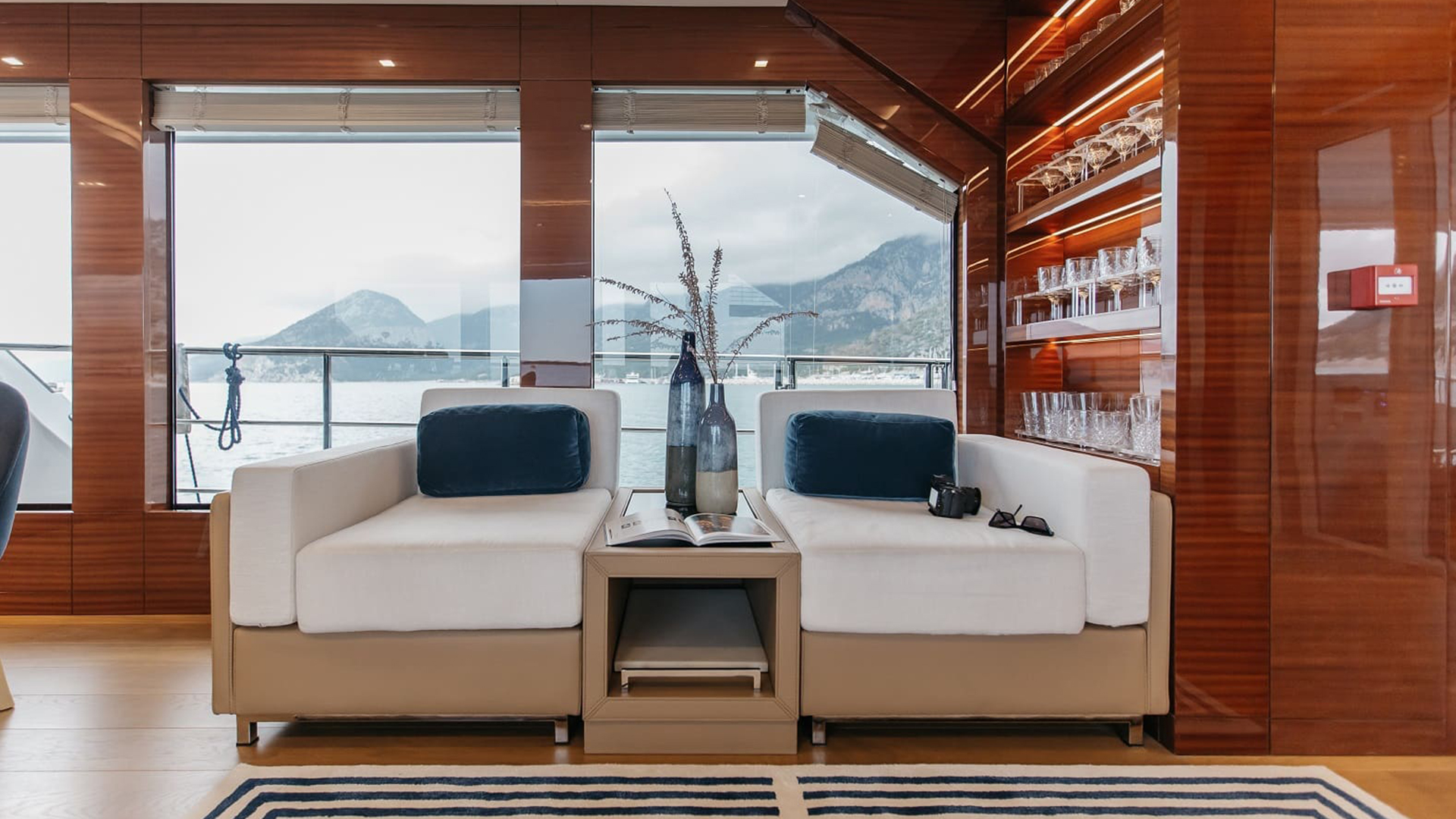
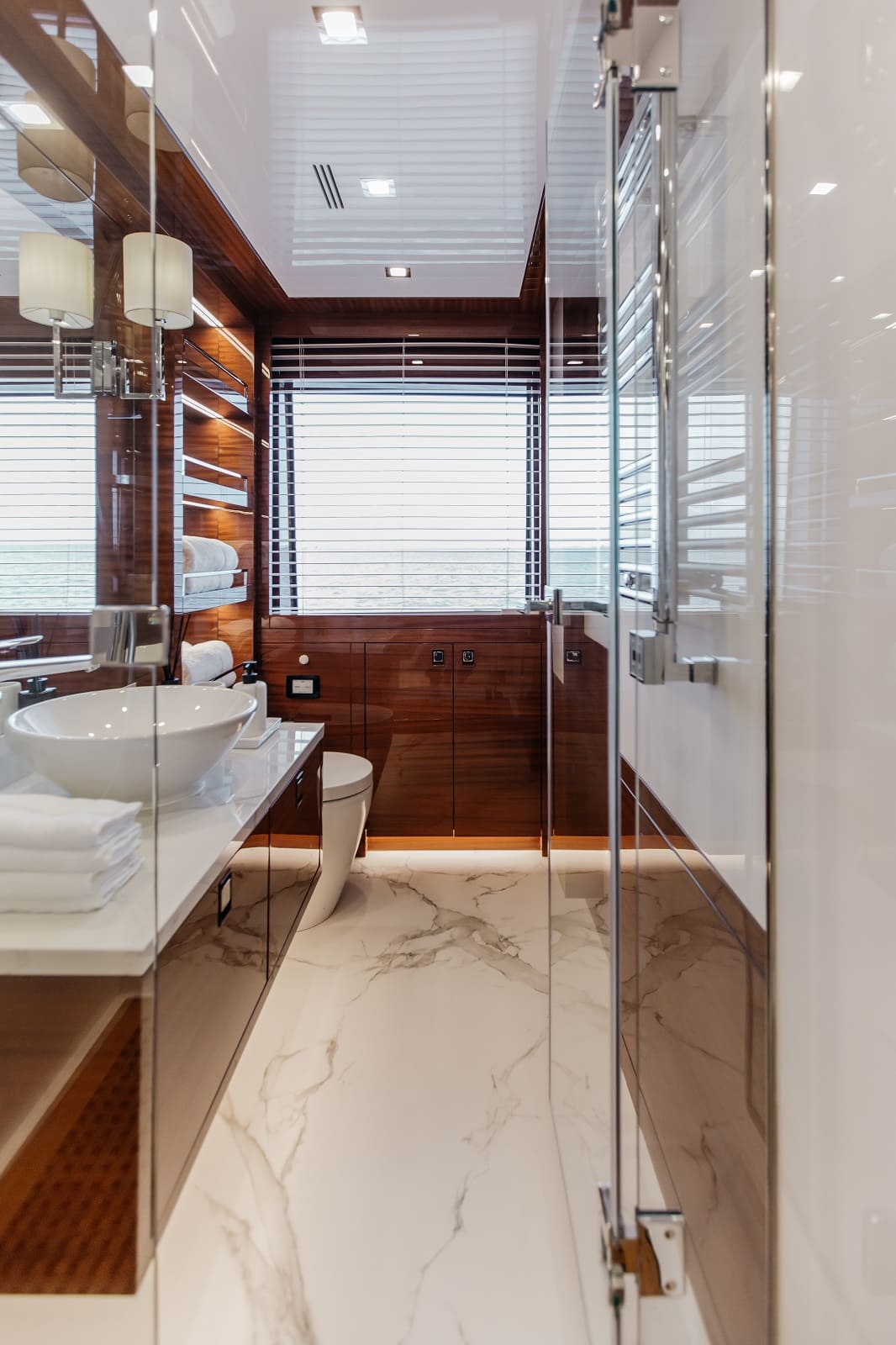
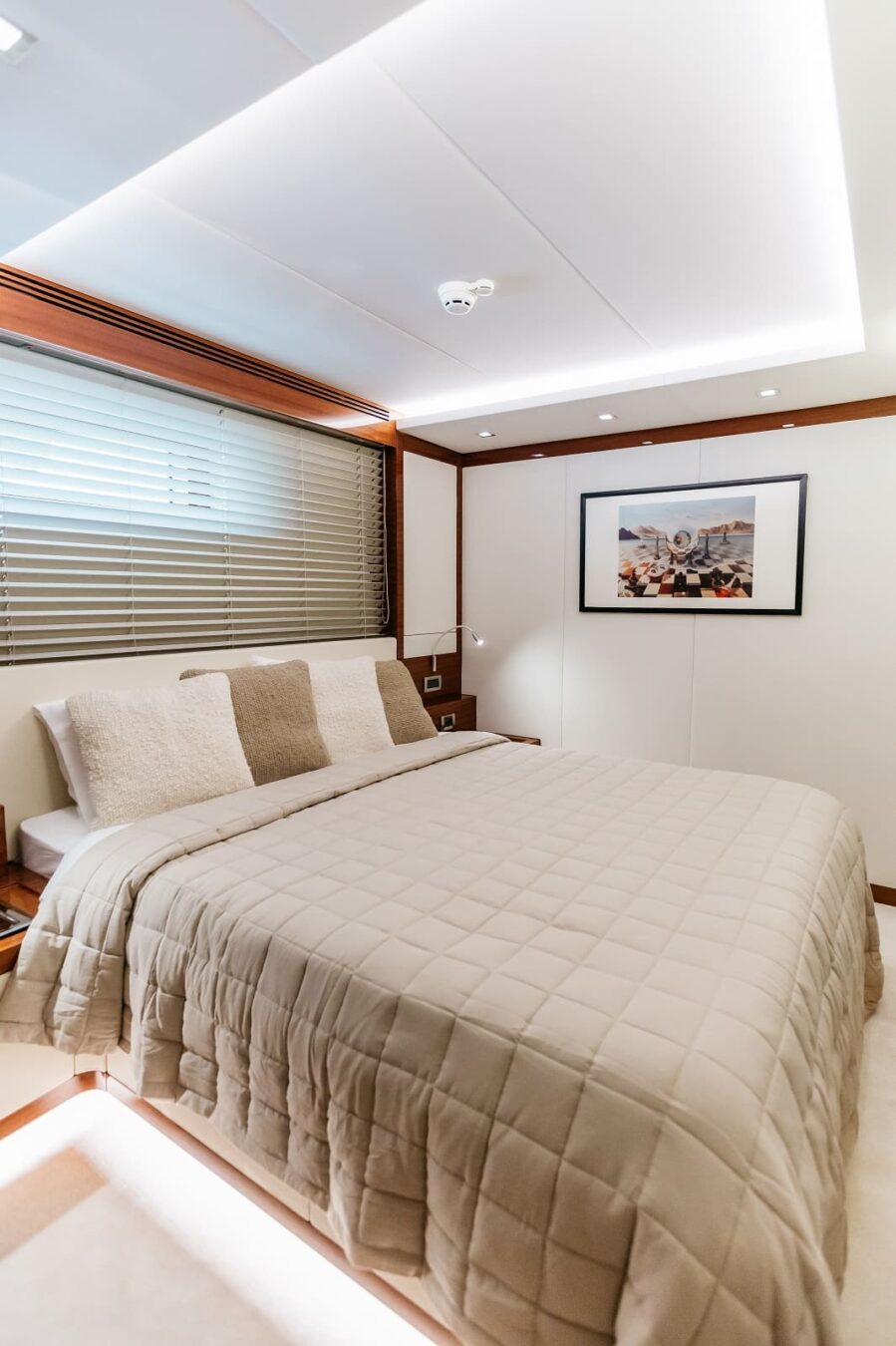
If a boat is noisy or vibrates, it pushes you away. If you plan to live aboard, it must embrace you.
Two stations, one philosophy
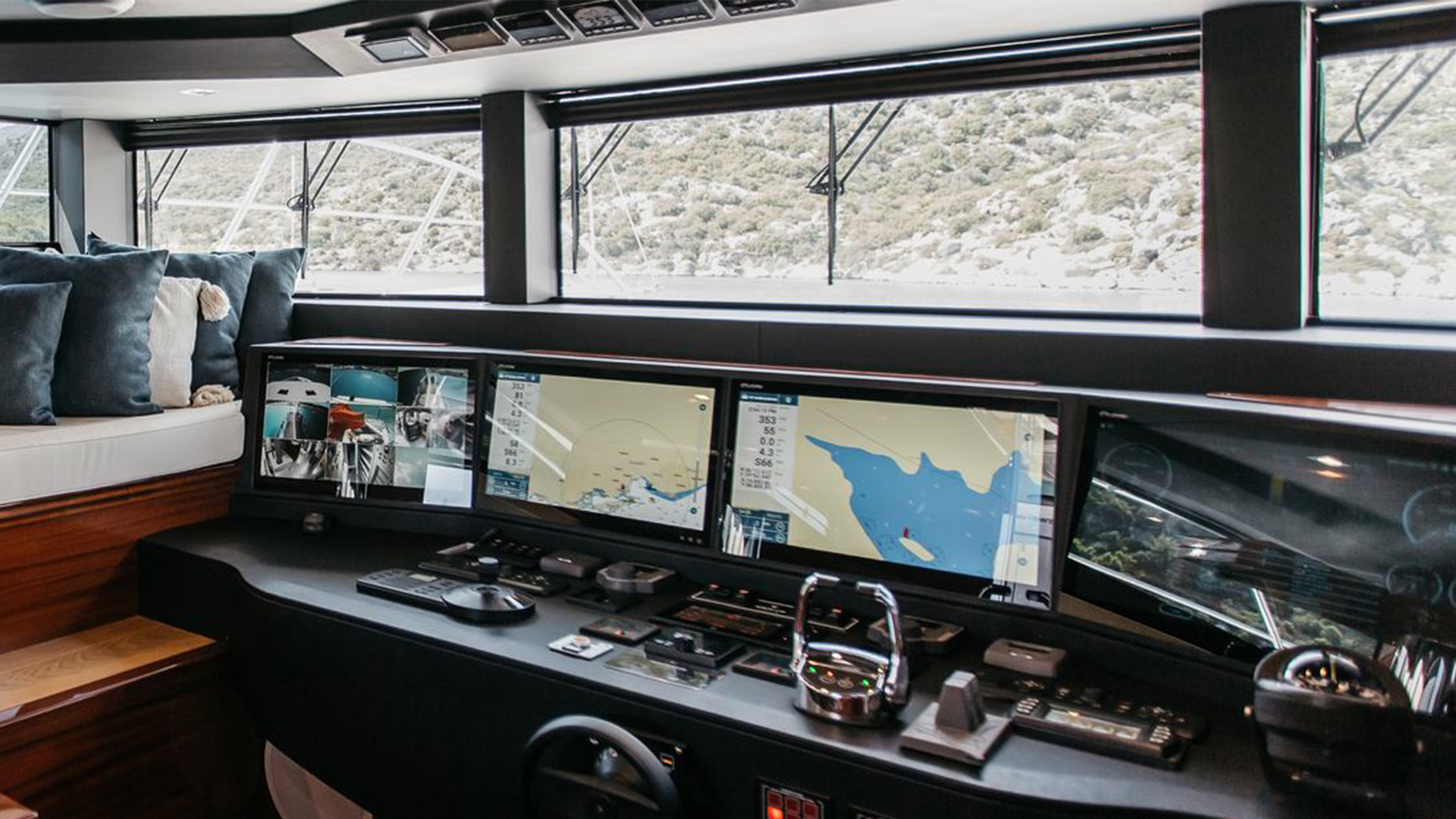
A bridge built around three‑hundred‑and‑sixty‑degree awareness
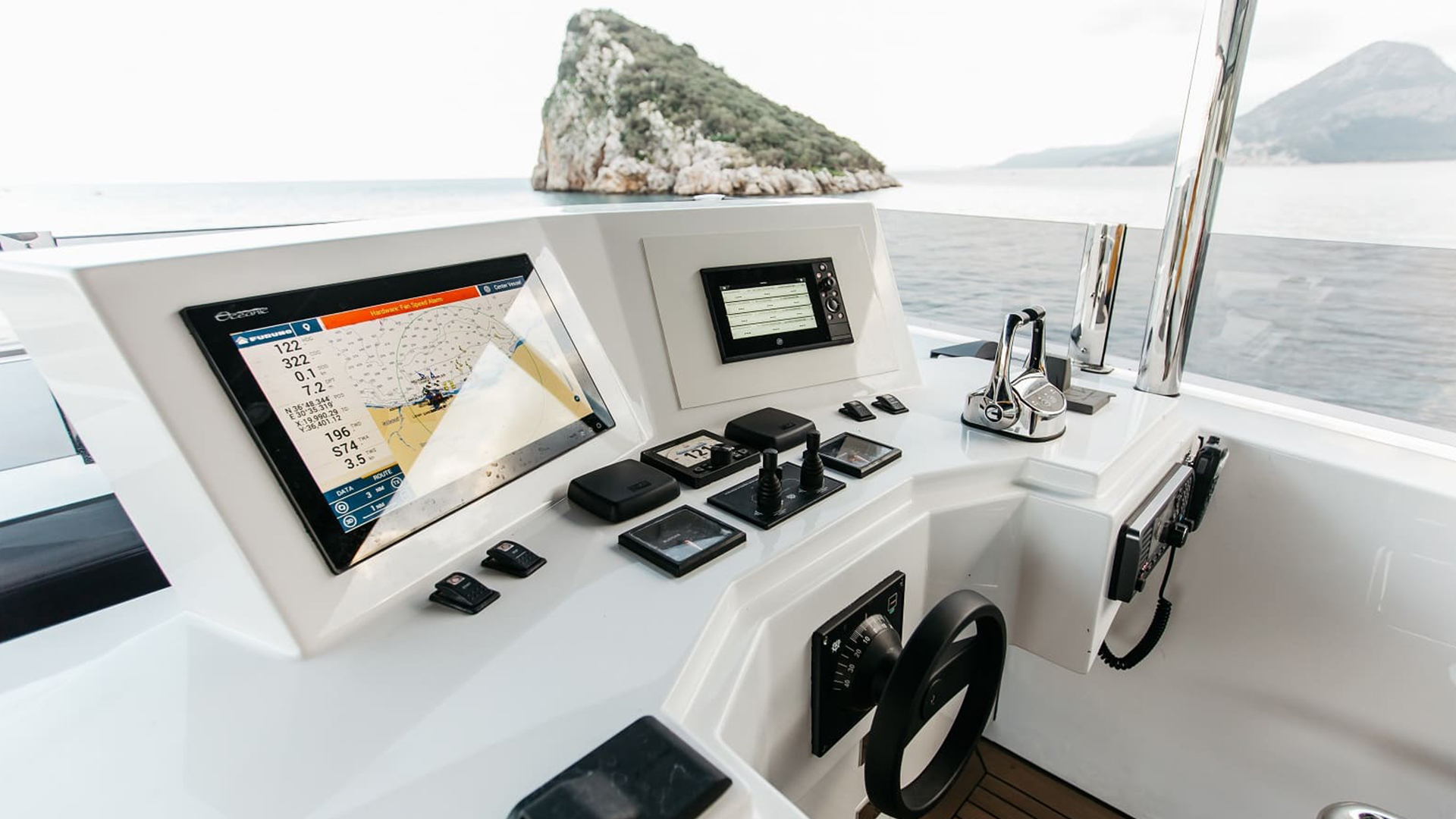
The interior pilothouse is the working command of the yacht — climate‑controlled, configured for ocean passages and laid out around redundant electronic suites. Navigation equipment is specified for situational awareness above and below the waterline, a quiet line of defence against grounding or collision in remote waters where assistance is hours away rather than minutes.
A flybridge helm sits one deck above, open to weather and air, where the boat is run for harbour work, anchoring and the close manoeuvring of arrival. The two stations are not redundant in the trivial sense. They are the working answer to a yacht meant to operate across very different sea states — interior and exterior helms, one for the long crossing and one for the last mile.
Beyond the helms, the upper deck makes room for the kind of life an explorer yacht is rarely credited with. There is space for an auxiliary tender of generous size with its own crane, room for a tender garage with a beam crane and stowage for water toys, and — once the work is parked — an open deck designed for entertaining at anchor. The Bering 92 carries a 3.6‑metre tender as standard, scaled for serious shore work rather than tour‑boat duty.
It is here, on the upper deck and the foredeck, that the explorer‑yacht stereotype begins to dissolve. The sun deck is sized for actual use; the foredeck takes lounging space rather than gear; and the aft cockpit, set close to the waterline, becomes the social centre of the boat at anchor — exactly the architecture the long‑form cruising owner wants when the engines go off and the kettle goes on.
At a glance
A visual tour through the vessel
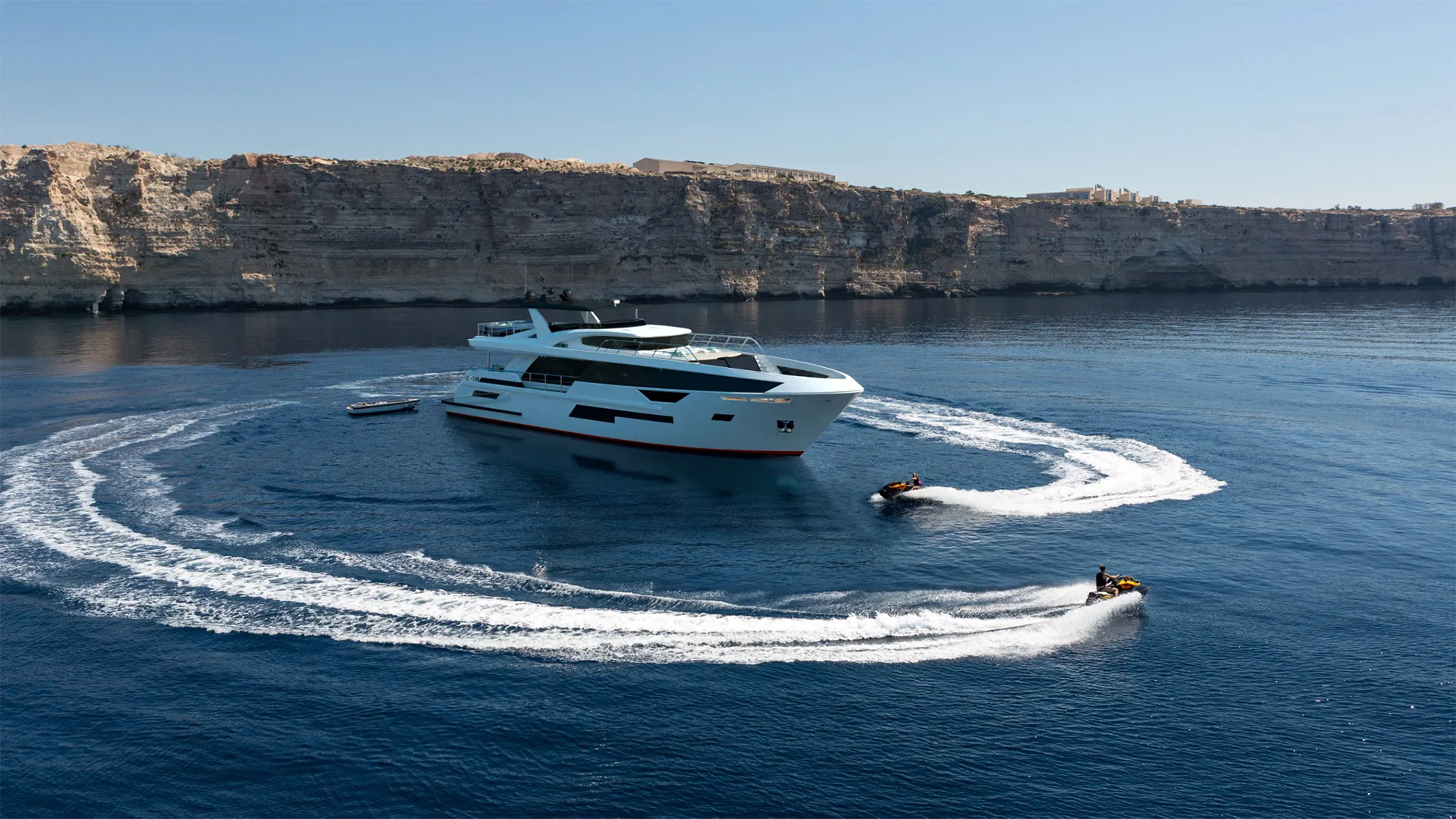
What the Bering 92 finally argues, in steel and litres and watertight compartments, is the case for a yacht designed against the prevailing fashion of the segment. The compact‑explorer market is dense with vessels styled to look like explorers without ever being conceived as such. The Bering 92 is the inverse — engineered first, styled second, with the result that almost everything visible above the waterline reads as a consequence of decisions made below it.
For the owner who measures a boat by where it can go and how long it can stay there, the calculation is unusually clean. Three thousand five hundred nautical miles. Five watertight compartments. A galley scaled for long passages. A boat, in the end, that does not need to be sold to anyone who has already understood the terms it sets.
A yacht engineered for distance, autonomy, and the texture of actual life on the water.