


MOST READED

NARRATED ARTICLES

NEWSLETTER

Luxury boating stories, delivered to your inbox every week.

EDITOR'S CHOICE

PRINT EDITION

ONBOARD ESSENTIALS

Pure originality. A gift collection for the individual who has it all and values distinction above all else.

Scroll
Destinations · Cruising Guide

First Crossing
to the Bahamas

Fifty miles of open water separate South Florida from Bimini, the closest landfall in an archipelago of seven hundred islands. For the first-time captain, the crossing is short — and entirely unlike anything on the inside of the coastline.

USA Onboard Editorial · Cruising Guide · 2026 · Reading · 12 min

No one quite knows how many islands the Bahamas hold. The official count favours seven hundred islands and roughly two thousand four hundred cays, scattered across an archipelago that runs nearly seven hundred and sixty miles north to south. Fewer than fifty are inhabited. The closest of them, Bimini, sits just over fifty miles from the Florida coast — and is, almost without exception, where the first crossing ends.

The Bahamas reward boaters who arrive on their own keel rather than at an airport. The flight lands you in a country; the crossing places you somewhere altogether different. From the moment the water turns from the deep ink of the Gulf to the pale, lit turquoise of the banks, the trip stops being a transit and becomes the thing itself.

For an experienced cruiser, the run from Miami to Bimini is a half-day affair. For a first-time captain, it is the first proper bluewater passage of a boating life — short enough to be reasonable, demanding enough to require respect. The Gulf Stream is not a hazard to be feared, but it is not a coastal channel either. It is a current, an offshore weather pattern and a navigational discipline rolled into one. The captain who reads it correctly arrives in Bimini before lunch. The captain who reads it badly is in for a long, uncomfortable day.

This guide assumes a beginner — a confident inland or coastal boater making the leap into the Atlantic for the first time. It is not exhaustive, and it is not a substitute for current charts, official forecasts and local knowledge. It is the conversation you would have with a captain who has made the crossing more times than they can remember, the night before you make it for the first time.

50nm
Miami to Bimini · The Shortest Atlantic Crossing

The distance from the Florida coast to the closest Bahamian landfall, measured at the narrowest point. A modern cruising vessel covers it in roughly two to four hours, depending on speed, sea state and how respectfully the Gulf Stream is being treated.

The Crossing · The Gulf Stream

A river inside the ocean

Between Florida and Bimini lies the Gulf Stream — a warm, fast-moving body of water that runs from south to north along the entire passage. It is, in effect, a river inside the ocean. Crossed in the right conditions, it is a fluent, almost gentle traverse. Crossed in the wrong conditions, it is the single most uncomfortable stretch of water in the Western Atlantic.

The rule that experienced captains repeat without irony is the simplest one in the trade: do not cross on a north wind. The Gulf Stream flows north; a wind blowing against it stacks the seas into short, steep waves that punish boats and crews equally. Wait for the south or southeast breeze, the calm summer morning, the high pressure that has settled over the strait. Never cross with a cold front approaching, never cross with a storm anywhere in the picture, and never cross because the calendar says you should.

The current itself sets the boat northward at roughly two to three knots, sometimes more. A crossing planned in a straight line will arrive considerably north of where it intended. Modern GPS chartplotters — properly waypointed and paired with a competent autopilot — correct for the drift continuously, holding the heading to its destination. The first-time crosser does not need to fight the current; they need to know it is there, trust the equipment, and resist the urge to over-steer when the bow points fifteen degrees off the apparent course.

Depths along the crossing run to roughly two thousand five hundred feet through the heart of the strait. As the western shelf of the Bahamas approaches, the seabed climbs sharply — first to a thousand feet, then, within a few miles of Bimini, to fifty. The water reads the change long before the depth sounder does. The deep blue of the open Atlantic gives way to a pale, almost luminous turquoise. That colour is the announcement: the bank is under the keel, and the Bahamas have begun.

The First Rule of the Strait
A north wind against the Gulf Stream is the only condition that consistently produces dangerous seas in the Florida Strait. Wait for a southerly breeze, a high-pressure ridge, and a forecast that holds for the full window. A delayed crossing is, in every case, the right crossing.
Bimini · The channel announces itself
Arrival · Bimini

The first landfall

Bimini is three islands and a scatter of cays, sitting on the western edge of the Great Bahama Bank. North Bimini and South Bimini hold most of the population, the marinas and the airport; East Bimini is quieter and largely undeveloped. For the first-time crosser, the destination is almost always one of two harbours on North Bimini.

As the depth sounder climbs from a thousand feet to fifty, the entrance channel becomes the priority. Bimini's approach is well-marked but unforgiving in cross-current; engines drop to idle, the chartplotter is checked against the visual markers, and the boat enters the inner waters at no-wake speed until the assigned slip is in sight. There is no urgency at this point. The crossing is done. What remains is the careful business of arrival.

Two anchorages — or, more accurately, two marina precincts — dominate first-time stays. The first is in front of the docks of the Big Game Club, in Alice Town, where the marina opens directly onto the village by tender. The second is at the northern end of the harbour, near Resorts World, the more recent resort and casino development. As with every Bahamian harbour, the anchor must be set firmly, and the strong tidal currents inside Bimini's port deserve continuous attention through the first night.

Once the boat is secured, one ritual precedes everything else. The yellow quarantine flag is hoisted, and only the captain steps ashore — with the documentation of every soul on board — to clear immigration and customs. The ritual is short, the paperwork uncomplicated, and the rest of the crew remains on the boat until clearance is granted. From that moment forward, the cruise has officially begun.

Annotated Diagram

The morning go / no-go decision

A simplified map of the question tree that runs in the captain's head at dawn, before the lines come off the cleats and the bow turns east.

— NORTH WIND — — SOUTH / CALM — FRONT NEAR WINDOW HOLDS 0 Forecast at 06:00 Wind, swell, pressure trend 1 2 3 4 Stand down · wait The crossing waits a day 5 Hold · monitor Reassess at midday 6 Depart · cross Lines off, bow east
01

Forecast at 06:00.

Wind direction, sea state, swell period and the pressure trend, read from at least two sources. Local marine forecasts and offshore models, cross-checked, not chosen.

02

The wind question.

The single most important variable. North against the Stream is the disqualifying condition. Anything else is, at minimum, eligible for further reading.

03

The frontal question.

Cold fronts crossing the Florida peninsula change the picture within hours. A front inside the next twenty-four hours pulls the crossing back to the dock, regardless of the morning's calm.

04

Stand down.

The lines stay on the cleats. A delayed crossing is a normal one. The captain who learns this on the first trip will keep the boat — and the crew — for many trips after.

05

Hold and monitor.

Stay rigged for departure, watch the mid-morning forecasts, plan a window that opens later in the day. Many good crossings began at 11:00 rather than 07:00.

06

Depart.

Fuel topped, waypoints loaded, the autopilot tested at the dock. The boat leaves the inlet under full daylight and arrives in Bimini before the afternoon breeze fills.

Anatomy of a Crossing

A morning across the Stream

A first crossing reconstructed in seven moments, from the dock at Miami Beach to the immigration desk at Alice Town.

05:30
Final forecast read
South-southeast at eight to twelve knots, no fronts within thirty-six hours, swell low and from the east. The window holds. The captain confirms with the crew, the engines are pre-warmed, fuel and water are checked one last time.
06:45
Lines off, inlet cleared
Out of Government Cut or Haulover, the bow turns to the east. Within minutes the colour of the water deepens. The autopilot is engaged on the Bimini waypoint, and the GPS begins its quiet correction for the Stream.
08:10
Inside the Stream
The water is darkest blue. The boat is being set north at roughly two knots, the heading reads fifteen degrees off the rhumb line, and the autopilot is doing exactly what it should. The crew settles. The crossing is half over before the coffee is finished.
09:25
The water turns
Within minutes, the deep blue gives way to a bright, almost unreal turquoise. The depth sounder catches up — two thousand feet, then a thousand, then fifty. The bank is under the keel. Bimini is on the bow, low on the horizon.
10:05
Channel approach
Speed comes off, the channel markers are picked out by eye and confirmed on the chartplotter. No-wake from this point. The engines drop to idle as the boat enters the inner harbour, and the assigned slip becomes visible past the breakwater.
10:30
Tied up · yellow flag
Lines secured. The yellow quarantine flag is run up. The captain gathers the crew's documentation, steps onto the dock, and walks to the customs office. The rest of the crew waits — the cruise is not yet officially under way.
11:15
Cleared in
The cruising permit is in hand, the courtesy flag replaces the yellow one, and the crew is ashore. The first proper Atlantic crossing of a boating life is complete. By any reasonable measure, lunch is overdue.
Gallery · Bimini and the Bank

A visual passage across the crossing

Drag to explore · Click to enlarge
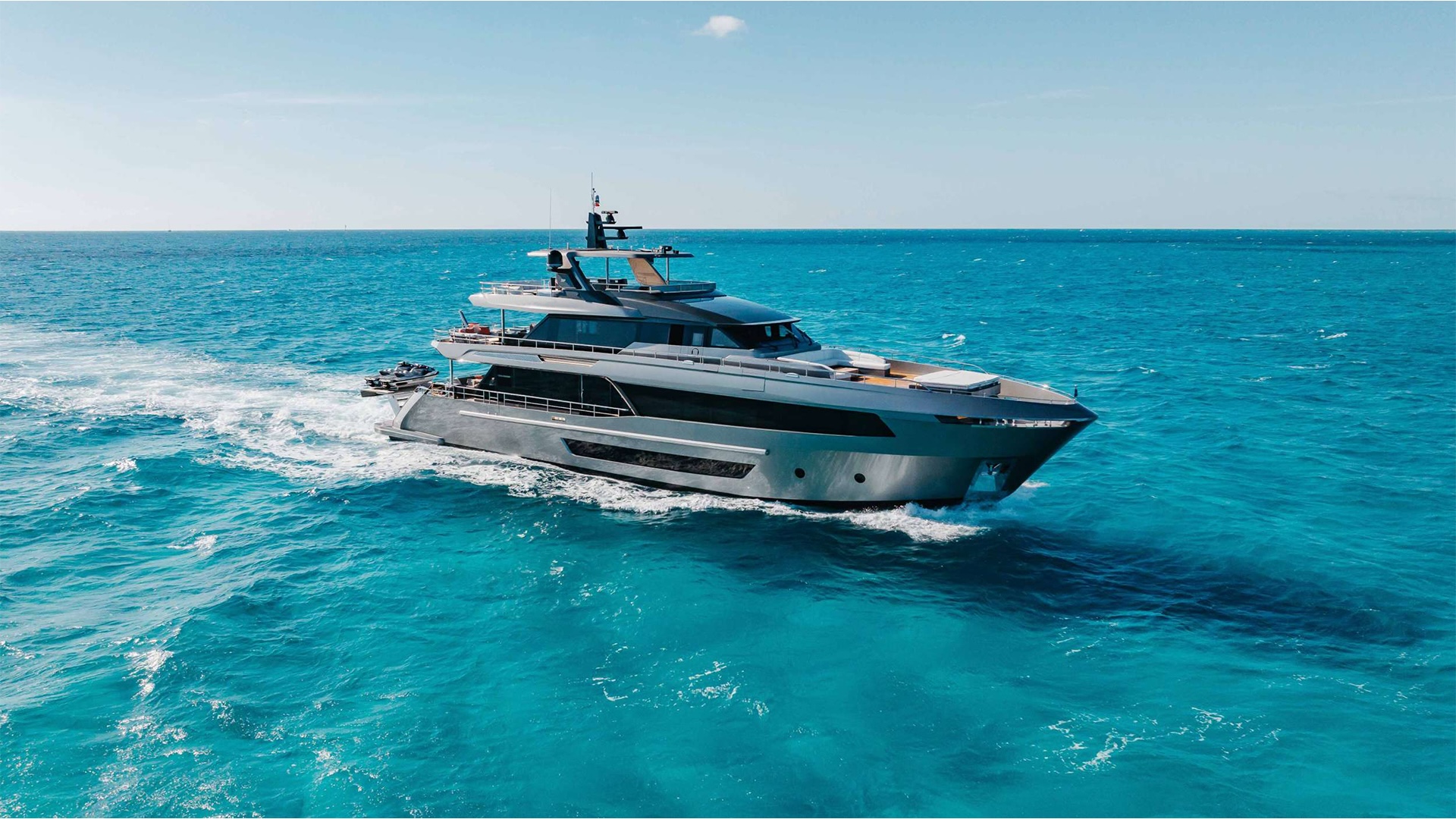
Yacht crossing the Gulf Stream toward Bimini 01 · The Crossing Yacht in transit
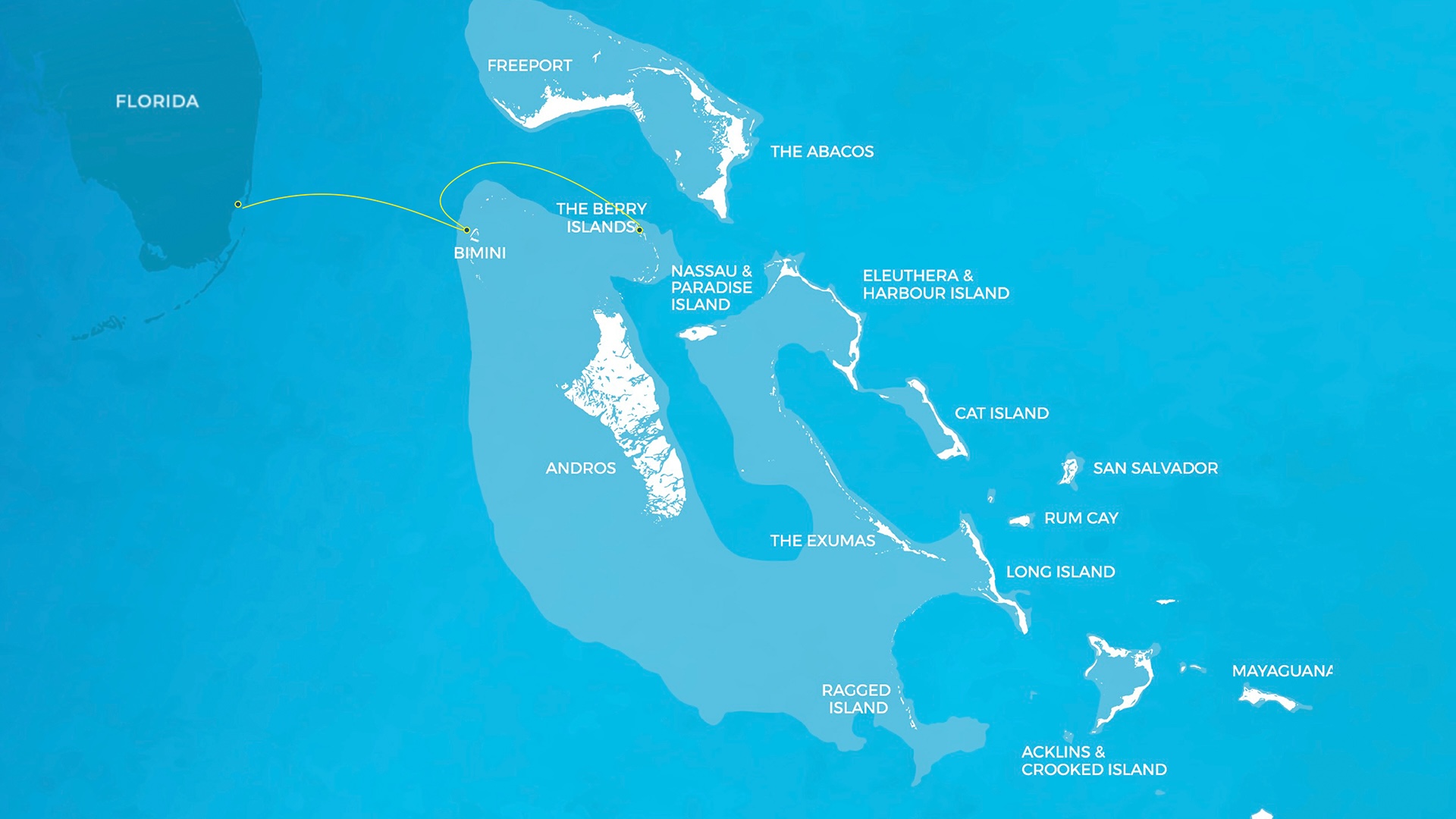
Navigation chart showing the route from Miami to Bimini and on to the Berry Islands 02 · Route Map Miami → Bimini → Berries
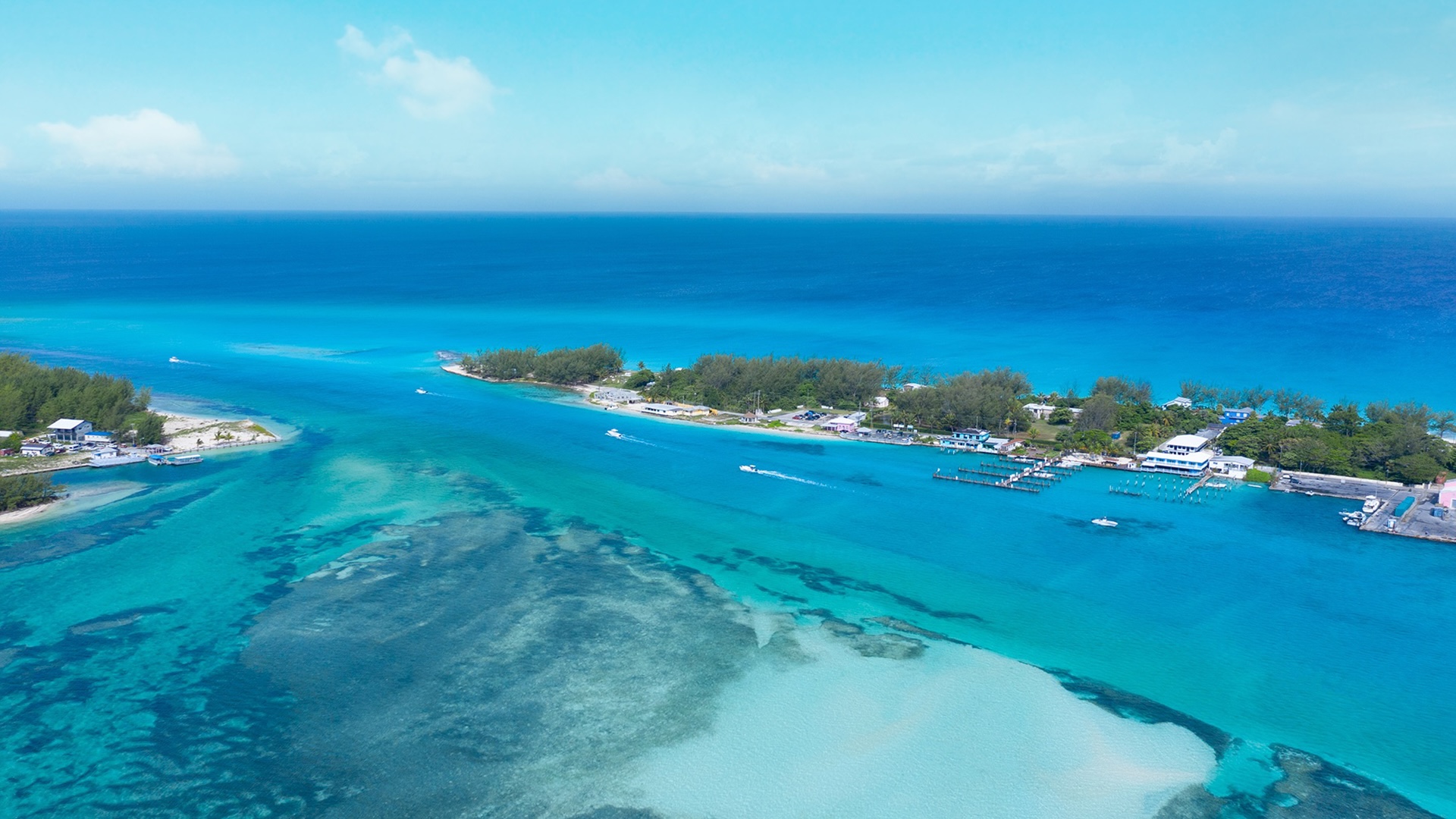
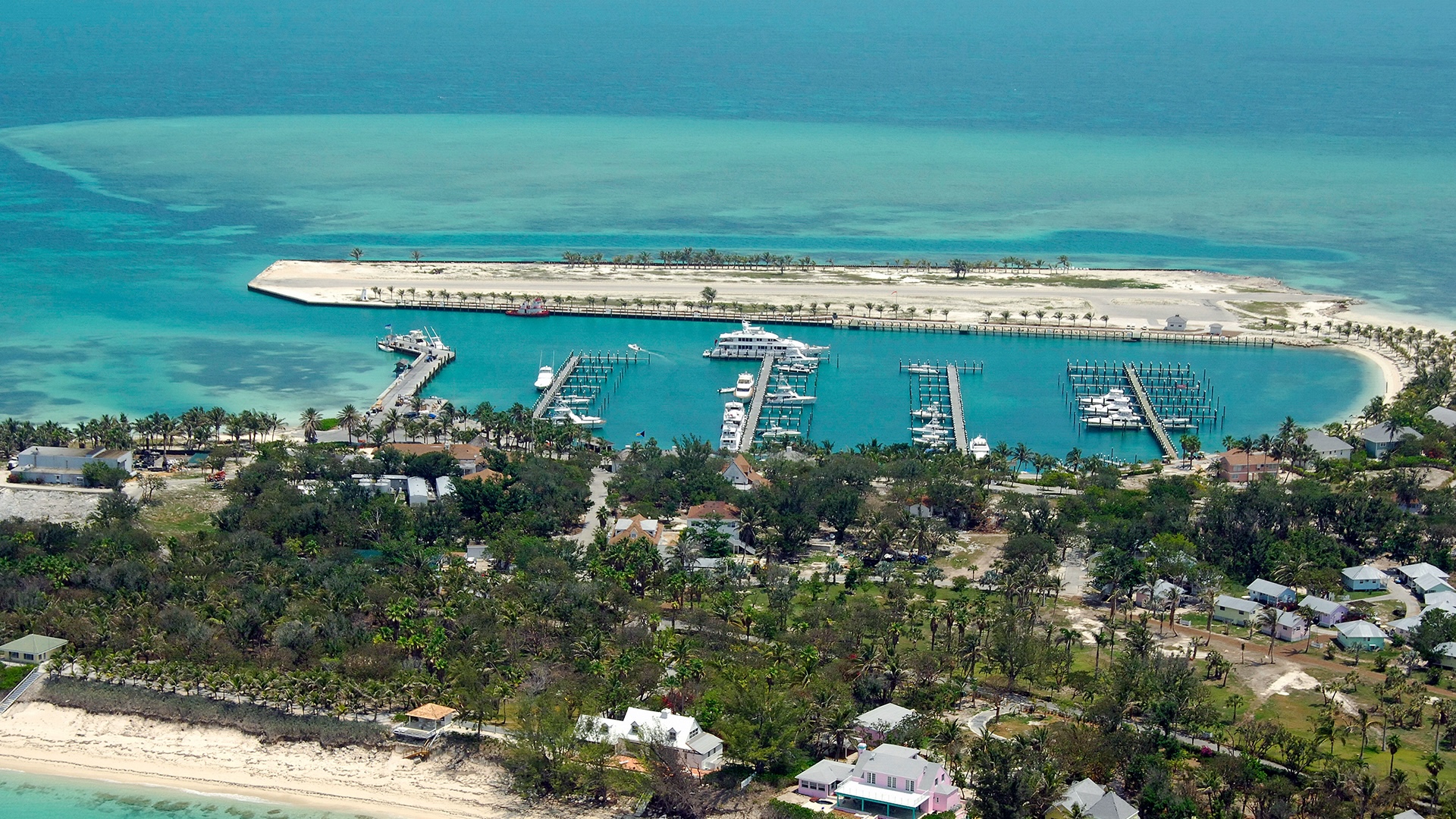
Aerial view of the entrance channel to Bimini 03 · Approach Bimini channel · Aerial
Aerial view of Cat Cay marina, south of Bimini 04 · Cat Cay Southern alternative
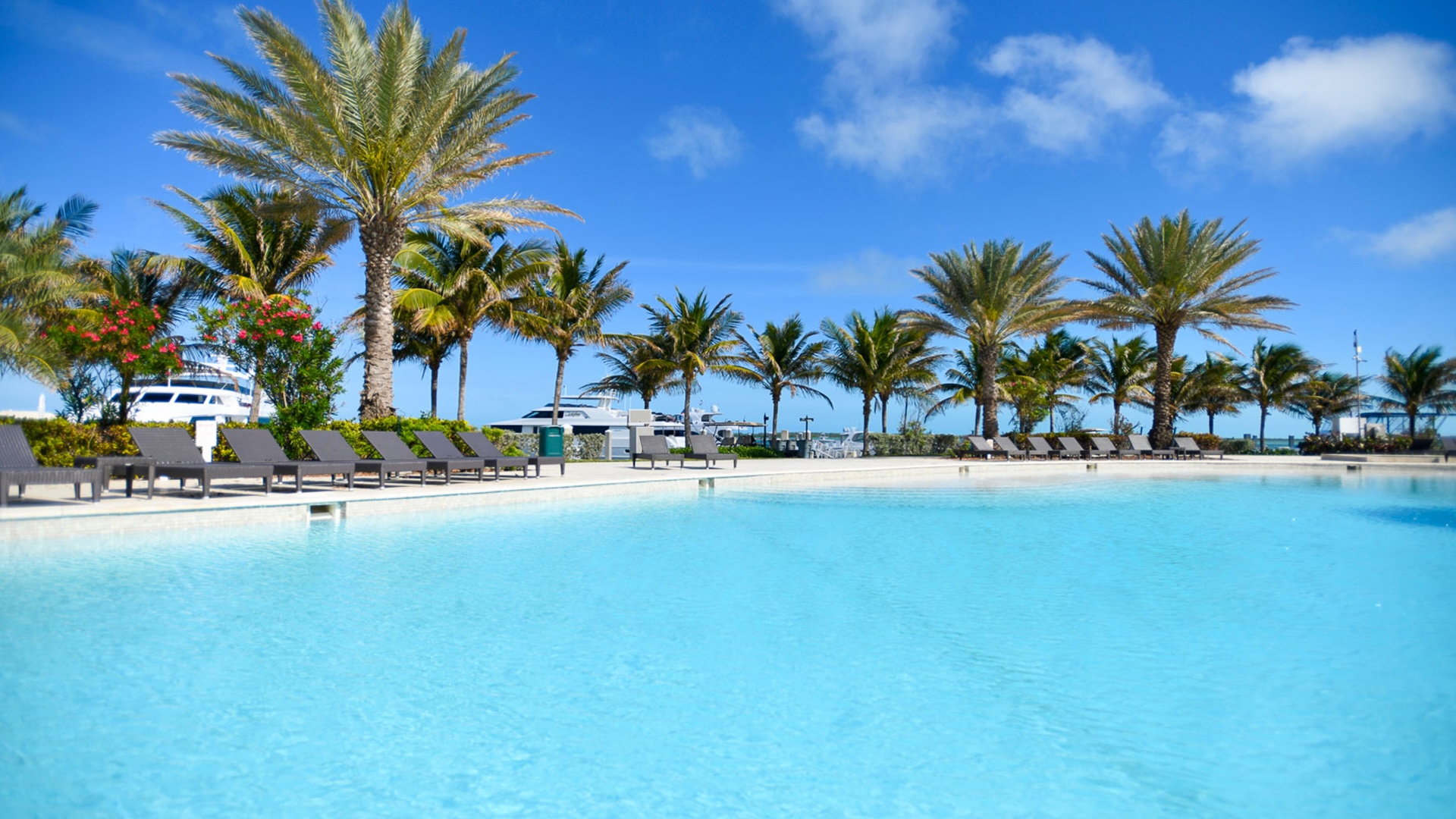
Large freshwater pool at a Bimini marina resort 05 · Ashore Marina pool
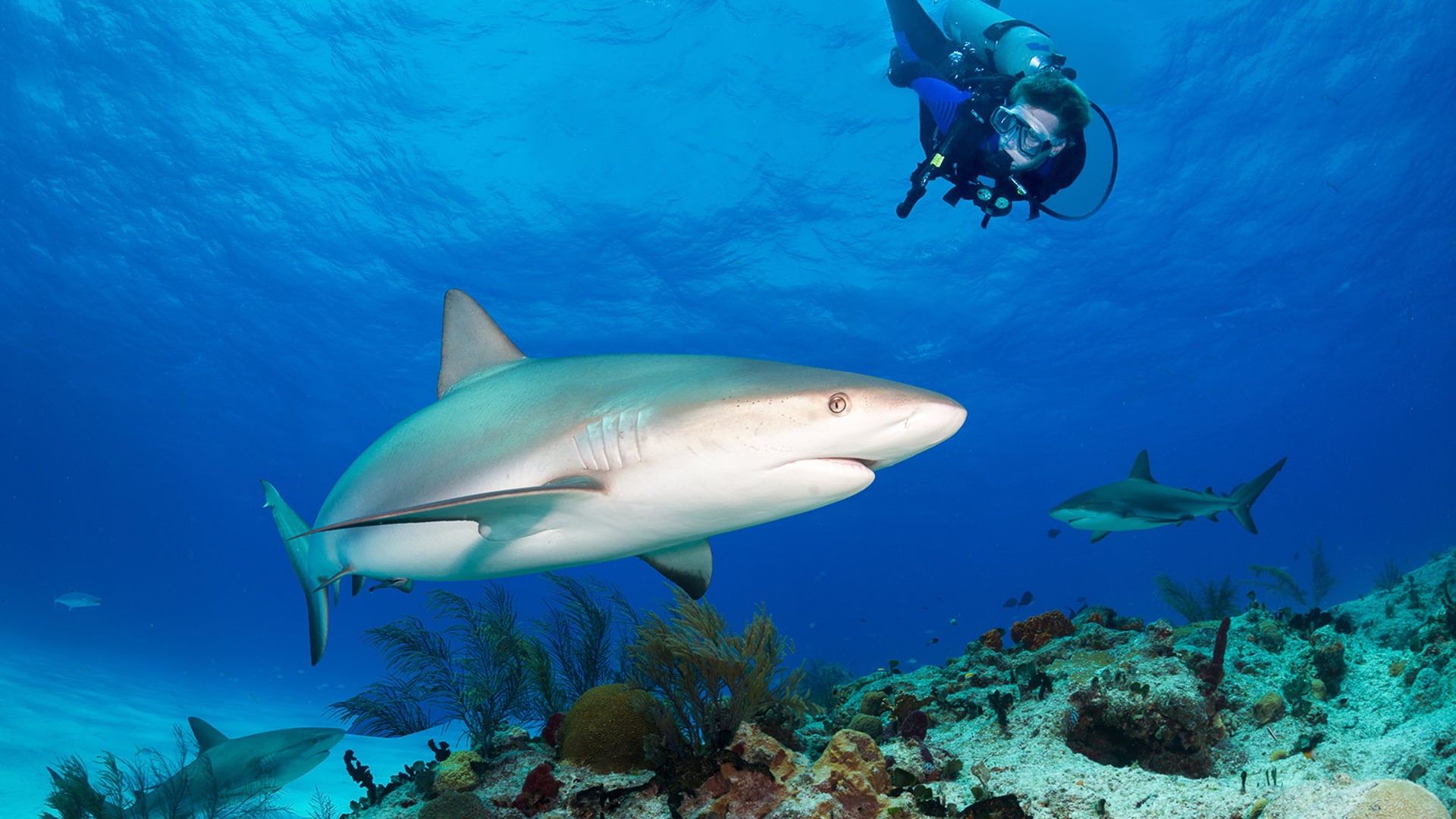
Diver among reef sharks in clear Bahamian water 06 · Underwater Sharks of Bimini
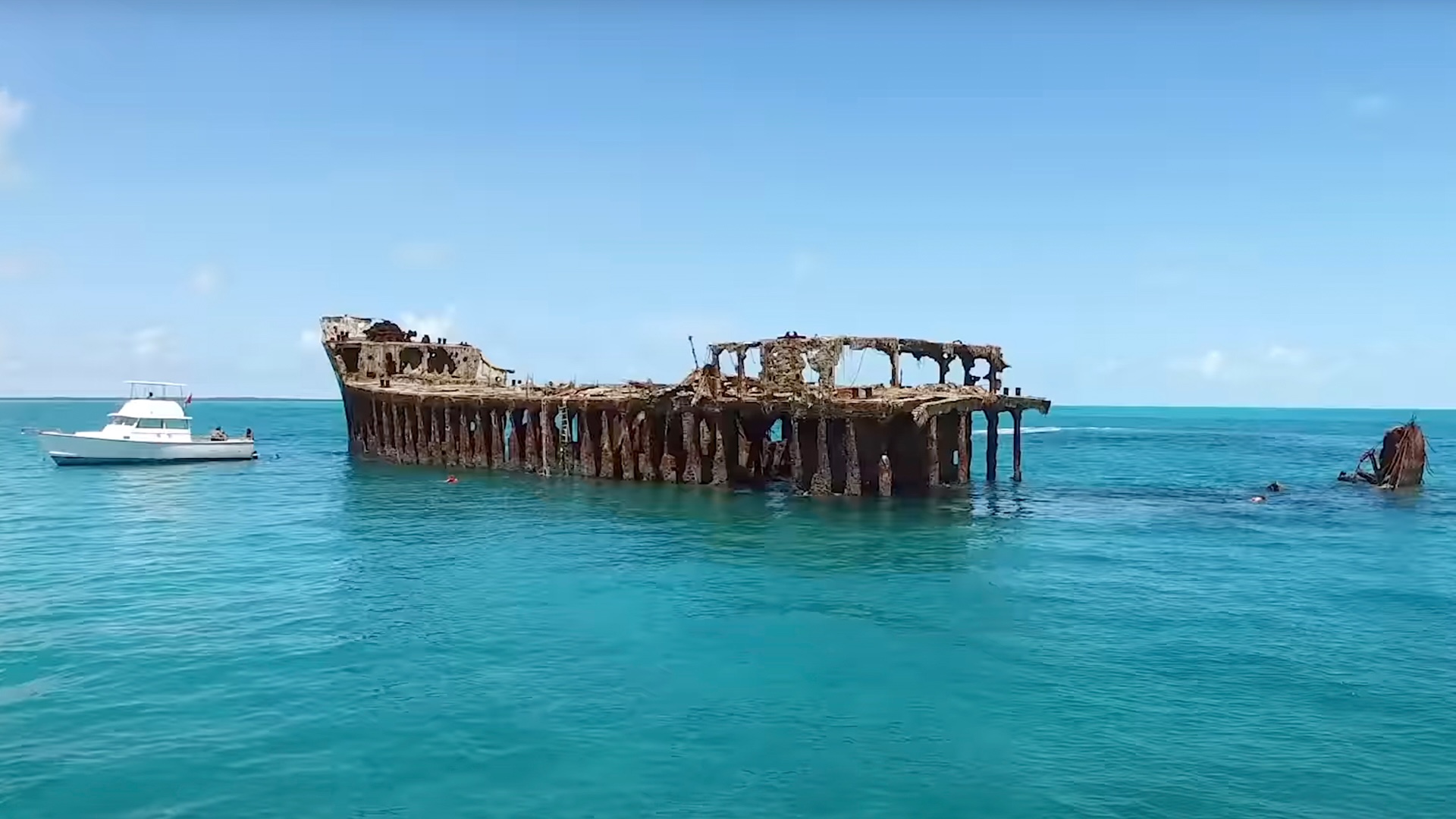
The wreck of the SS Sapona, partially above water in shallow Bahamian flats 07 · The Sapona Shallows wreck
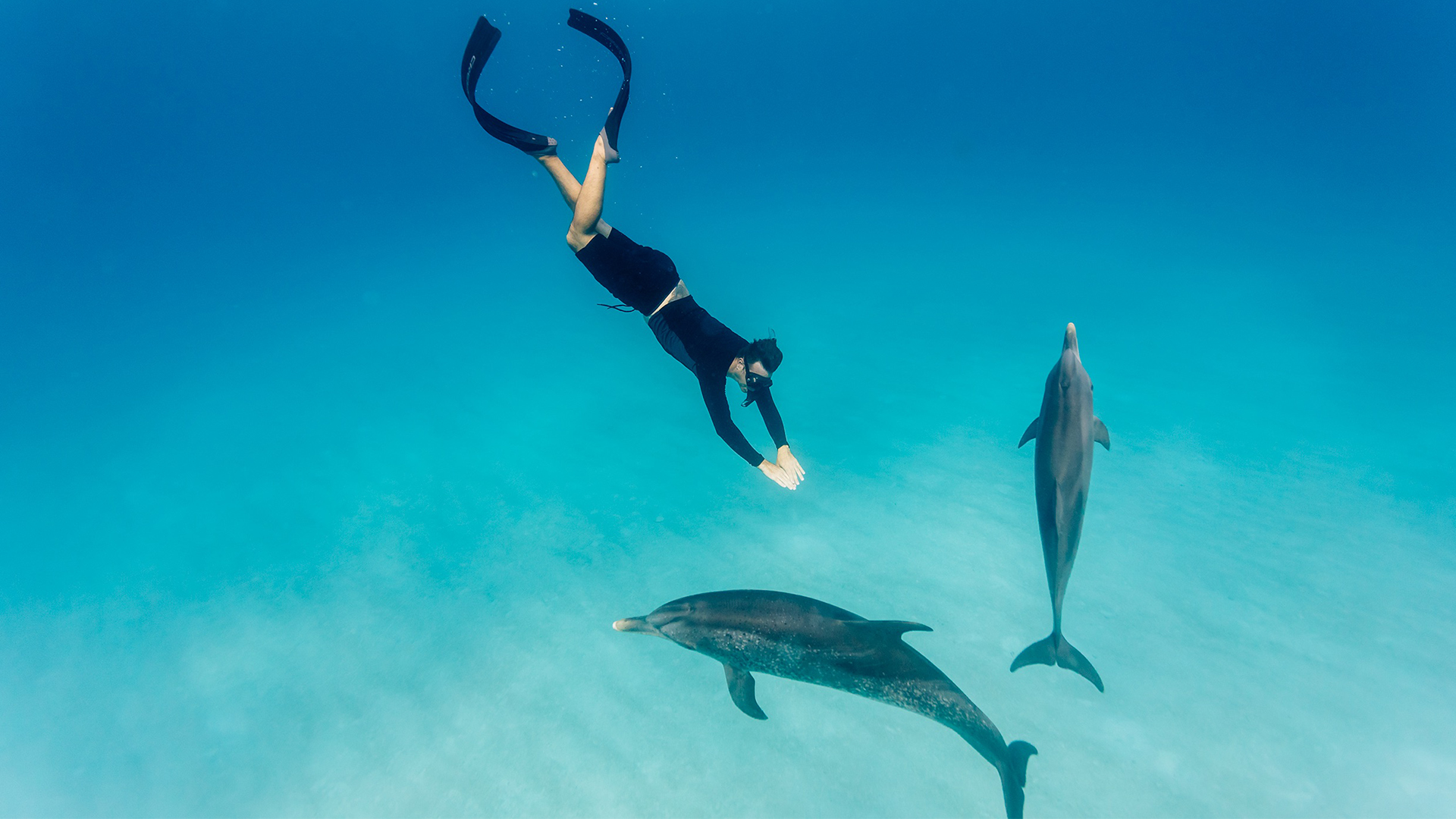
Swimmer underwater alongside two wild dolphins 08 · Dolphins Swimming the banks
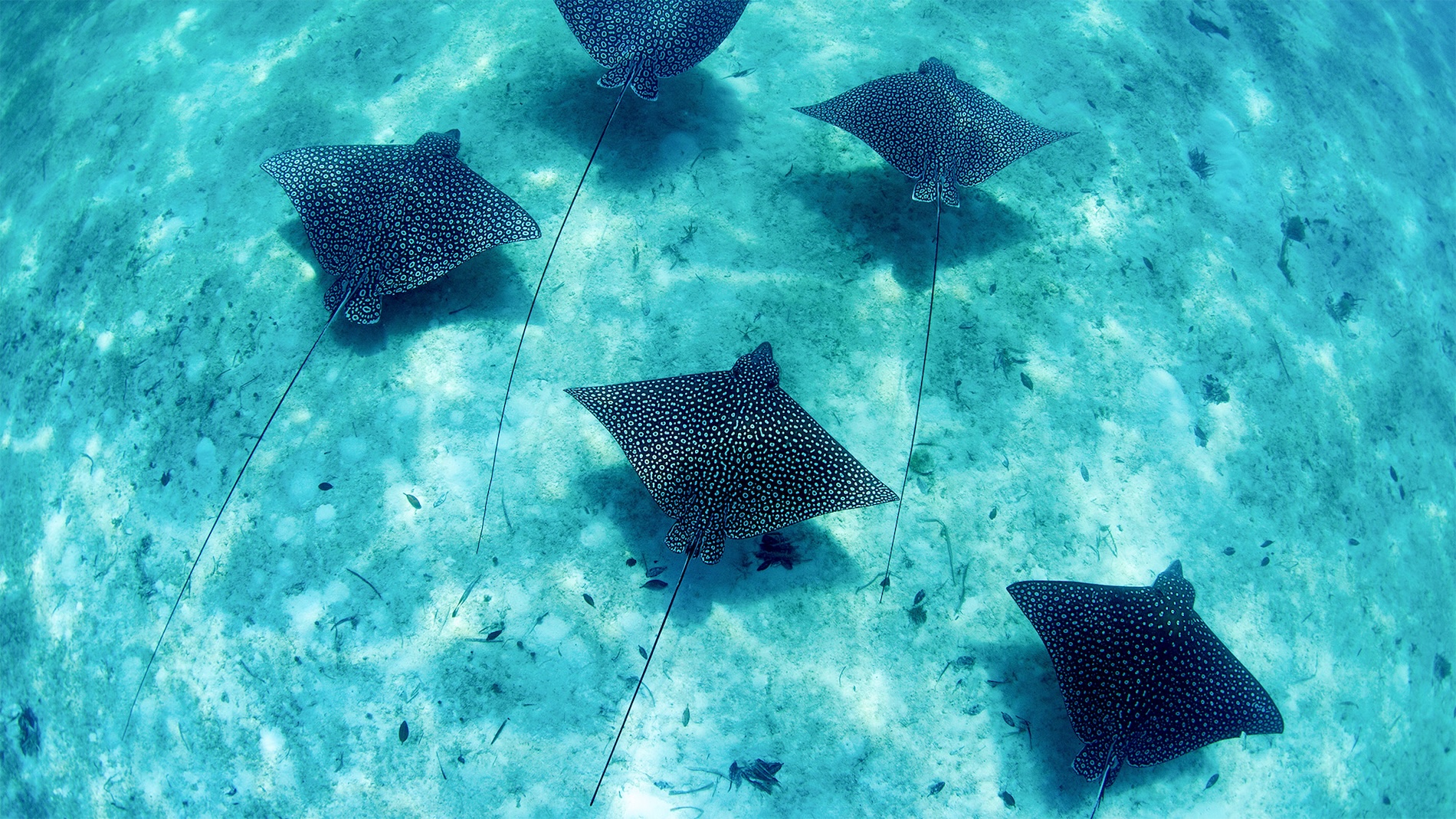
Spotted eagle ray gliding underwater in clear Bahamian water 09 · Reef life Eagle ray
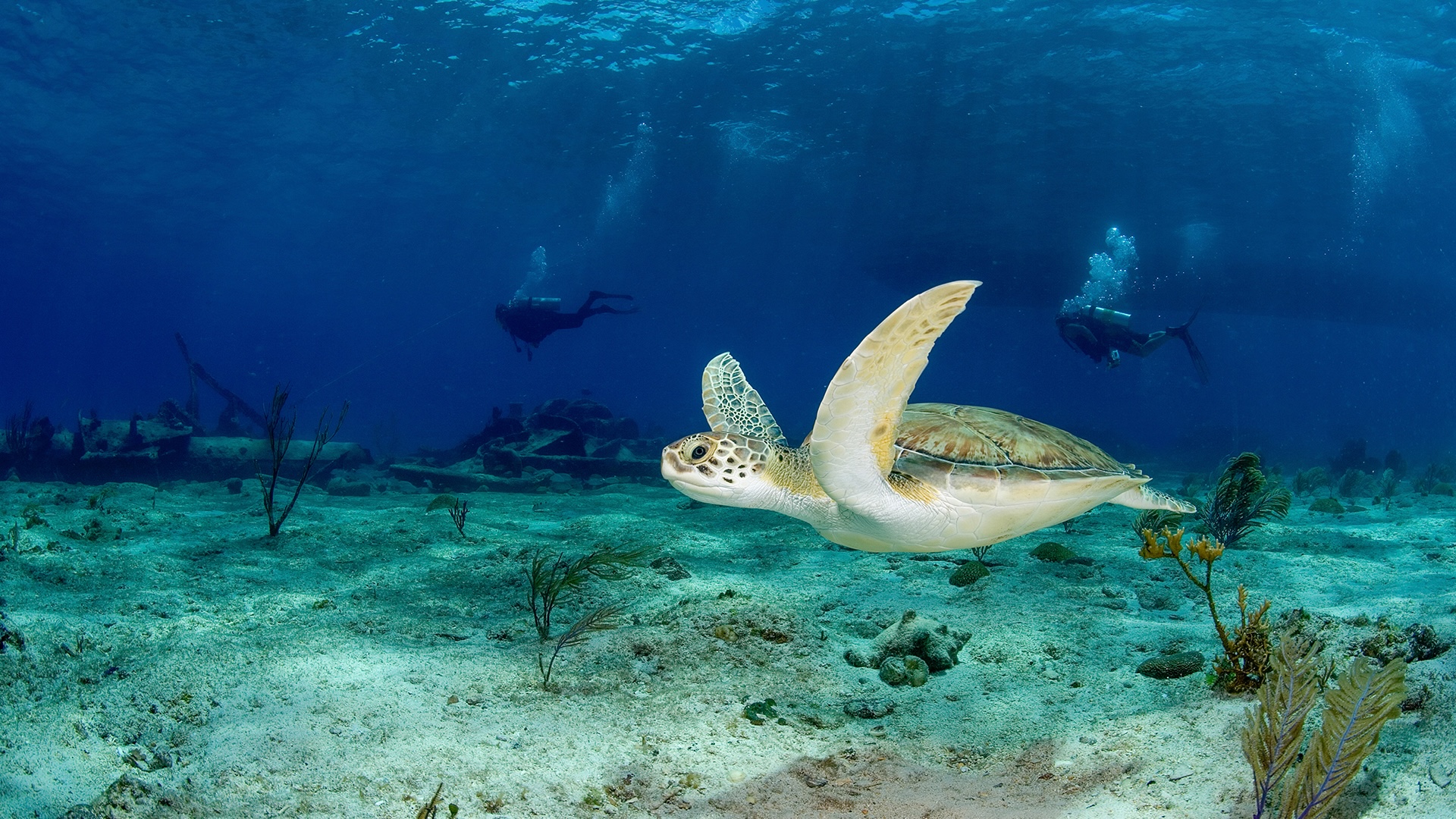
Green turtle swimming in shallow Bahamian water 10 · Green turtle In the shallows
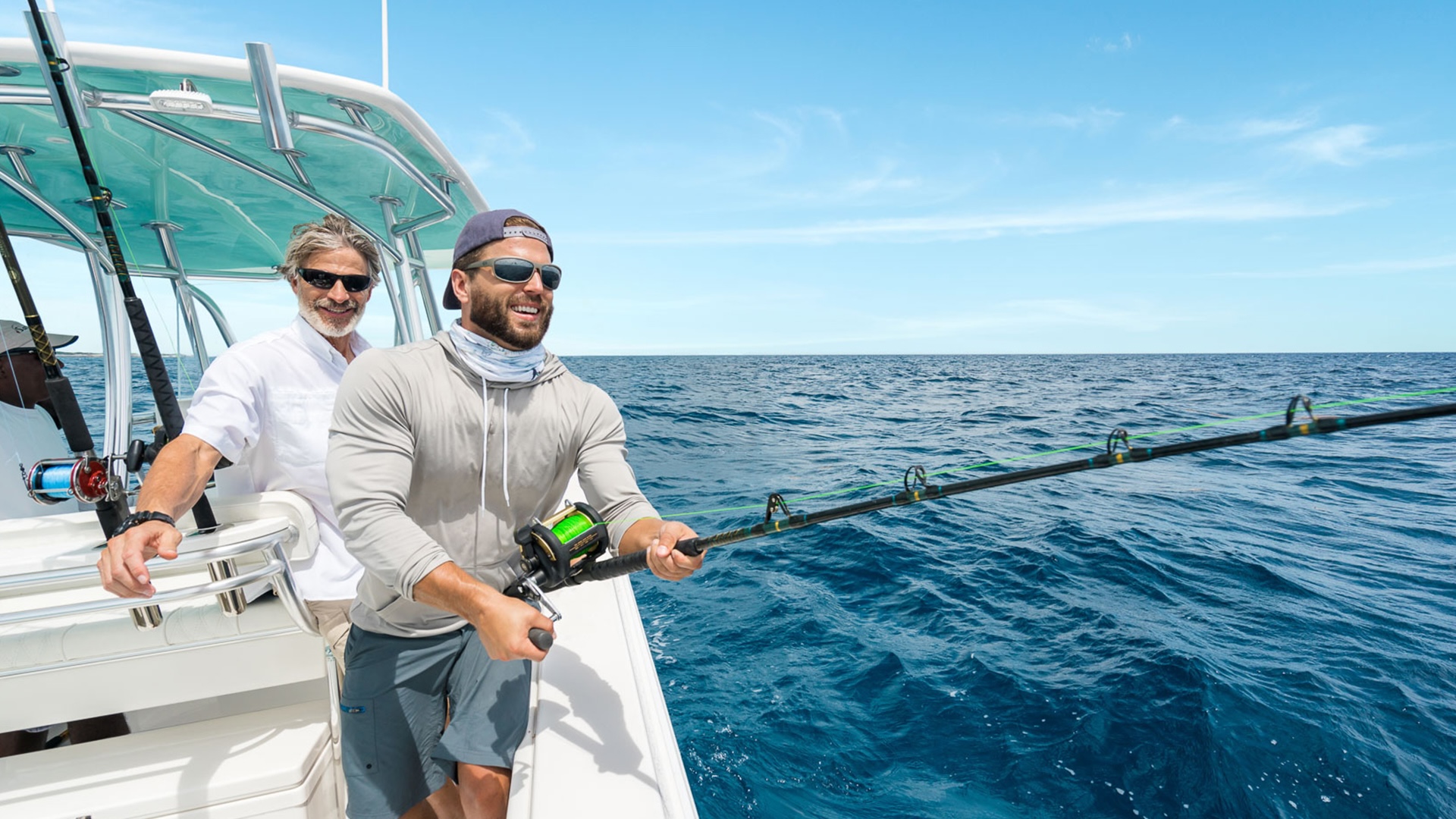
Two young anglers fishing aboard in Bimini waters 11 · Sport fishing A morning offshore
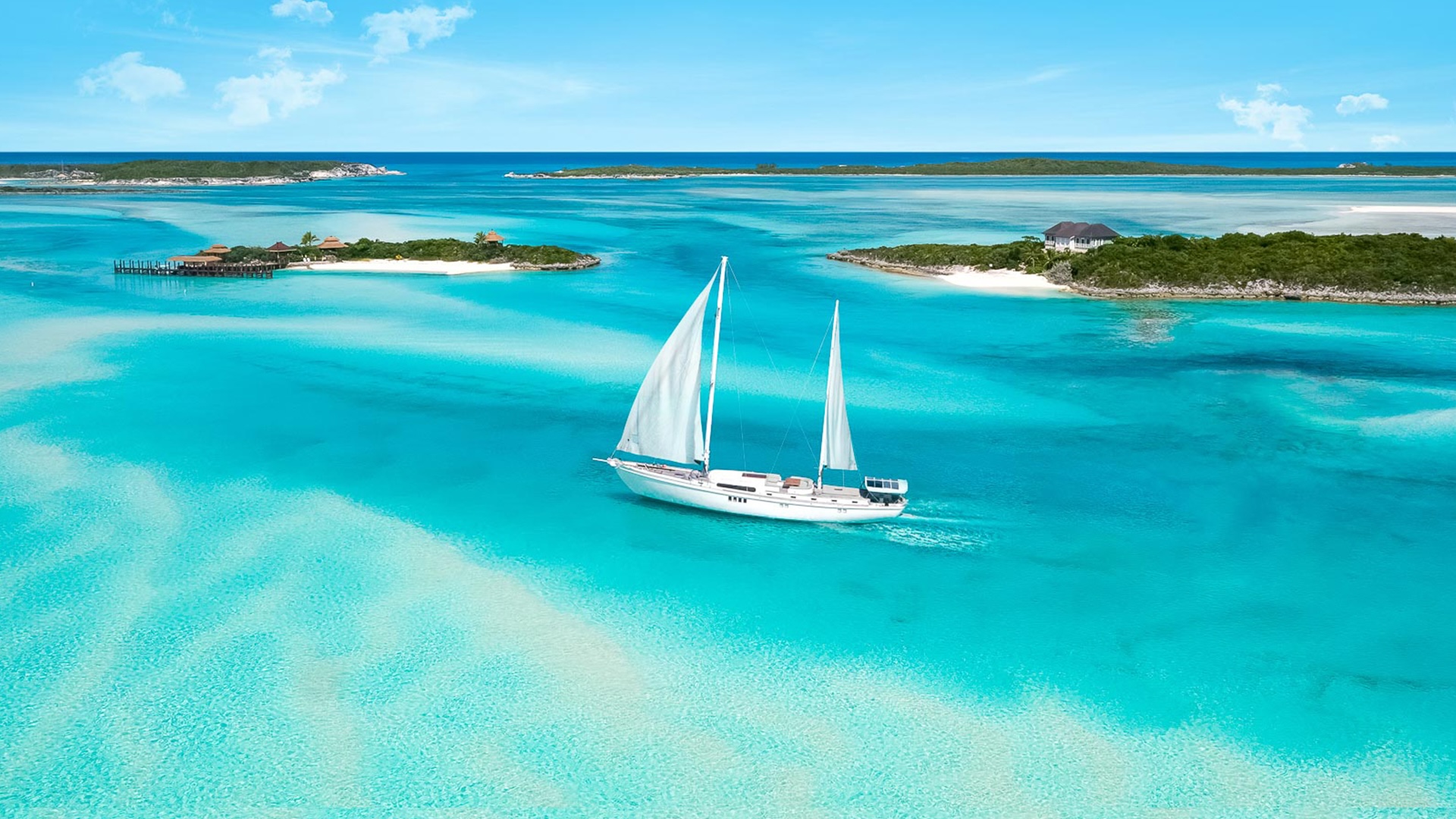
Aerial view of a large sailboat among the Bahamian islands 12 · Under sail Among the islands
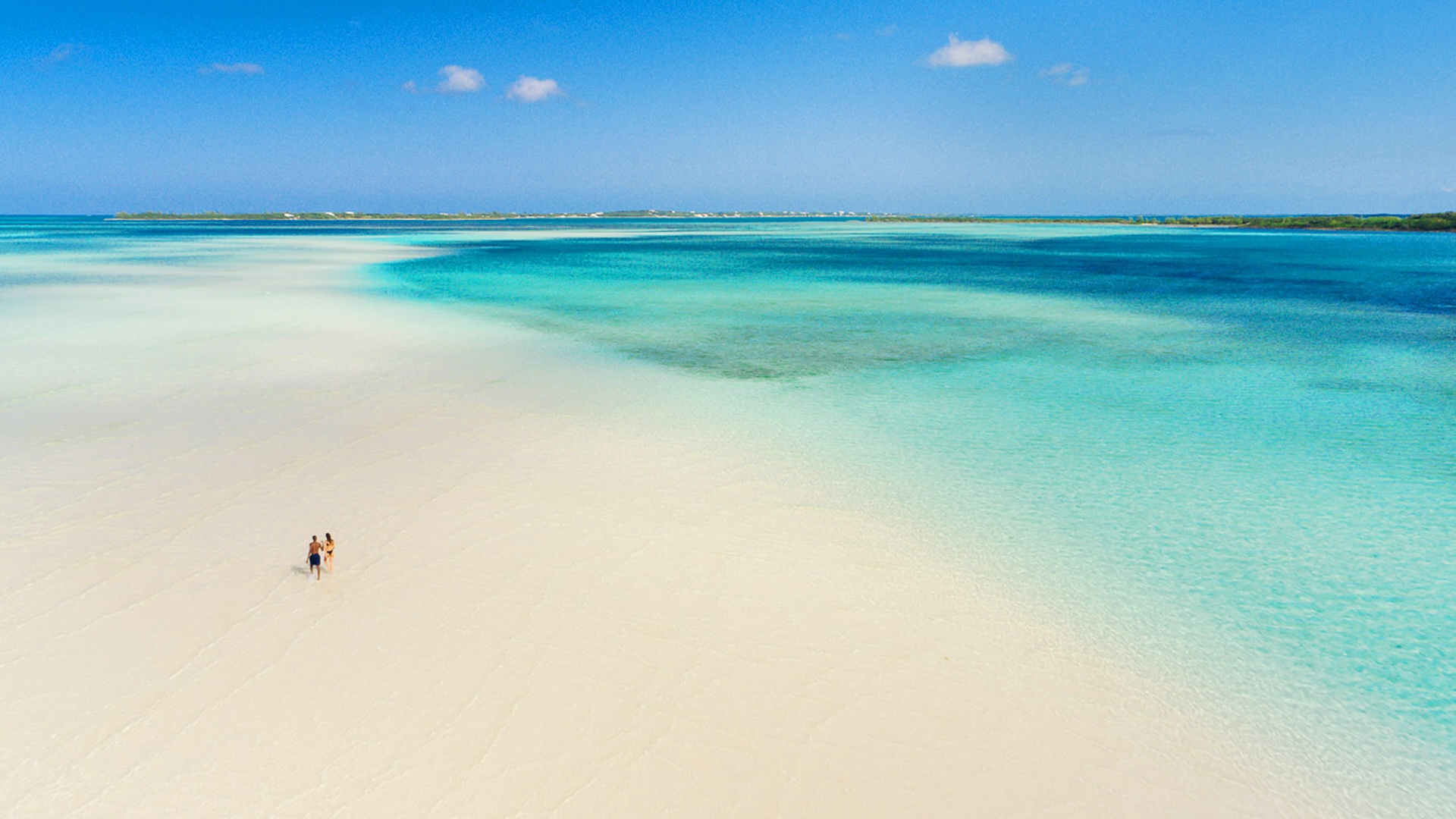
Aerial view of a long sandbar reaching into shallow Bahamian water 13 · The Bank Sandbar from above
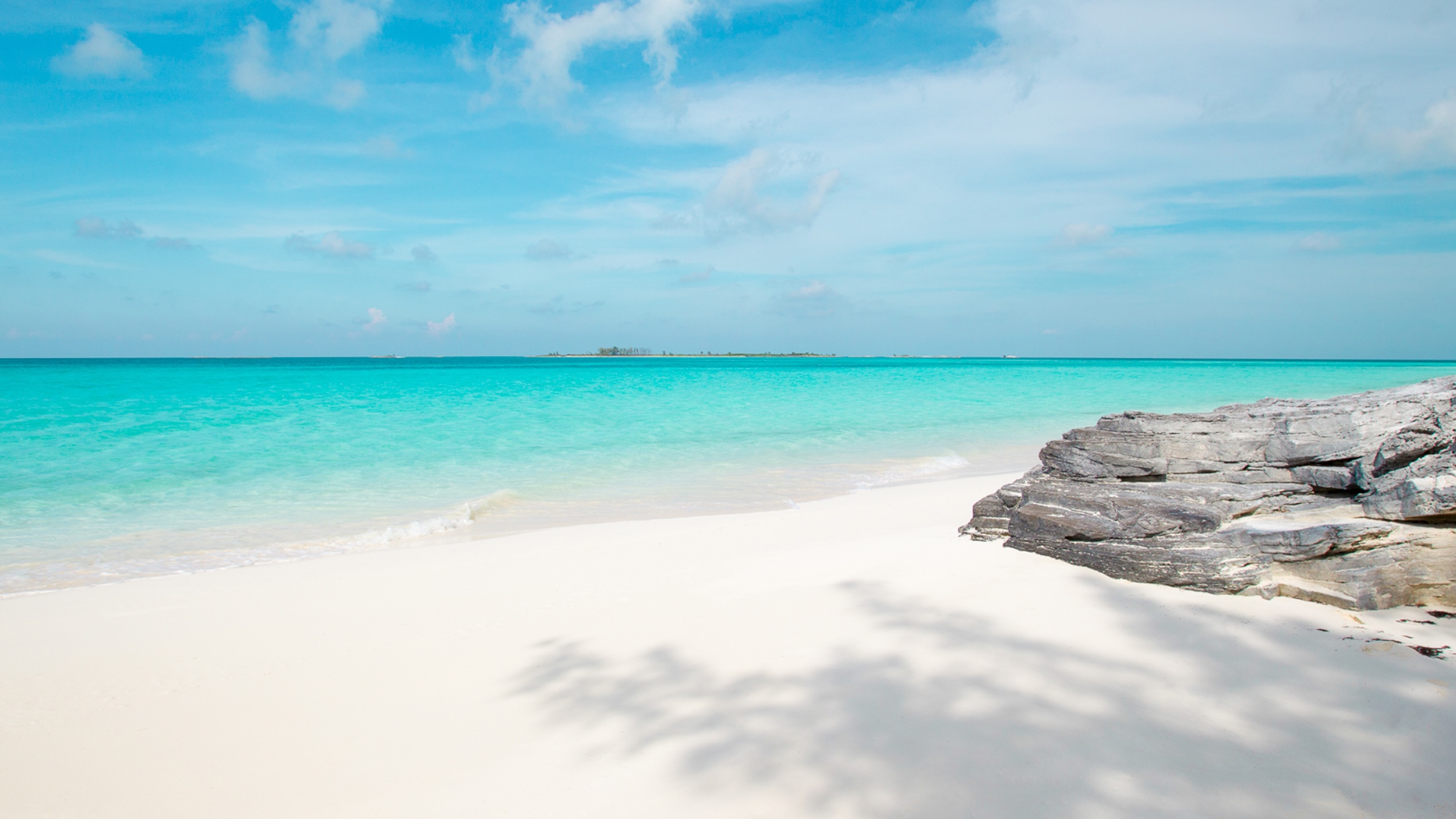
White sand beach and turquoise water in the Berry Islands 14 · The Berries White sand · Turquoise
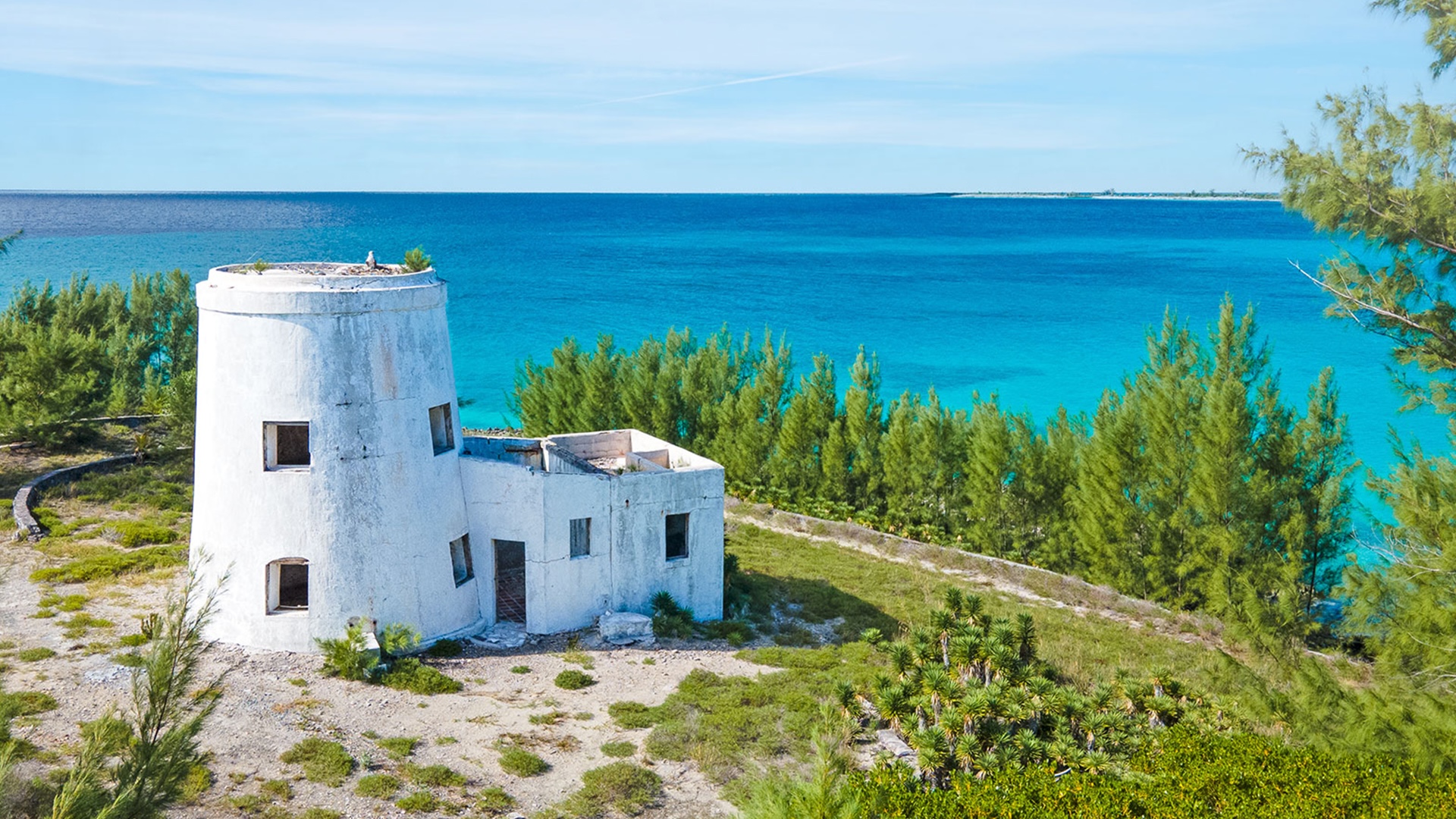
Old rustic house by the sea in the Berry Islands 15 · Ashore House by the sea
Bahamian musician playing a hand drum 16 · Island life Rhythms ashore
Once Ashore · Bimini

Four reasons to stay an extra day

Bimini rewards the captain who treats it as a destination rather than as a stopover. A short list of what the harbour and its waters tend to offer first-time crews.

Diver in clear Bahamian water surrounded by reef sharks
In the water · I

Diving with Bimini's sharks

The reef-shark and hammerhead encounters off Bimini are among the most accessible in the Atlantic. Operators run morning trips from the harbour; the dives are shallow, the visibility extraordinary, and the experience tends to be the trip-defining hour for first-time crews.

The wreck of the SS Sapona standing partly above the surface in shallow Bahamian water
In the water · II

The wreck of the Sapona

Half-buried in the shallows south of Bimini, the concrete-hulled SS Sapona has been a fixture of these waters since the 1920s. Snorkellers circle the upper hull at the surface; divers explore what remains of the lower frame. The Rainbow Reef nearby completes a half-day of easy underwater exploration.

A swimmer underwater alongside two wild dolphins in clear Bahamian water
In the water · III

A morning with wild dolphins

The pods that work the banks west of Bimini are habituated to small boats and curious by nature. Charter operators from the harbour will run the trip in the right conditions; the encounter is on the dolphins' terms, never the swimmers', and that is precisely the point.

The large freshwater pool of a Bimini marina resort, set against the harbour
Ashore · IV

An afternoon at the Big Game Club

Lunch at the dockside restaurant of the Big Game Club is the easiest version of Bimini ashore — relaxed seafood, a long view across the marina, and a flag-flying clientele of cruisers who arrived the same way you did. The newer Resorts World pool, a short walk north, is the alternative for an idle afternoon.

Aerial view of Cat Cay marina, Bimini, with yachts at the docks
Cat Cay · The southern alternative

Bimini is the door to the Bahamas. The Berry Islands are what lies on the other side of it.

USA Onboard · Editorial
Pushing On · The Berry Islands

Ninety-five miles further east

For the captain whose first crossing has gone well — and whose schedule allows another two or three days at sea — the Berry Islands are the natural next move. Roughly ninety-five miles east of Bimini, the chain runs in a long crescent of about thirty islands, almost all of them uninhabited. There is no airport for most of them, no resort grid, no busy moorings. There is shallow turquoise water, white-sand cays that read like stage sets, and a cruising silence that the more developed parts of the Bahamas no longer offer.

The route from Bimini divides into two recognised paths. The northern route tracks up to North Rock and then runs east to Great Harbour Cay at the top of the Berries. It is the longer of the two passages but the safer one, because it stays in deeper water for the entire run. The shorter route crosses the Great Bahama Bank — a vast shallow that averages around ten feet of depth and demands continuous attention to the chartplotter, the sounder and the colour of the water itself.

Choice of route is, in practice, a question of draft. A boat drawing more than six feet should default to the northern route without hesitation; the bank is full of patches where the depth shoals fast and the chart will not catch every isolated coral head. Shallower vessels can take the bank crossing, but a first-timer should still consider it the more demanding of the two, regardless of what the boat is capable of clearing.

Once at the Berries, the anchorage at Bullocks Harbour gives easy tender access to the town dock at Great Harbour Cay. The seabed here carries a fair amount of grass; the prudent move is to look for a sand patch before letting the anchor go, both for holding and for an easy release the following morning. Inside Hawksnest, on the eastern side of Great Harbour Cay, lies a more spectacular anchorage — kilometres of white-sand beach and a quiet that justifies several nights at anchor.

Berry Islands · A sandbar reads the bank
At the Berries · The Reward

An archipelago that asks little

The Berries are not a destination in the conventional sense. Most of the thirty-odd islands have no permanent population. The fishing is excellent — bonefish on the flats, snapper and grouper around the reefs, lobster in season — and the snorkelling around Great Stirrup Cay brings small reef fish curious enough to circle a swimmer's ankles in waist-deep water. Chub Cay, at the southern end of the chain, sits inside an exceptional reef system that rewards a slow morning with mask and fins.

Ashore, the principal marina at Great Harbour Cay holds a small, accomplished restaurant scene — fresh seafood, simple presentation, cocktails built from what the islands themselves produce. Beyond that, there is very little nightlife and almost no shopping. This is the point. The Berries are for crews who have arrived at the boat with a stack of unread books, a fishing rod, and the intention of doing as little as possible for as long as possible.

For the return, options open up depending on the boat's range and the captain's appetite. A direct run to the Florida coast is feasible from Great Harbour Cay in a single long day, weather allowing. The more relaxed return treats Bimini as a planned stop on the way home — two more nights at the Big Game Club docks, one last morning at the Sapona, and a final crossing back across the Stream that will, almost without exception, feel shorter and easier than the one out.

Bimini → Berry Islands

Two ways to make the second leg

A comparative ledger of the two routes from Bimini to the Berries — what each demands, and what each rewards.

— The Northern Route
Track north to North Rock, then east to Great Harbour Cay. The longer passage, but the safer one for any boat with meaningful draft.
Deep water for the full leg. No bank crossing, no shallow patches, no continuous attention to the colour of the water beneath the keel.
Suitable for vessels drawing more than six feet. Sailboats, larger motor yachts and any cruiser whose owner prefers to remove draft from the list of variables.
More open water exposure. The northern leg is more committed to the Atlantic than the bank route — wind direction and sea state matter more, the schedule less.
The default for a first crossing of the bank. Almost every captain who recommends the trip recommends this route the first time it is made.
— The Bank Crossing
Direct across the Great Bahama Bank. The shorter route, and the more visually astonishing — the boat travels for hours over an unbroken plate of pale turquoise.
Average depth of around ten feet. Comfortable on paper, demanding in practice. Patches of significantly shallower water dot the bank and require continuous monitoring.
Suitable for shallow-draft vessels only. Boats drawing under six feet, with current charts, an alert helm, and good light overhead. Not a route for low-visibility or late-day crossings.
Eye-navigation as a discipline. The colour of the water is part of the chartplotter on the bank. Dark patches mean grass or coral; pale patches mean sand. The skill is read in real time, not in advance.
The route most cruisers come back for. Once made, in good light and on the right boat, the bank crossing tends to be the leg most often recounted at the dock back home.
Preparation

The crossing kit, in three registers

A first crossing is built before the lines come off. What follows is the briefing the boat, the paperwork and the captain each require, treated separately.

01
Paperwork
Customs · documentation
i.Valid passports for every person on board, with at least six months of validity beyond the planned return date.
ii.Vessel registration or documentation, with a current insurance certificate that explicitly covers Bahamian waters.
iii.A pre-filed cruising permit through the Bahamas Click2Clear system — completed online before departure to streamline the dockside formalities.
iv.A yellow quarantine flag and a Bahamian courtesy flag, both stowed where they can be hoisted within thirty seconds of tying up.
v.Cash in small US bills for marina fees, a fishing permit if one is intended, and the inevitable small expenses that the card terminal cannot solve.
02
Navigation
Charts · weather · electronics
i.Up-to-date Bahamian electronic charts on the primary chartplotter, with an independent backup on a tablet or secondary plotter.
ii.Pre-loaded waypoints for the inlet of departure, the entrance channel to Bimini, and any alternates within a day's range.
iii.Two weather sources consulted for at least seventy-two hours before the crossing — an offshore model and a regional marine forecast, cross-checked.
iv.A working VHF radio on Channel 16, with the harbourmasters of Bimini and the chosen marina in the directory.
v.An EPIRB or PLB registered to the vessel, batteries current. The probability of needing it is low. The cost of not having it is total.
03
On board
Vessel · provisions · safety
i.Fuel topped to capacity in Florida — Bahamian fuel is reliably available but consistently more expensive, and the first crossing is not the moment to economise on range.
ii.Fresh water tanks full, plus a stock of bottled water for at least three days beyond the itinerary.
iii.Provisions for the planned cruise plus two additional days. Bimini has groceries; Berry Islands provisioning is limited.
iv.A serviceable life-jacket per person, an offshore-rated life raft if the boat carries one, and a ditch bag stowed where it can be reached in seconds.
v.A medical kit beyond the routine — seasickness tablets, antibiotics agreed with a physician, and the supplies that the nearest pharmacy on the bank does not carry.

A first crossing is rarely about the destination. It is about the moment the water turns from blue to turquoise, the colour shift that announces an entire cruising life is now within reach. From there, the Bahamas open in every direction.

USA Onboard · Cruising Guide
Editorial Credits
Editorial
USA Onboard
Cruising Desk
References
Bahamas Customs & Immigration
Explorer Charts · NOAA Forecasts
Photography
USA Onboard
Image Library
Notes & References
1. Distance from Florida to Bimini. The figure of just over fifty nautical miles refers to the closest point of approach between the South Florida coast and North Bimini. Actual crossings depart from inlets several miles inside that distance, and the practical run usually exceeds fifty-five.
2. Gulf Stream. A warm ocean current flowing northward through the Florida Strait, with surface speeds of roughly two to three knots in the central axis. A north wind opposing the flow produces short, steep seas — the condition every experienced captain crosses to avoid.
3. Yellow flag · quarantine. The international maritime convention by which a vessel arriving from abroad signals it has not yet been cleared by customs and immigration. Hoisted on arrival; lowered when the cruising permit is in hand.
4. Click2Clear. The Bahamian government's online customs and immigration system, which allows pre-arrival filing for cruising permits. Recommended over paper-only clearance for first-time crossers.
5. Great Bahama Bank. A vast carbonate platform extending east of the Florida Strait, with average depths of approximately ten feet over an area of tens of thousands of square kilometres. Navigable by shallow-draft vessels in good light, with continuous attention to the chart and the water colour.
6. Editorial note. This article is a destination guide intended for first-time crossers, not a substitute for official forecasts, current charts and the captain's own judgement. All passages remain the responsibility of the vessel's master.
This site is registered on wpml.org as a development site. Switch to a production site key to remove this banner.