




Collector's Eye
An editorial selectionFour Objects That Earn Their Place
On luxury yachts and along the waterfront, the most considered pieces are rarely the loudest. They are the ones that still serve.
The objects that were built to be used, and almost incidentally became worth looking at.
Some objects are designed to be looked at. Others are designed to be used, and then, almost incidentally, become worth looking at. Collector's Eye observes the second kind.
This is not a column about decoration, nor about trends, nor about the trophy economy of the very rich. It is about a narrower category: pieces that were built to perform a specific task, executed with such material clarity that, decades later, they remain in service. A chair that folds without losing its line. A diver's watch made of the same metal that built the hardware of a hull. A backgammon set that gathers four shipyard materials into one box. A silver service that lives at the center of the table rather than inside a drawer.
The criterion is unsentimental. Six filters, applied honestly: clarity of purpose, noble materials, tactile execution, beauty without excess, the capacity to age with dignity, and real use. An object that passes all six earns a place here. An object that misses one is something else: a design item, a luxury product, an antique. Legitimate categories, all of them, but outside this conversation.
For this inaugural issue, four objects from four houses with between 165 and 196 years of continuous practice. Different functions, different centuries of origin, one shared trait: each one is better after use than before it.
Pippa Folding Armchair
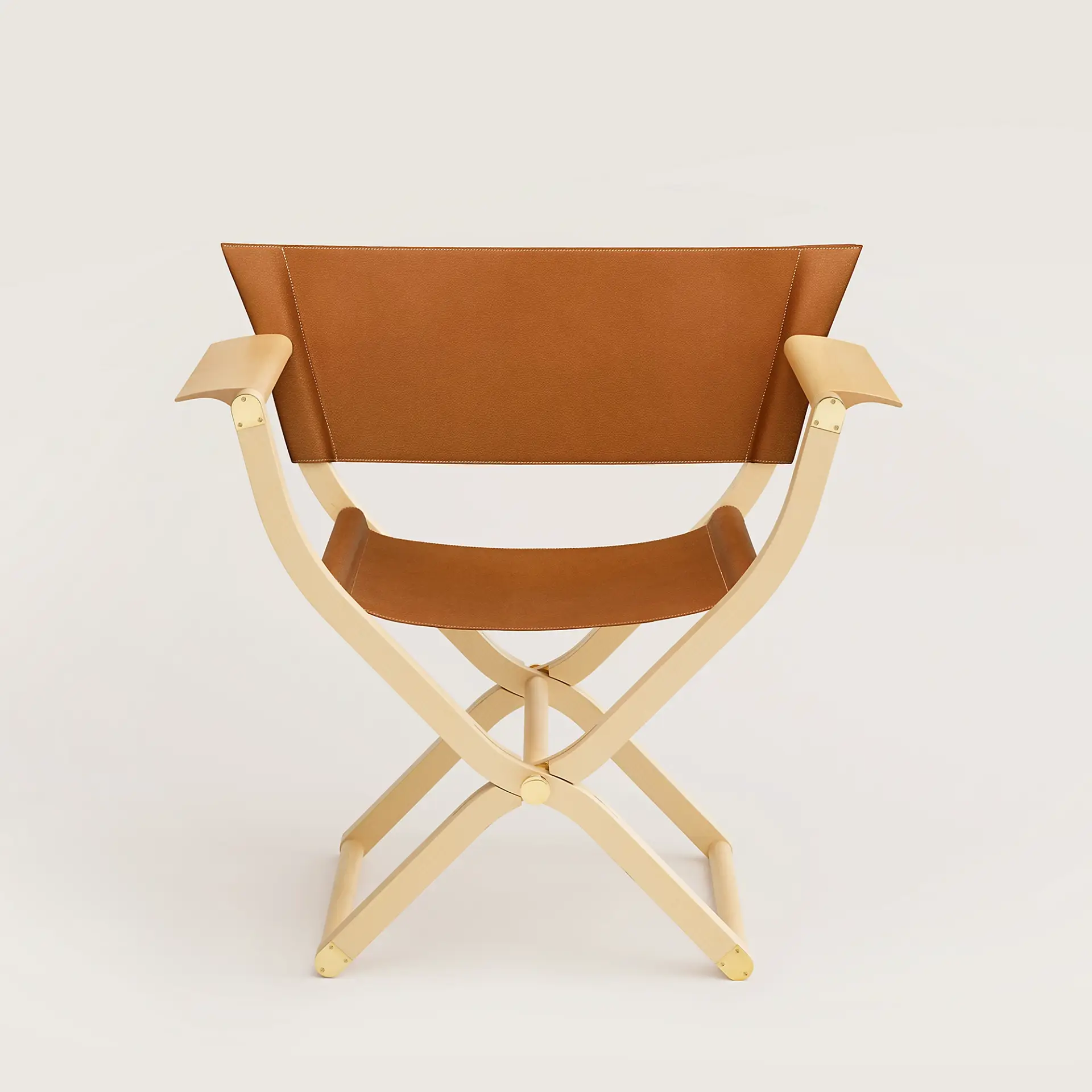
The Pippa was drawn in 1987 by Rena Dumas, the French architect responsible for shaping Hermès' approach to interiors for nearly three decades, working with Peter Coles. It belongs to a long lineage of campaign furniture: the chairs, desks and stools that European officers carried with them on the move, dismantled and reassembled in tents, ship cabins and field offices. The form had to be portable without negotiating its proportions when open. Pippa accepts that brief and refines it until almost nothing remains beyond geometry.
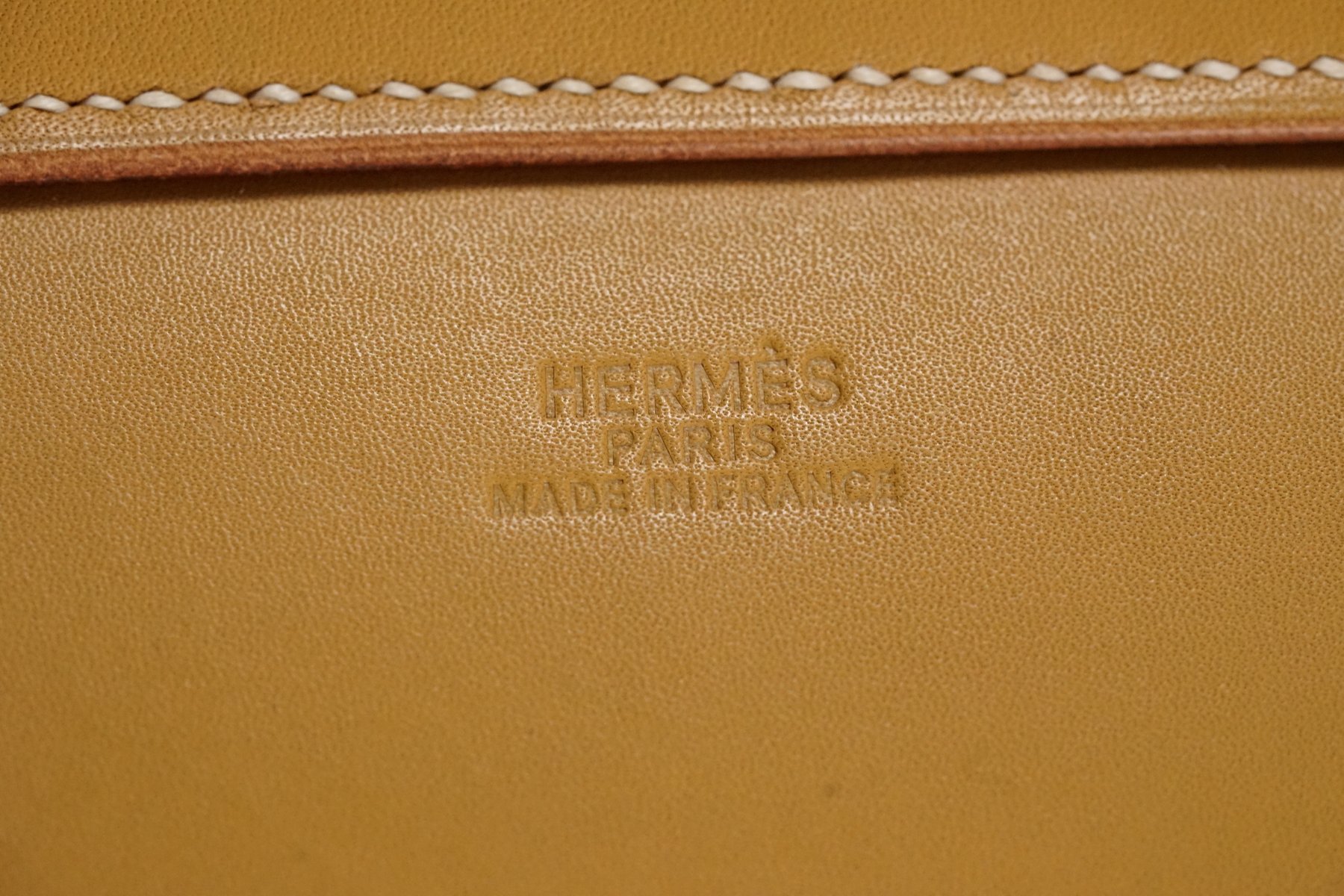
The frame is solid maple, available in natural finish or ebonized. The seat and back are stretched in Taurillon Clémence, a full-grain bull calf leather that Hermès developed for objects expected to age in plain sight. The hardware is polished brass, machined to fit without play. There is no decoration anywhere on the chair. The Hermès name is recessed into the leather, legible only in raking light. Closed, it stacks against a wall like a folded book. Open, it sits with the quiet authority of a piece of architecture.
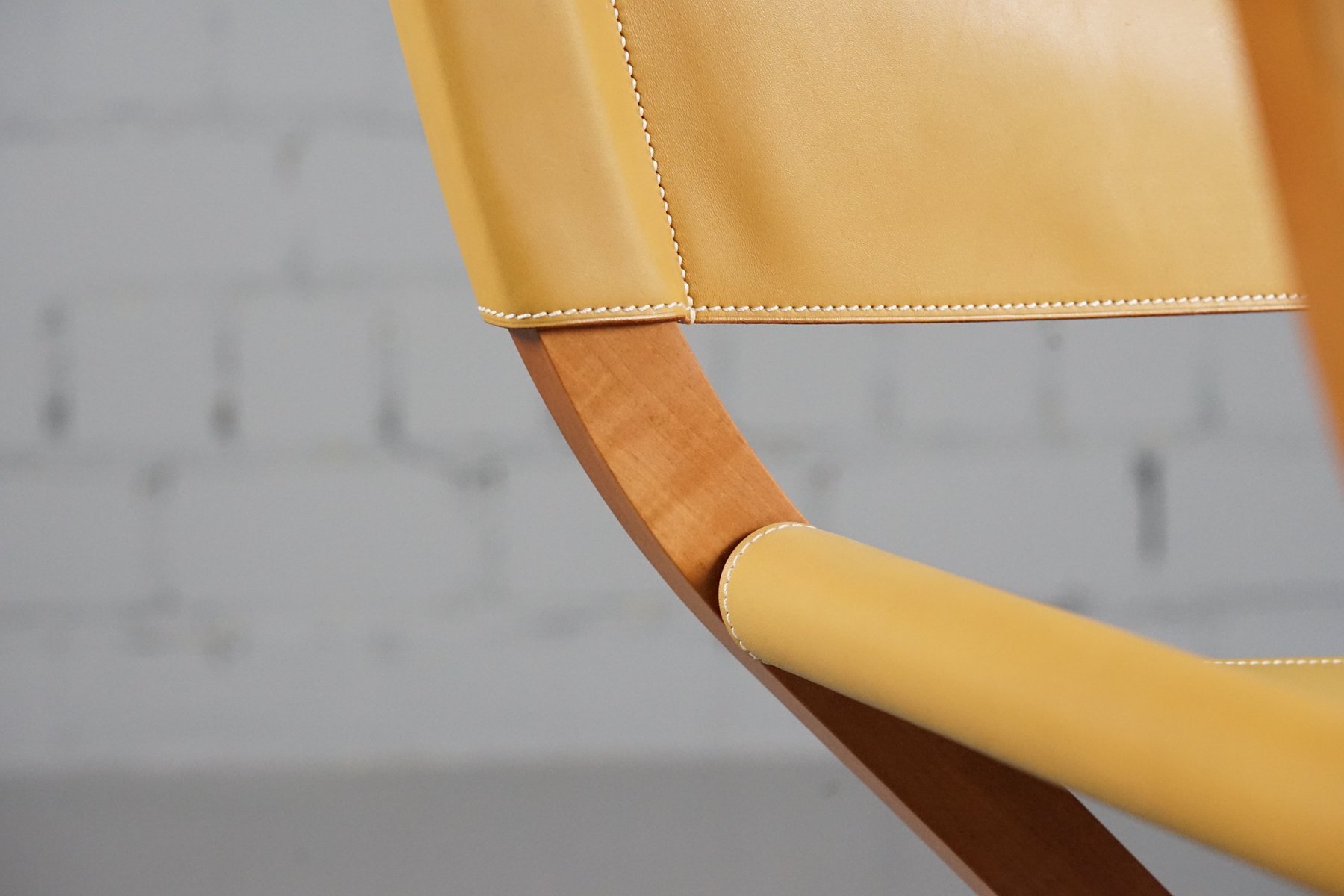
What Pippa does well, and quietly, is refuse the false economy of folding furniture. The hinge does not loosen. The leather, stretched by geometry rather than by stitching under tension, does not sag. The chair invites the kind of long use that produces a personal patina. After a decade aboard or on a terrace facing the water, a Pippa is no longer generic. It belongs to its owner the way a leather notebook does.
The hinge does not loosen. The leather does not sag. Pippa invites the kind of long use that produces a personal patina.
Luminor Marina Bronzo PAM01678
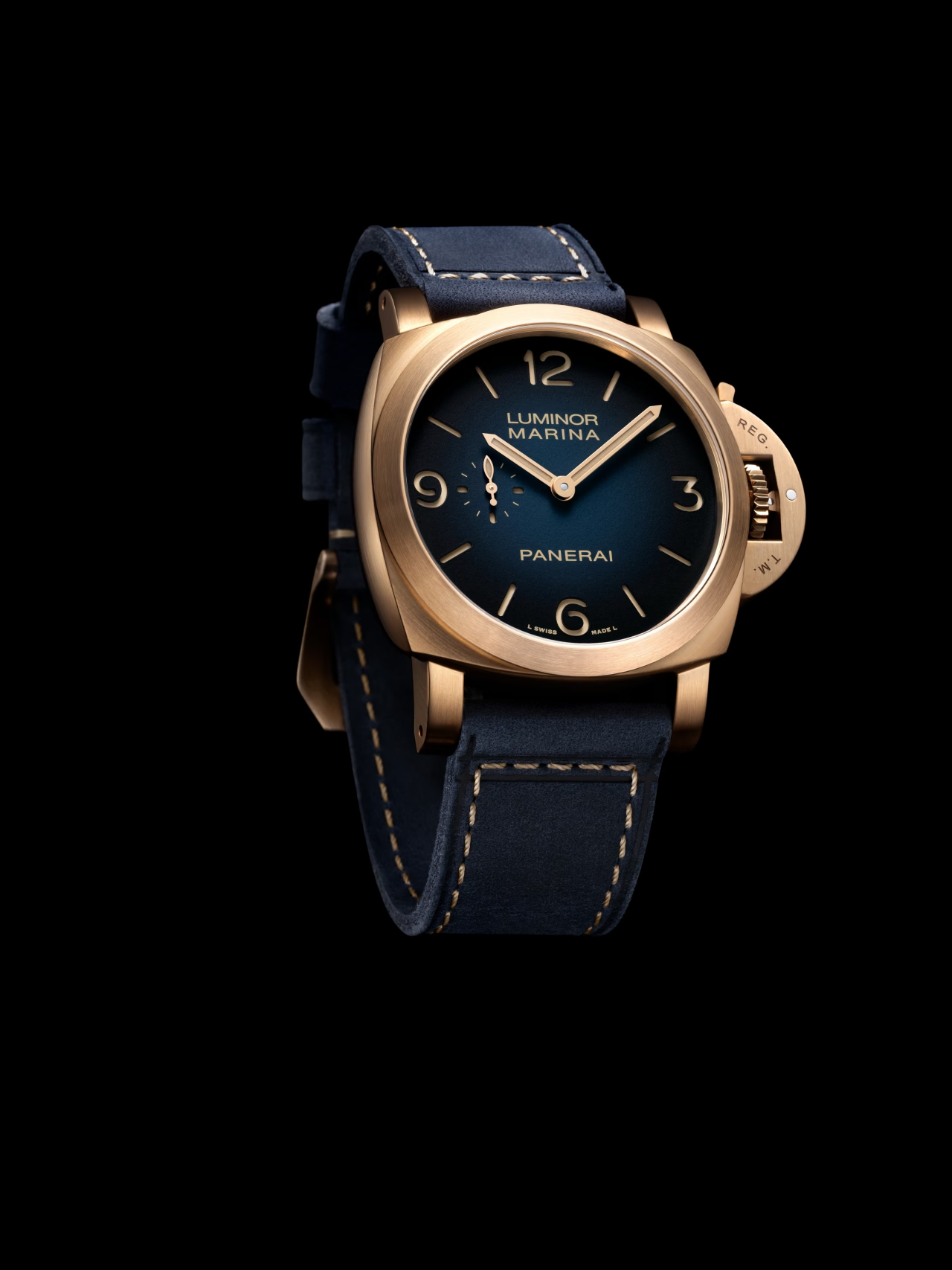
Panerai's history is bound to the Italian Navy. From the late 1930s through the early 1990s the house supplied instruments to combat divers and frogmen, working in conditions that demanded absolute legibility under water and absolute resistance to salt. The watches were classified equipment. Civilians met them only in 1993. The Luminor's cushion case, with its distinctive crown-protecting bridge, comes directly from that period and remains the visual signature of the house.
Panerai introduced bronze to its catalog in 2011 with the Submersible Bronzo. The choice was not stylistic. Bronze is the metal of marine hardware: deck cleats, portholes, propeller bushings. It resists corrosion. It develops a patina that records every saltwater morning and every sweated wrist. The PAM01678, presented in December 2025, brings that material to the Luminor Marina line for the first time. The 44 mm case is machined from a proprietary bronze alloy developed by the house. The caseback is titanium, separating bronze from skin without breaking the visual continuity of the watch.
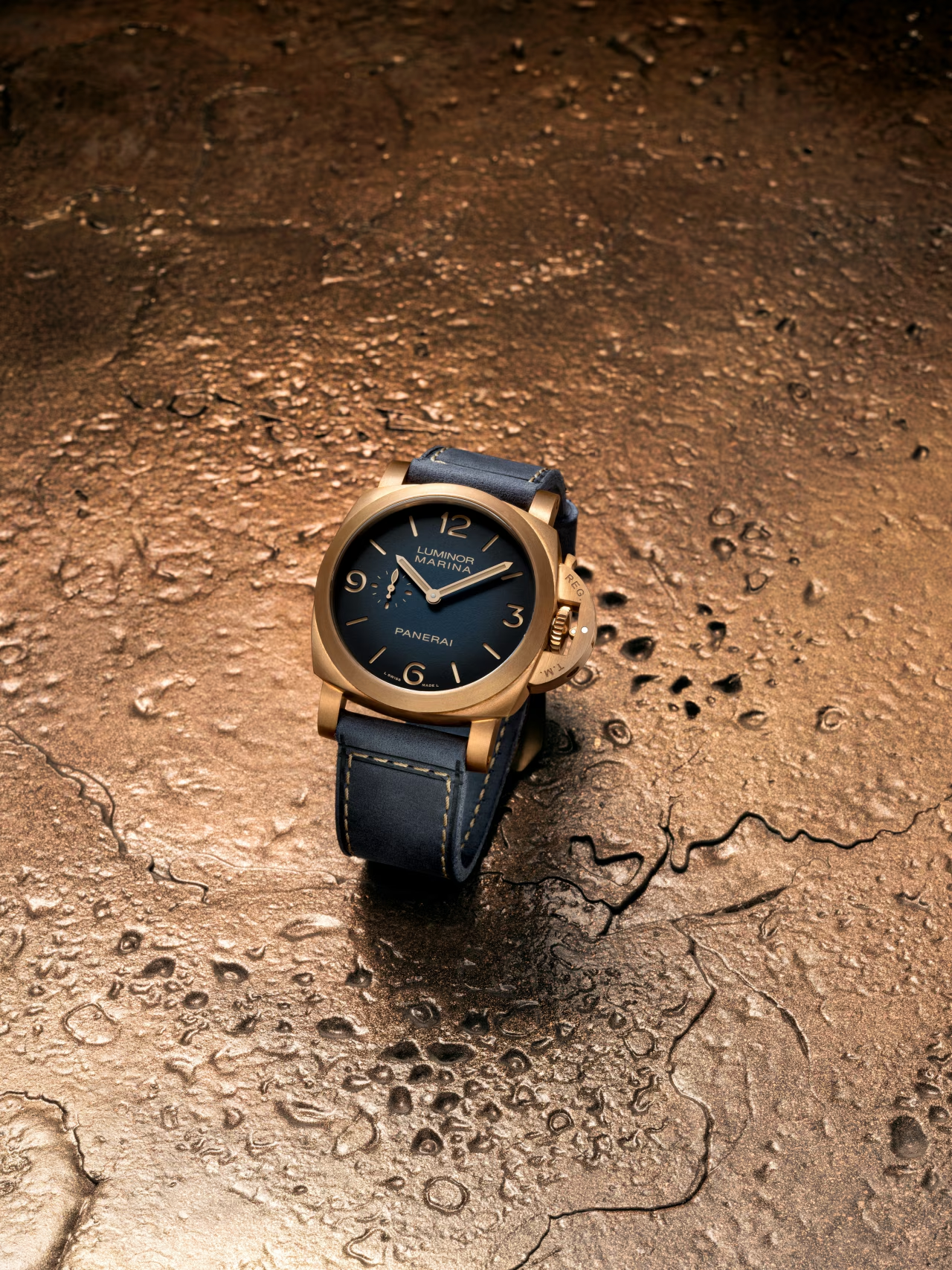
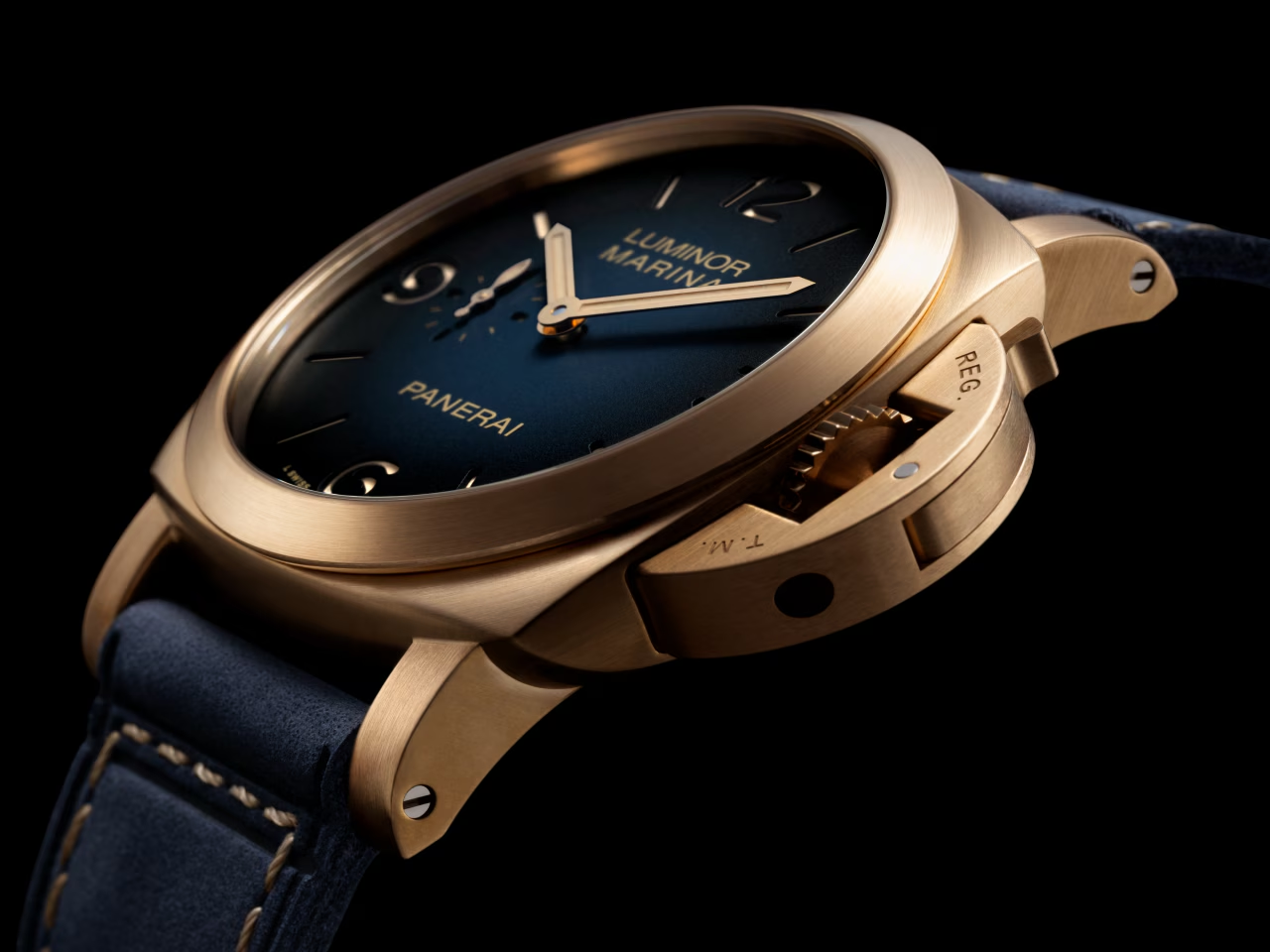
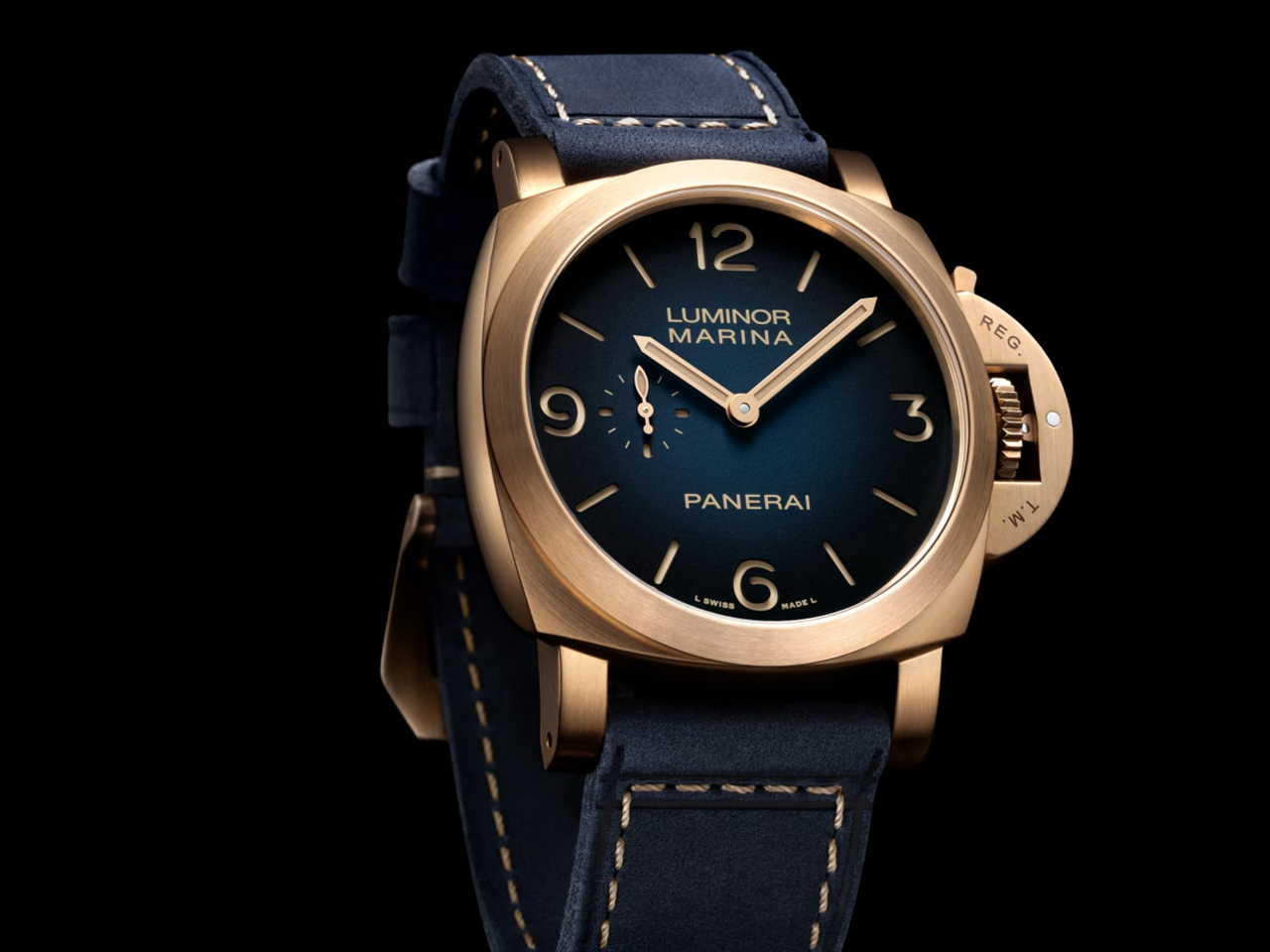
Inside is the P.980 automatic, a three-day movement with stop-second function and a traversing balance bridge for shock stability. The dial is a blue gradient in sandwich construction, fading from deep navy at the edges to a lighter wash at the center. Beige Super-LumiNova fills the cut-out numerals. The water resistance is rated to 50 BAR, tested at twenty-five percent above that depth as a margin of safety. None of this is decorative. Each specification answers to the same brief that has organized Panerai's work for ninety years: a tool watch for the sea.
Riva Backgammon Set, Leather
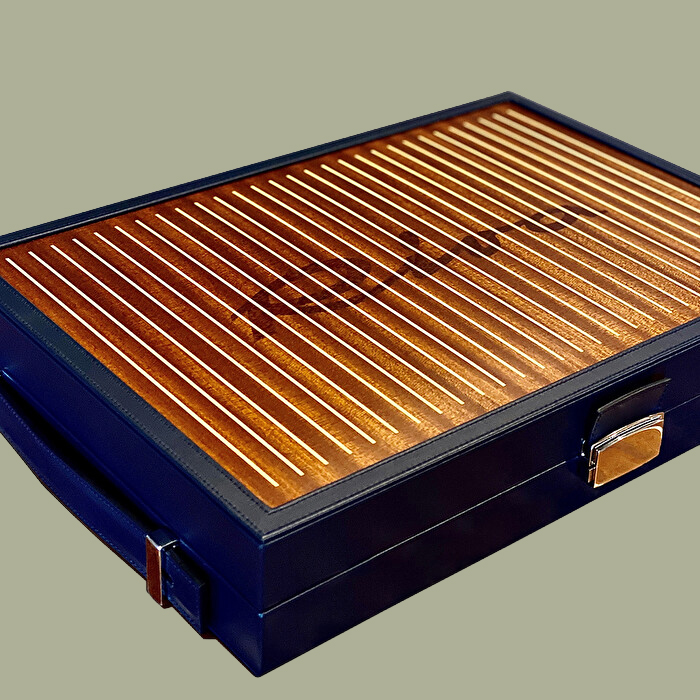
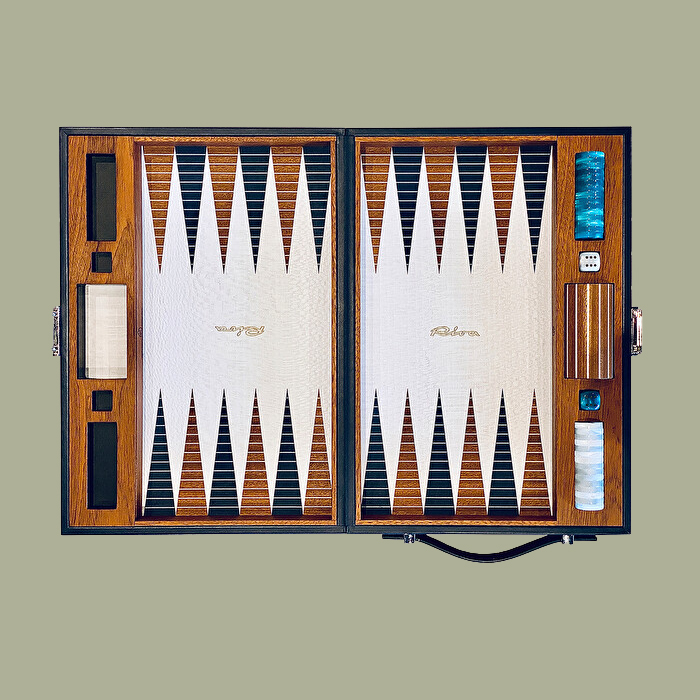
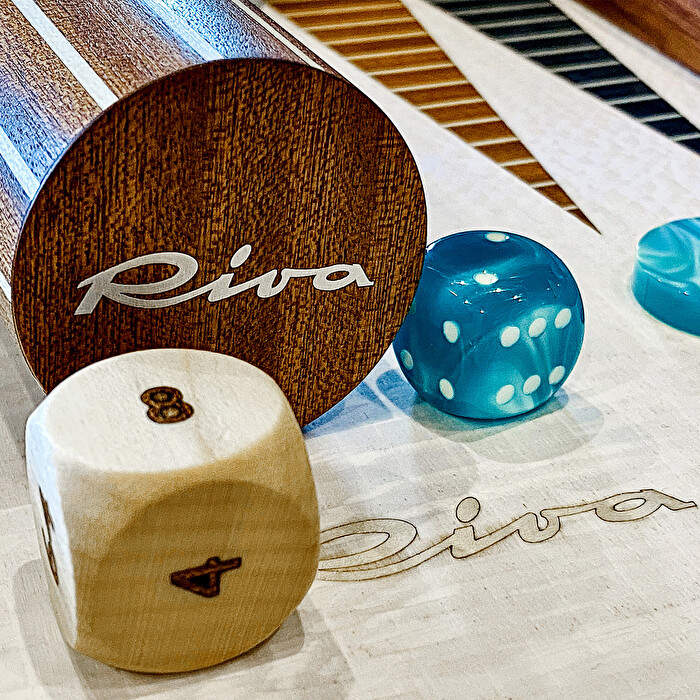
Riva was founded in Sarnico, on Lago d'Iseo, in 1842. The Aquarama, built between 1962 and 1996 under Carlo Riva, is the runabout that gave the brand its enduring vocabulary: mahogany decks finished in pinstripe, polished chrome details, leather seating, Mambo fabric for the sunbeds. When Riva Boutique was relaunched in 2017, the brief was specific. Take the materials that built the boats and make objects that speak the same language without imitating them.
The Backgammon Set is the cleanest expression of that principle. The case is mahogany and maple, lined in leather, with stainless steel inlays. The Riva name on the lid is set in steel, not printed. Inside, the points are arranged in white and aquamarine, the colors of the painted hulls; each playing piece carries a small mahogany inlay; the dice cup is turned in mahogany and maple. Four materials, all of them found on the deck of a Riva, gathered into a box that fits between two glasses on a saloon table.
The game itself is six thousand years old. Riva does not try to redesign it. What the workshop did was apply the same standards used on a hull to a domestic object: the inlays sit flush, the leather stretches without creases at the corners, the dice are weighted. After a season aboard, the leather darkens, the mahogany deepens, the steel takes the soft scratches of use. A Backgammon set five years old is more itself than a new one. That is the test.
Four materials, all of them found on the deck of a Riva, gathered into a box that fits between two glasses on a saloon table.
Mood 24-Piece Flatware Set
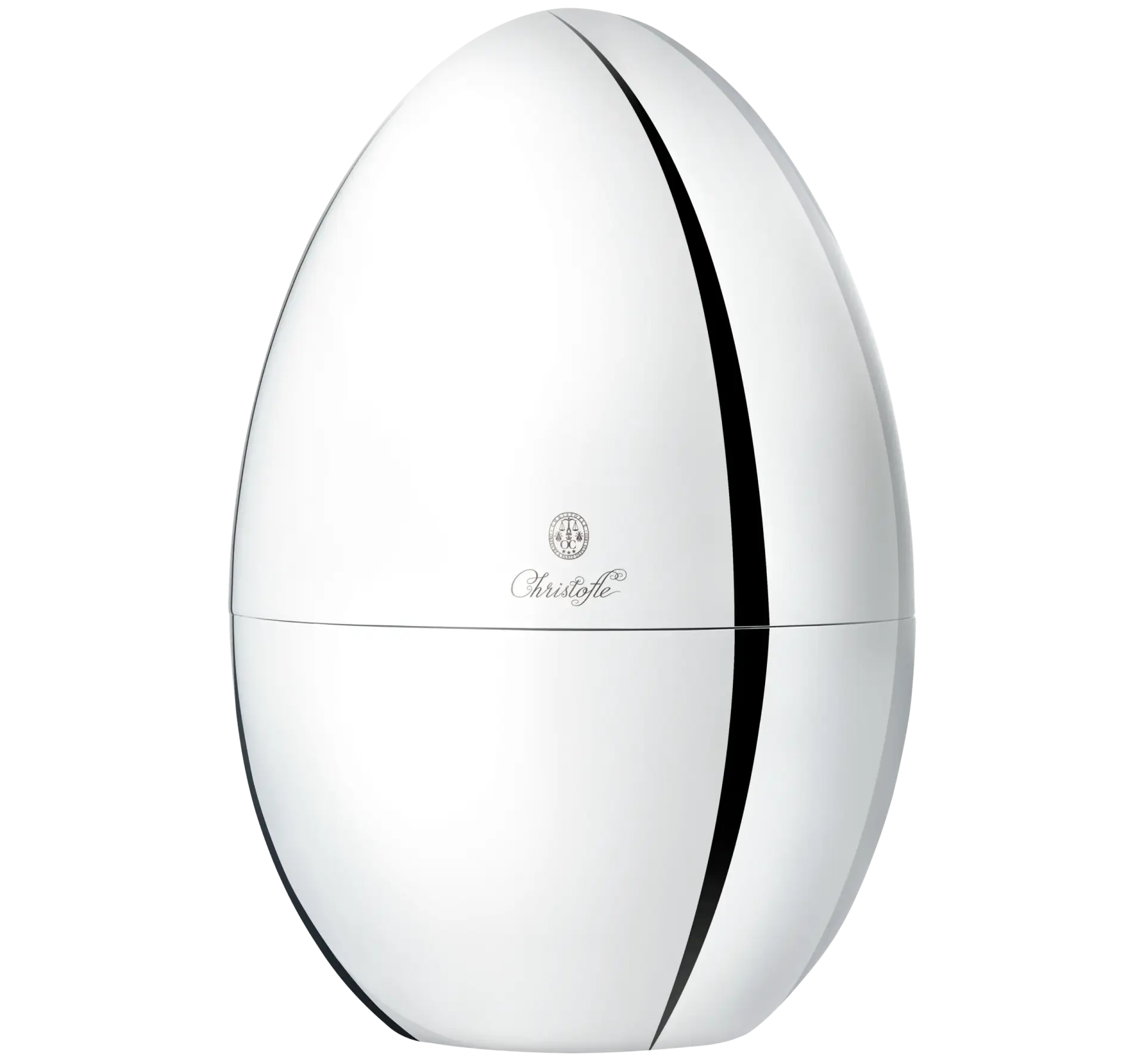
Christofle was founded in Paris in 1830 by Charles Christofle, who industrialized silver electroplating in France and supplied flatware to the courts of Louis Philippe and Napoleon III. The house's two-century practice is in silver: hand-spun, hammered, chased, engraved. The Mood collection, introduced in 2015, broke with the inherited code of how a Christofle service is presented at the table.
A traditional silver service lives in a baize-lined drawer, brought out on the occasion of a formal dinner. Mood inverts that logic. The flatware is housed inside a polished stainless steel ovoid, lined in walnut, that sits at the center of the table as its own object. The egg holds 24 pieces: six knives, six forks, six tablespoons, six teaspoons, arranged radially in the wood like petals folded into a pinecone. The host opens the lid. The guests serve themselves. The egg, emptied, remains on the table as a decorative element.
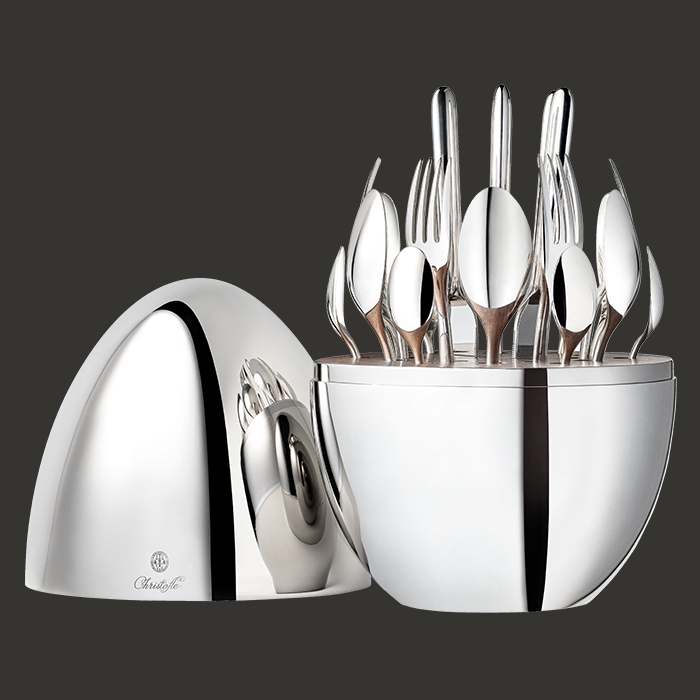
The technical content is conservative. Silver plate on a steel substrate, the same baseline Christofle has perfected since the 1840s. The case is mirror-polished stainless. The walnut interior disk is solid. What is contemporary is the gesture: the refusal to treat the everyday meal as less worthy than the formal one, the decision to bring silver back into daily use by removing the small theater of the drawer. After ten years of dinners, the silver carries the polish of hands; the steel egg shows the faint marks of moving across a tablecloth; the walnut darkens. It is the test of a useful object.
Different functions, different centuries of origin, one shared trait.
Four houses, founded between 1830 and 1860. Four different functions, organized around the life of a yacht or a waterfront home: a chair to sit on, a watch to wear, a game to play, a service to share a meal with. Two from France, two from Italy. The shared trait is the only one that matters.
None of these objects asks for permission to be beautiful. None requires explanation to be understood by the person who picks it up. The leather, the bronze, the mahogany, the silver: each material was chosen because it is the right one for the function, not because it photographs well. The forms are quiet. The houses are not.
The collector's eye, when it is honest, looks past the trophy and toward the object that still works. After thirty years of folding, after a decade of saltwater mornings, after a thousand games and a thousand dinners. The ones that survive that test are the ones worth keeping.
Six filters. An object enters this section only if it meets all six.
Applied to this issue, all four objects meet all six filters.
Built to do a specific, identifiable thing. Not decorative.
The right material for the function. Not the cheapest, not the most spectacular.
The hand recognizes the difference at first touch.
No ornament. Beauty arrived at through restraint.
The patina improves the object. It does not degrade it.
Still usable. Not only scenic value.
Photography: courtesy of the maisons · Hermès · Officine Panerai · Riva Boutique / Ferretti Group · Christofle
Editorial direction · USA Onboard