


What the law actually asks of you
Federal authority, state enforcement, and the small set of documents and habits that keep a day on the water clean. A working guide to the rules every recreational boater in the United States operates under, whether or not the badge ever appears.
A recreational boater in the United States moves through a regulatory environment that is layered, not loud. Federal rules cover the water itself; state agencies enforce registration, education, and operator conduct; specific zones, around manatees, in marine sanctuaries, near military installations, add their own. The whole structure is designed to operate quietly in the background as long as the operator does their part. When it surfaces, it surfaces fast.
Most owners discover the architecture of boating law one document at a time. A registration sticker that needs renewing, a safety-equipment inspection at a fuel dock, a no-wake zone misread on a Sunday afternoon. None of these is dramatic in isolation. Taken together, they describe a system in which the boater is presumed competent until proven otherwise, and in which the cost of being unprepared is paid in fines, delays, and occasionally in the long quiet that follows a serious incident. The legal framework is not adversarial. It is, however, exact.
What follows is a working brief on the four authorities that regulate American recreational boating, the paperwork and safety equipment the rules expect to find aboard, the way speed and wake are managed in protected waters, and the small set of habits that turn a regulatory checklist into something resembling seamanship. The audience is the owner who already knows their boat and wants to know the framework around it.
The four authorities, and what each one owns
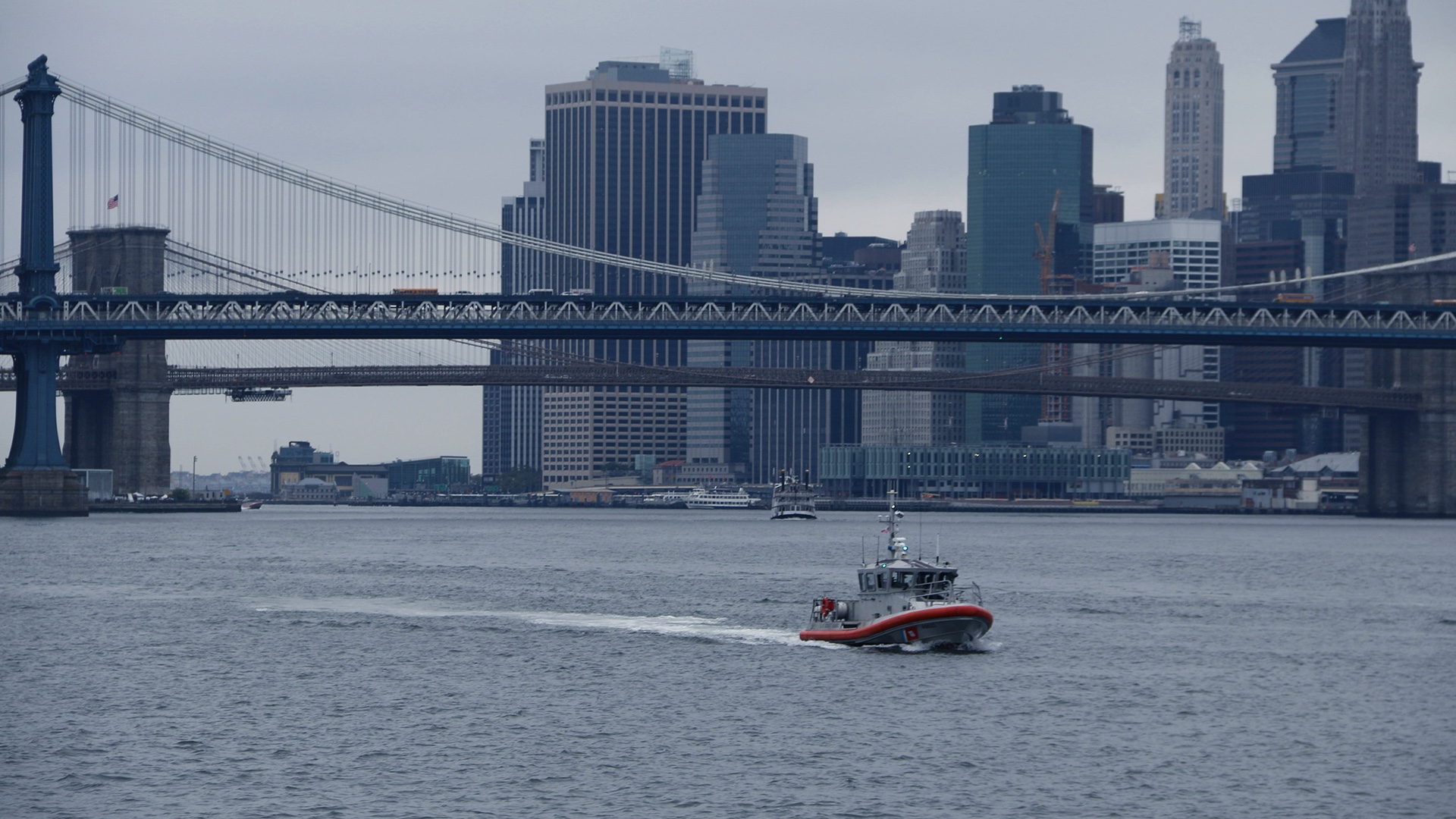
American boating regulation is built in tiers, and the tiers do not overlap by accident. The United States Coast Guard holds federal jurisdiction over navigable waters: the open ocean within twelve miles of shore, the Intracoastal Waterway, the Great Lakes, and the navigable portions of inland rivers. Coast Guard authority covers the rules of the road, the documentation of vessels above five net tons, the carriage of required safety equipment, and the enforcement of federal law on vessels operating commercially or recreationally. A Coast Guard boarding is not common, but when it happens it is not negotiable. The officer has the authority to inspect, to require corrections on the spot, and to issue federal citations.
State agencies own the second tier. In Florida, the Fish and Wildlife Conservation Commission, known as the FWC, regulates state waters, vessel registration, boater education requirements, and most of the day-to-day enforcement a recreational boater is likely to encounter. Equivalent agencies exist in every coastal and lakeside state under different names. The pattern is consistent: the state issues the registration number that appears on the hull, requires a boating safety education ID for operators born after a defined date, and patrols its own waters with marine officers whose authority on state waters matches the Coast Guard's on federal waters.
The third tier is specific to protected zones. The National Oceanic and Atmospheric Administration, NOAA, administers the national marine sanctuaries and the regulations that apply inside them. Speed restrictions in right-whale habitats off the Atlantic coast, anchoring rules in coral reef sanctuaries off the Florida Keys, and seasonal closures in spawning grounds are all NOAA work. The fourth tier is municipal and local: county sheriff marine units, harbor masters, and bridge tenders apply local ordinances on top of federal and state rules. The boater rarely needs to know which agency wrote which rule. The boater always needs to know that the rule applies.
The legal definition of navigable waters is broader than it sounds. Federal jurisdiction reaches into any water capable of being used as a highway for interstate or foreign commerce, which in practice covers most coastal bays, sounds, and the navigable reaches of inland rivers. The question is not whether the water looks federal. The question is whether it connects.
The practical consequence is that two boats moored in the same marina may be operating under slightly different rule sets depending on which water they leave through, which species they pass near, and which agency happens to be patrolling that afternoon. The competent boater treats the most restrictive rule as the rule and moves on. Arguing jurisdiction with an officer is, in nearly every case, the slower path to the same outcome.
The paperwork the law expects to find
The first practical encounter most boaters have with the legal system is documentary. Before a hull touches the water, a registration number has been issued by the state, a Hull Identification Number has been etched into the transom, and at least one operator has been required to carry a boating safety education ID. None of this is paperwork for its own sake. Each document is a stable point in a system that needs to verify, quickly and from the water, who owns the vessel, where it lives, and whether the operator has been instructed in the rules.
State registration is the universal starting point. In Florida, the FWC issues the registration that lives on a sticker affixed to the port side of the hull, just aft of the bow. The numbers themselves, the alphanumeric sequence beginning with the two-letter state code, must be displayed in characters of contrasting color, at least three inches tall, in a block style readable from a passing patrol. Registration renews annually or biennially depending on category, and operating an unregistered vessel on state waters carries a fine that is, in nearly every case, larger than the renewal itself.
Federal documentation is the optional second layer. Any recreational vessel of five net tons or more, a threshold that typically catches anything from roughly twenty-five feet upward with substantial enclosed volume, is eligible for a Coast Guard Certificate of Documentation. The certificate replaces the state registration number with a federal documentation number carved into a main beam of the vessel, and is generally required for boats financed through marine lenders, used in commercial charter, or operated frequently in foreign waters. The owner who never leaves the state and never takes a charter passenger may go a lifetime without one. The owner who finances a fifty-foot cruiser will have one within thirty days of closing.
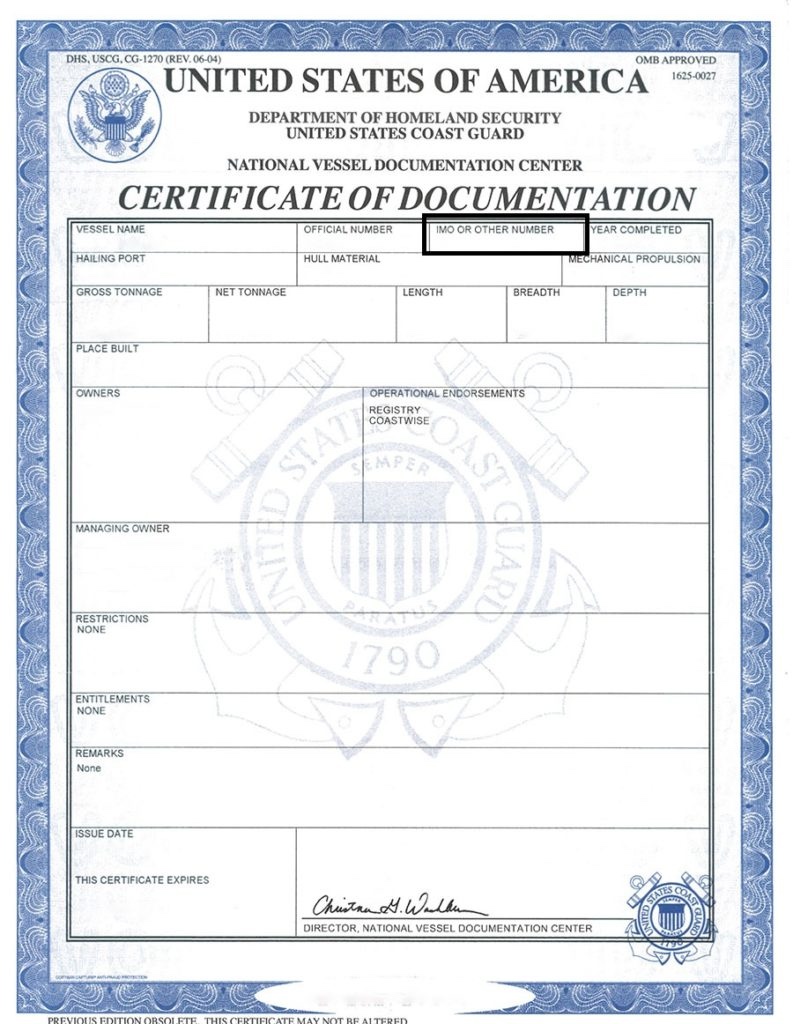
Certificate of Documentation The federal vessel record. Required above five net tons for many use cases, optional below.
The Hull Identification Number, the HIN, is the constant beneath all of it. A twelve-character code molded into the starboard transom, the HIN identifies the vessel for the life of the hull regardless of how often it changes owners or states. Buying a used boat without verifying that the HIN on the hull matches the HIN on the title is the most common reason a sale closes and then unravels. The number is the boat. Everything else, registration, title, insurance, documentation, is administrative paperwork stacked on top of it.
The operator carries their own document. Most states now require a boating safety education ID for any person born after a certain date who intends to operate a powered vessel above a defined horsepower threshold. The Florida card, issued by the FWC after a state-approved course, is valid for life and recognized in every state under the National Association of State Boating Law Administrators reciprocity agreement. The course is several hours of structured instruction on rules of the road, navigation aids, safety equipment, and emergency procedures. The card is short proof that the operator has been exposed to all of it. The patrol officer who asks for it expects to see it on the vessel, not at home in a drawer.
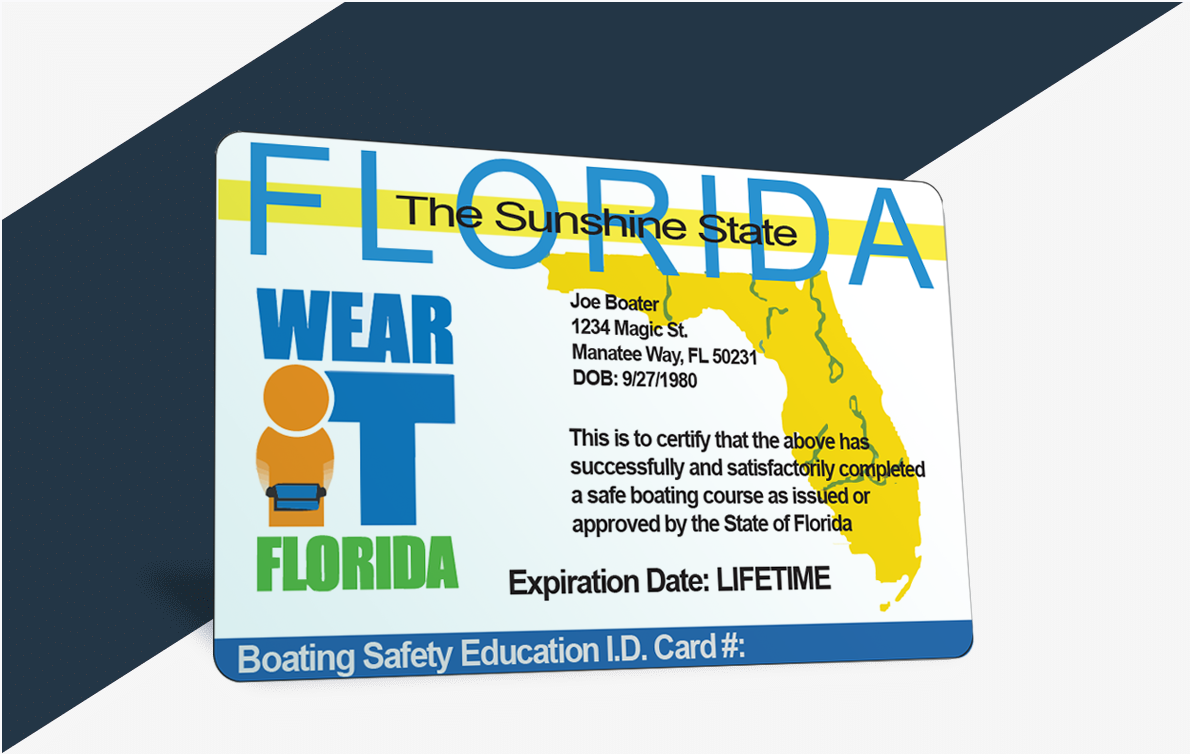
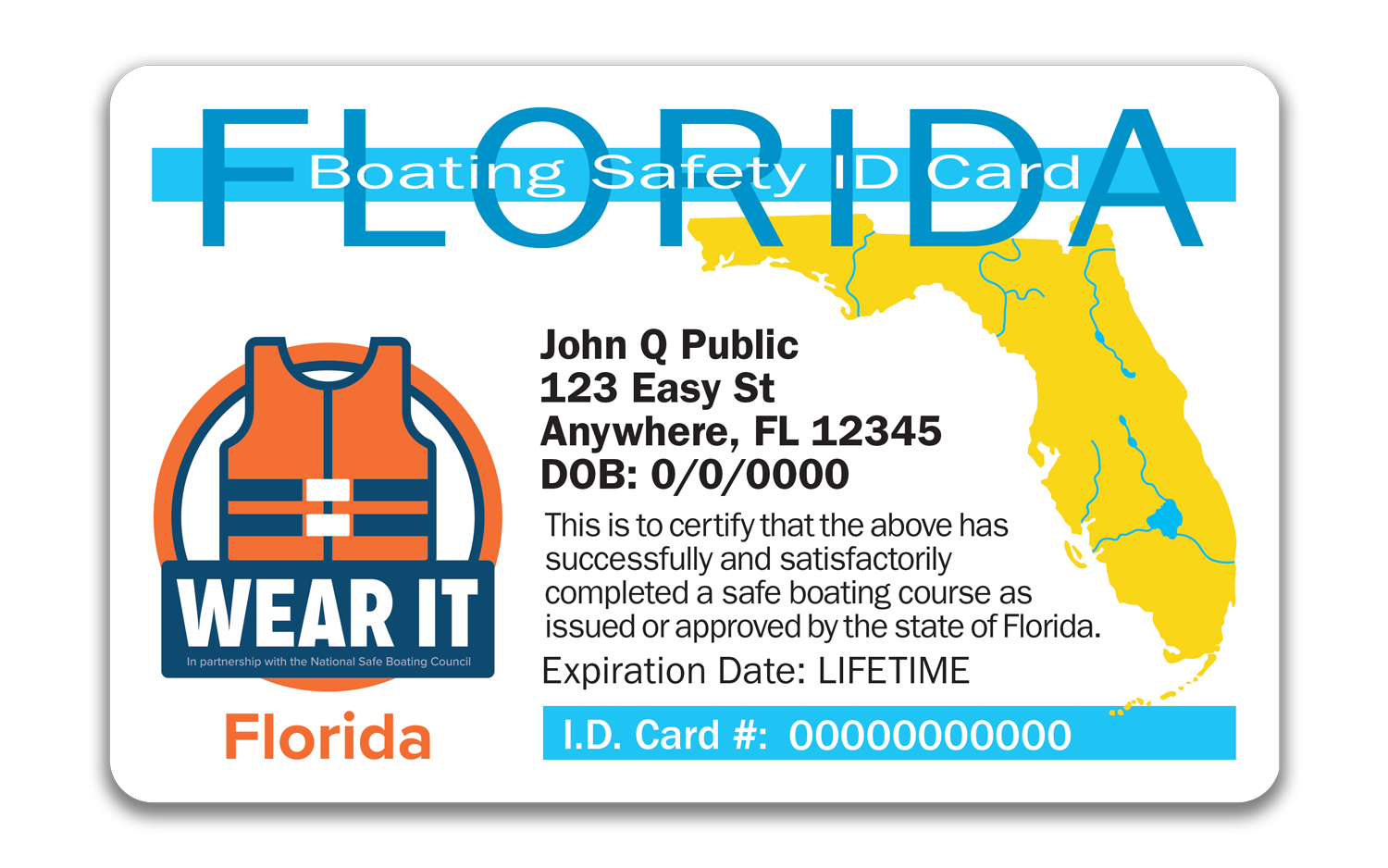
Four records.
Each one answers a different question.
I
State
Vessel Registration
Issued by the state agency, renewed annually or biennially. Sticker on the port bow, numbers on both sides. Confirms the vessel is legally registered and the fee is current.
II
Hull
HIN & Title
Twelve-character Hull Identification Number molded into the starboard transom. Title is the state-issued ownership record that links the HIN to the legal owner.
III
Federal
Certificate of Documentation
Coast Guard vessel registry. Required for many financed, chartered, or internationally operated boats above five net tons. Replaces state registration numbers with a federal documentation number.
IV
Operator
Boating Safety ID
State-issued, often digital, valid for life. Required for most operators born after a defined date. Recognized across states under NASBLA reciprocity.
“
The system is designed to operate quietly in the background as long as the operator does their part. When it surfaces, it surfaces fast.
Field Note · USA Onboard Editorial
The safety inventory the rules require
The Coast Guard publishes a minimum equipment list for every category of recreational vessel, and the list is the bar, not the goal. Federal regulation under 33 CFR Part 175 sets the carriage requirements: an approved life jacket, a Type IV throwable cushion or ring on boats sixteen feet and longer, visual distress signals appropriate to the operating area, fire extinguishers sized to the vessel, sound-signaling devices, navigation lights for any operation between sunset and sunrise, and a backfire flame arrestor on gasoline-powered inboards. The boat that meets the minimum is legal. The boat that prepares beyond it tends to have shorter incidents.
Life jackets are the first line of every inspection. One U.S. Coast Guard-approved personal flotation device must be on board for each person, in the correct size, in serviceable condition, and readily accessible. Children below a certain age, the threshold varies by state but is most commonly six, are required to wear a fitted jacket at all times on vessels under twenty-six feet underway. The marine officer who climbs aboard during a safety check will count heads, count jackets, check sizing, and verify the equipment has not been stored in a way that makes it impossible to reach during the first minutes of an emergency, which are the minutes that matter.
Visual distress signals are the second category. For vessels operating in coastal waters, on the Great Lakes, or on waters connected to them, the requirement is for both day and night signaling capability: a combination of orange smoke for daylight and red flares for darkness, with at least three signals of each kind. Modern alternatives include the electronic visual distress signal device that has been Coast Guard-approved as a substitute for pyrotechnics, with the trade-off that the boater no longer carries a single-use product that expires and must be replaced. Pyrotechnic flares have expiration dates printed on the cases. Carrying an expired flare is the same, under inspection, as carrying no flare.
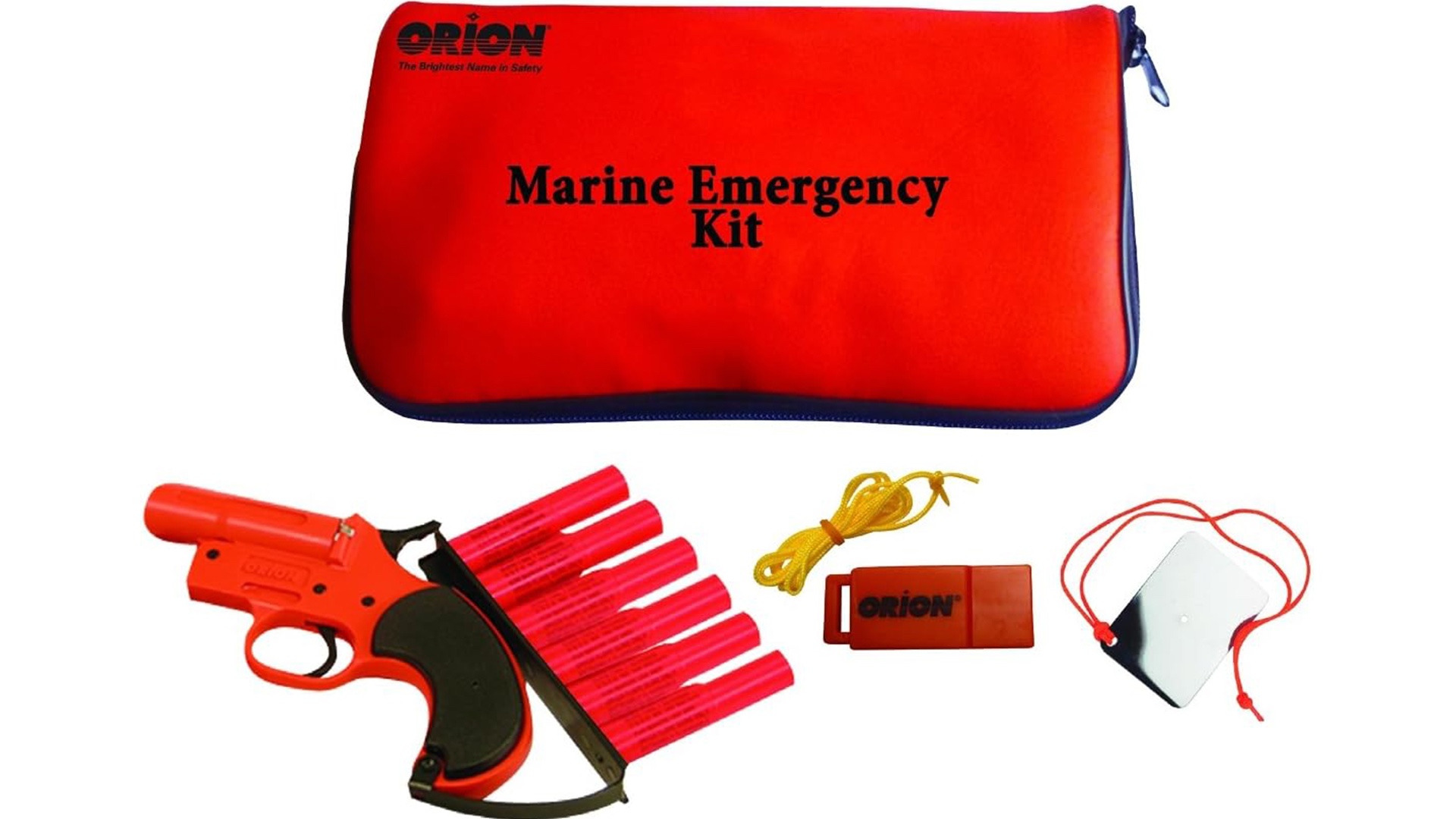
A marine emergency kit The federal minimum, laid out. The boat that prepares beyond it tends to have shorter incidents.
Fire extinguishers, sound-signaling devices, and navigation lights complete the federal baseline. State requirements often add to it. Florida, for example, requires a sound-producing device aboard every vessel and treats the failure to carry one as an equipment citation regardless of the size of the boat. Beyond the federal minimum, prudent boaters in coastal waters add an EPIRB, an emergency position-indicating radio beacon registered to the vessel that transmits a coded distress signal to satellites when activated. The EPIRB is not required for recreational use in most categories. It is, however, the single piece of equipment that most reliably turns a serious incident into a survivable one.

A note on insurance, because it sits beside the safety inventory in any honest brief. Federal law does not require liability coverage on recreational vessels, and most states do not either, but marinas, lenders, and charter operators almost universally do. A standard marine policy covers hull damage, liability for injury to third parties, salvage costs, and pollution liability for fuel spills, which is the line item that has surprised more boaters than any other. The minimum policy that satisfies a slip lease is rarely the policy that protects the owner against a serious claim. Reading the coverage limits and the exclusions before the first cruise is the kind of administrative task that earns its keep exactly once, and only on the day no one wanted.
Speed, wake, and the water you cannot see
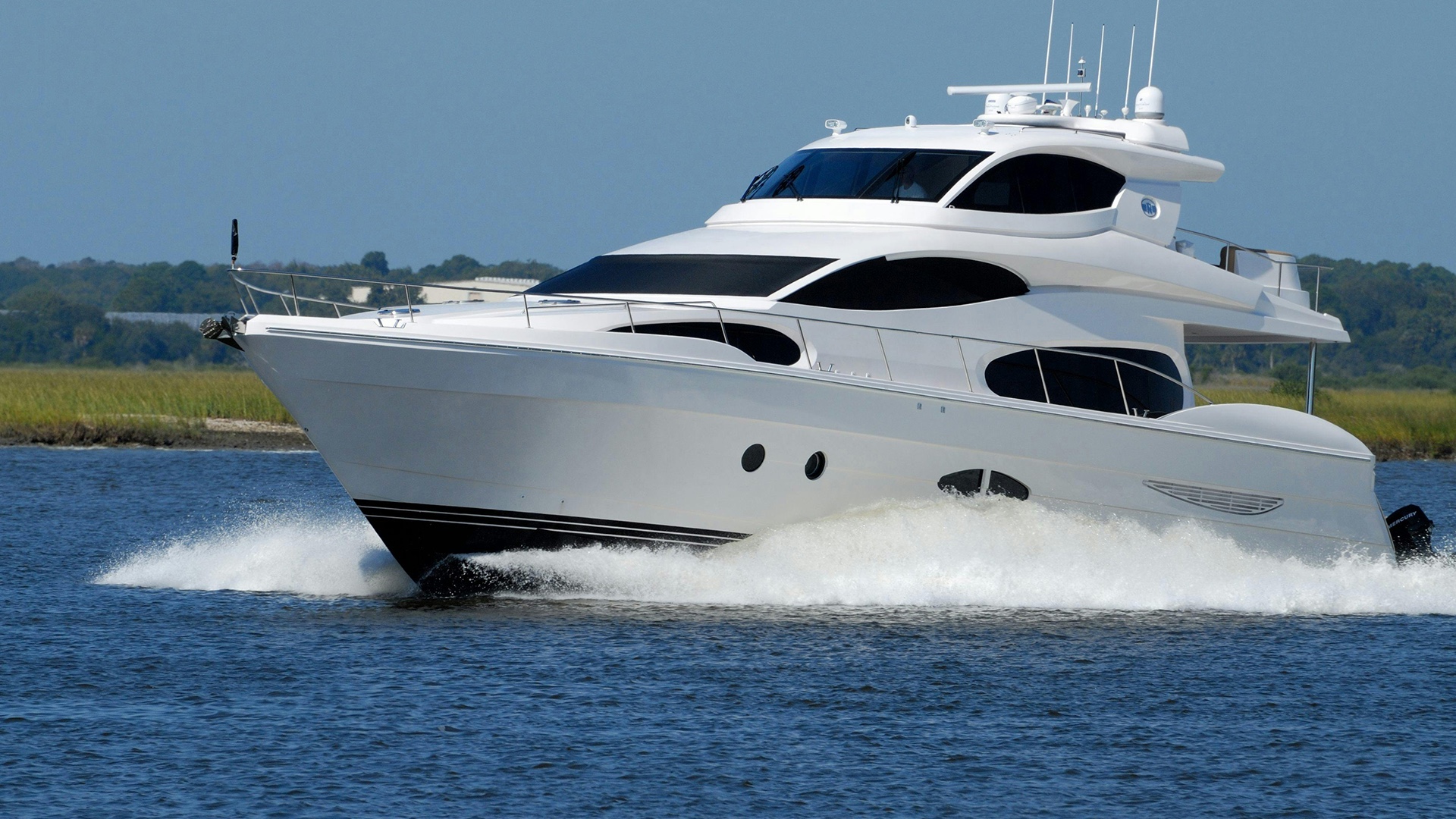
Speed regulation on American recreational waters is calibrated not by miles per hour but by the wake the boat produces and the harm the wake can do. The legal vocabulary is precise, and the enforcement is more aggressive in the United States, particularly in Florida, than most newcomers expect. A vessel cited for a wake violation is rarely cited for going fast in the abstract. It is cited for the visible consequence of the speed, the wave thrown against a moored boat, the wash that destabilizes a paddleboard, the disturbance that interferes with a protected species below the surface.
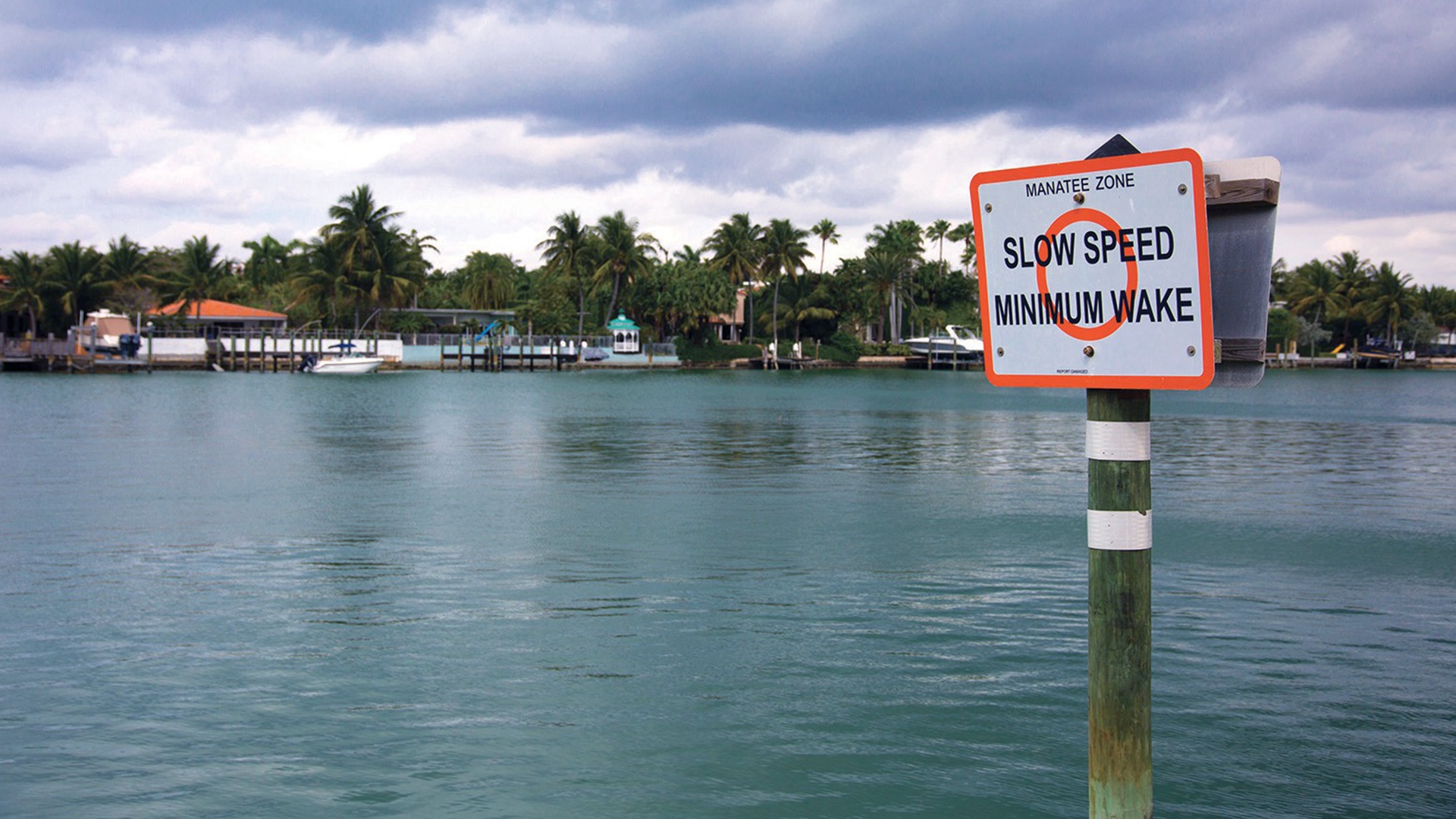
Florida law and federal rules in protected zones recognize a tiered vocabulary that every coastal boater learns to read on signage: Idle Speed No Wake, Slow Speed Minimum Wake, Slow Speed, and No Wake. Each level describes a specific operating condition. Idle speed is the minimum speed required to maintain steerage with the engine at its lowest sustained throttle, typically under three knots. Slow Speed Minimum Wake requires the vessel to operate fully off plane, the bow level and the wake reduced to its smallest practical signature. Slow Speed has a similar effect with somewhat more latitude. No Wake is the absolute version: the vessel produces no observable wave behind it. The signs are posted; the marine officer enforces the level posted on the sign.
The economic logic behind the rules is unambiguous. A wake-producing pass through a marina at the wrong throttle setting can tear cleats, snap dock lines, damage hulls of moored boats, and injure crew working on deck. Civil liability follows the wake. A captain whose wake damages another vessel is generally responsible for the cost of repair, regardless of intent, regardless of posted signage, and regardless of how briefly the throttle was held above the recommended setting. The rule that the wake belongs to the operator is one of the few that is consistent across federal, state, and admiralty jurisdictions.
Protected zones add a second layer of restriction. In Florida, the Manatee Sanctuary Act and its associated FWC rules designate seasonal and year-round manatee zones across most navigable inland waters of the state, with the densest restrictions in the Crystal River, Banana River, and Indian River systems. Inside these zones, the speed posted on the sign is the speed enforced from the air and the water. The penalty for a speed violation in a manatee zone is materially higher than a comparable violation outside one, and the enforcement is unsentimental: marine officers patrol the zones by boat, and FWC aerial patrols cite violators based on photographic evidence. The animal does not need to be visible at the time of the citation. The rule applies in the zone, full stop.
The same logic governs NOAA-managed sanctuaries. Off the Florida Keys, the Florida Keys National Marine Sanctuary imposes anchoring restrictions on living coral, no-discharge zones for waste, and speed-restricted areas near reef line. Off the Atlantic seaboard, seasonal slow-speed corridors protect the North Atlantic right whale during its migration. None of these are intuitive from the chart alone. The competent boater consults the local Coast Pilot, the chart updates from NOAA, and the FWC bulletin before the season opens, and treats the most restrictive sign on the route as the speed for the day.
Four operating levels.
Each one means something specific.
Tier I
Idle Speed No Wake
Minimum steerage only
The lowest throttle setting at which the vessel maintains directional control. Typically under three knots. Used in marinas, fueling areas, and the tightest manatee zones.
Slow Speed Minimum Wake
Tier II
Fully off plane, bow level
The vessel operates off plane with the wake reduced to its smallest practical signature. The standard posted level in most residential canals and seasonal manatee corridors.
Tier III
Slow Speed
Reduced, controlled
A reduced operating speed without the strict no-plane requirement. Common on transit segments approaching restricted zones and around heavy traffic.
Tier IV
No Wake
Absolute, no observable wave
The vessel produces no wave detectable behind it. The strictest commonly posted level, used around moored boats, structures, and zones with submerged hazards.

Florida manatee The reason a stretch of canal is posted Idle Speed. The animal does not need to be visible for the rule to apply.
Lines, responsibility, and the day that ends well
The last layer of boating law is the layer that lives at the dock and on the deck. Dockage is contractual: the slip lease defines insurance minimums, after-hours access, fuel handling, pump-out obligations, and the marina's right to refuse service to a vessel in poor condition. Reading the slip lease carefully is rare. Discovering that the policy did not actually cover the spill or that the after-hours haul-out was not authorized is, unfortunately, common. The marina is operating under its own state and local code, and the contract with the boat owner is the document that resolves disputes between them.
Lines are the operator's responsibility from the moment the boat arrives. A properly cleated bow line, a stern line under modest tension, and a spring line correctly placed are not seamanship for show; they are the small acts of competence that keep a vessel from working against its neighbors during a tide change or a passing wake. A line coiled neatly on a piling speaks well of the boat. A line dragging in the water, or a cleat improperly tied, speaks badly of it and may, in the event of damage, shift the liability quietly toward the operator who failed at the basic work.
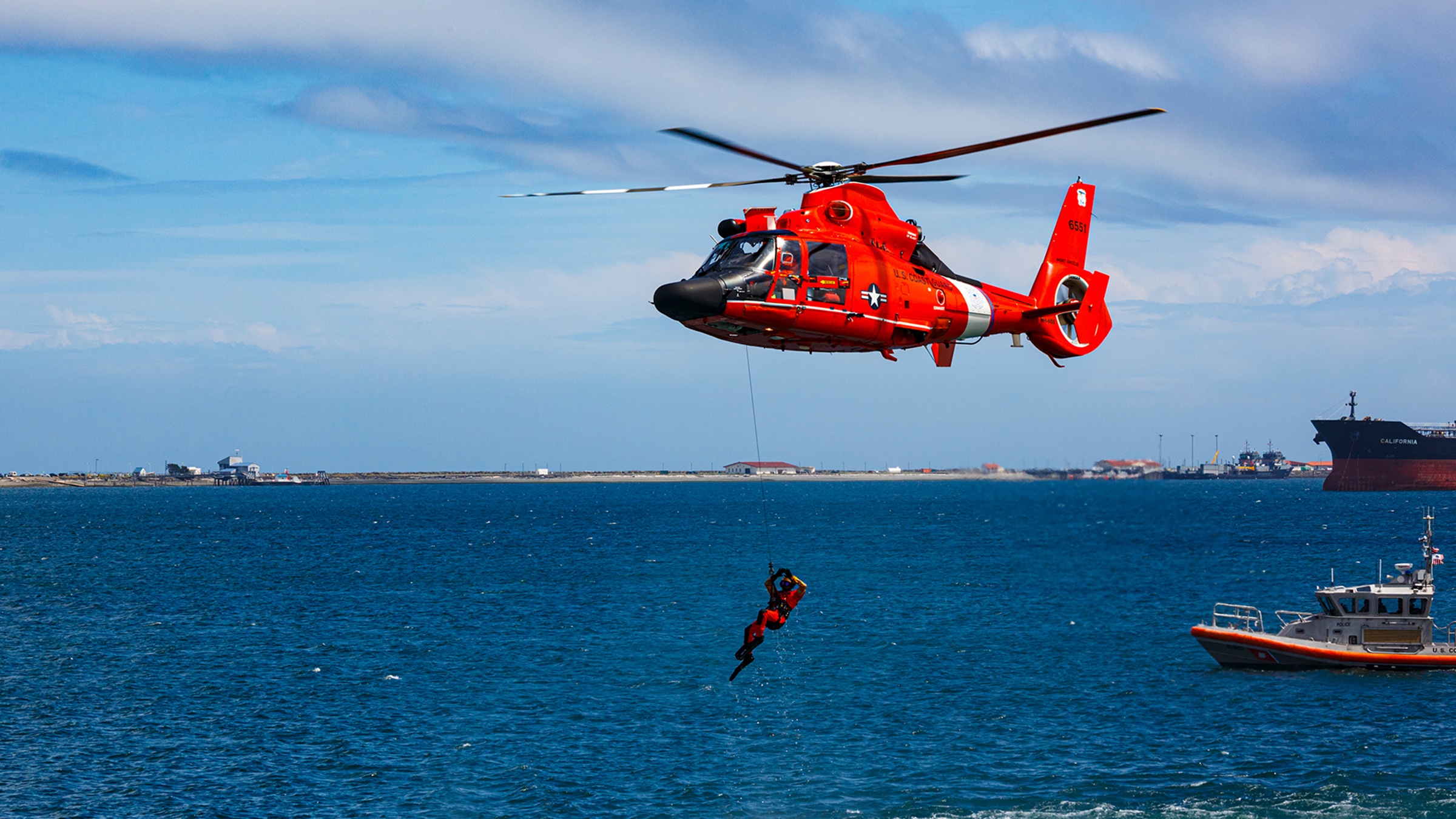
A Coast Guard or FWC boarding, when it happens, is a structured interaction with a known script. The officer requests permission to come aboard, identifies themselves, states the basis for the inspection, and asks for the carry-aboard documents. The cooperative boater hands over the registration, the operator's safety ID, and any federal documentation, then steps out of the way while the officer verifies the safety equipment count. The inspection is rarely adversarial. It becomes adversarial only when the operator refuses, evades, or argues. A boater who treats the encounter as routine, because for the officer it is, tends to be back underway within fifteen minutes with a checklist completed and nothing further requested.

Lines, coiled Your lines are your responsibility, always. A small competence that shifts no liability.
There is one further category worth naming, because it sits at the intersection of every layer above. Operating under the influence is a federal and state offense, prosecuted under both 33 CFR Part 95 at the federal level and state implied-consent laws on state waters. The thresholds are the same as on the highway: 0.08 blood alcohol concentration is the per-se limit, lower for operators under twenty-one in many states. The penalties stack: federal civil fines, state criminal charges, license consequences on the road, and a civil liability profile that no recreational insurance policy will quietly absorb. The boater who pours the first drink at noon is no longer operating a boat; they are operating a hazard with paperwork.
Two short lists worth keeping at hand.
On the Water · Do
- Keep state registration, operator ID, and federal documentation aboard, in a dry place the officer can reach.
- Verify safety equipment count, expiration dates, and PFD sizing before each season.
- Read posted speed signs as binding instructions, regardless of how empty the water looks.
- Inspect dock lines, cleats, and fenders at every arrival and departure.
- Treat a Coast Guard or FWC boarding as a routine inspection. Cooperate, hand over documents, step aside.
On the Water · Don't
- Operate an unregistered vessel, or one whose registration sticker has been allowed to lapse.
- Trust an expired pyrotechnic flare to satisfy the visual distress signal requirement.
- Throw a wake in a posted Slow or No Wake zone, regardless of how brief the throttle moment was.
- Pair operation of a powered vessel with alcohol, sedative medication, or recreational drugs.
- Argue jurisdiction with a marine officer. The conversation belongs in a courtroom, not on the water.
Boating law in the United States is not a barrier to entry. It is a quiet architecture, federal at one end, local at the other, that assumes the operator is competent and rewards the assumption. The owner who knows the four authorities, carries the four documents, meets the safety inventory, reads the posted signs, and treats the marine officer as a colleague rather than an obstacle, will spend a long career on the water without ever needing to know more. The owner who skips any of it will discover the system at the moment it costs the most.
USA Onboard Editorial