
MOST READED

NARRATED ARTICLES

NEWSLETTER

Luxury boating stories, delivered to your inbox every week.

EDITOR'S CHOICE

PRINT EDITION

ONBOARD ESSENTIALS

Pure originality. A gift collection for the individual who has it all and values distinction above all else.

Scroll
Before Purchase · Decision Guide

Flybridge Yes,
or Flybridge No?

The answer almost every dealer offers is honest, if unsatisfying: it depends. What it depends on — climate, route, family, marina, mood — is the more interesting question, and the one this guide is built around.

USA Onboard Editorial · Decision Guide · 2026 · Reading · 10 min

There is a question that every serious buyer eventually meets, and that no brochure quite manages to answer: flybridge or no flybridge? The honest reply is that there is no universal answer — only the right one for a particular boat, a particular coastline, and a particular life.

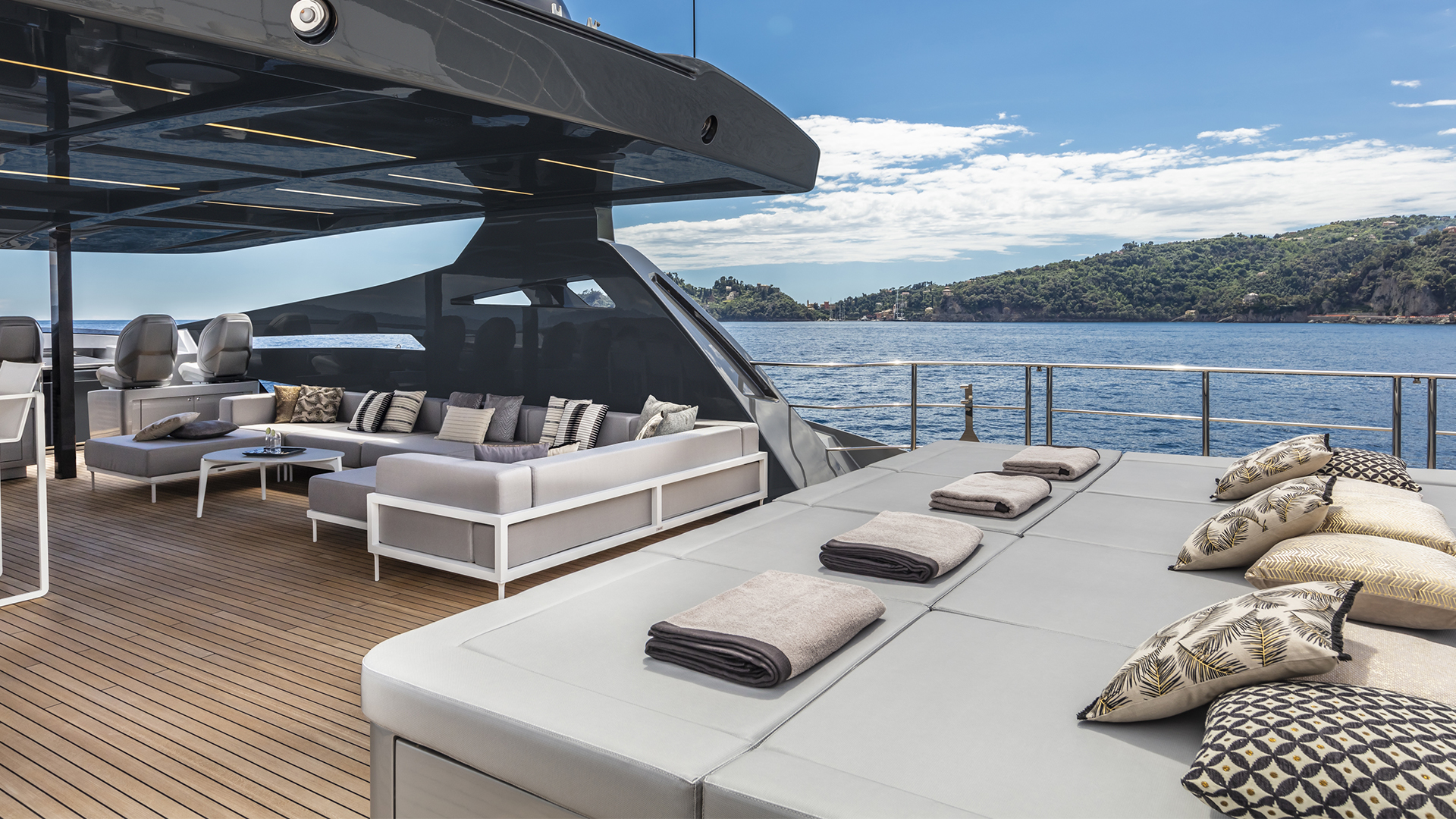
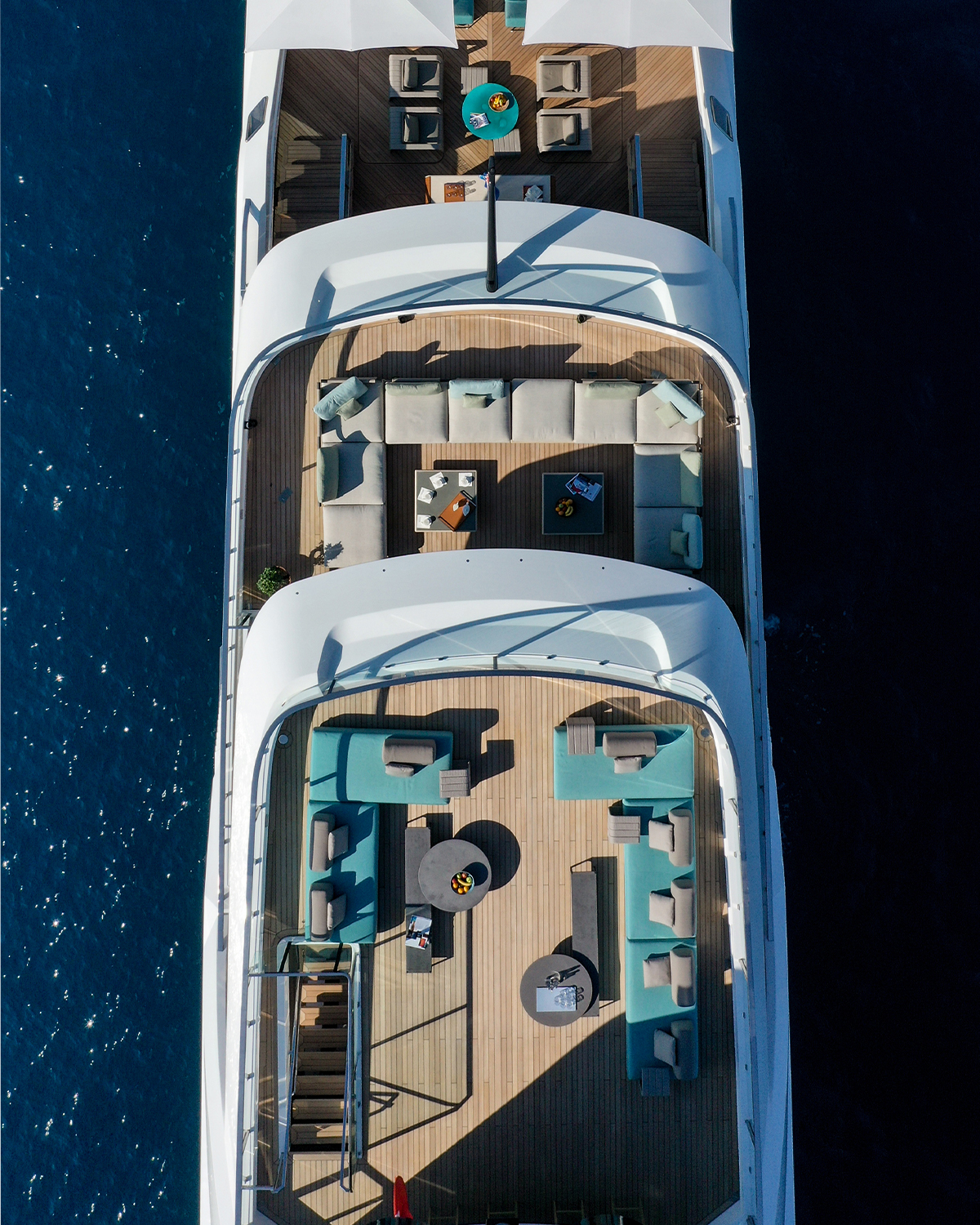
Over the last decade the "Sport" yacht — single-level, low-profile, all glass and reflection — has captured an outsized share of the high-end market. The shapes are striking. The press photography is irresistible. The marketing reads younger. And as that aesthetic has advanced, an interesting countercurrent has run beneath it: the flybridge has been quietly rebuilt. The era of a cramped upper helm shared only with the captain is over. The contemporary flybridge is closer in spirit to a private rooftop terrace at sea — with a wet bar, a built-in grill, dining for ten to twelve, panoramic sunpads, and a second helm that gives the skipper the best seat in the marina.

The case for sport, in turn, has not weakened. A well-drawn sport yacht is lighter, faster, more fuel-efficient and structurally lower — which makes it nimbler in crosswinds, more honest in rough water, and friendlier to canals with low bridges. The two boats are not opposites so much as different propositions of the same yacht, and the buyer's task is to understand which proposition fits the way they actually use the water.

This article does not pretend that one is better. It maps the four tensions every owner navigates when making the decision, walks through the questions a skipper should be asking before signing the order, and ends with a small toolkit for testing the boat — and yourself — before the deposit clears.

~40%
The Efficiency Gap, Roughly

The order of magnitude by which a sport yacht typically outperforms a comparable flybridge model in fuel burn at cruising speed, owing to its lower weight and reduced windage. Hull, drivetrain and conditions all move the number — but the direction does not.Industry estimates · 60–100 ft segment

The Decision · Four Tensions

Where the flybridge
wins and loses

Every flybridge debate, stripped of aesthetics and brand loyalty, comes down to four tensions. They are worth naming clearly. None of them resolves universally, and any honest decision involves trading one against another.

The first is weight against performance. A flybridge adds structure — second helm, hardtop, exterior furniture, additional plumbing for the wet bar — and that structure imposes a mass penalty the hull must carry. The penalty shows up as reduced top speed and increased fuel burn. The exact figure varies with length, engine package and weight-to-power ratio, but the direction is constant: a sport version of the same model will run more efficiently than a flybridge version of the same model. Always.

The second is windage against control. Adding a deck above the wheelhouse raises both the boat's profile and its center of gravity. The technical name is windage — the area above the waterline on which the wind can press. In a crosswind at low speeds, that pressure complicates close-quarters maneuvering, and the boat is more readily set off course while approaching a slip. Bow thrusters, joystick controls and modern pod drives compensate effectively in most conditions, but the underlying physics remain.

The third is visibility against connection. From the upper helm, the skipper has the best view on the boat — markers, water color, slip approach, the geometry of nearby traffic. It is, by some margin, the safest position to dock from. The same position, however, separates the captain from the cockpit, the galley, and the children below. Today's solution is technical: portable VHF on a family channel, internal intercom, and a multifunction display that mirrors live camera feeds from bow, stern, engine room and galley. Most contemporary flybridge yachts ship with this kit as standard. It works.

The fourth is height against geography. The flybridge raises the boat's air draft — the vertical distance from the waterline to the highest fixed point. On open coasts that is not an issue. On the Intracoastal Waterway, on river systems with fixed low bridges, in canal cruising grounds where bridges open on schedule, it can be. A boat that needs every bridge to lift becomes a boat that runs on bridge timetables.

The line the trade keeps repeating
On a beautiful day, nothing beats running the boat from above. On a stormy day, nothing is worse. The argument for the dual-command flybridge — upper helm and protected lower helm in the same vessel — is precisely that the owner is never forced to choose.
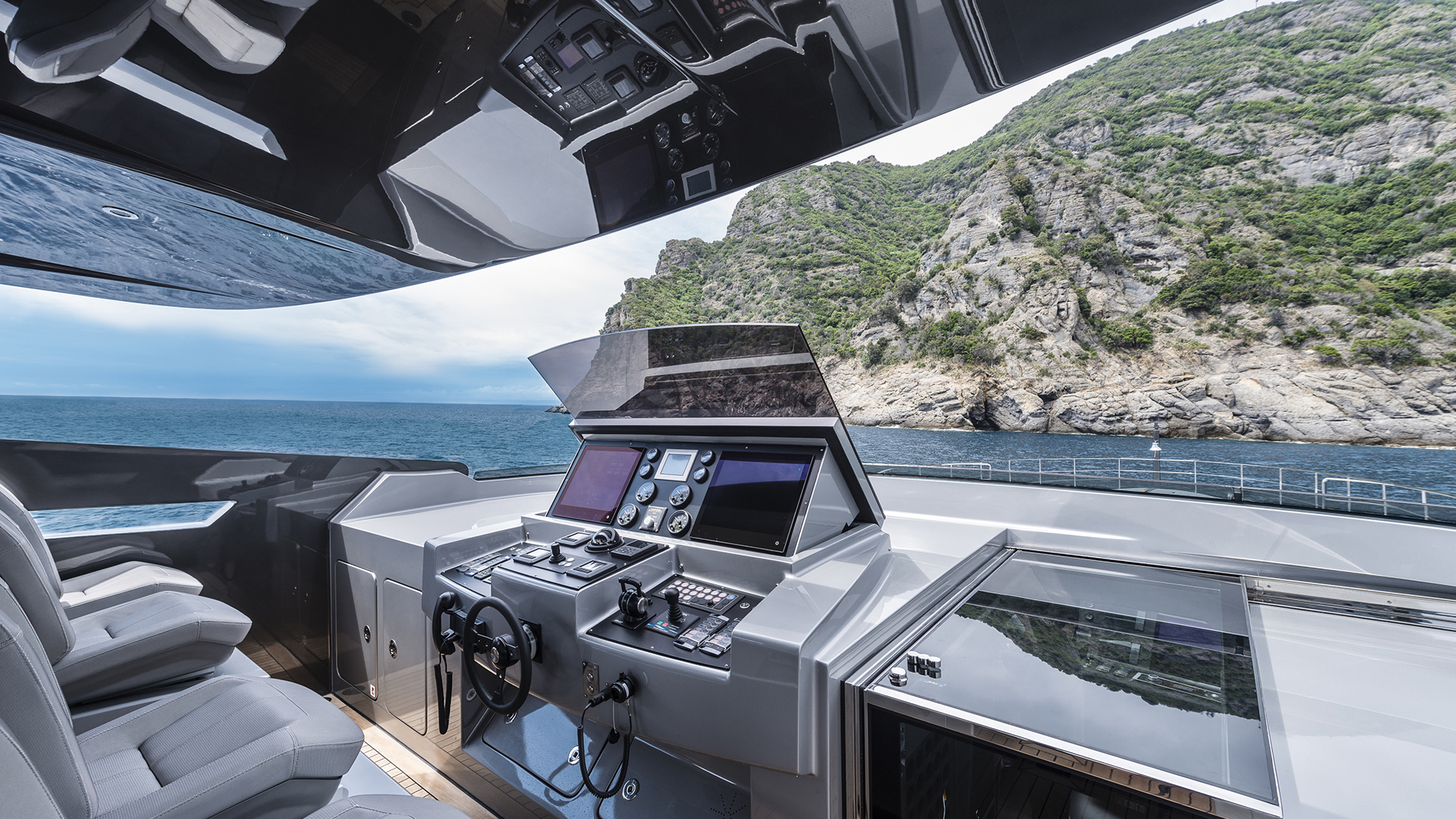
From the helm · A Riva 110 flybridge
Annotated Diagram

A short tree for an honest decision

Six questions, two outcomes. The branches of the diagram below collapse the entire flybridge-versus-sport debate into the small set of inputs that actually move the answer.

— WARM & OPEN — — COLD OR TIGHT — FAMILY · SOCIAL PERFORMANCE · SOLO 0 The buyer's brief What does the boat have to do? 1 2 3 4 Flybridge The social, all-weather case 5 Dual-command fly Upper helm · protected lower helm 6 Sport yacht Performance, profile, simplicity
01

Where will the boat actually run?

Florida, the Bahamas, the Caribbean, Mediterranean summer — the case is warm and open. Pacific Northwest, Alaska, North Atlantic, river systems with low bridges — the case is colder, tighter, or more vertical.

02

How many months a year is the upper deck usable?

Eight to nine months of warm weather is the threshold at which a flybridge starts paying for itself in lifestyle terms. Below five months, the asset spends most of its life as additional structure the boat carries but rarely uses.

03

Who is on board, and how often?

Families with young children gain a great deal from controlled access: many builders site the flybridge stairway inside the salon, so the only route to open deck passes through where the parents are. Solo and couples-only owners weigh this lightly.

04

What is the home marina like?

Tight slips with frequent crosswinds reward the higher visibility of an upper helm at low speed. Wide slips and low-traffic basins make the visibility advantage less decisive.

05

Does the cruising ground have fixed low bridges?

The Intracoastal Waterway, certain inland canals and some European river systems can turn extra air draft into a daily inconvenience. Always check the vessel's air draft against the bridges that actually sit on the route.

06

Is the operating budget comfortable with the fuel premium?

A flybridge version of the same model burns roughly 20–40% more fuel at cruising speed and is slower at top end. If those numbers matter to the use case, the sport version is the cleaner answer.

Anatomy of a Day

A flybridge day, hour by hour

When the climate cooperates, this is what the upper deck actually does between dawn and the end of dinner. The flybridge is rarely a single use case — it is a sequence of them.

07:30
Coffee, above the waterline
The first hour of the day is the one the upper deck most reliably wins. Cool air, no crowd, the marina still asleep, the view to the horizon already there before the boat has even left.
10:15
Out of the slip, eyes on the bow
Casting off from the upper helm gives the skipper a sight line into the slip that the lower station cannot match. Bow corners, finger ends, the boat one slip over — all visible without leaving the wheel.
12:40
Lunch underway
On a calm passage, the flybridge dining table seats eight to twelve depending on length. A grill, a refrigerator, a wet bar with a sink — the open-air galley is built in, not improvised.
15:00
The sun deck, afternoon
Modern flybridge sunpads run nearly the full beam, often with pop-up headrests and shaded canopy options. This is the hour the asset most clearly distinguishes itself from any single-level alternative.
17:20
Anchoring from above
Setting the hook in a busy cove is a visibility problem. The upper helm reads the field of nearby boats, the depth shading, the swing radius — and lets the captain place the bow exactly where it needs to be.
19:00
Sunset, golden hour
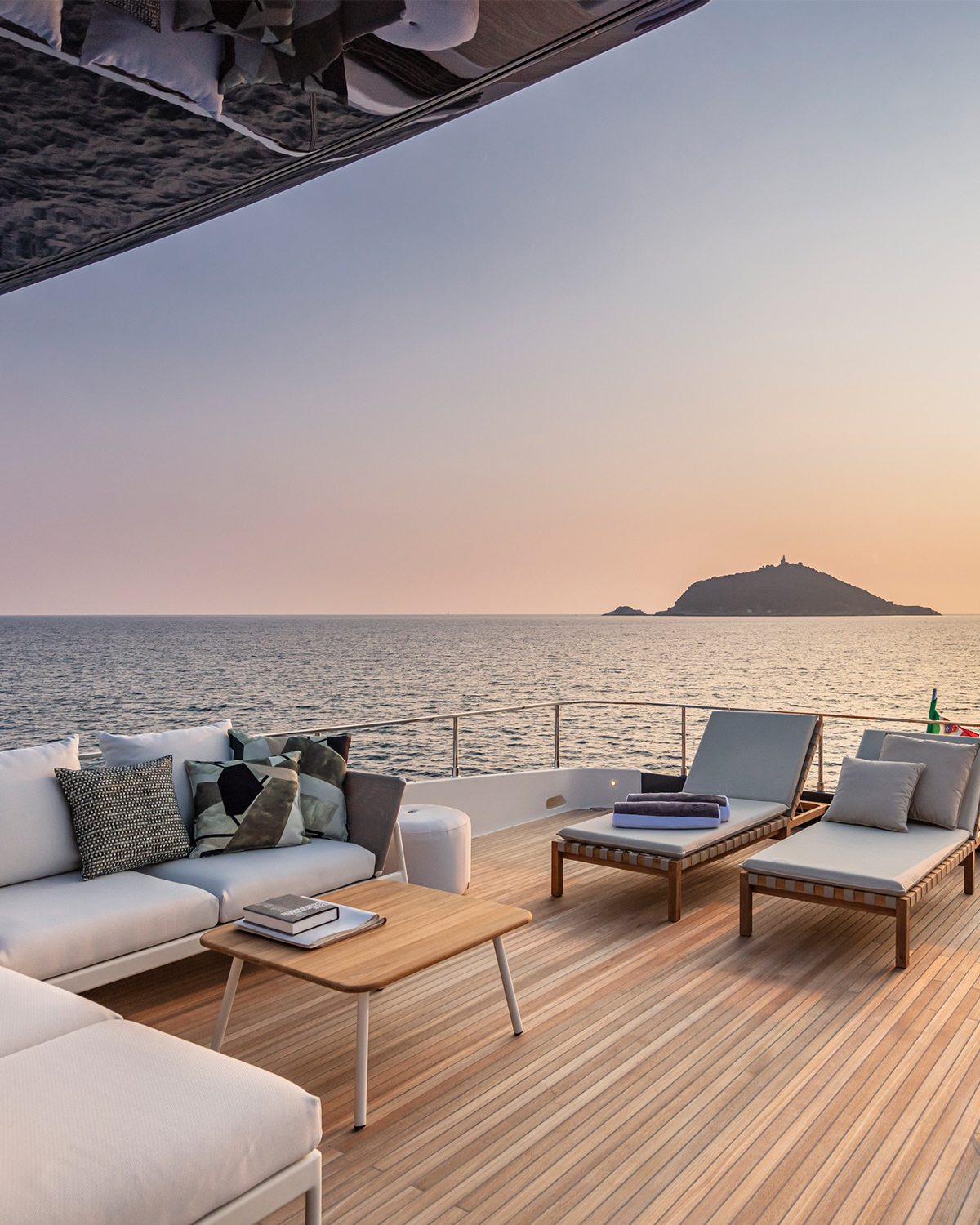
The reason a meaningful share of flybridge buyers buy flybridge boats. The upper-deck sunset, drink in hand, the bay turning copper, the bow facing into the breeze. Worth, in those minutes, every kilo of structural penalty.
20:45
Al fresco dinner
The grill, the wet bar, the dining table for ten — set under the hardtop, often with a discrete sound system. A dinner served at anchor on the flybridge is the cruise's most photographed moment, and rarely the most expensive one.
23:00
Stars, no horizon to compete
The lights down, the engines off, the only thing above is sky. The upper deck after dark is the cruise's quietest, least programmed space. Many owners describe it, eventually, as the reason they bought the boat.
Four Cruising Contexts

When the flybridge wins, and when it doesn't

The same boat in two specifications can be the right answer in one geography and the wrong one in another. Four cases that draw the lines clearly.
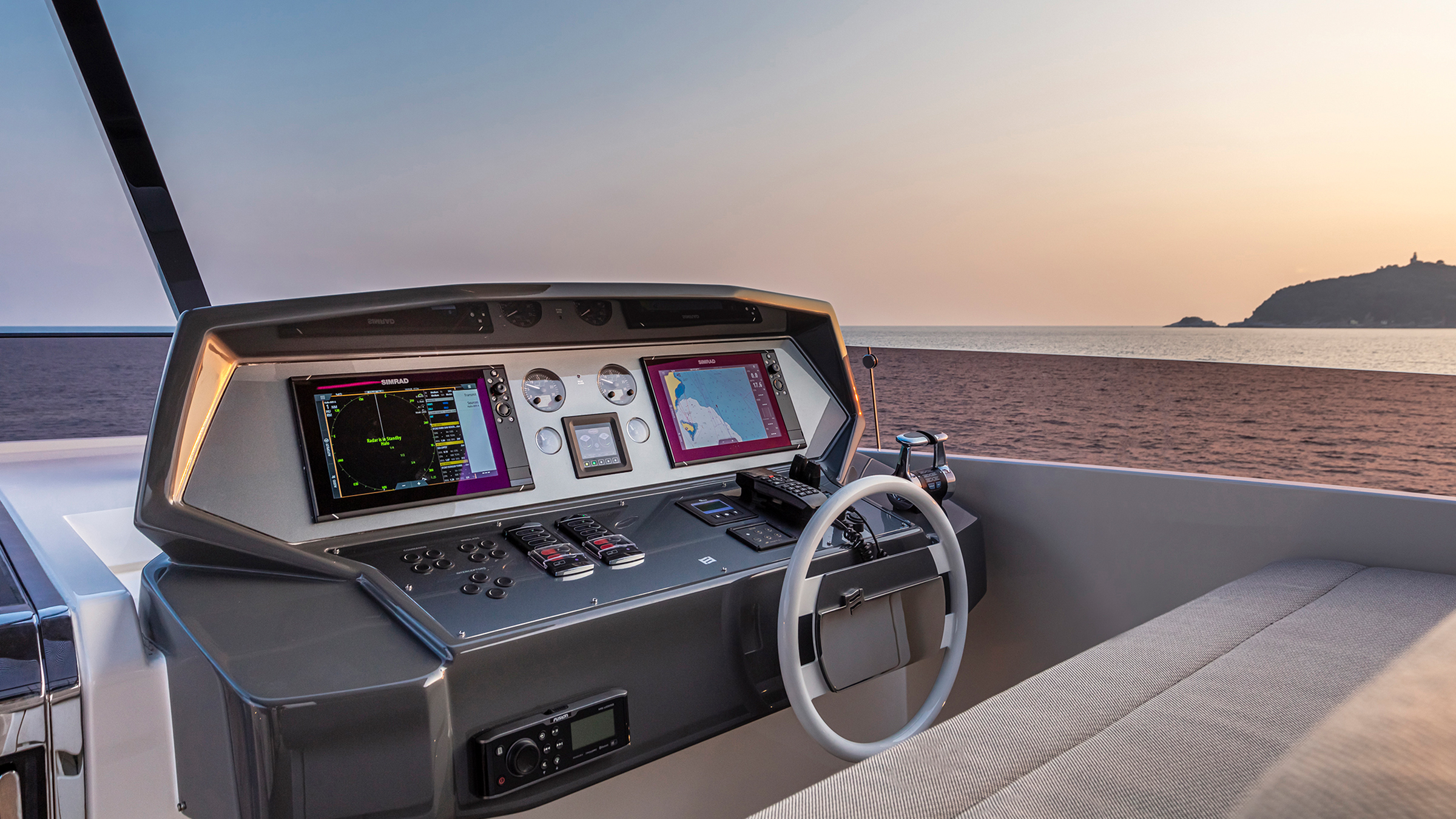
Flybridge helm station with full controls
Case · I

Florida & the Bahamas · flybridge wins

Eight or nine months of usable weather, short hops, calm shallow water, marinas designed for entertaining at the dock. The upper helm dominates close-quarters maneuvering in busy basins; the upper deck becomes the boat's primary social room. The fuel premium is paid back, in lifestyle terms, several times a week.
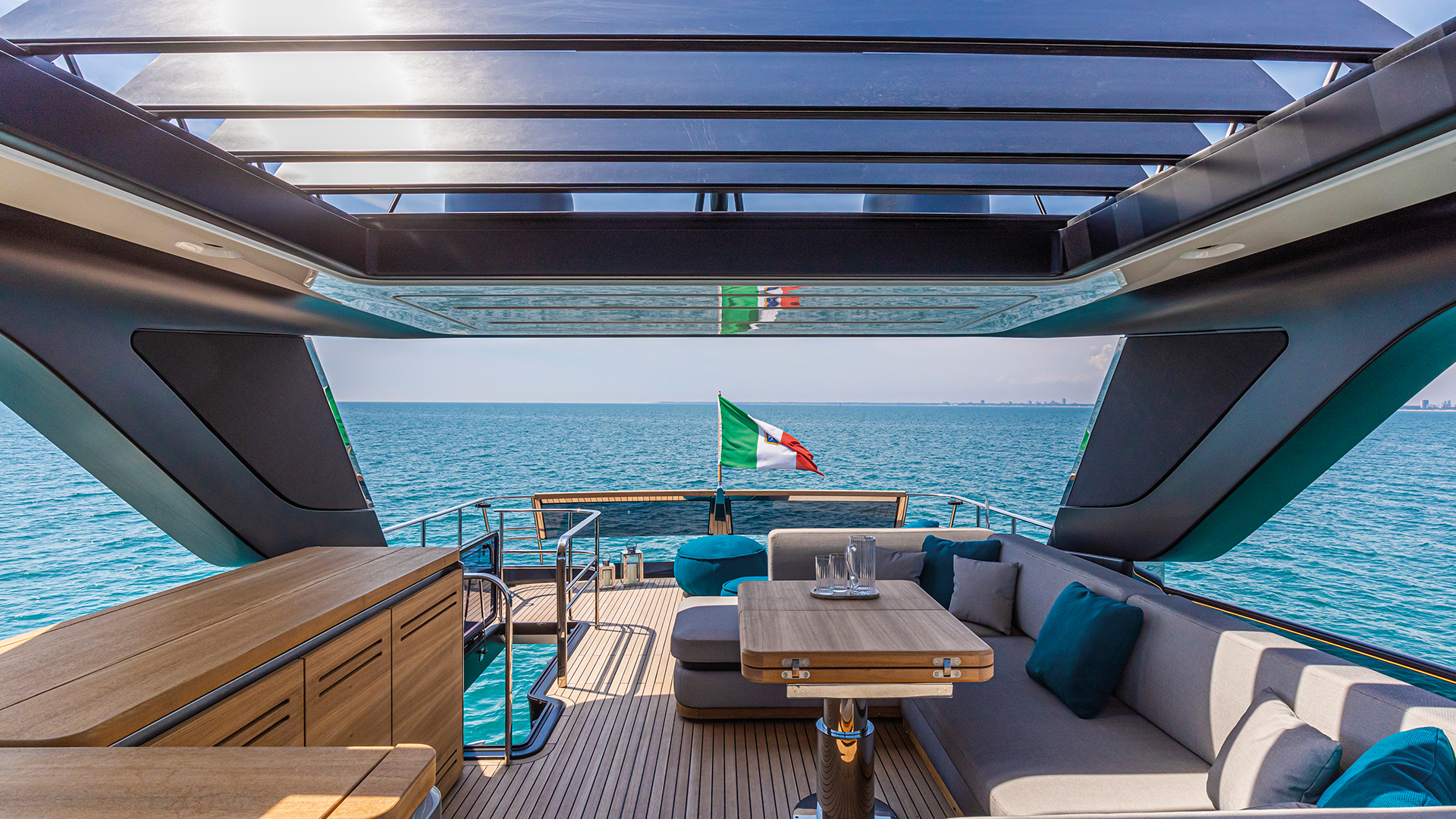
Flybridge with grill and lunch table on a 77-foot yacht
Case · II

Mediterranean charter season · flybridge wins

A 60-to-100-foot yacht in the Med between June and September spends more hours at anchor than underway. The flybridge — with grill, wet bar, dining for ten and a forward sun lounge — is the only deck that actually scales to a charter party of eight to twelve, and the asset that the brochure photography depends on.
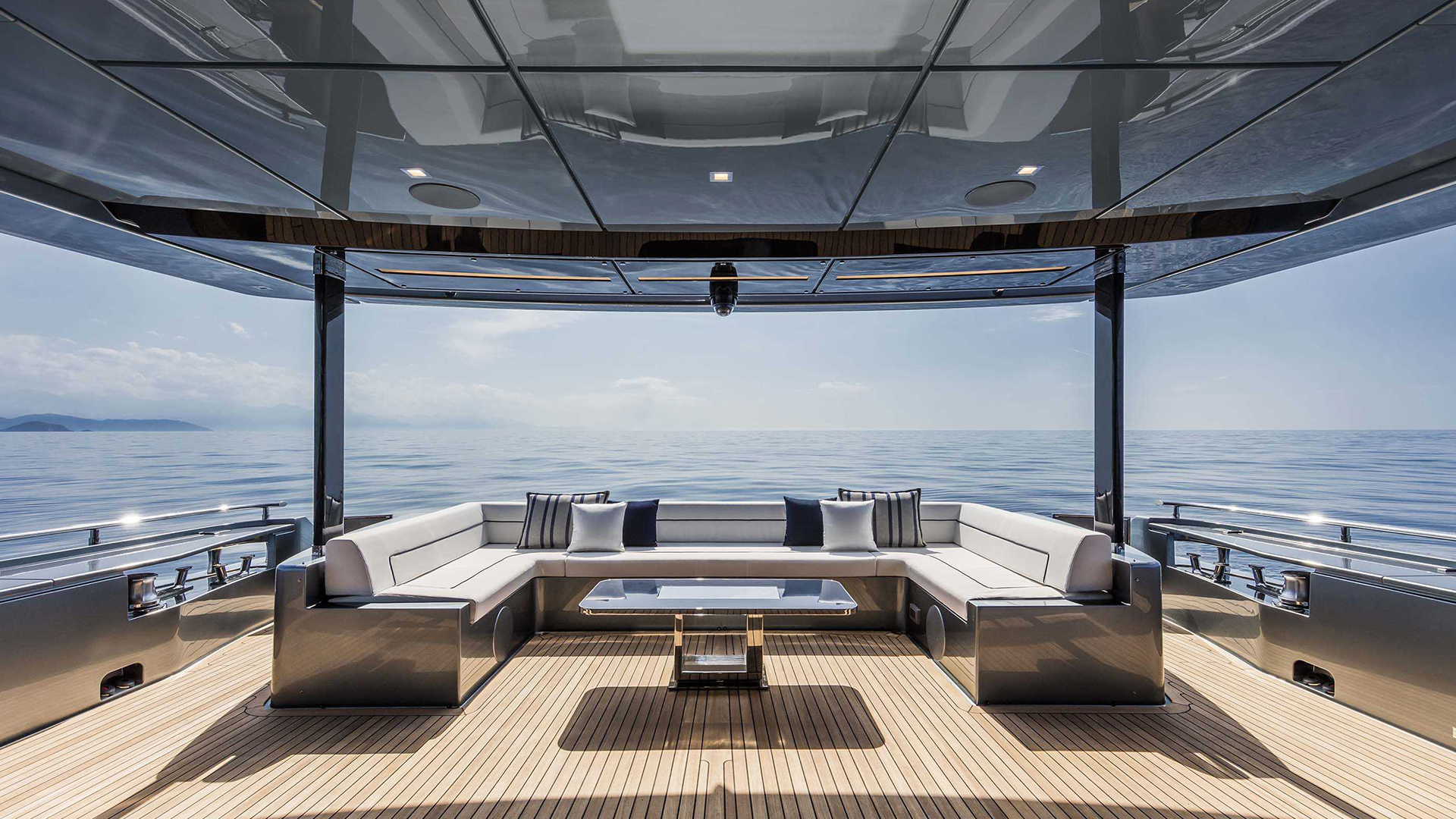
Lounge section on a modern flybridge yacht
Case · III

Pacific Northwest & Alaska · sport wins

Five months of usable weather, often rainy. The flybridge becomes structure the boat carries but rarely visits; the lower helm in a sport yacht — enclosed, climate-controlled, with full electronics — is the actual command position eleven months out of twelve. The lighter, faster sport hull also pays back more efficiently across a long cruising season.
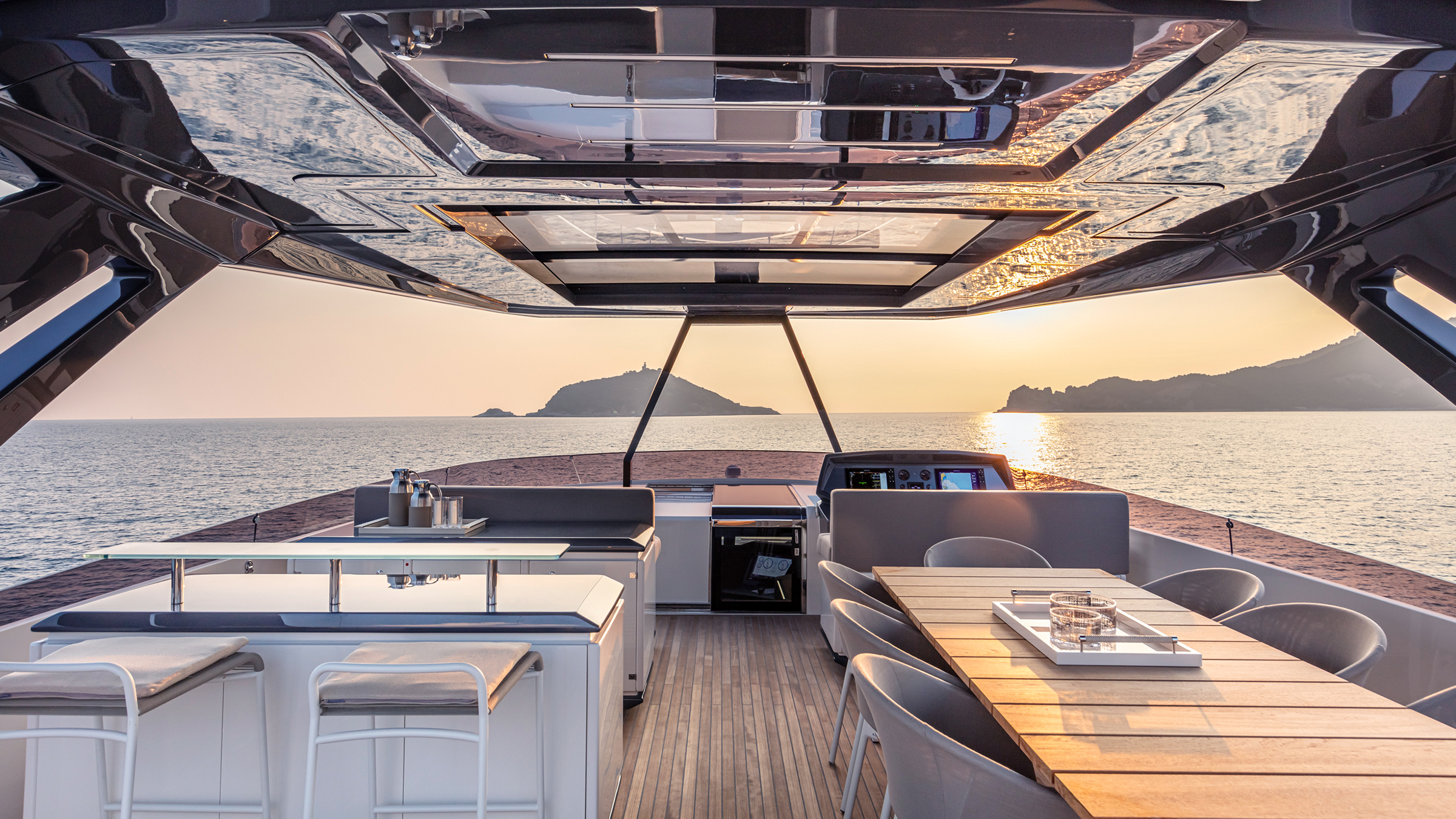
Full flybridge layout from stern to bow
Case · IV

The Intracoastal Waterway · sport wins

The ICW is a route defined by bridges — many of them fixed, some opening only on schedule. Air draft becomes the limiting variable. A sport yacht of comparable length runs lower, slips beneath swing bridges without negotiation, and converts what would otherwise be a stop-and-wait day into a straight run. The flybridge, on this geography, is a liability rather than a feature.
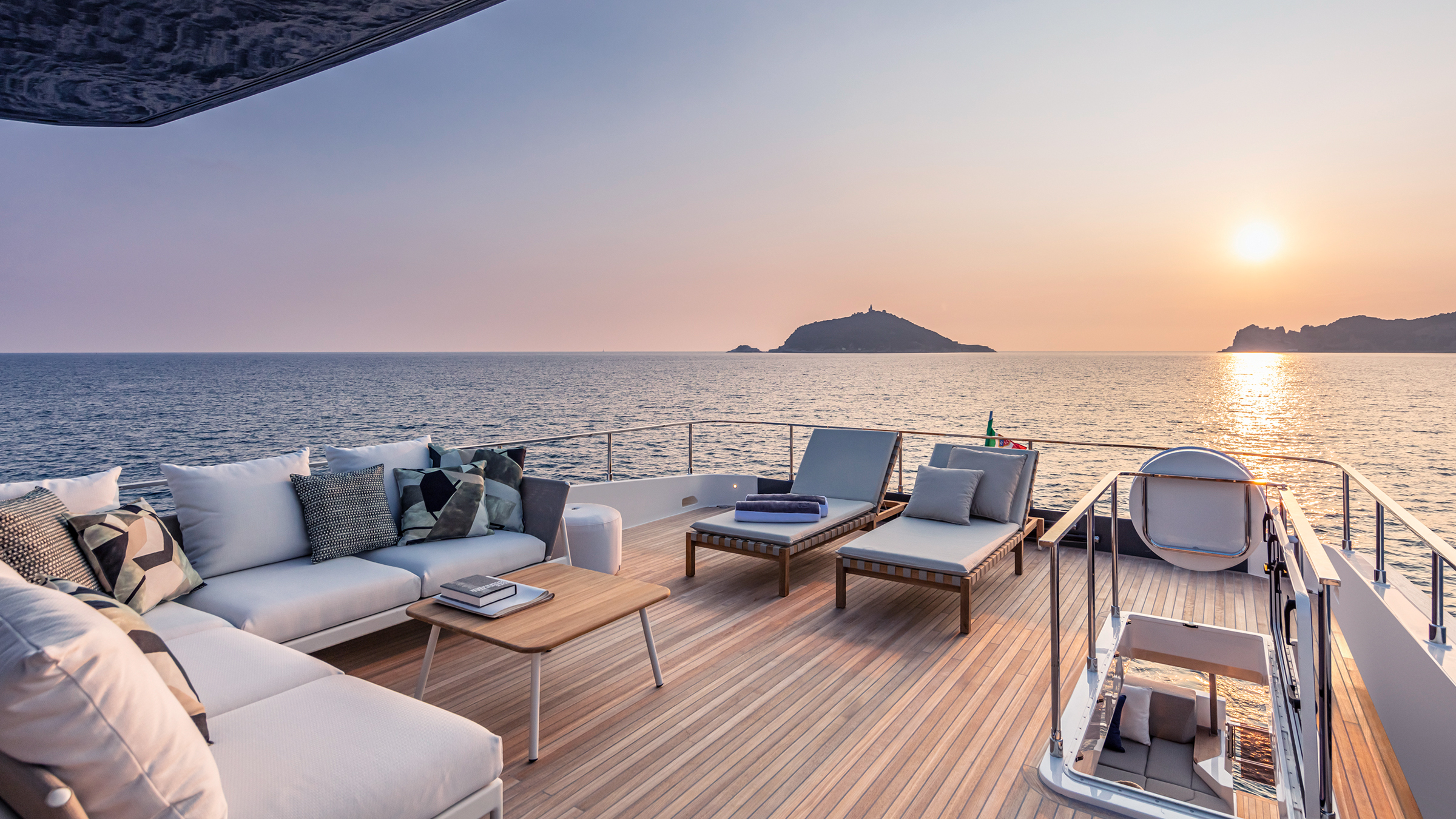
Upper deck · Riva 110
Flybridge sun deck at sunset
Sundown · The flybridge's signature hour

On a beautiful day, nothing beats running the boat from above. On a stormy day, nothing is worse.

The line every captain repeats, eventually
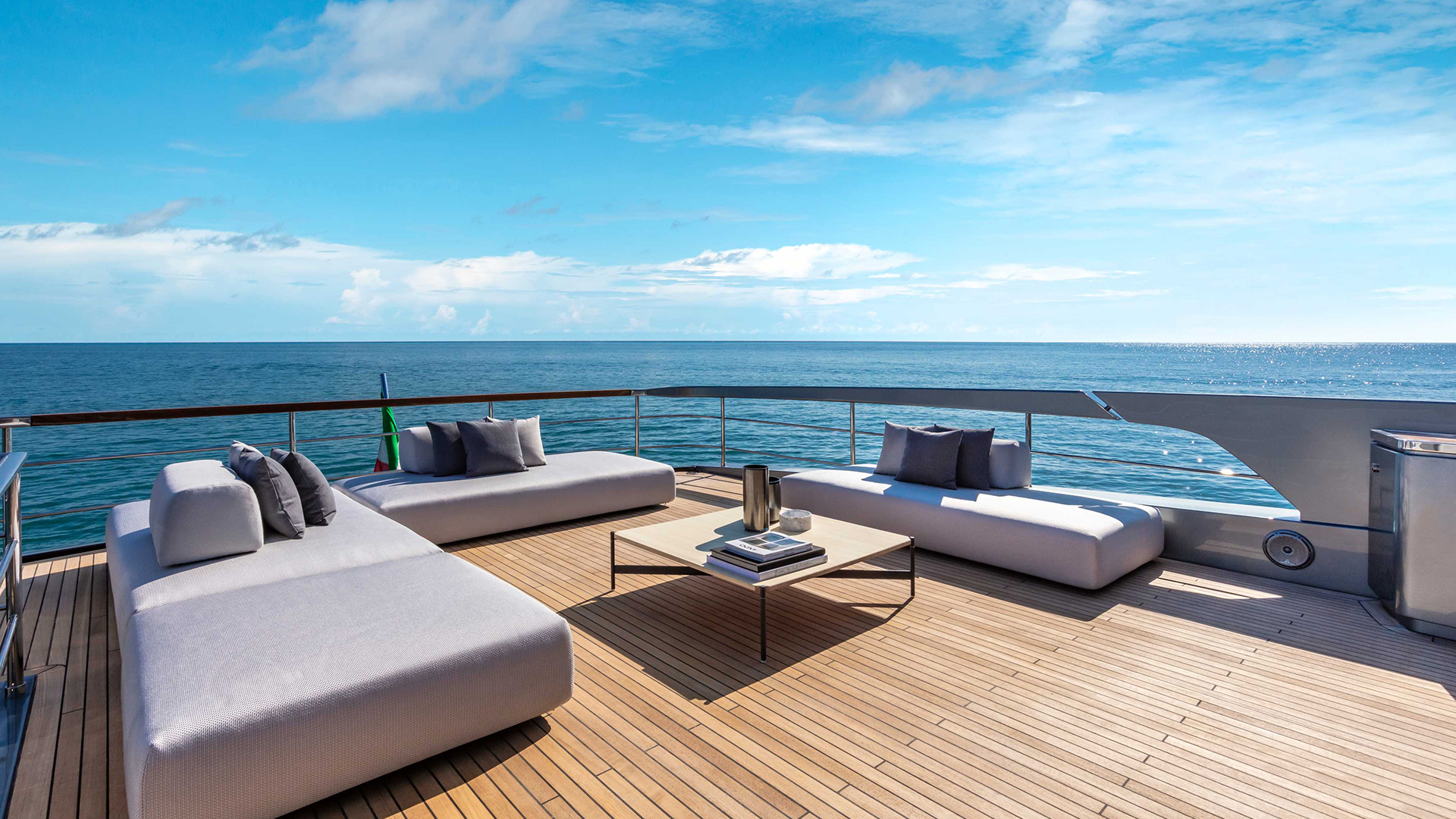
Aft sun loungers on a flybridge
Aft loungers
Full helm station on the flybridge
Full helm station
Large aft sun deck on a flybridge
Aft sun deck
The Honest Ledger

What is gained, and
what is paid for

The contemporary flybridge is not the cramped lookout it was a generation ago. The shipyards have rebuilt the space methodically: full helm stations with the same electronics as the lower bridge; wet bars with sink, refrigerator and ice-maker; built-in grills; dining for between eight and twelve depending on length; sunpads that run nearly the full beam; hardtops with retractable sunroofs; integrated sound and shade systems. On yachts above roughly 78 feet, most builders now also include an enclosed lower helm, which dissolves much of the historical argument for sport over flybridge in one stroke.

The sport yacht's counterargument has not weakened either. A lower center of gravity, less mass above the waterline and a cleaner profile translate into measurable advantages — more efficient at speed, better behaved in steep seas, easier in marinas with low bridges and tight slip access. Sport designers have closed much of the interior-volume gap with high-deck-saloon layouts that put salon, cockpit and bathing platform on a single, generous level.

Most of the historical disadvantages of the flybridge — the captain isolated from the cockpit, the children separated from the helm, the upper deck unusable when the weather turns — have been resolved either technically (intercoms, camera feeds, multifunction displays) or architecturally (dual command, internal stairway access from the salon). What remains is the genuine, irreducible trade: a flybridge yacht is heavier, taller, thirstier and more affected by wind than its sport equivalent. Those costs are real. The question is whether the lifestyle the upper deck enables pays them back.

The Ledger, Side by Side

What the flybridge gives, and what it costs

A comparative balance sheet, kept honestly. Each column reads against the other on the same line.

— What the flybridge gives
The best seat on the boat. The upper helm delivers panoramic visibility — into the slip, across the anchorage, over the bow. It is, by margin, the safest position from which to dock in tight quarters.
A second living room outdoors. Wet bar, grill, refrigerator, dining for eight to twelve, full-beam sunpads. The upper deck is rarely a single function — it is a sequence of them across the day.
Controlled access for families. Many flybridge yachts route the stairway through the interior, meaning the path to open deck passes through the parents. A small detail with disproportionate value for owners with young children.
Resale strength. Flybridge models in the 50-to-80-foot range retain demand in warm-water markets, where the upper deck remains a primary purchase driver across the brokerage market.
The signature hour. Sunset and the hour after, viewed from above the waterline, on the boat's own dining table. The cruise's most photographed moment, repeated on demand.
— What it costs
A weight penalty, paid in fuel. A flybridge version of the same model runs roughly 20–40% less efficiently at cruising speed, with reduced top end. The cost is paid every nautical mile of every passage, every season.
More windage in the marina. The taller profile and higher center of gravity make crosswind docking measurably more demanding at low speeds. Bow thrusters and pod drives compensate, but they do not eliminate.
Extra air draft, fewer routes. A boat that needs every bridge to open runs on bridge timetables. On the Intracoastal Waterway and on inland canal systems, the air-draft penalty is a daily one.
A stairway, not an elevator. Access to the flybridge is by steps, with varying steepness. For elderly owners or anyone with limited mobility, the upper deck becomes a space used less often than the brochure suggests.
Dormant value in cold climates. Below roughly five months of warm-weather use a year, the upper deck spends most of its life as structure the boat carries but rarely visits — and as a maintenance line item.
Before You Sign

Three registers of test

A flybridge decision is not made at the dealership. It is made by checking the route, the boat and the buyer — each against the other.

01
On paper
Before the sea trial
i.Count the months of usable warm weather in the home cruising area. Below five, the flybridge is decorative for most of the year. Above eight, it earns its keep.
ii.Map the route's fixed and opening bridges against the candidate vessel's air draft. A single recurring bridge can determine the answer.
iii.List the home marina's slip width, prevailing crosswind, and access depth. A tight, windy basin rewards the upper helm's visibility advantage.
iv.Calculate the operating budget at the published fuel burn for both specifications, projected across a realistic season.
v.Identify the on-board profile: solo, couple, family with young children, charter use. The answer changes the weighting of every other line above.
02
On the boat
During the sea trial
i.Climb the stairway with your hands full — a tray, a cooler, a child. The path is taken often. It should feel natural in both directions.
ii.Run the boat from the upper helm in a crosswind, in a tight basin, against a current. Visibility advantages, windage penalties — both appear at low speed in close quarters, not on a straight run.
iii.Sit at the dining table and at the bar with the engines at cruising rpm. The flybridge's relationship with engine vibration and exhaust is something the brochure cannot show you.
iv.Test the dual command. Switch helms underway. The transition should be quick, the lower station fully equipped, the views from each clearly different and useful.
v.Sit on the upper deck at anchor with the boat broadside to ten knots of wind. The hardtop, the canvas, the shade and the sound system — everything that lives on the fly is either comfortable in that condition or it is not.
03
In the head
The honest conversation
i.How often, realistically, will the upper deck be used? Days per month, not aspirational scenarios. Count the weather as it actually is in your home port.
ii.Who is on board with you on a typical Saturday? The flybridge is a social space. It pays for itself in social terms.
iii.Are you the kind of owner who entertains aboard, or the kind who runs and explores? The answer pulls the decision sharply in one direction.
iv.Will the upper helm be your primary station, or a fair-weather option? The honest answer often determines whether dual command is essential or simply nice to have.
v.Five years from now, will you still want to climb the stairs? Not a sentimental question — a practical one. Boats outlast our preferences.

If the home water is the southeastern United States with the Bahamas an afternoon away, and the calendar reads warm for eight or nine months of the year, the flybridge is, almost certainly, for you. If the geography reads closer to Alaska, the upper deck is structure the boat will carry but rarely visit. Most owners live between those two extremes — and that is where the answer requires the work this guide tries to make easier.

USA Onboard · Before Purchase
Editorial Credits
Editorial
USA Onboard
Feature Desk
Photography
USA Onboard
Image Library
Notes & References
1. The efficiency gap. Industry estimates place a flybridge yacht's fuel burn at cruising speed roughly 20–40% above a comparable sport yacht. Cited orders of magnitude are typical for the 60–100 ft segment and vary with hull, drivetrain and conditions.
2. Windage. The area of the boat above the waterline against which wind exerts force. A higher profile and elevated center of gravity increase the vessel's tendency to be set off course at low speeds, particularly in crosswinds during docking.
3. Air draft. The vertical distance from the waterline to the highest fixed point on the vessel. The relevant figure when assessing compatibility with fixed bridges along a planned route.
4. Dual command. The configuration in which both an upper (flybridge) and a lower (interior) helm station are fitted, typically on flybridge yachts above 78 ft. The arrangement dissolves most weather-related arguments against the flybridge configuration.
5. Onboard connectivity. Portable VHF on a family channel, fixed intercom systems and multifunction displays mirroring live feeds from bow, stern, engine room and galley have largely resolved the historical concern that the captain is isolated from the rest of the vessel when running from the upper helm.
6. Editorial note. This guide is a decision aid, not a substitute for professional surveys, sea trials or local-area expertise. Final selection should be made in consultation with the candidate vessel's builder, a qualified surveyor and a captain familiar with the intended cruising ground.