

The Considered
Island
An honest map of what it actually means to buy a private island in the Bahamas or the wider Caribbean, written for the buyer who already has the means and now needs the method.
A private island is the rare luxury purchase that resists every shortcut. It cannot be ordered, optioned, or delivered. It must be found, understood, negotiated, and then patiently translated from a coordinate on a chart into something habitable. The work begins the moment the romance ends.
The Bahamas remains the deepest market in the hemisphere for what brokers, with characteristic discretion, call significant private island opportunities. Roughly seven hundred islands and more than two thousand cays make up the archipelago, and the active inventory at any given moment sits between fifteen and thirty listings. Beyond the Bahamas, the Caribbean keeps a smaller but more varied catalog: the Out Islands of the British Virgin chain, the lesser cays of the Grenadines, a handful of properties along the Belize barrier reef, the occasional offering in Turks and Caicos. Together, the region accounts for the overwhelming majority of private island transactions on earth.
Most of the writing about these purchases imagines the buyer at the beginning. The reality is that the buyer is almost always somewhere in the middle: already familiar with the geography, already comfortable with the price range, already convinced that the impulse is sound. The questions that matter are operational, legal, and infrastructural. What changes when a property is reached only by boat. How title actually works in a country where the registry traces back to British colonial grants. What the difference is between an island that costs four million dollars and one that costs forty. Why two cays a mile apart, on the same chart, can have entirely different economic lives.
This is not a catalogue. It is a slow walk through what the experience involves, what the market currently offers, and how the buyers who do this well make their decisions. The geography is divided into two regions: the Bahamas, which by volume and infrastructure dominates the market, and the wider Caribbean, which compensates with character and quiet. The conclusions, in both cases, tend to converge.
The water, read across every cay
A market built on seven hundred islands
The Bahamas is not simply where most of the Caribbean's private islands change hands. It is the only jurisdiction in the region where private island ownership functions as a mature, established market with conventions, comparables, and the infrastructure that long-running activity produces. Title work has its own specialists. Marine contractors know how to land a barge on a rocky beach in February. Caretaker couples can be sourced through a small network of Nassau agencies that have been placing staff on Out Islands for two generations.
The geography subdivides into rhythms a buyer learns quickly. The Exuma chain holds the cluster everyone has heard of, with proximity to Staniel Cay, swimming pigs, and an established community of long-time owners who keep the social water warm. The Abacos, slower to recover from Hurricane Dorian in 2019, offer larger acreage at lower price points for buyers comfortable with the rebuild trajectory. The Berry Islands sit close enough to Nassau to remove half the logistical pain while still feeling remote. Eleuthera and its outlying cays trade on character and topography, with the highest natural elevations in the country. The southern Out Islands, from Cat Island down through the Ragged Range, are where serious privacy still lives.
The fiscal frame is the part most repeated in the press and the least misunderstood by serious buyers. The Bahamas levies no income tax, no capital gains tax, and no inheritance tax. What it does levy is a real property tax of roughly six tenths of a percent to one percent of assessed value, a one-time stamp duty on the transaction, and a regulatory layer that begins with registration before the Foreign Investments Board. Properties over five acres, or with any commercial use intended, require additional permits. The process is straightforward when handled by Nassau counsel; it is rarely catastrophic and almost always slower than the buyer expects.
Smaller inventory, tighter rules, deeper character
Outside the Bahamas, the Caribbean market is meaningfully smaller and meaningfully more regulated. The British Virgin Islands, the Grenadines, Grenada, Turks and Caicos, Belize, and a few cays in Honduras and Panama account for almost everything else. Buyers willing to engage with the additional friction are rewarded with a different kind of property altogether: islands with more topography, more vegetation, longer history, and the particular gravity that comes from being part of a smaller community.
The regulatory instrument that defines the eastern Caribbean is the Alien Landholding License, known by its initials ALHL. In most of the Eastern Caribbean states, including Grenada and St. Vincent and the Grenadines, foreign buyers must apply for an ALHL before or during the purchase. The fee is typically between seven and twelve percent of the transaction value, with the percentage varying by jurisdiction and whether the property is purchased through a company. The application is handled by local counsel and takes three to eight months. The process is not difficult. It is simply not optional.
Two jurisdictions deserve their own footnote. In the British Virgin Islands, foreign buyers are classified as non-belongers and require a Non-Belonger Land Holding License; in practice most non-belongers can own only one property at a time, conditioned on the specific use case. In Mustique, in the Grenadines, the situation is more singular still: every sale requires not only government approval and the ALHL, but also approval from The Mustique Company, the entity that operates the island as a closed community. The point of Mustique has always been that you do not simply buy in. You are accepted in.
Belize functions differently. There is no ALHL. Foreigners hold freehold title under terms broadly comparable to those a Belizean would receive. The barrier reef, the second longest in the world, lies a short boat ride offshore. Prices begin substantially lower than anywhere else in the region, with small, undeveloped cayes available below five hundred thousand dollars. The infrastructure ecosystem is younger and less specialized, which is a constraint and, for some buyers, the appeal.
The same idea, seen from three angles
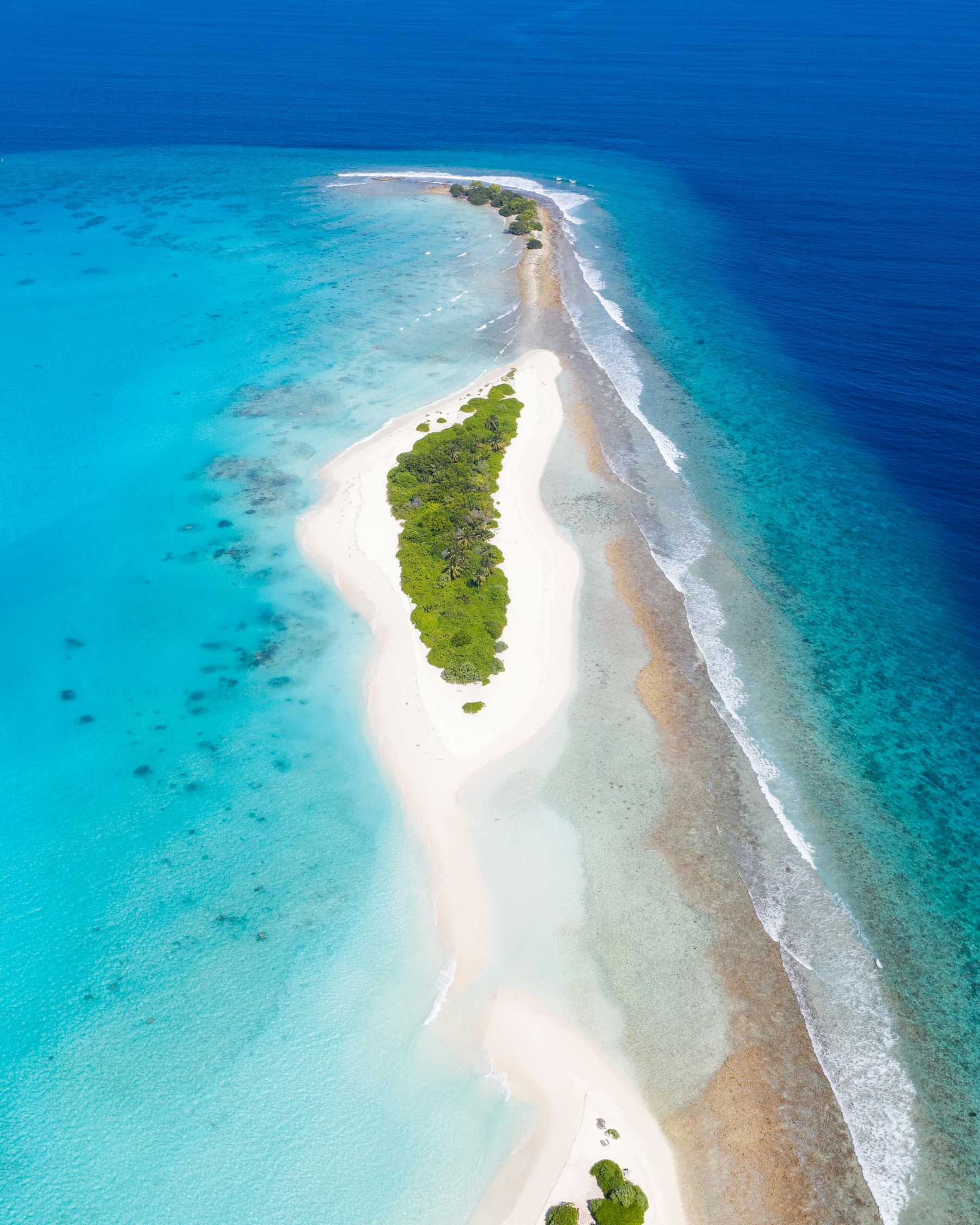 Narrow cay · Aerial
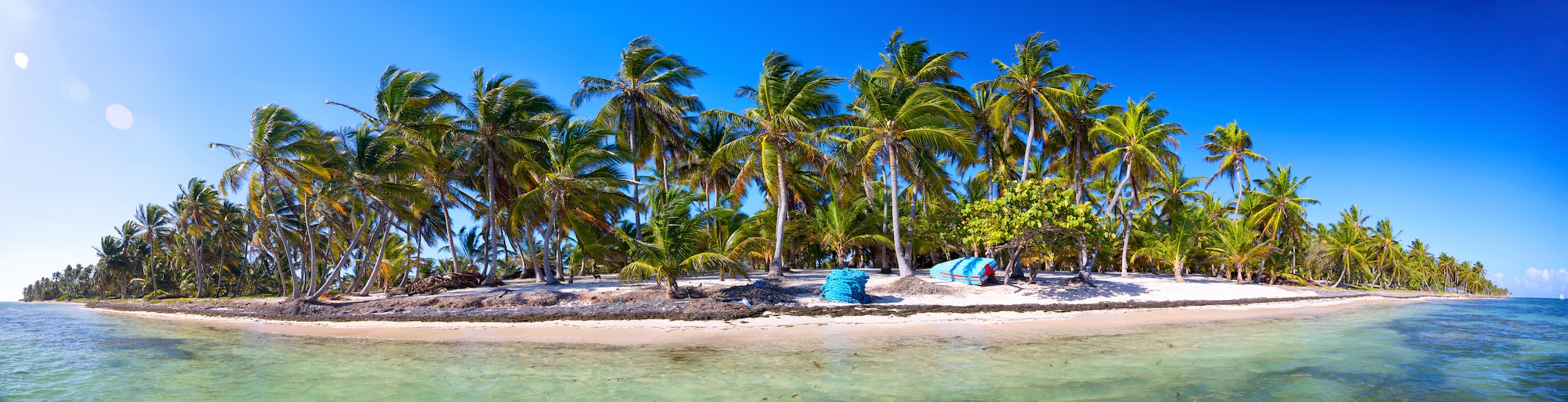 Coastline · Sea level
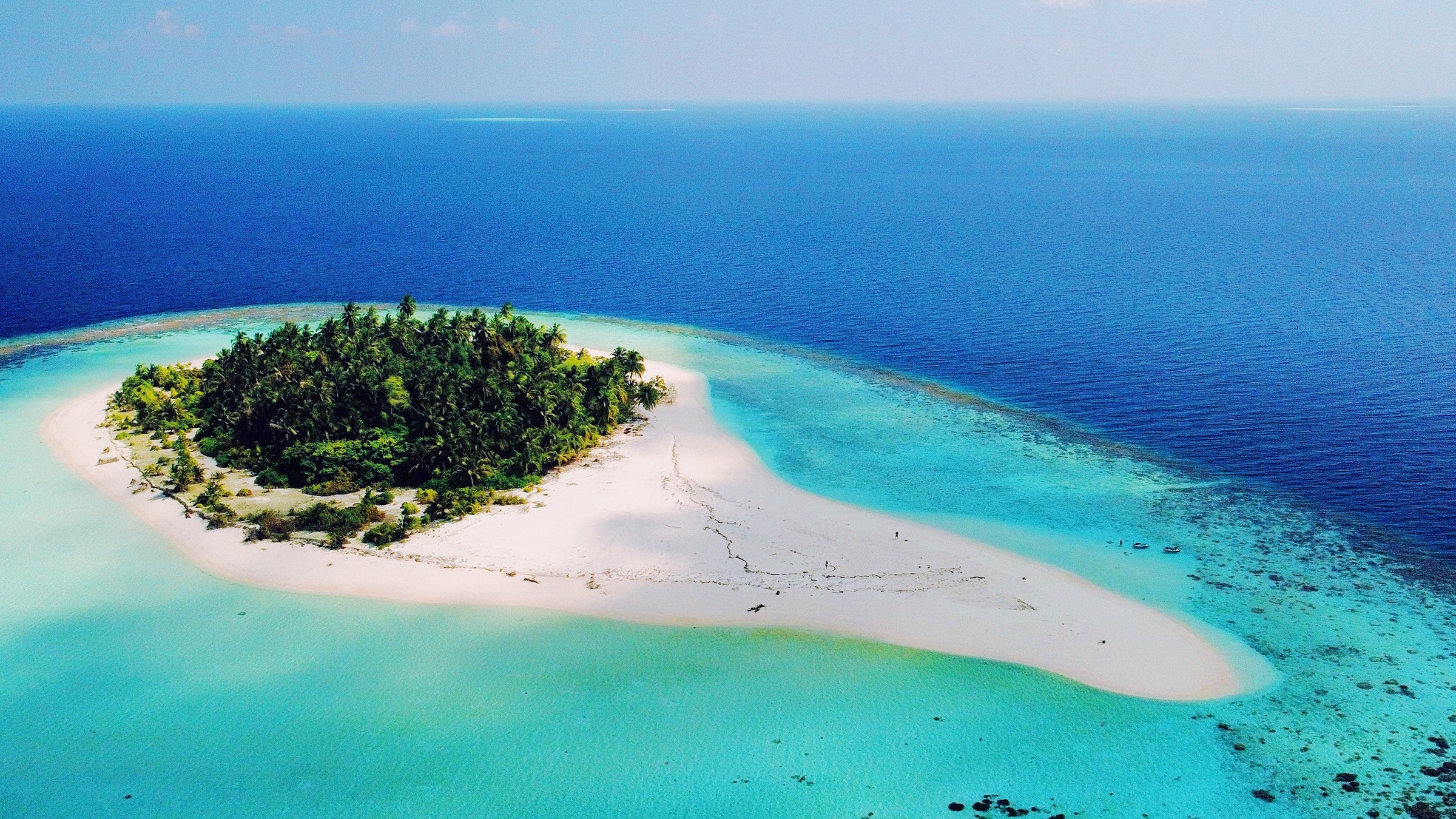 Aerial · Study
Outside the Bahamas, the number of private islands available is genuinely limited. The work is to find the right one, not to choose among many.
USA Onboard · A view widely held among Caribbean specialists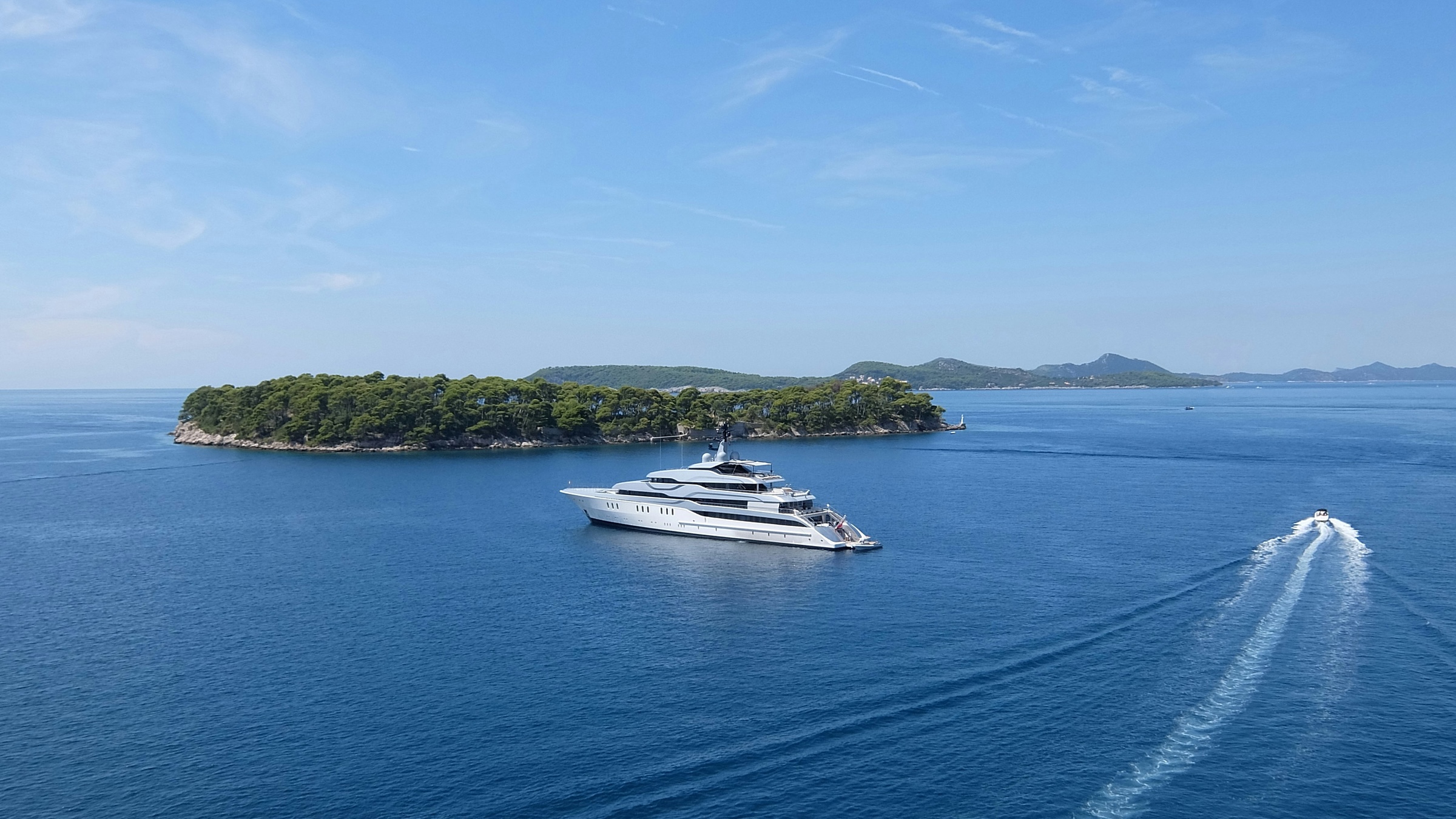 Aerial · Superyacht at anchor
What is actually available
A buyer reading the regional press will encounter the same three or four headline-grade properties cycling through coverage: Bonds Cay, the six-hundred-and-fifty-acre island in the Berry chain that was listed at thirty million dollars in early 2026; Musha Cay, the David Copperfield property whose long-rumored valuation hovers around fifty million; Little Ragged Island, the seven-hundred-and-thirty-acre flagship of the southern Out Islands. These are the names that travel. They are not, in a structural sense, the market.
The market is the tier directly beneath them. At any given moment, perhaps twenty to thirty Bahamian private islands sit on offer, with asking prices that span an order of magnitude. The variation has less to do with size or location than with the work already done. A raw, undeveloped cay of five acres at one and a half million dollars is a different proposition entirely than a fifteen-million-dollar turnkey property with a deep-water dock, a finished residence, a generator package, and a caretaker couple already in residence. Both can be reasonable choices. They are not the same choice.
Three current listings illustrate the spread well enough to anchor the rest of the discussion. None of them is being recommended here. They are simply representative of the categories a serious buyer should be able to read fluently.
Different tiers of the same conversation
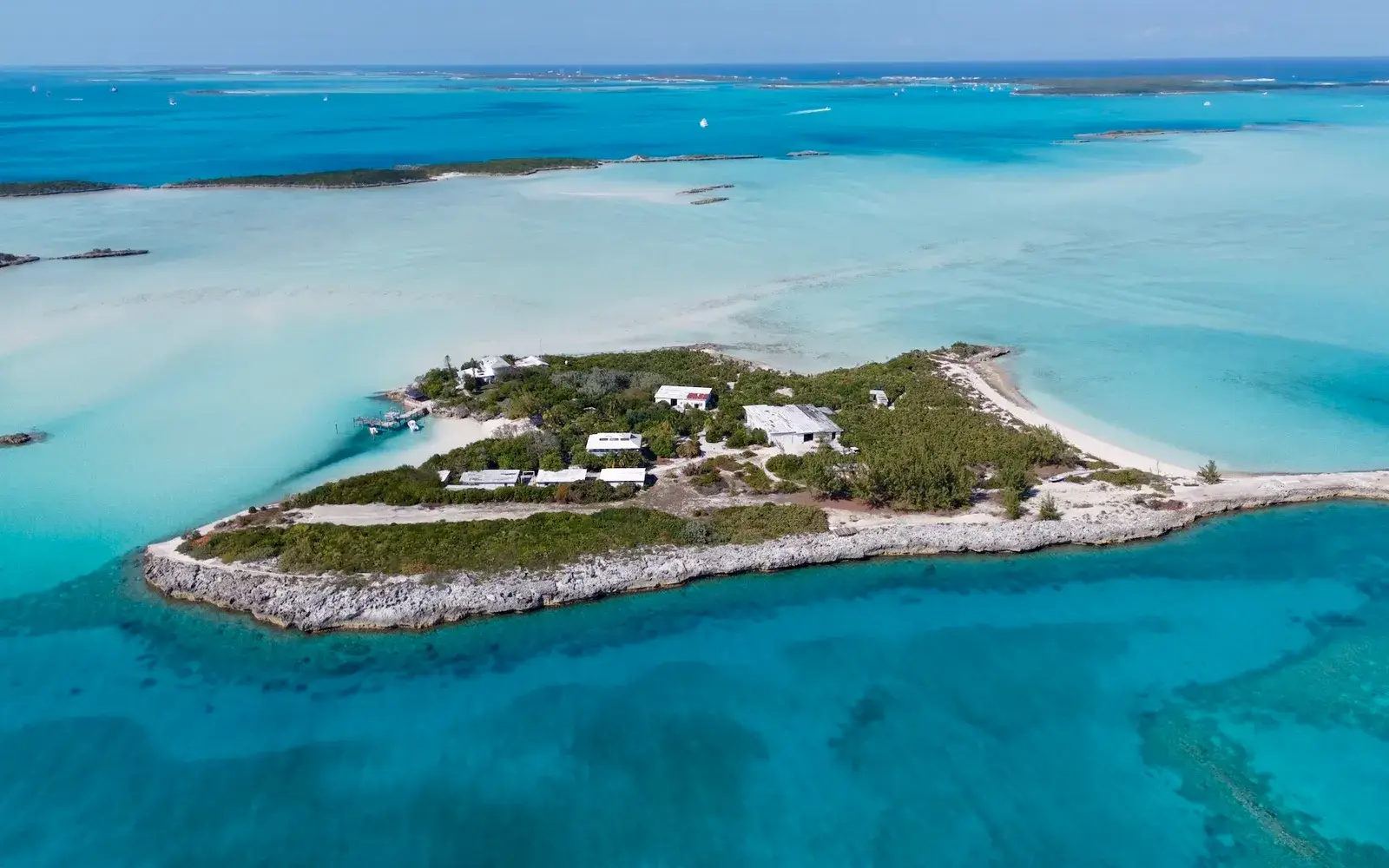
Bahamas · Spring 2026 · For reference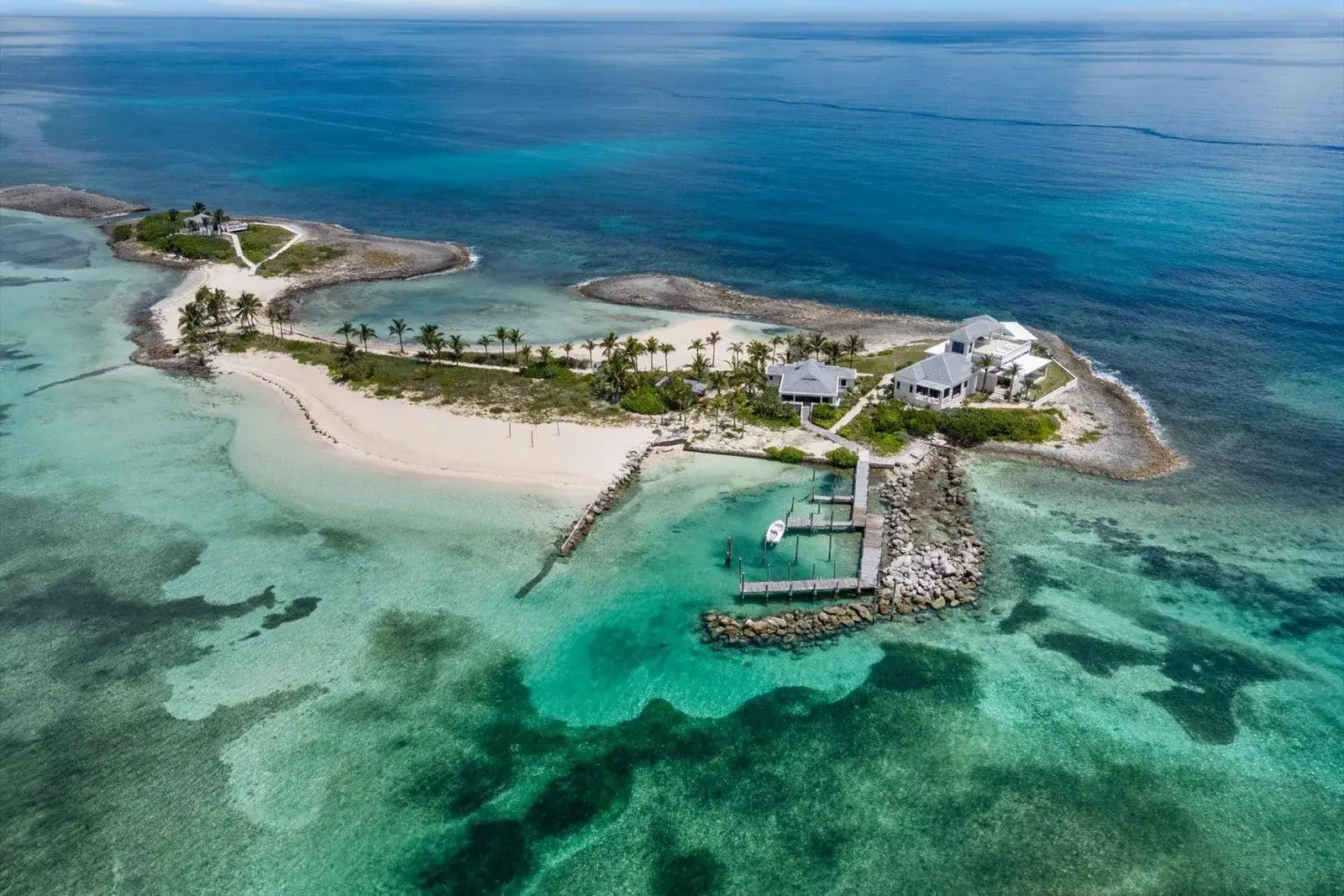 Abaco
AbacoIsland Oasis
The Abaco market, still recalibrating in the aftermath of the 2019 hurricane season, offers significant scale at this tier. Buyers comfortable with the rebuild conversation will find unusual value.
 Exuma
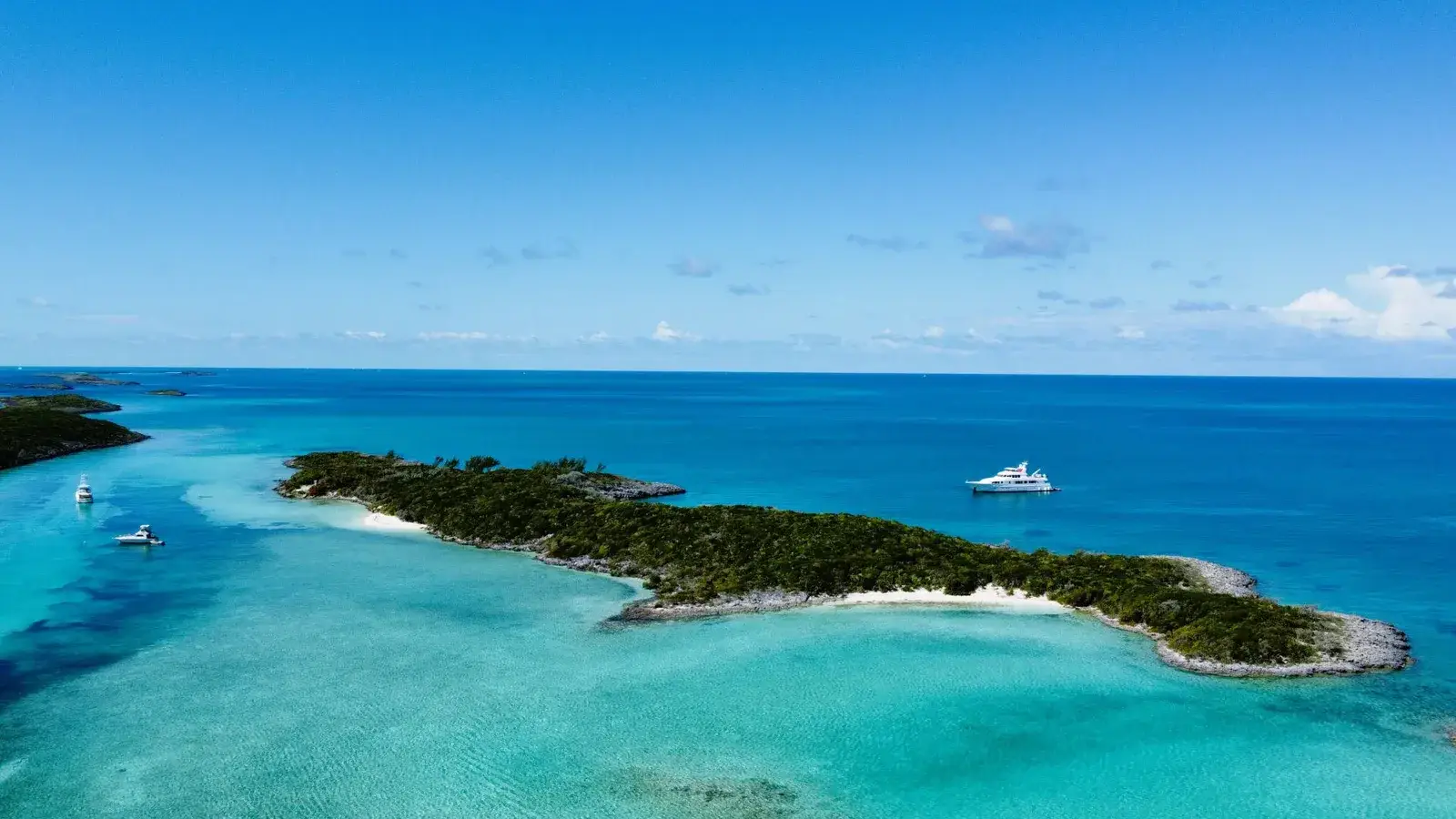
ExumaLeaf Cay
The Exumas command a consistent premium. Proximity to Staniel Cay and the established community of long-time owners turns a private property into a small social geography.
 Exuma
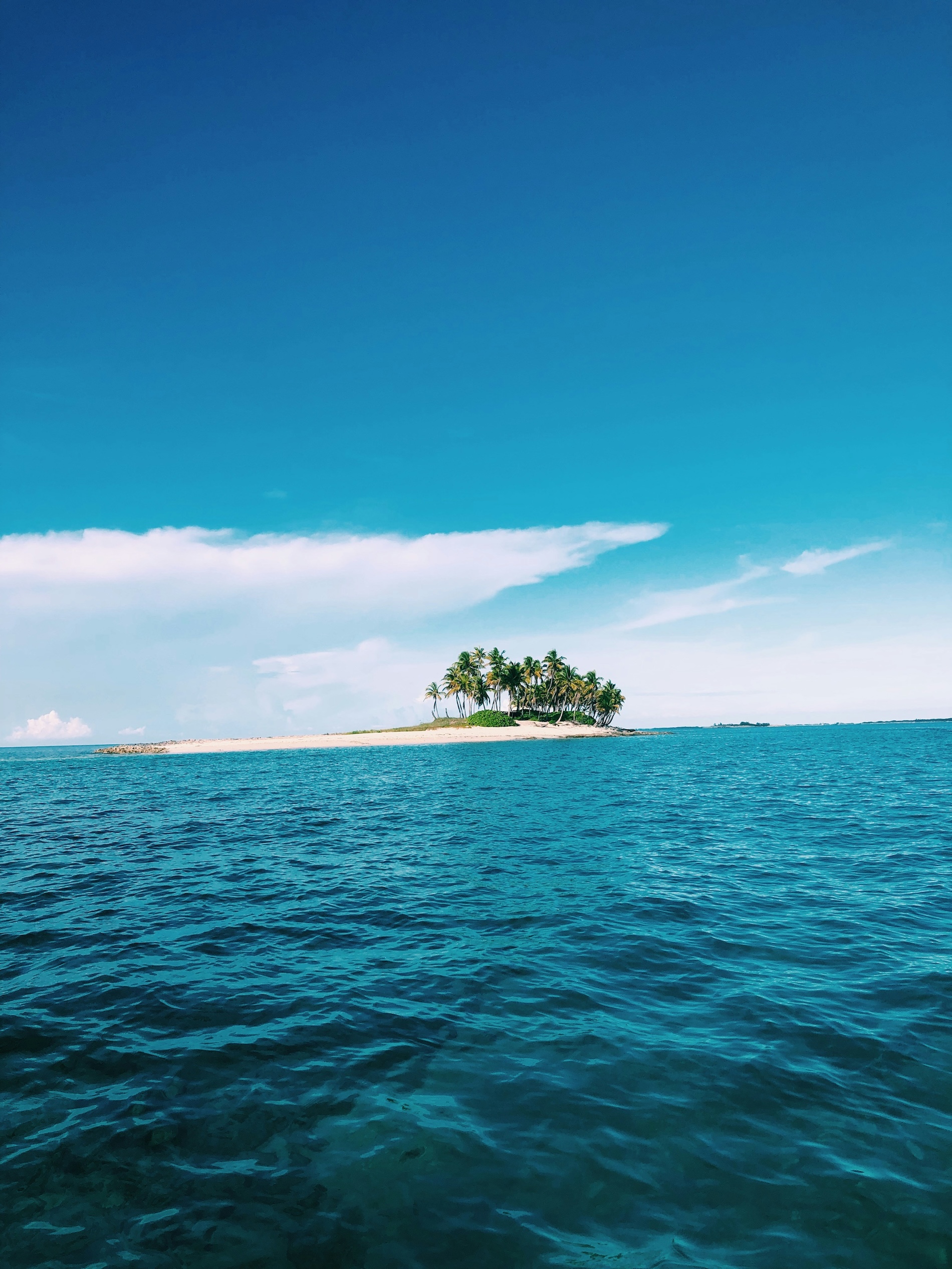
ExumaRoberts Cay
The lower entry to the Exumas, the price point at which a smaller cay or a partially developed property becomes available to a buyer not yet at the top of the market.
List, ask, and what actually transacts
Discount-from-list runs deeper in the private island segment than in almost any other category of luxury real estate. A property listed publicly at fifteen million may transact at ten. A property that has been on the market for three years at nine may move at six in a single afternoon to the right buyer. The reason is structural: the inventory is small enough that public listings function partly as advertising and partly as a sorting mechanism. The serious work happens off-list.
The most consequential signal a serious buyer can send is patience. Islands tend to sell to the third or fourth conversation, not the first. A broker with the right network can surface a property that was never publicly advertised at all, simply because the owner asked for discretion and asked for time. The premium for a turnkey property is real but not always justified; the existing infrastructure may not be infrastructure the next owner would have chosen, and retrofitting frequently costs more, and disrupts more, than building fresh.
 From the water
 Seaplane access
Six questions worth asking before the first visit
Brokers who work this market for decades develop a shorthand for the early conversation. The points below are the standard frame, reordered for the buyer's perspective rather than the seller's.
What is the elevation, accurately measured, of the highest natural ground on the island. What is the depth of the surrounding water at the most accessible approach, and at what tide. Is there a natural harbour, or can one be engineered without dredging into a protected reef. What is the distance, in actual transit time, to the nearest functioning airport or FBO. How clean is the title chain, and how many transfers does it pass through before it reaches a registered colonial grant. What is already built, and of what value to the buyer who wants to build differently.
Each of these questions has a wrong answer that should remove the property from consideration immediately. None of them is rude to ask. The properties that survive all six honestly are the properties worth visiting.
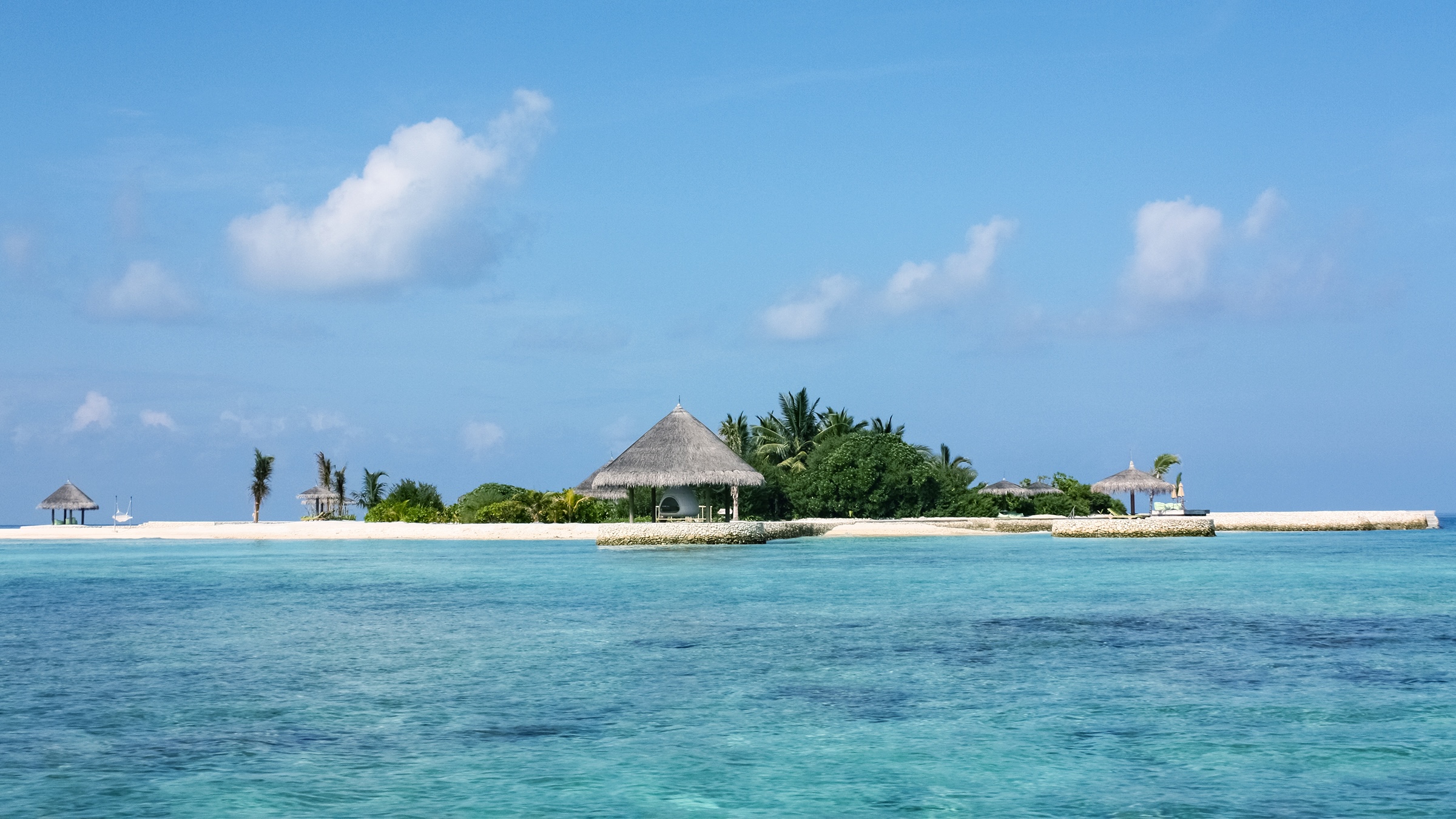 Beach pavilion · From the water
The dock comes before everything else
The most seductive option in the market is also the most demanding. A raw, undeveloped cay purchased as a blank canvas offers the appeal of unhampered authorship: no inherited mistakes, no retrofits, no decisions made by a previous owner that now constrain the project. The price of that freedom is a level of logistical planning that most buyers significantly underestimate. Every cubic meter of concrete, every section of rebar, every fixture and tool arrives by boat. Construction timelines in the Bahamas typically run forty to sixty percent longer than equivalent mainland projects. The cause is rarely budget. The cause is the calendar.
The architects and contractors who deliver good work on Bahamian islands share one habit. They build the dock first. A deep-water dock capable of receiving a barge transforms every subsequent phase of construction. Without it, every delivery requires a shallow-draft work vessel, doubling labor costs and halving material volumes per trip. The dock is not a nicety added at the end. It is the precondition.
The Bahamian construction workforce is genuinely capable of the work. Concrete block construction, hurricane strapping, cistern systems, roof loads engineered for a hundred-and-seventy mile-per-hour wind: these are not specialty skills locally. They are the standard vocabulary. Attempting to import an entire mainland construction team is expensive, slow, and counterproductive. The best builders are Bahamian, with relationships established in the local immigration system for specialist trades when international expertise is genuinely required.
A utility system that owes nothing to the grid
The most technically sophisticated aspect of island ownership is also the most philosophically satisfying. A well-designed island power and water system, built with current technology, produces cleaner energy and purer water than most mainland properties. The contemporary approach combines solar photovoltaic generation, lithium battery storage, and diesel backup in a layered configuration that makes grid connection unnecessary and, in practical terms, undesirable.
A typical compound runs on a hundred to two hundred kilowatts of solar generation paired with a lithium bank sized for two to three days of full operation. The diesel generator runs perhaps three to five percent of the time, primarily during extended overcast spells. Water comes from a layered system of catchment, large cisterns of a hundred thousand gallons or more, and reverse-osmosis desalination for backup. The combined system, properly engineered, makes the island self-sufficient in every season except a direct hurricane strike, and resilient even then.
- Caretaker couple · live-in
- $80K – $140K · Bahamas · Plus housing, utilities, benefits
- Additional household staff
- $60K – $120K · Chef and seasonal complement during occupancy
- Energy systems
- $30K – $80K · Fuel, service contracts, scaling with occupancy
- RO membrane and water systems
- $15K – $35K · Membranes replaced every 3–5 years
- Marine, dock, tender operations
- $40K – $120K · Saltwater accelerates everything
- Real property tax · Bahamas
- 0.625% – 1% · Of assessed value, annually
- Insurance · hurricane, property, liability
- $80K – $300K · Specialist underwriting required
- Resupply logistics
- $25K – $60K · Food, fuel, provisions from Nassau or Marsh Harbour
- Realistic annual total
- $400K – $900K · Fully operational, 4–6 bedroom compound
The single non-negotiable: elevation
The climate question is not, for buyers at this level, a financial question. It is a question of stewardship, of legacy, and of honest assessment of what a private island purchase means across a thirty-, fifty-, or hundred-year horizon. The Bahamas, and large parts of the eastern Caribbean, sit directly in the primary Atlantic hurricane corridor. The 2019 passage of Hurricane Dorian, with sustained winds of one hundred and eighty-five miles per hour at landfall on Grand Bahama and Abaco, demonstrated with devastating clarity the physical limits of what a low-elevation island can withstand.
Current projections from NOAA and the IPCC anticipate sea level rise of between half a meter and one and a half meters by 2100 in the Atlantic basin under moderate emissions scenarios. The average natural elevation of a Bahamian island is approximately one meter above mean sea level. The implication is unambiguous. Elevation is the primary risk-mitigation variable in any long-term island purchase. Islands with significant high ground, five meters and up, will remain viable through any plausible twenty-first-century scenario. Those at or near sea level are speculative assets regardless of how attractive they appear today.
The correct response to the climate reality is engineering, not avoidance. A compound designed to the current Bahamas Building Code specifications, with reinforced concrete block, impact-rated glazing, hurricane strapping on every structural element, and a roof engineered for one hundred and seventy-mile-per-hour wind loads, will withstand every storm in the historical record except the most extreme outliers. For buyers with a multi-generational perspective, elevated foundation design (a minimum of eight feet above mean high water), site-specific storm surge modeling, and a formal resilience plan represent the appropriate level of preparation. The island that survives the century is not the island that avoided the storm. It is the island that was built to receive it.
The private island purchase that endures, that becomes a family asset and a private institution rather than a long story about a regret, shares a predictable set of characteristics. Meaningful elevation. A natural harbour, or one the geology forgives. Within an hour by boat of a working airport. Title impeccably clean. Infrastructure designed from first principles, not retrofitted around a previous owner's logic. And a buyer who understood, before the offer, that acquiring an island is itself a form of education about the place, about oneself, and about the particular patience the work rewards.
USA Onboard EditorialAlix Greenman·Andry Roby·Wojtek Witkowski·Hamdhulla Shakeeb·Geio Tschler·Hugh Whyte·Shan Seefromthesky·Juan Aguirre Saravia·Nick Rickert·Royce Fonseca