

Conquering
the Wind
The fifth hull in the SW105 series, christened Sorvind, is where Farr Yacht Design's naval architecture, Nauta Design's hand, and Southern Wind's carbon craft converge into a 32-meter sloop that meets the ocean with both speed and restraint.
Some sailing yachts are conceived to impress at the dock. Sorvind was conceived to disappear into the horizon. The fifth unit of Southern Wind's acclaimed SW105 series answers a brief its owner phrased almost too simply: a high-performance bluewater yacht for fast and comfortable sailing, carrying what he called a Nordic Cool spirit.
Launched from Southern Wind's yard in Cape Town in March 2022, Sorvind takes her name from the Scandinavian word for southern wind. She is the product of a collaboration that has matured over two decades: Farr Yacht Design on naval architecture, Nauta Design on exterior and interior, and the South African shipyard on construction. Across nearly thirty yachts in this size range, the three have refined a shared vocabulary for the bluewater performance cruiser. The boat that races the wind without surrendering the comforts of a superyacht.
What sets the SW105 apart begins below the waterline. A twin-rudder configuration paired with an increased sail area and a telescopic keel that draws from 3.65 to 5.6 meters delivers the righting moment of a far more aggressive racer, without compromising the interior volume. The hull, deck, and bulkheads are built entirely in carbon fiber, and weight discipline runs through every detail: synthetic teak decking, titanium stanchions, pulpits, cleats, and fairleads. The result is a yacht of just 69,500 kilograms that comes alive in light air, where heavier boats reach for the engine.
The recognition followed quickly. At the World Superyacht Awards 2023, Sorvind was named Sailing Yacht of the Year in the 30-to-50-meter category, the jury describing her as a beautifully constructed yacht able to satisfy a desire for both performance sailing and comfortable cruising, all in a Nordic cool package. It is a rare verdict in a segment that usually forces owners to choose between the two.
Sorvind, read from keel to coachroof
Speed written below the waterline
The SW105 hull is a Farr Yacht Design signature: a narrow bow, a fine waterline entry, and an optimized transom that gives the boat its faintly aggressive stance, sharpened further by Sorvind's jet-black hull. Beneath it sits the engineering that lets a 32-meter cruiser sail like something lighter. The telescopic keel retracts from a cruising 3.65 meters to a deep 5.6, and a twin-rudder configuration keeps the blades biting as the hull heels, where a single rudder would begin to ventilate.
The combination is deliberate. Increased sail area asks for more righting moment; the deep keel and twin rudders supply it without forcing the interior to shrink around a structural compromise. It is the quiet argument the SW105 series has made across five hulls, and Sorvind makes it most fluently: that performance and volume are not opposites, only a problem of where to put the weight.
A coachroof, softened
The deck reads as a clear descendant of earlier SW105s, sisters to Wolfhound and Kiboko Tres, but Nauta Design reworked its geometry with a careful hand. The coachroof's hard chamfers were eased into radiused curves, the lines made, in the studio's own description, sweeter and more contemporary. The effect is sporty without being severe, a profile that looks fast at rest and disappears into elegance under sail.
Aft, a tender garage and reorganized lazarettes swallow a 4.3-meter jet tender along with the equipment a serious cruising program accumulates: sea kayaks, paddleboards, wind foils, even a pair of road bikes for the shore. Twin circular helms anchor the cockpit, and the working deck stays uncluttered, smooth, and clean, exactly the brief the owner described. A dodger and bimini with removable side panels, plus an extended boom awning, shade the guest cockpit and the sunbathing area without permanent structure.
Three views of a working deck
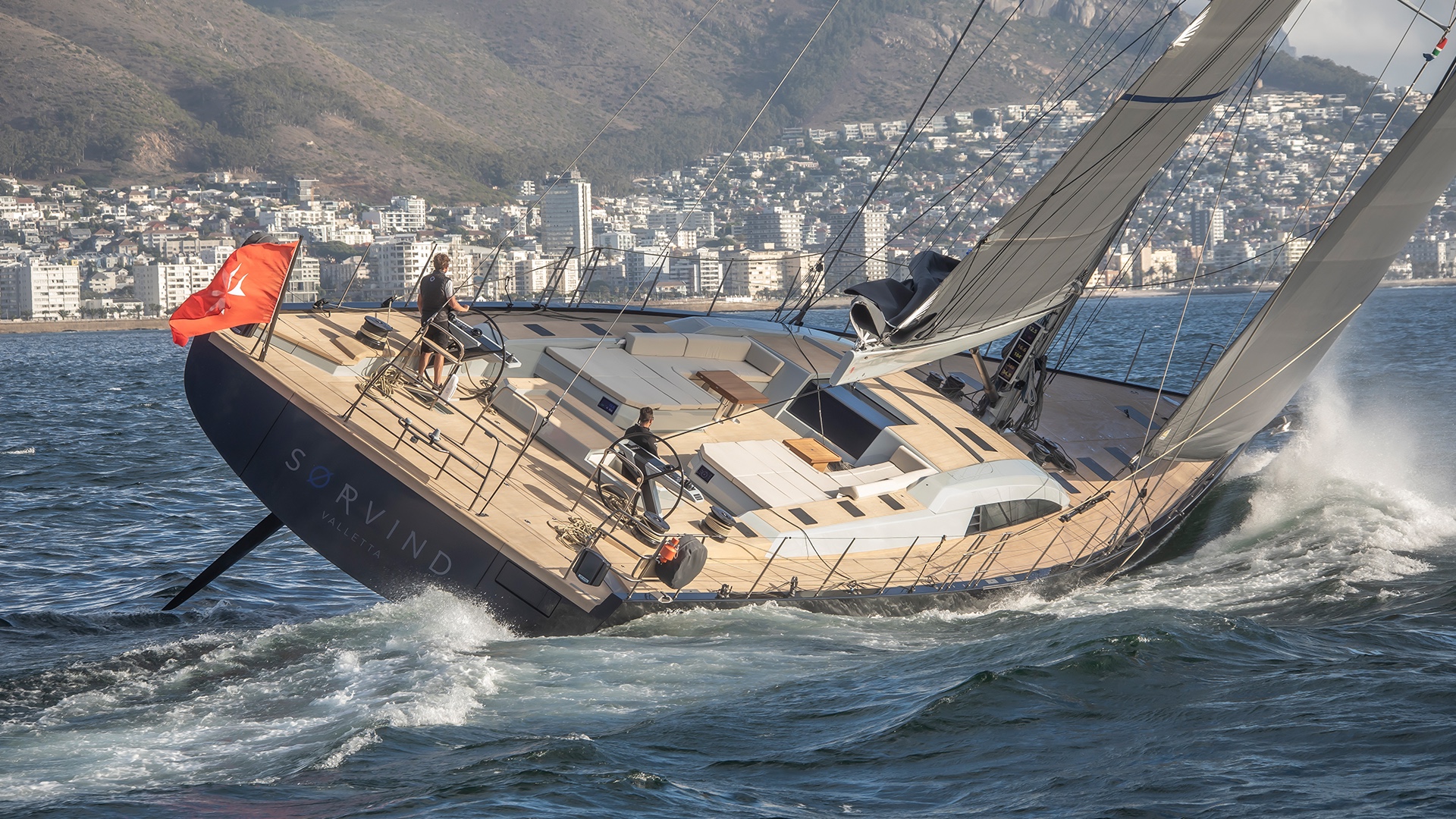 Heeled, under full sail
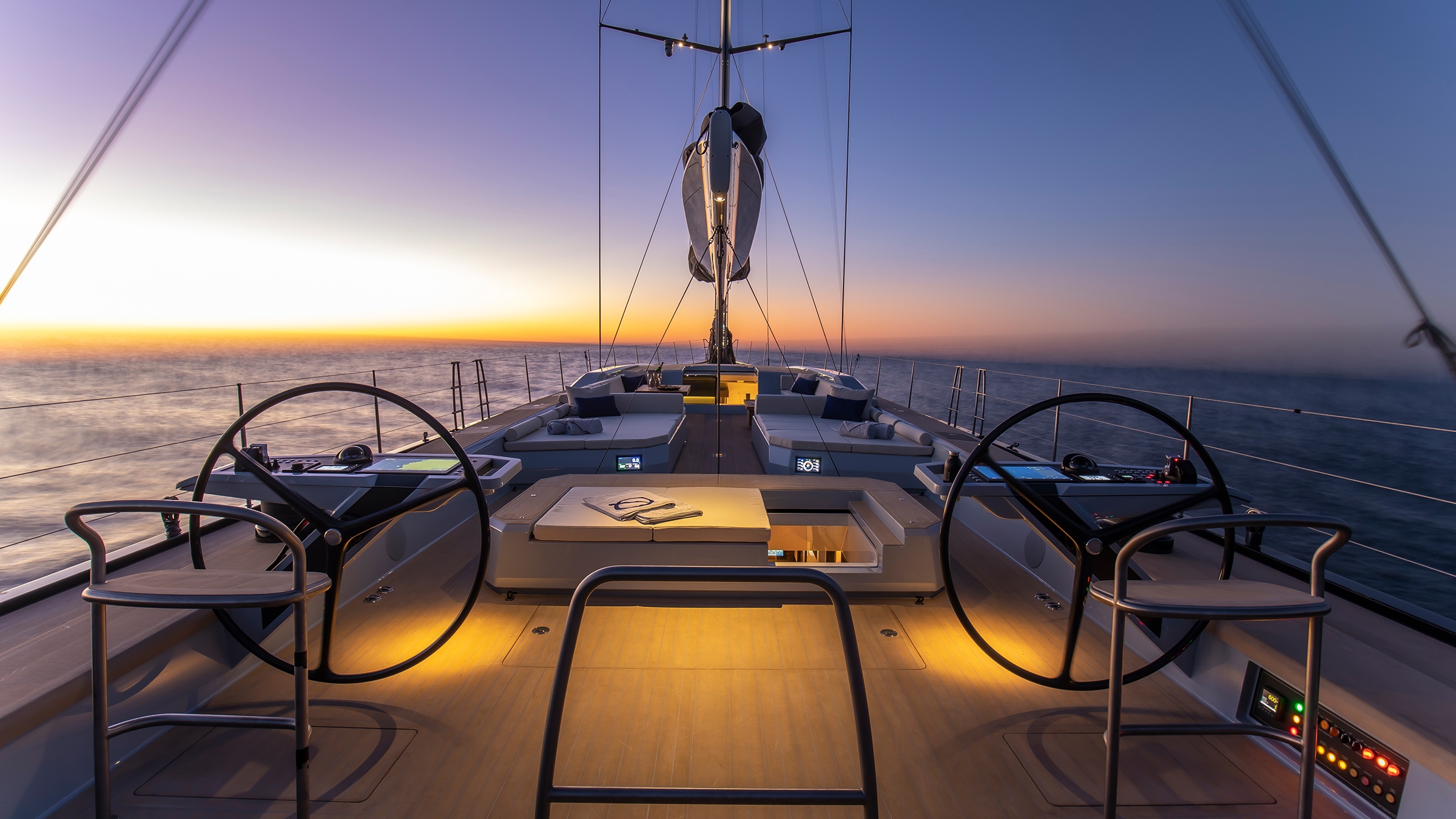 Twin circular helms
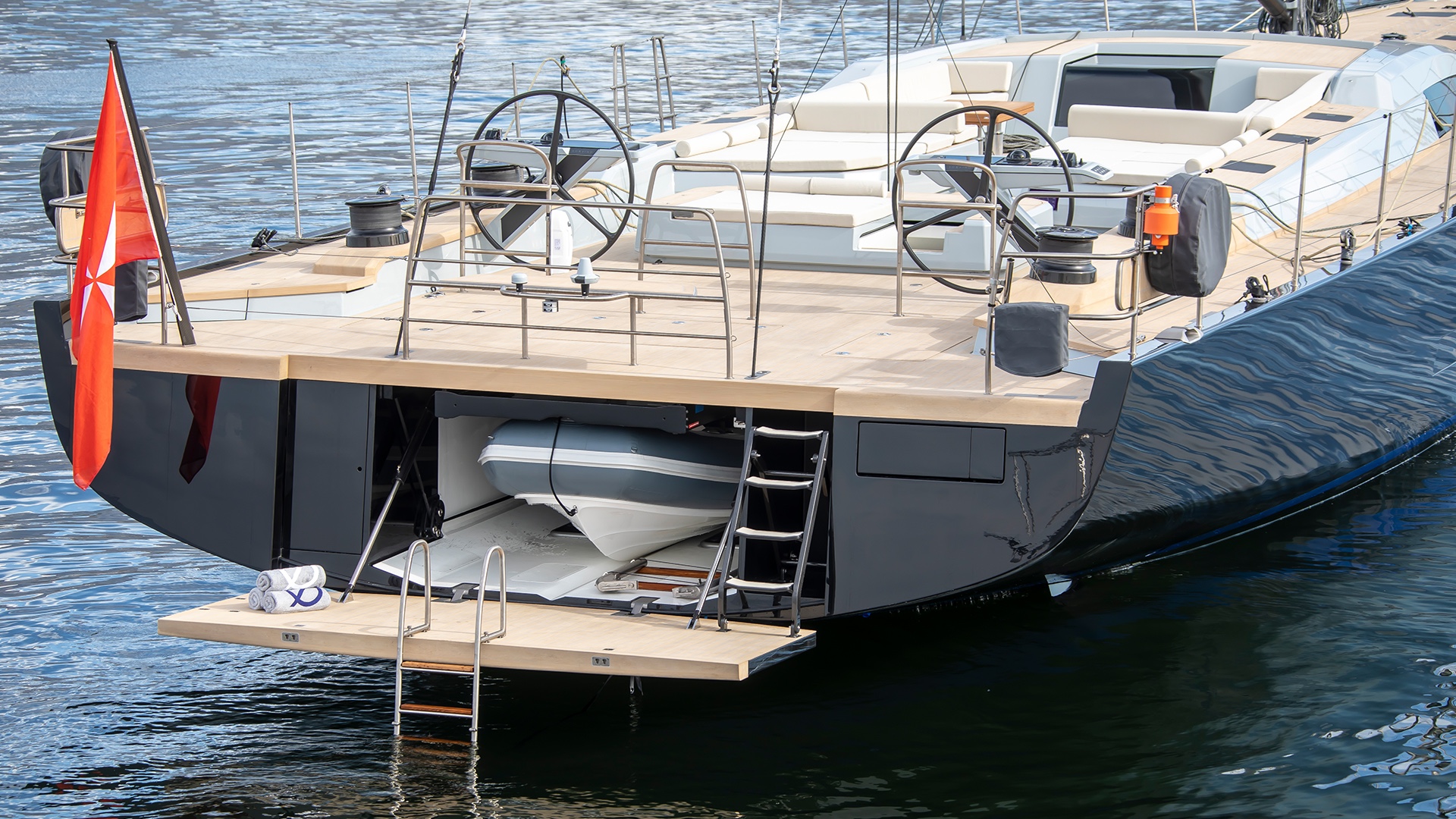 Stern · Tender garage
"I wanted a sailing yacht that could still be in touch with the ocean, a sensation that sometimes gets lost with bigger boats."
The owner of Sorvind · via Southern Wind
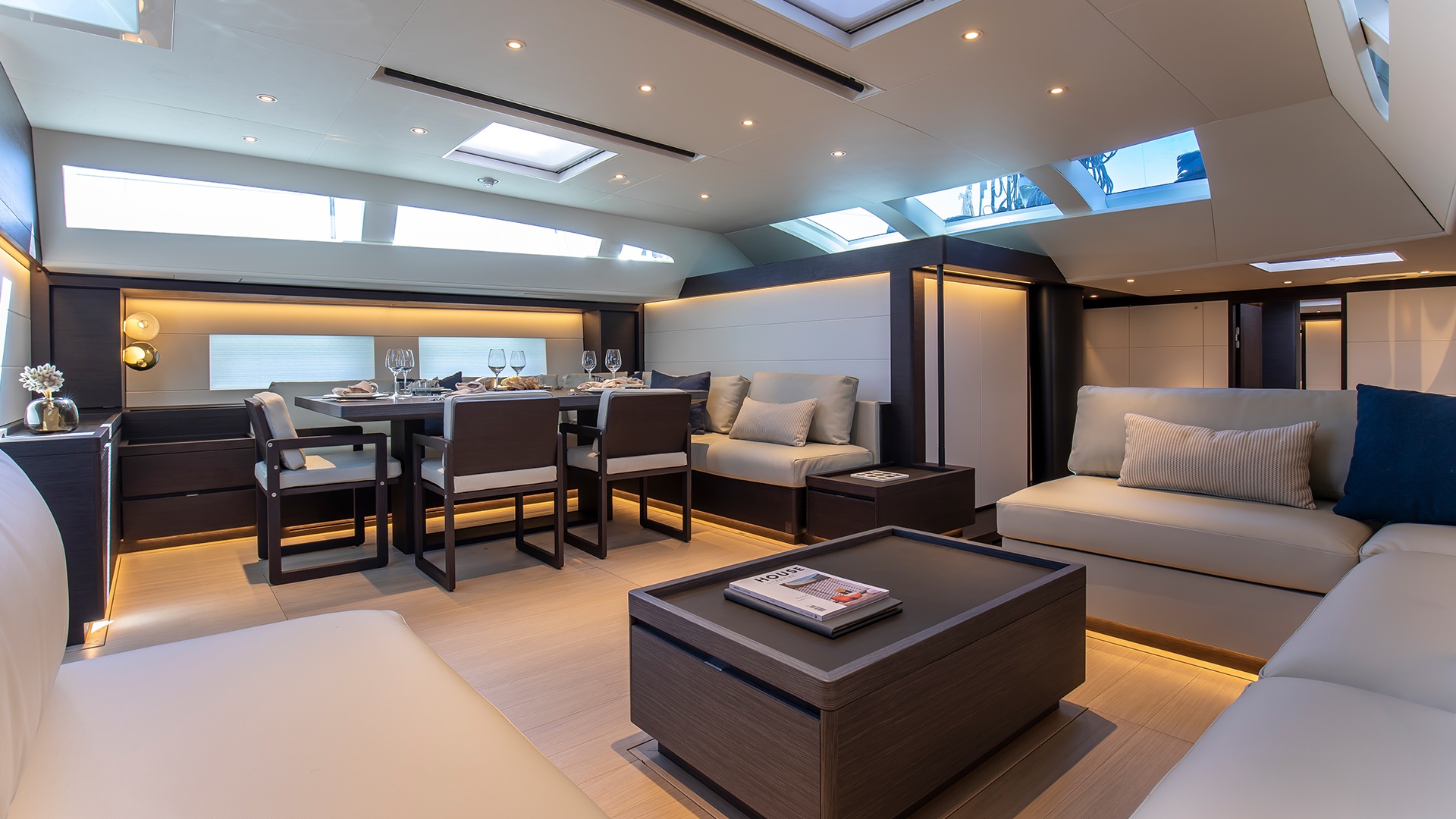 Raised saloon · Amidships, full beam
A long northern night, lit white
The owner came to Southern Wind with a phrase rather than a mood board: Nordic Cool, a sensibility he had admired aboard the earlier SW96 Seatius. To realize it, Nauta Design brought in Jeroen Machielsen of the Dutch Studio Hermanides, the same partnership behind that yacht's award-winning interior. The palette they arrived at takes the long nights and bright snow of Northern Europe as its reference: pale woods, soft neutrals, and the quiet warmth of a space built to feel calm at sea.
The layout follows the Raised Saloon configuration, a tried-and-tested SW105 trademark. Guests seated in the saloon look directly out at the passing landscape through expansive hull windows, and natural light pours down through skylights and hatches to fill the interior. The saloon sits amidships, a light and open volume where a full complement of guests can settle into the sofas or gather around the dining table. Immediately forward, a fully equipped custom bar marks the threshold between the shared space and the owner's private domain.
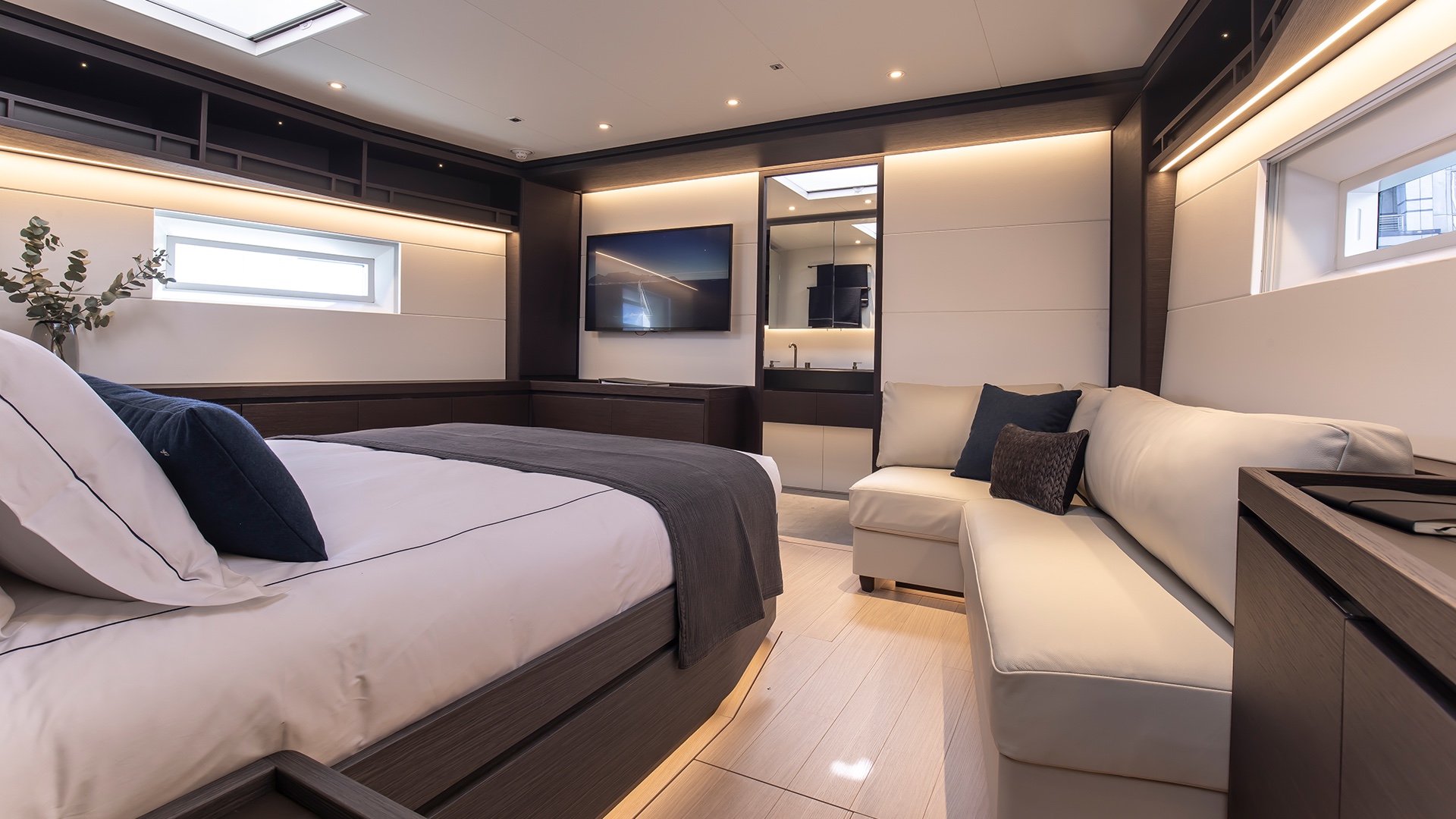 Owner's suite · Forward
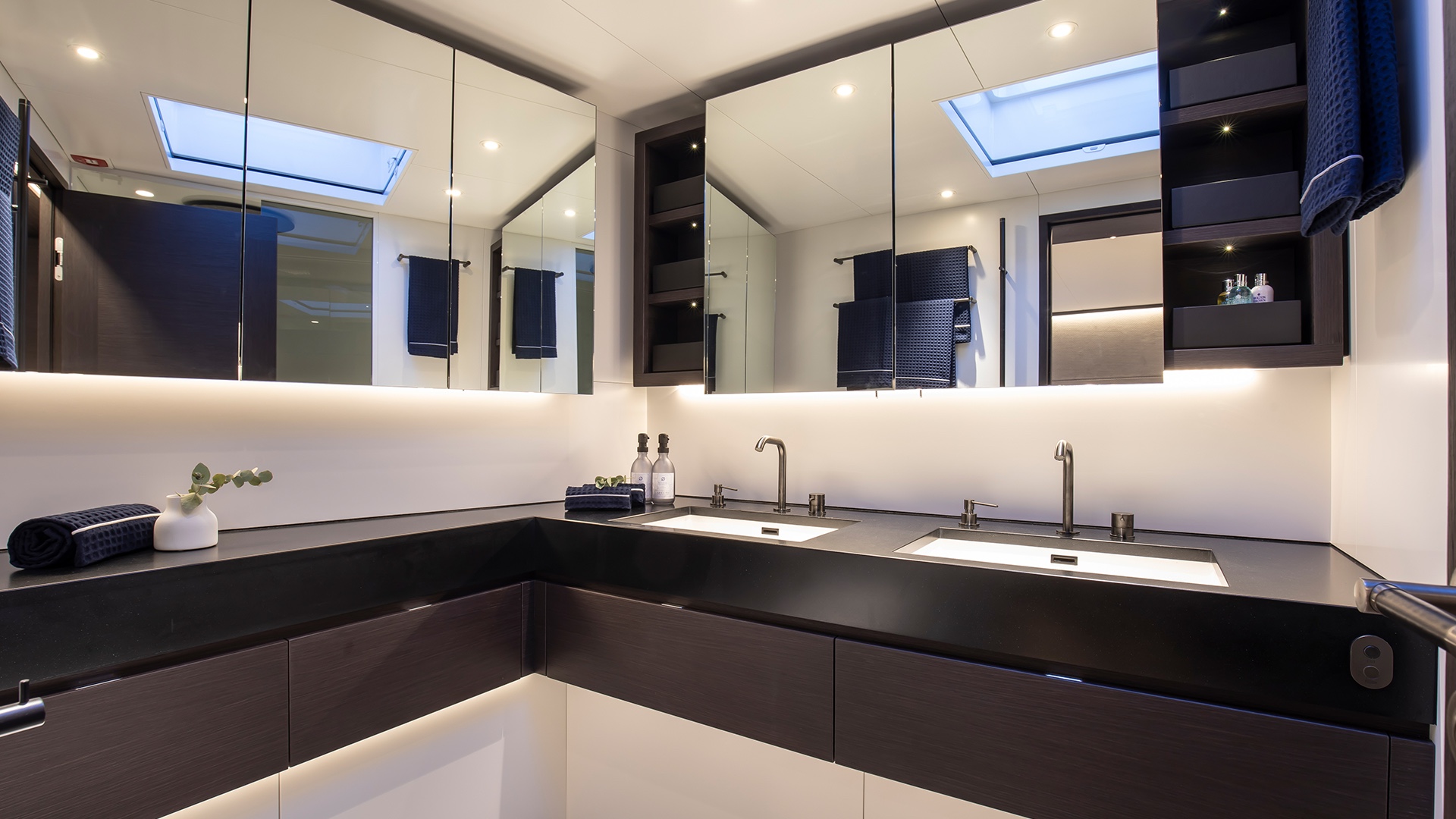 Owner's bath
Privacy, by position
The interior follows the proven arrangement of Nauta-designed Southern Winds in the 100-to-110-foot range. The owner's suite is placed forward of the saloon, a Southern Wind trademark that grants it maximum privacy and the full beam of the hull at its widest comfortable point. A VIP stateroom sits close by, and two guest cabins lie aft of the saloon, accommodating eight guests in total. The twin beds in the starboard cabin convert to a double, the kind of quiet flexibility a charter program rewards.
A crew of up to six lives separately in three cabins, the working and guest domains kept deliberately apart. It is a layout that reads as obvious only because it has been refined across nearly thirty yachts: the owner forward in silence, guests aft within reach of the cockpit, crew positioned to serve both without crossing either. The galley and interior nav station complete the working spine of the boat, equipped for the bluewater passages the SW105 was built to make.