

Silence
by Design
Electric propulsion, a battery bank of almost one megawatt hour and solar panels built into the composite itself: the 80 Sunreef Power Eco makes the case for a catamaran that cruises without exhaust, noise or vibration.
The first thing the 80 Sunreef Power Eco takes away is the sound. No diesel note at the stern, no tremor through the deck, no exhaust trailing the wake. What remains is water moving past two hulls.
Catamarans have earned their place in the conversation for reasons that are easy to measure: the stability of two hulls, and an interior volume that a monohull of similar length cannot offer. Sunreef Yachts, the Gdańsk shipyard that built its name on luxury multihulls, has spent the past several years asking what else that platform can carry. On its Eco line, the answer is a power plant.
The Eco suffix marks the Sunreef yachts designed around electric propulsion, fed by batteries and by solar panels integrated into the composite structure. On the 80 Sunreef Power Eco the figures are deliberate: 990 kWh of storage, which the shipyard describes as the biggest battery bank among leisure craft up to 24 meters, driving twin 360 kW electric motors.
The unit named Sól, after the Norse sun goddess, made the model's United States debut at the Fort Lauderdale International Boat Show in October 2023. At 23.8 meters overall and 12 meters across the beam, she arranges 356 square meters of living space around four cabins: the proportions of a coastal house, set on two hulls and moved by electricity.
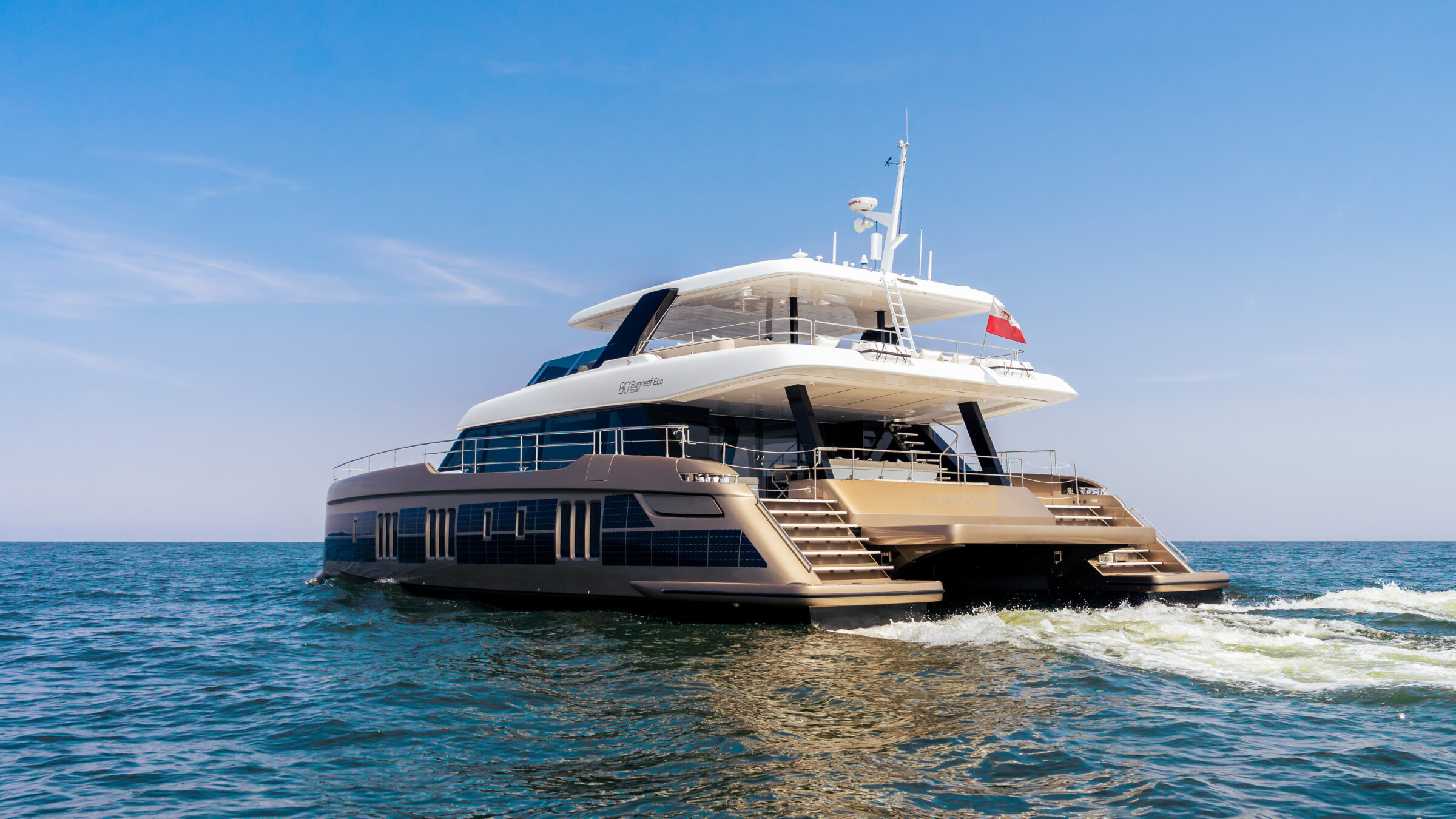
The 80 Sunreef Power Eco, fed by its own surfaces
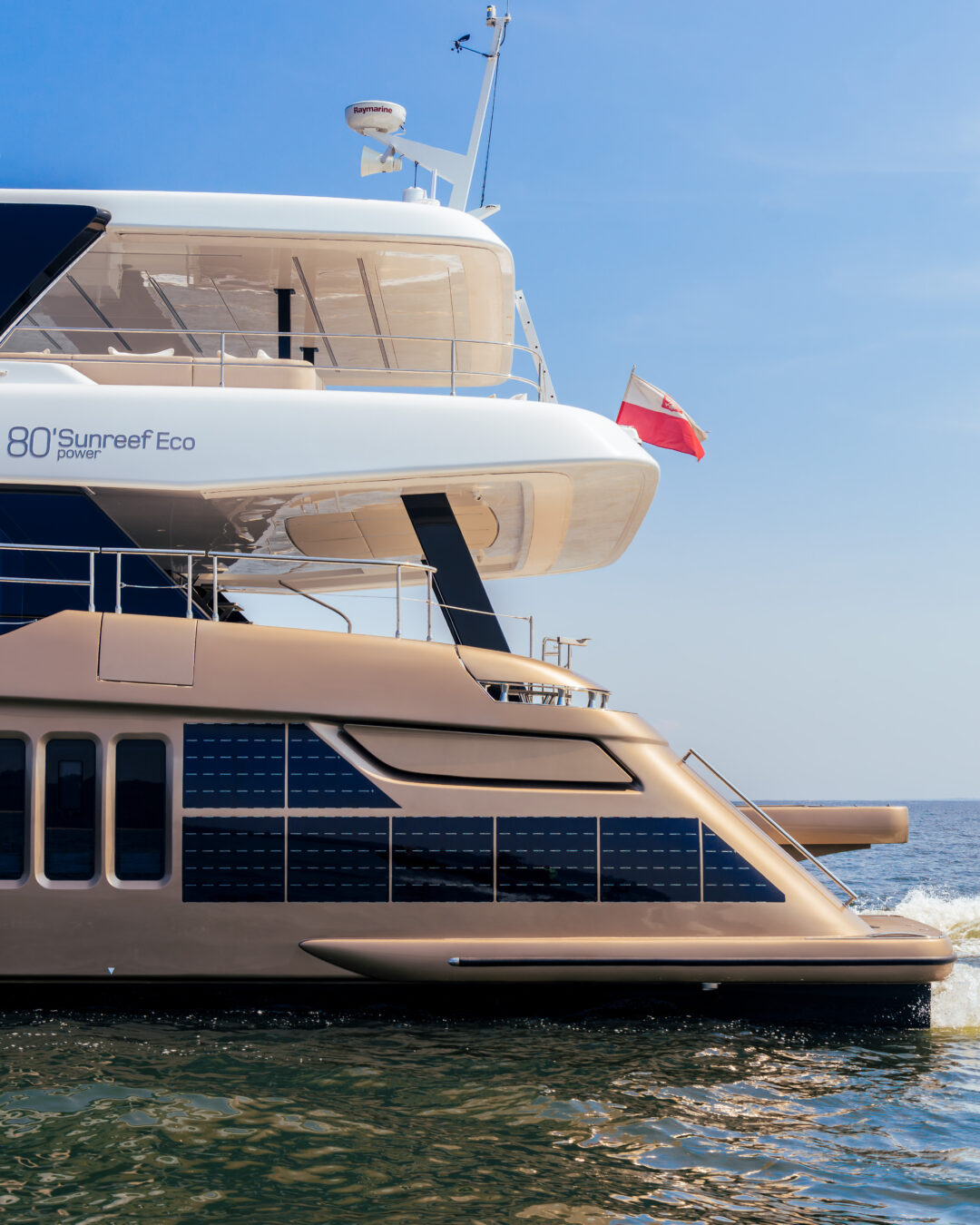
Sunreef's solar system does not sit on the yacht; it is part of it. The shipyard's panels are integrated into the composite of the hulls, the bimini roof and the superstructure, covering up to 200 square meters, about 2,150 square feet, with a rated output of 36 kWp. The hull itself becomes a collecting surface.
That energy flows into a battery bank running at 700 volts, the reserve behind the yacht's electric propulsion. Sunreef puts electric autonomy at close to 300 nautical miles. Beyond that, a range extender opens up transoceanic passages, and the charging system can transform whatever voltage a harbor provides, a practical detail for an itinerary that crosses regions with different shore power.
Cruising without the engine room
Electric propulsion changes the experience more than the specification sheet suggests. Without combustion there is no exhaust and no vibration, and the yacht moves almost in silence. The shipyard pairs it with an energy-saving air conditioning system and smart energy management, so that a quiet bay can stay quiet.
This is where the platform and the propulsion reinforce each other. The broad, stable deck of a catamaran is already a calmer place to spend a day than the deck of a rolling monohull; remove the sound of the engines and the yacht stops competing with the setting around it.
Here, silence is not an option on the list. It is the premise.
USA Onboard EditorialThree places to spend the day
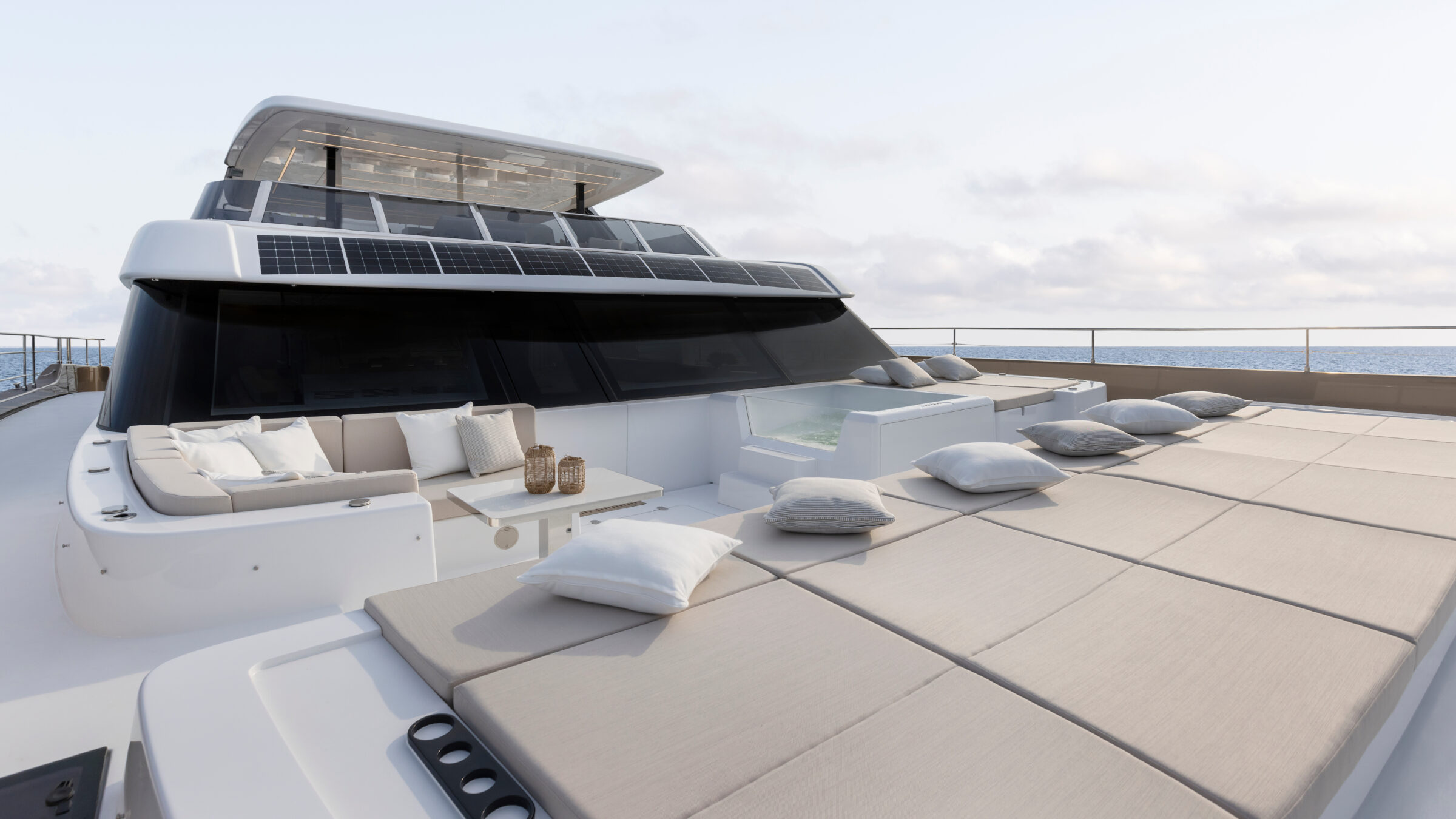
The main salon opens forward onto a terrace at the bow, where Sunreef places a spa pool. It is the most private outdoor space on board, set ahead of the living areas and facing the water the yacht is heading into.
Aft, the cockpit combines dining and lounging, with a large day bed, open views of the sea and direct access to the platform from which the water toys are launched.
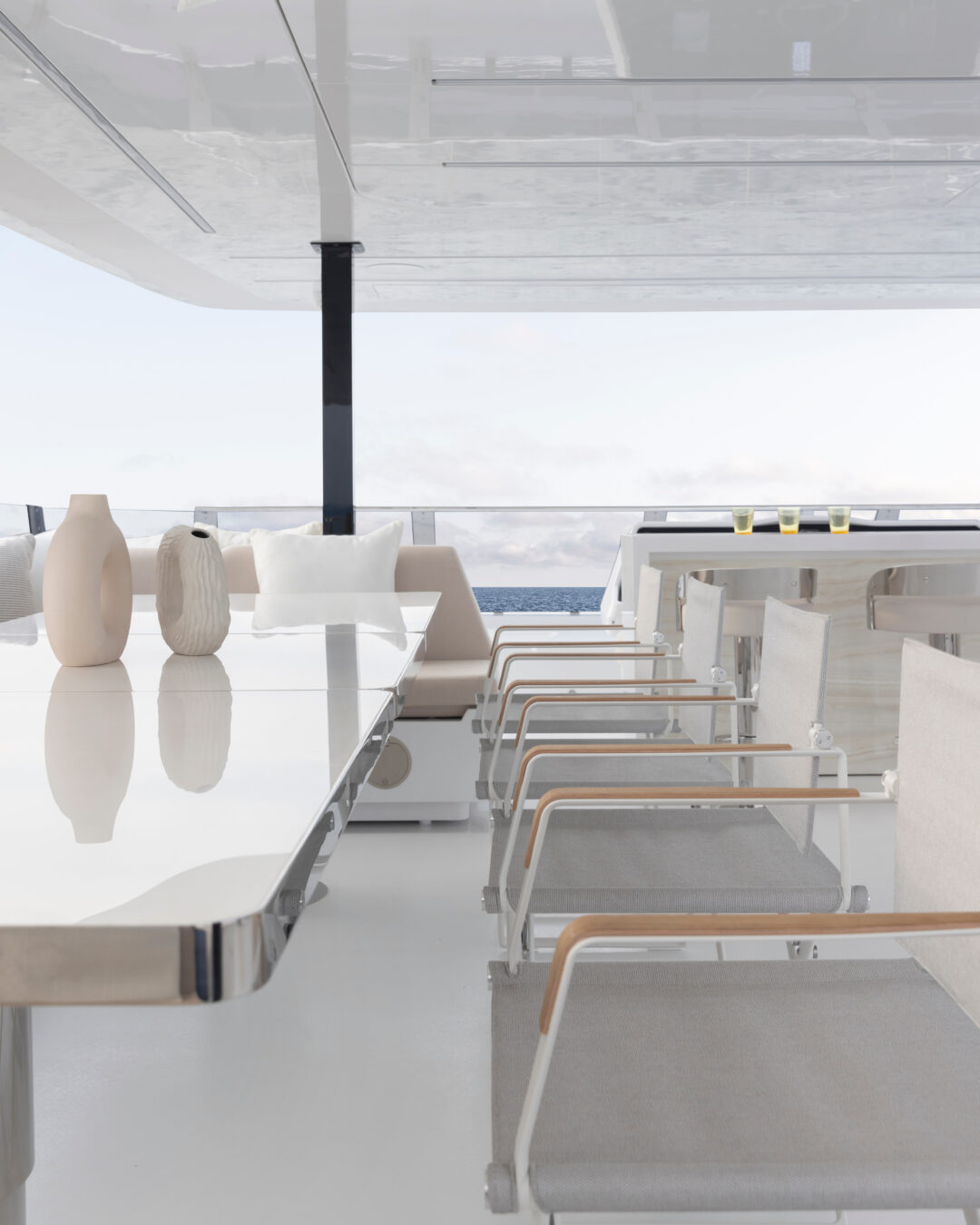
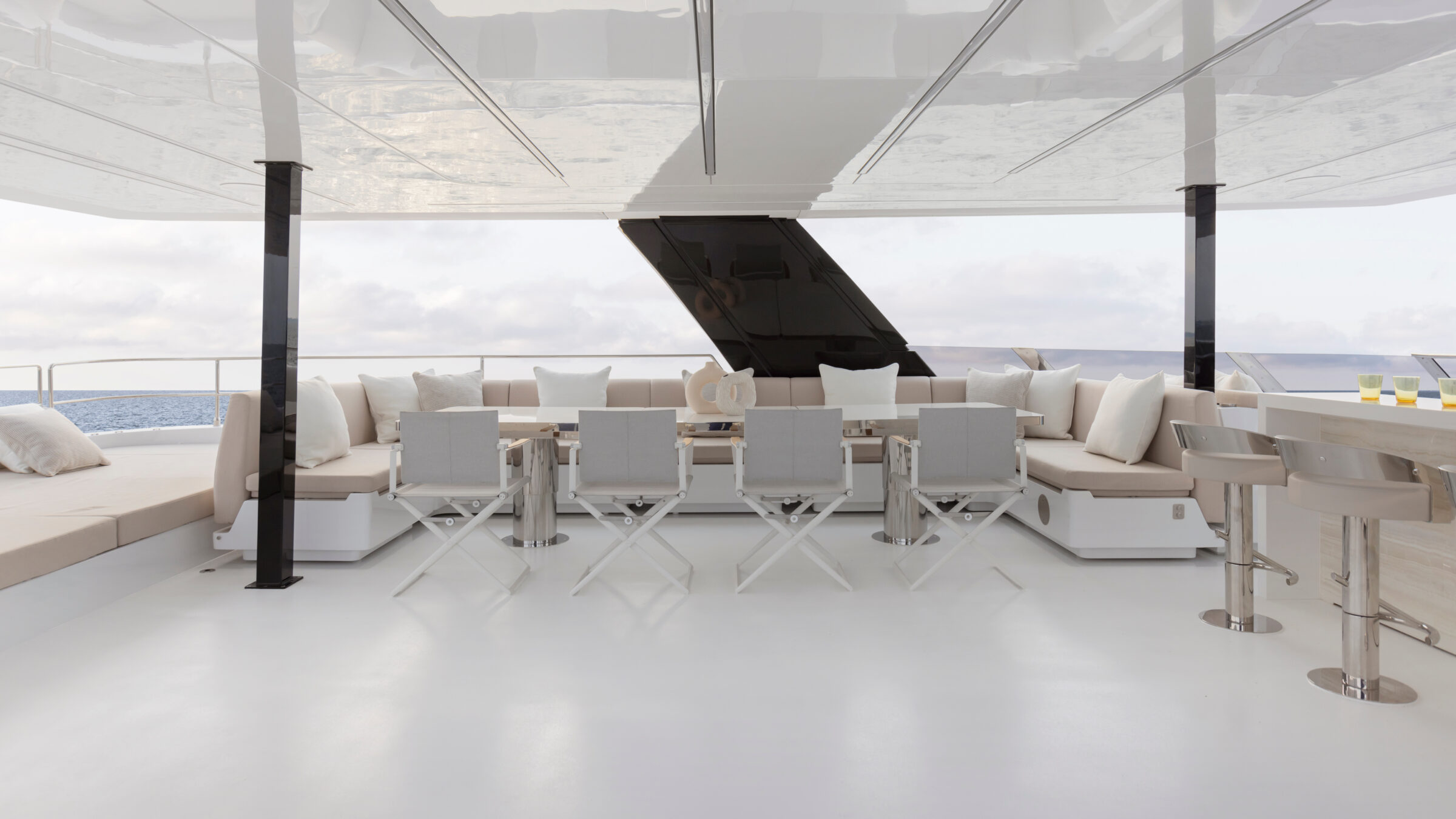
Upstairs, a C-shaped dining area, a bar and oversized sunpads make the flybridge the yacht's main social deck. Above it, the bimini roof carries part of the solar array.
A table above the water
The flybridge is where life on board gathers. The C-shaped dining area brings everyone around a single table, the bar sits within reach, and the sunpads take over the rest of the deck. It is an arrangement drawn for long lunches at anchor rather than quick passages.
With no engine running below, conversation at the table has nothing to compete with. On an electric yacht, the flybridge stays quiet even when the yacht is underway.
Glass, light and four cabins
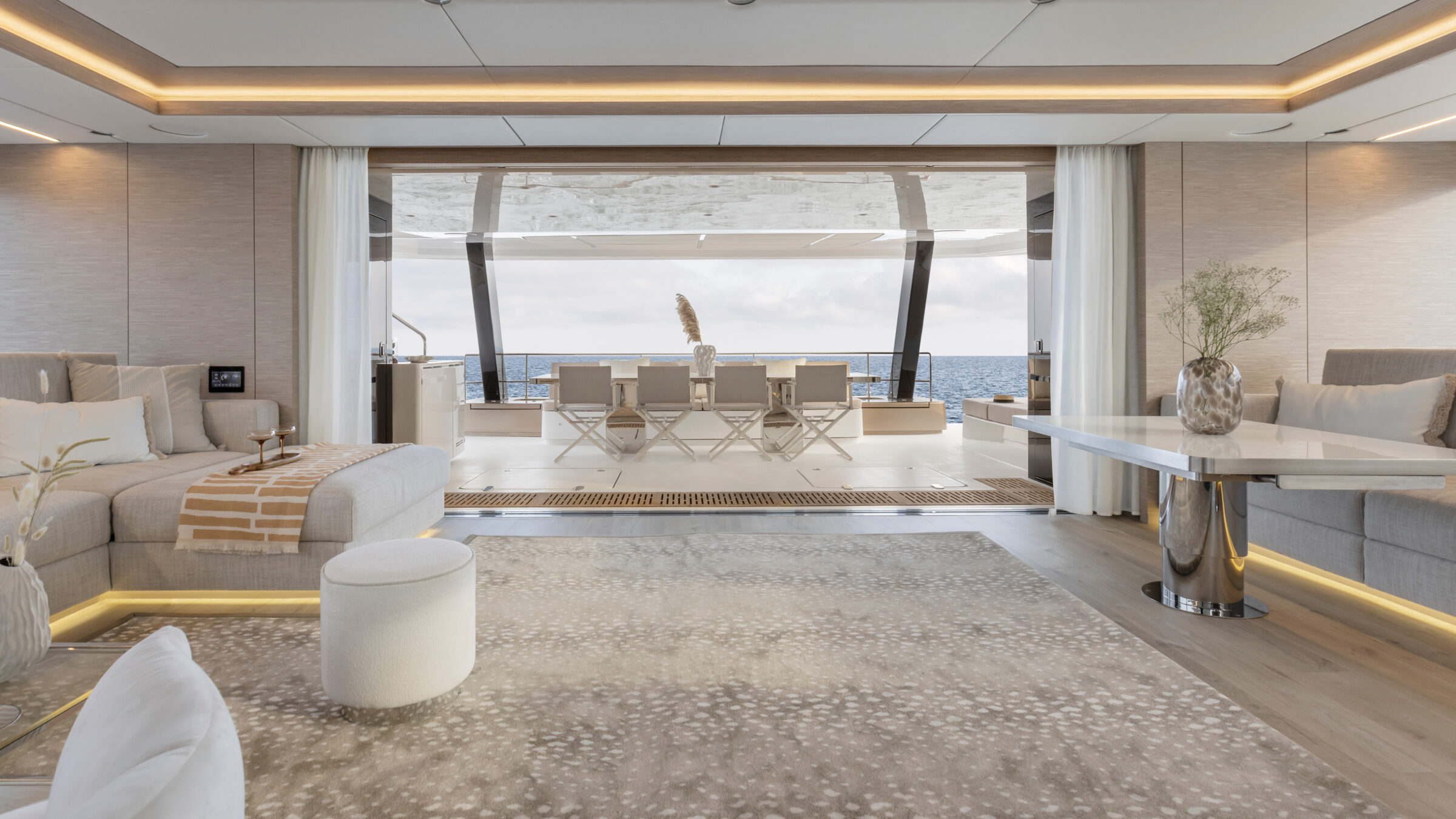
Inside, the main salon is arranged as a lounge with a wet bar, and it opens in two directions: aft to the cockpit and forward to the bow terrace. The result is a single line of living space along the main deck, with the interior at its center rather than at its edge.
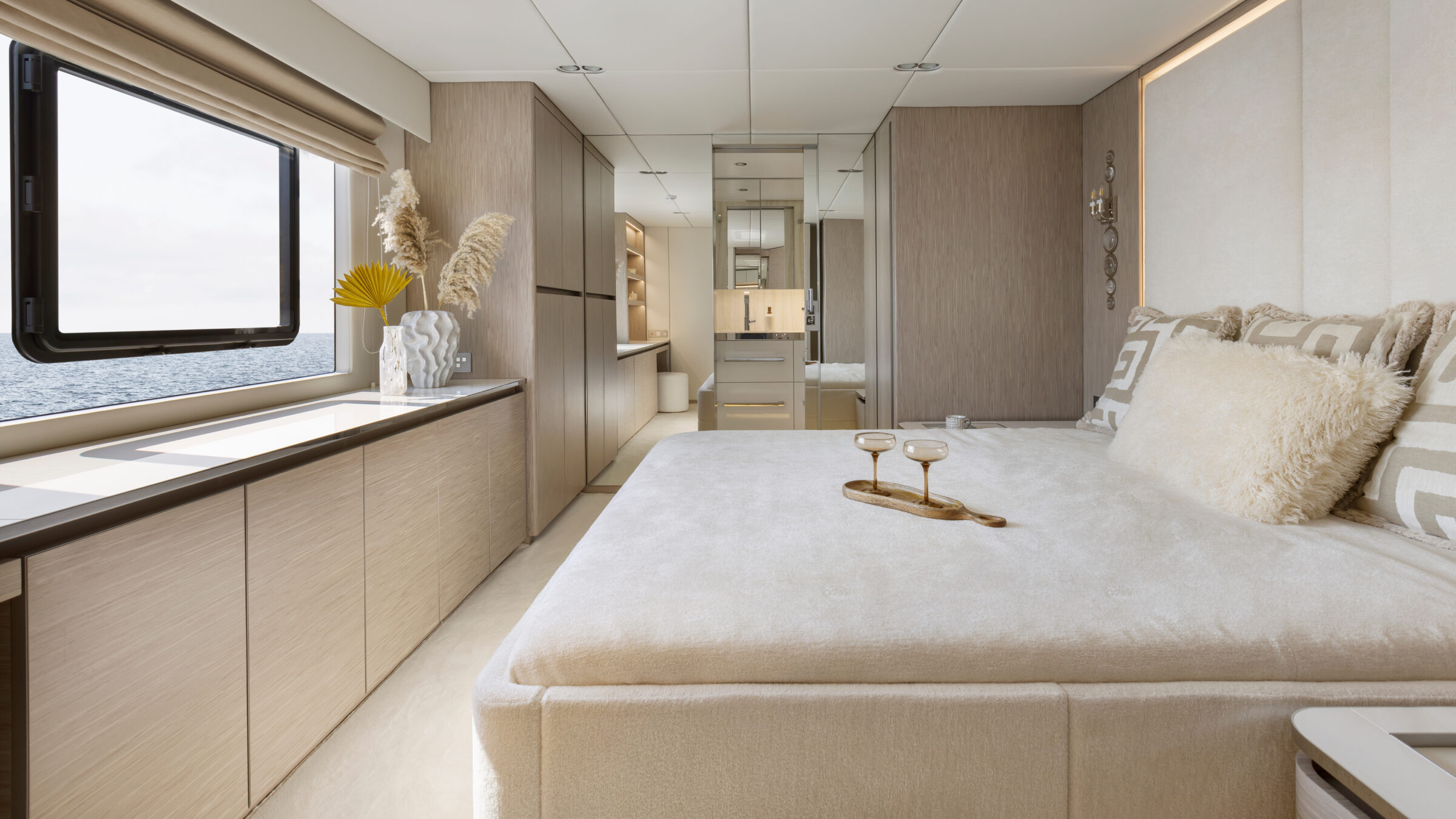
Below, four cabins complete the accommodation, and the yacht is specified for a crew of four. Across the decks, Sunreef counts 356 square meters of living space, a figure that explains, better than any adjective, why the catamaran has become the preferred platform for this kind of experiment.
At a glance
Figures as published by Sunreef Yachts for the 80 Sunreef Power Eco Sól.
Where the quiet is the point
The 80 Sunreef Power Eco does not ask its owner to trade comfort for conscience. It keeps the advantages the catamaran already had, the stable platform and the generous volume, and changes the one element that always intruded on them: the engine.
What Sunreef proposes here is not a smaller footprint presented as a sacrifice, but a quieter yacht presented as a better one. On the water, the difference is immediate. It is the sound of nothing at all.
Two hulls, almost one megawatt hour of storage and a skin that gathers its own light: a yacht designed to be heard as little as possible.