
Constance Brément
Cannes Yachting Festival Director
“Not Everything
Is About Power”
Two ports, seven hundred boats, six days. Constance Brément takes over Europe's leading in-water show in a year when the quays themselves have moved, and talks through the logistics of positioning a fleet, the innovations she wishes visitors would stop for, and the slower, longer-range turn she sees in European boating.
Two ports, seven hundred boats, six days. The Cannes Yachting Festival is Europe's leading in-water show and the event that opens the season, and this September it runs for the first time under a director who has spent fifteen years around it in another role.
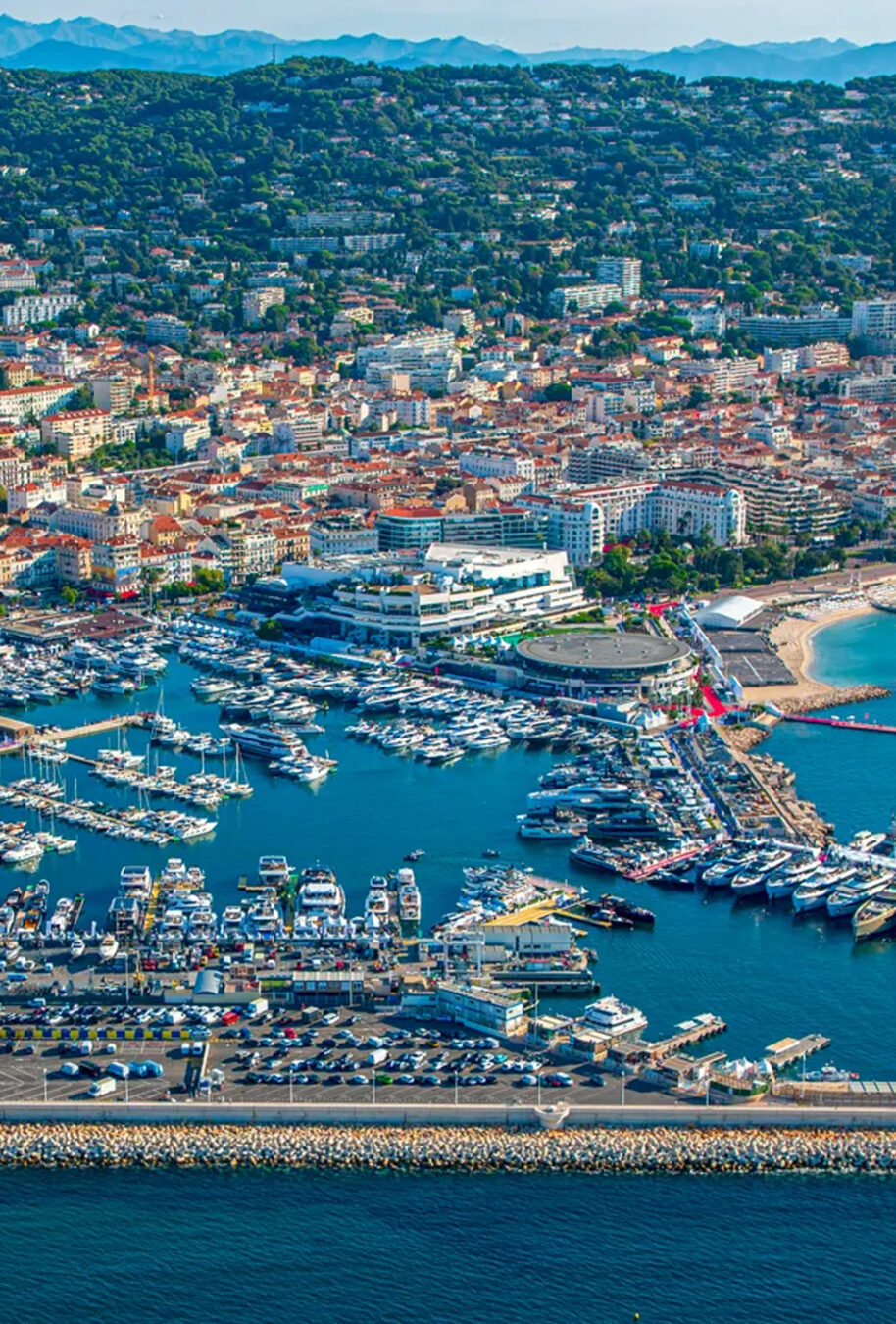
The show itself is moving this year. Works at the Vieux Port have pushed the large yachts along Quai Max Laubeuf and sent the Power Cat Village across to the Pantiero. Nearly 150 world premieres arrive between September 8th and 13th, spread across the Vieux Port and Port Canto and linked by a shuttle that crosses the bay in about fifteen minutes.
What follows is a conversation about how that fleet is actually assembled, and about what Brément sees changing underneath it. Some of it is logistics, and the logistics turn out to be more interesting than they sound: draft, mooring systems, gates that open every fifteen minutes, and a segmentation plan built backwards from the way a visitor walks. Some of it is direction of travel. Hybrid propulsion, foils adapted to leisure boating, virtual anchors, layouts drawn for owners who intend to work on board.
She is careful with claims and quick with detail. She does not make grand statements about where boating is going. She describes what has arrived at the quay, which turns out to be a more useful way of answering the same question.
The First Season
Onboard
Our readers are American owners and enthusiasts, many of whom will be in Cannes in September and many more following from a distance. I have to start with congratulations, because this is your first year as director of the whole show. When something of this magnitude is planned, it almost feels like a baby: you wait for it to walk. When you walk onto that dock on September 8th, what do you want to see?
Brément
First, I have a lot of emotion, because it is hard work to put everything together. We are on two ports, we have 700 boats, and a lot of exhibitors on land as well. There is great excitement, and what I would really like to see is people happy. It's a very short answer, but it's really the entire industry and the visitors coming to enjoy themselves and to do business. The exhibitors share the same objective: we want to create value, we want to inspire boaters and new boaters. We want to attract more and more people to boating, because it is a great way out, and then we want them to explore new horizons. That is what I want to see: people motivated, ready, and ready to pass on the passion they have.
It's easy to fall in love with the show, and many who were there last year will be back. But what's new? What will they see that they didn't see in 2025?
Every year is different in this show. The location is still Cannes, but we have nearly 150 world premieres, and that's the first thing. The show is amazing for me because you see, in a very cocooned way, everything that boating can offer, whatever your program is: renting, buying second-hand or new, sailing boats, multihulls, dayboats, yachts. It's a great privilege for a visitor to discover those premieres.
We have innovations as well, and we'll talk about that in more detail, but through the Innovation Route you see more and more ease of use for boaters, and more sustainability. And then, of course, there are the works at the Vieux Port, so the layout is a bit different for the yachts this year. We have large yachts partly repositioned along Quai Max Laubeuf, whereas the Power Cat Village, which used to be there, is now on the Pantiero. We have a bit more than 30 power multihulls.
With every edition there's one arrival the whole team is waiting for. Without spoiling anyone's announcement, although we'd love a scoop, what are you most excited to see in the water this year?
I was thinking about that, and honestly I don't have a single favorite. The ones I'm looking forward to seeing are those that really embody the future of boating: shipyards proposing hybrid engines on board, or AI solutions to optimize consumption. We have the Amer 42 Explorer, which is both steel and aluminum and certified ice class, really the kind of adventure yacht you can see now. And the B.Yond 37 meter from Benetti, an exploration yacht with a very modular layout, designed to optimize space and long-range cruising.
You see more and more of this: not everything is about power, it also goes towards longer ranges and a slightly slower life. Maybe that isn't the typical trend in the US, but in Europe you see more and more of that idea, enjoying the navigation as much as the destination.
Cannes opens the European autumn season. Against Fort Lauderdale, Dubai or Monaco, what is its identity? What sets it apart?
I've been around the Cannes show for the last fifteen years, in my previous job, and it is the show that for me is the best one to get inspired, to explore, and to be amazed, for several reasons. First, as you were saying, it is the leading European in-water boat show, with huge diversity and a very international visitor base, and it is the first major event of the boating season. All of that makes it an event in itself.
Then there is the diversity of the offer: the newest engines, technology, paints, equipment, toys, a huge brokerage area now, and the experience you get from the sea trials. The Cannes setting brings a real plus, because you can feel what boating really is, in a very close-up environment. Cannes also brings this incomparable dimension with the two ports: the light, the food, the art you get around the Riviera, which is pretty unique. All in all, it makes something more emotional than the other boat shows.
It makes something more emotional than the other boat shows.
Constance BrémentThe Choreography
You mentioned sea trials, and that's a real advantage: people can experience the whole concept of a boat, out at sea. How many of the vessels can go out, and how easy is it to get on one?
I couldn't tell you the percentage of boats on trial. It's decided by the exhibitor first, so it depends on their availability, on the way the boats are laid out in the port, and on operational conditions. For example, an exhibitor with ten boats: the ones at the back won't be able to go out on sea trial, because it's too complicated for the mooring system, but the boat at the front can. So it's a discussion with the exhibitor as well.
Usually what they want is to showcase their new boat, and they don't want the berth to be empty either, so it's a trade-off. Some of them also offer to take leads out before the show opens and after it closes, every day. So a lot of them can go out, and we have some scheduled so that the gates open every fifteen minutes. It's a roll-on system.
More than 700 boats, from 5 to 50 meters, all put into position. It sounds more like choreography than logistics. How do you solve that puzzle, and how far in advance do you start?
We start as soon as the companies and the shipyards enter the registration process, because they tell us: I'm coming with two boats, five boats, ten boats. That's the first step, how many boats you want to bring. Then, of course, the length of the boats, because you have different drafts, and with the specifications of each port you can put boats in specific spaces, deep draft or shallow draft.
That guides us through the positioning of each sector, because what is central for us is the visitor's journey. You need to be able to find what you want to find, easily. We have the app and the digital tools, of course, and you can prepare your show; but at the same time, when you're on site, you have the signage on site, and you need to understand that this area is there: Port Canto, for example, for powerboats up to 12 or 13 meters, the new ones; then you go to the Vieux Port and you have the new boats above 13 meters; and if you want to find brokers, you go to the brokerage area. So it's all about segmentation.
Who decides which boat or shipyard gets the prime spot? Is it based on size, on seniority, or on the story the boat is telling?
It's a bit of both, really. As I said: technical constraints, the number of boats, the areas we are dedicating. And then, of course, loyalty is very important. But it's a balance, because we need to make room for new players and new ways of enjoying boating, so sometimes we have to make decisions that allow new brands to come in.
You're using two ports, the Vieux Port and Port Canto, and each has its own character. What does each one do best, and how would you recommend people move between them?
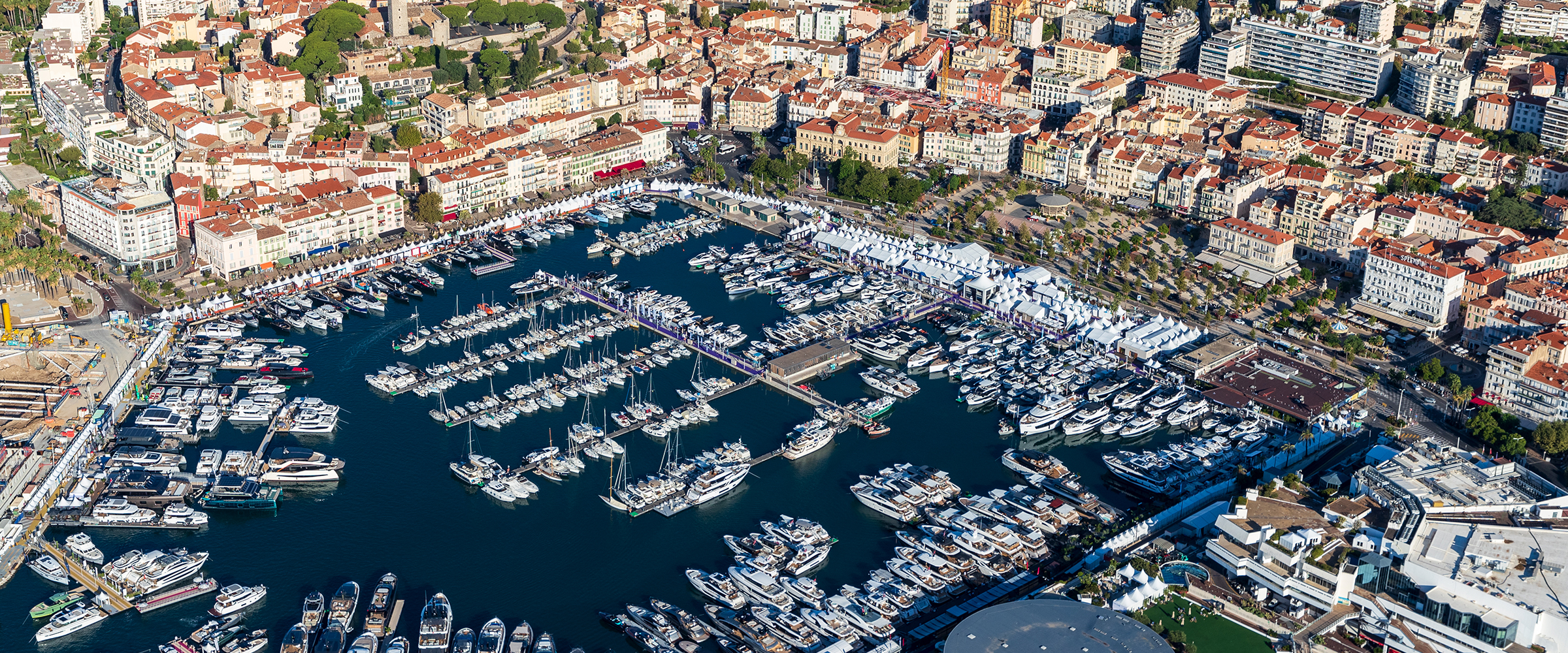
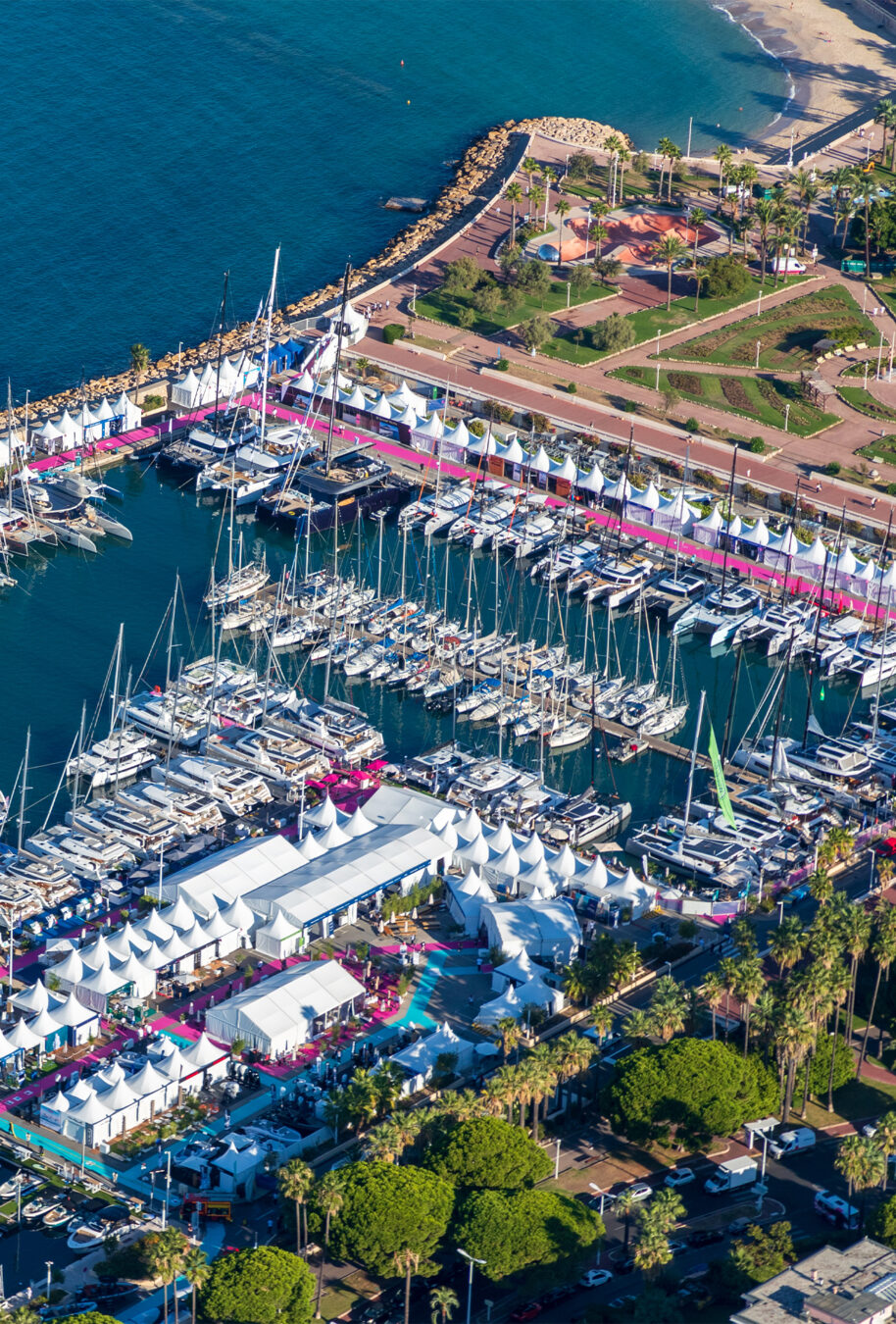
Each port has its own program and its own atmosphere. At Port Canto you have the brokers, with boats up to 50 meters; the Power Boat Marina, with motorboats up to 12 or 13 meters; all the sailing boats, with more than 50 multihulls as well; and the services and equipment around them. Outboard engines will be there too.
Then at the Vieux Port you have all the motorboats. It's only motorboats afloat, from 13 to 45 or 50 meters, and I can't remember the largest one. And then you have all the equipment in the Palais, which is really interesting as well, with great treasures of design, equipment and destinations, and all the engine manufacturers surrounding it.
To go from one to the other, the best way is to take the sea shuttle, because it's only fifteen minutes and it's really an experience. It's nice: you're out there, you go quickly, and on top of being a logistics system, it's really about enjoying the sea along the way, the Croisette and the surroundings of Cannes.
The day before the doors open, when everything is set but there's still that calm, how does the bay look to you? You're one of the few who gets that privilege.
The day before the opening is very special, because you feel all the energy of the last details being finalized. It's all about cleaning up, the last decoration piece, the final preparations, making sure that when the public arrives they are astonished, and want to go towards the exhibitors and get in touch with them.
All the boats are there, the pontoons are finalized, the whole organization is in place. It's very exciting, really.
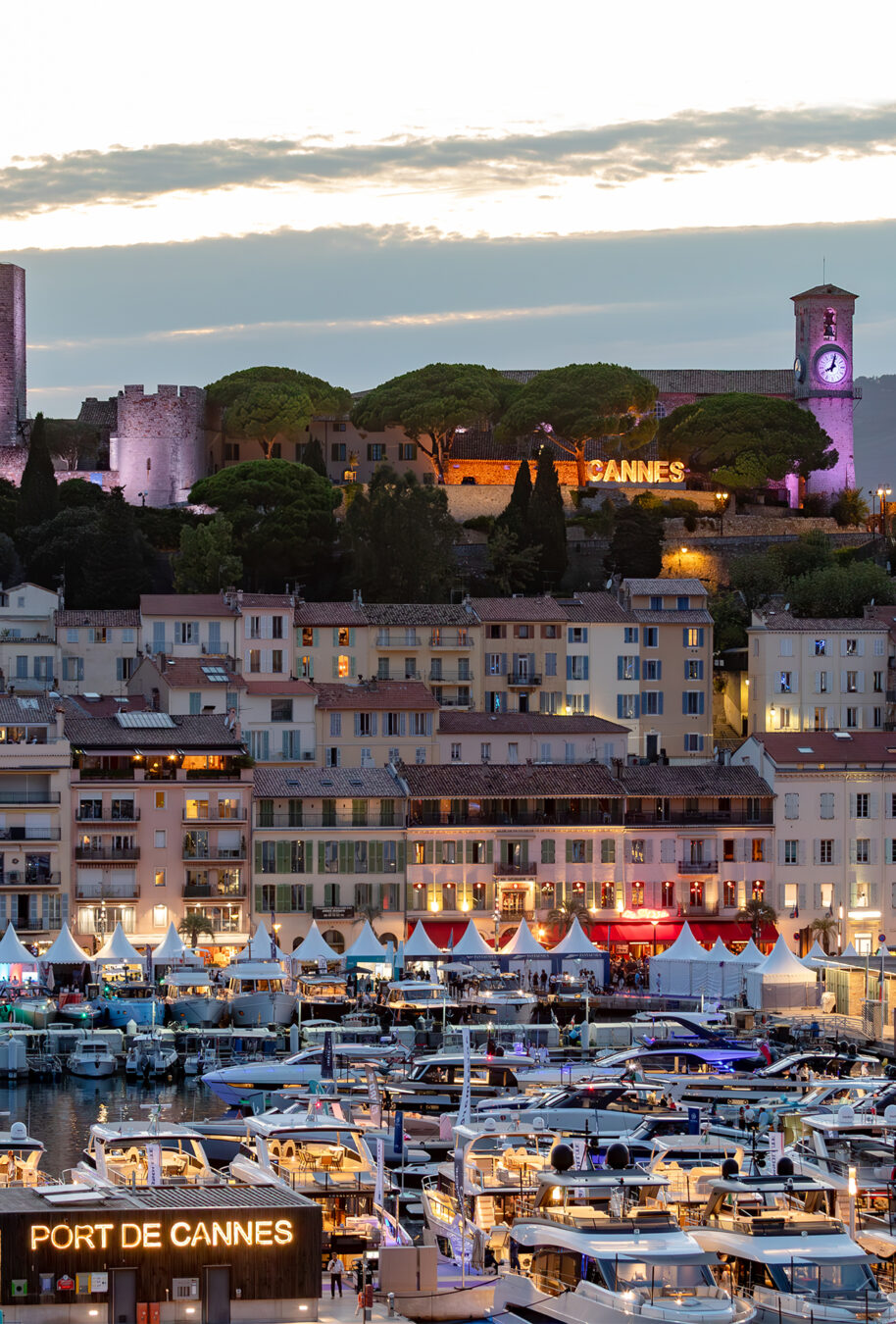
What is central for us is the visitor's journey.
Constance BrémentThe Visitor
Let's build a reader's walk. An American traveling to Cannes with two days: how should they plan them to make the most of the time they have?
The first question is what kind of project they have. A first-time buyer, a yacht owner looking to refit or change shipyard, a sailor: they won't have the same program. So for me it's preparation: the website, the app, and thinking ahead. What do I want to discover? I know I have this kind of budget and this kind of program, then the list of boats is reduced, and you can make the most of it.
To take an example: among big yachts, some have big engines and it's all about space and speed; others offer big space, but the program is more about reduced speed, more autonomy, longer cruises, sometimes living on board. More and more shipyards propose layouts where people can work on the boat. We're seeing younger buyers now, and they want to work on the boat, so the boat is organized around that. If they define the objective a bit more, they can then look at the main players through that lens of preparation and objective.
The other piece of advice is to plan key appointments, to make sure they get the visits they want. We have the VIP program, where we can organize some visits for them, because the shipyards don't really want hundreds of people on board. The better you prepare your visit, the better the experience you'll get.
For yachts, I would devote the first day to the Vieux Port: boats afloat, equipment on the pontoons, tenders, interior design in the Palais. And the second to Port Canto, with the power area and the brokerage and toys area, so that you have a complete view. For a sailing boat, I would do the opposite: start at Port Canto, because you have this great offer of 120 sailing boats including multihulls, and finish at the Vieux Port for equipment and services in the Palais. I would of course recommend using the sea shuttle: first, it's efficient; second, it's very nice. And if people want a bit more service, they can use the VIP offer: the club, the car, possibly a concierge arranging meetings for them. It's an easier way to have things organized and prepared for them.
There's so much on offer that it's easy to overlook things that matter. What do people tend to walk straight past that you wish they'd pay more attention to?
Visitors naturally focus on the boats, those massive, beautiful products right under your nose. So naturally they focus on that. What I find very interesting, though, is to take the time to look into the innovations that will make their boating experience even more interesting, and to get to know the technical side: the engine manufacturers, the diesel producers, the naval architects. In the Palais, at the Vieux Port and at Port Canto, you have all those people who can explain the inside of a boat to you, everything that makes it smoother or more efficient when they navigate.
The management solutions are very interesting as well, because some people don't want to own. Shared ownership is developing, and management solutions are a good way to enjoy boating while somebody else takes care of the maintenance. All of that is at the show. So again, it's about thinking a bit in advance about what would make the difference for them.
In the bigger sizes the market has stayed much the same, but in the mid-size segment things have shifted, and you mention shared ownership and clubs, important for boaters getting into it for the first time. Can they learn about that at the show?
Yes, they can. We don't have that kind of conference system, because we know our exhibitors organize those explanatory sessions on their side. The insurance companies explain a lot about what should be insured and how; the finance companies explain how you can finance it. And when you go to the brokerage section, they can explain how to manage the boat as well. So it's all about getting clear on what your priority is, and on how you want to live your life on board.
What Counts as New
You mentioned the Innovation Route, which started in 2024. For visitors who followed it last year, what's new in the 2026 edition?
Every year we select, or rather, the jury selects, the innovations that will shape the yachts of tomorrow. This year we have 47 selected companies, which will be revealed in a couple of days. In there you have innovative boats and sustainable products: it can be a paint, it can be an AI system to minimize consumption, it can be navigation equipment that makes things easier. As I was saying, it's a combined system, a combined innovation, that will make boating more appealing as well as more sustainable.
It isn't a section: it's identified across all the sections of the show, with a sticker, and it's identified on the app as well. You see all the products, whether it's a boat, or not a boat, or a solution, flagged on the app, so you can follow this innovative journey if you want. That's important for visitors, because we want to highlight the efforts of the companies, whether they are shipyards, manufacturers or services. And it's not that easy, when you have 680 exhibitors, to highlight the best of the best.
How do you and your team decide what belongs in the Innovation Route? What is truly an innovation, and what is simply an improvement?
First, I'm not the one choosing: it's a very independent jury, with people from the federation, from the press, and technical members. You can find all the names on our website. The idea is to select real innovation. We're not talking about R&D, but about innovation that is already on the market and that improves usage, or improves the sustainability of the system.
We had a lot of applications, and among them we selected about a third, which is already quite a lot. Then, from those 47 innovations, we'll have awards in only four categories, so again we're highlighting the best of the best. The idea is that it really needs to bring something tangible: not a project or R&D, but something already on the market.
And when a company wins, what does it actually gain? What visibility comes with one of those awards?
First, it's a great recognition, and they're always very happy to have a sort of official recognition of the effort they've put in. It's very much a marketing opportunity, because the winners and the selected companies are on the app, on the web and on the YouTube channels. We have a studio, so they get a video they can use for themselves. They're on site with a dedicated point and signage, and they're at the entrance of the show as well. So it's really an awareness tool, and one that is particularly well used and appreciated by the winners.
A Quieter Sea
Sustainability is something every industry has to talk about now. Who do you think is moving faster, the regulators, the shipyards, or the engine builders? Where is the real momentum coming from?
For me, it's the combination of several technologies that is really pushing things forward. Of course regulation is there, and it will accelerate the innovation process more and more. But the combination is what's interesting. You have alternative propulsion, for example, but when you pair it with an intelligent energy management system, that's a real result, a real plus. When you have sustainable materials, recyclable or recycled raw materials, and you combine them with improved production processes to reduce weight, both really improve the sustainability and the overall durability of the product. The same when you do connectivity and predictive maintenance: it improves the boat's overall efficiency.
We've seen a lot of different innovations, but combined, we start to see real progress. I didn't mention foils. You've seen them on dayboats, for example; more and more are integrating foils adapted to leisure boating, of course, not like offshore racing. That adaptation is very interesting, because it's equipment that reduces consumption. So if you have that, plus a solar panel, plus an intelligent energy management system, suddenly you're consuming less and you have more autonomy. It's really virtuous.
So it isn't propulsion, or energy management, or materials on their own. It's the sum of them.
Exactly. And more and more shipyards, shipyards and engine manufacturers as well, are thinking together. AI will certainly improve the speed of innovation again, and the optimization of production, consumption and speed as well. Now you have integrated systems: on board, the system tells you the optimum speed for the boat. You can go 10% faster, and then consumption goes up. So it's a kind of education tool for boaters as well.
The Mediterranean became a sulfur emission control area in May 2025. From where you sit, how is the industry adapting to rules that didn't exist ten years ago?
First, let's be honest: it concerns transport more than leisure. But we do have to take it into account. It goes along with the mooring requirements and the Posidonia protection, again a sort of addition of different requirements that we have to take into account at the moment. What I would say is that it is stimulating innovation, first; and second, it is changing boaters' behavior, slowly, but it will be beneficial for everybody.
You see things like virtual anchors. We're not talking about emissions there, but about the impact on the environment, on the Posidonia. A virtual anchor is a very interesting system that keeps your boat in the same position without mooring with a real device. You see alternative engines, electric, new paints, AI systems optimizing production, as I was saying. The transition has to remain realistic, because the technologies are still complex and boating practices need to evolve alongside them. But it's something I think people accept.
Is it weighing on the industry, or is it actually creating a new market? What are you seeing from the exhibitors, a limitation, or an opening?
I would say it's an opening, because it creates a market for transformation. The shipyards are rethinking the whole system, the whole puzzle, whether it's services, refit, materials or propulsion. It's the whole thing. I don't think they have a choice, but it's more a transformation phase, and for me it's accepted by the shipyards. They've already taken that on board, and they're talking about it, thinking about it, and transforming the industry.
In Italy, Cinque Terre has set aside a stretch of sea for electric and certified hybrid boats only, on grounds of underwater noise rather than emissions. Is quiet becoming something buyers are actively drawn to, or is it still just a rule they have to meet?
I can understand the move. Think about you and me in the street: if you have only electric cars and electric motorbikes, it brings real peace of mind. Cinque Terre attracts many boaters; it's a very attractive tourism territory. So I can understand the move, honestly.
And silence is a quality criterion, both in terms of navigation and of on-board comfort. I wouldn't say it's a universal expectation among buyers, but the calmer experience, the connection with the sea, the connection with the elements: if you have a lot of noise, you can't have that. So going quieter is a benefit, for me. Again, it's not everybody's expectation, but it's really interesting.
Silence is a quality criterion.
Constance BrémentPicture the Mediterranean in 2035. How would you like it to look and sound from the deck of a boat?
I would like the Mediterranean to be cleaner, that's for sure. Shipyards can't do many things about that, but plastic is really an issue, everywhere in the world. So: quieter, better preserved, and treated with great respect. I think we will learn to navigate more gently and more efficiently, not only going fast somewhere, but enjoying the journey as much as the destination. Boating is that as well.
The fast-moving world you see everywhere is coming back, for some of us, to a more reasonable world, where you take the time, and that's true for boating as it is for other things in one's life. So yes, I would like boating to retain that unique emotion: the feeling of being fully connected to the sea and to the elements. That's how it really is.
Fifty Years
The 2026 Festival runs from September 8th to 13th, and 2027 will be its 50th anniversary. What are you already imagining for a milestone like that?
We're really proud of the history of the Cannes Yachting Festival. It's a tool for the entire industry that has been very useful for the last fifty years, and I would like it to be as useful as it has been for the next fifty. That means attracting new boaters, and reflecting the innovations and the truly exceptional products of all our exhibitors. So the ambition is really focused on attracting, and on illustrating the new ways people are experiencing boating. And along the way, 2028 will open new possibilities as well, because it will be the end of the Vieux Port works, a good milestone for us too.
To finish: after six days, when the last boat leaves the bay, what is the moment you'll treasure most?
I remember last year, at 6 p.m., when all the boats sound their horns. It really gave me chills. I thought: it's finished, the pressure is off. And it's a bit sad as well, because you've been so busy for a week. It's a big emotion.
What I always want to have in mind is when I walk and go and talk to the exhibitors: it's the smile on their faces and the sparkle in visitors' eyes, and it's really the business success as well. When you talk to the exhibitors, they're here to sell boats, to make money, to showcase their companies and their innovations. So what I would like to see is my clients' satisfaction, of course.
And now you're the director, so the workload has multiplied. That will make it feel even better.
Well, I hope. Fingers crossed everything goes well.
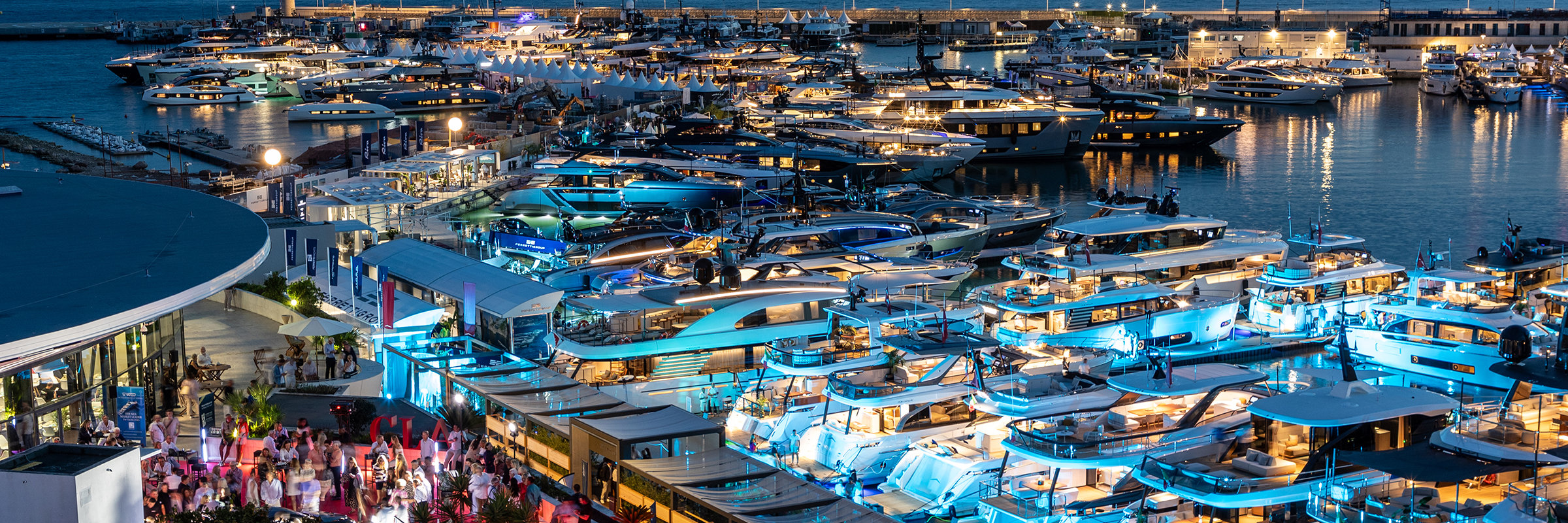
The gates open on September 8th. At six on the final evening, the horns sound across the bay, and the fleet begins to leave.