

The Center
of Everything
The category takes its name from where the helm sits. Born as a fishing boat, the center console has become something far more refined: fast, versatile and increasingly chosen by people who never cast a line.
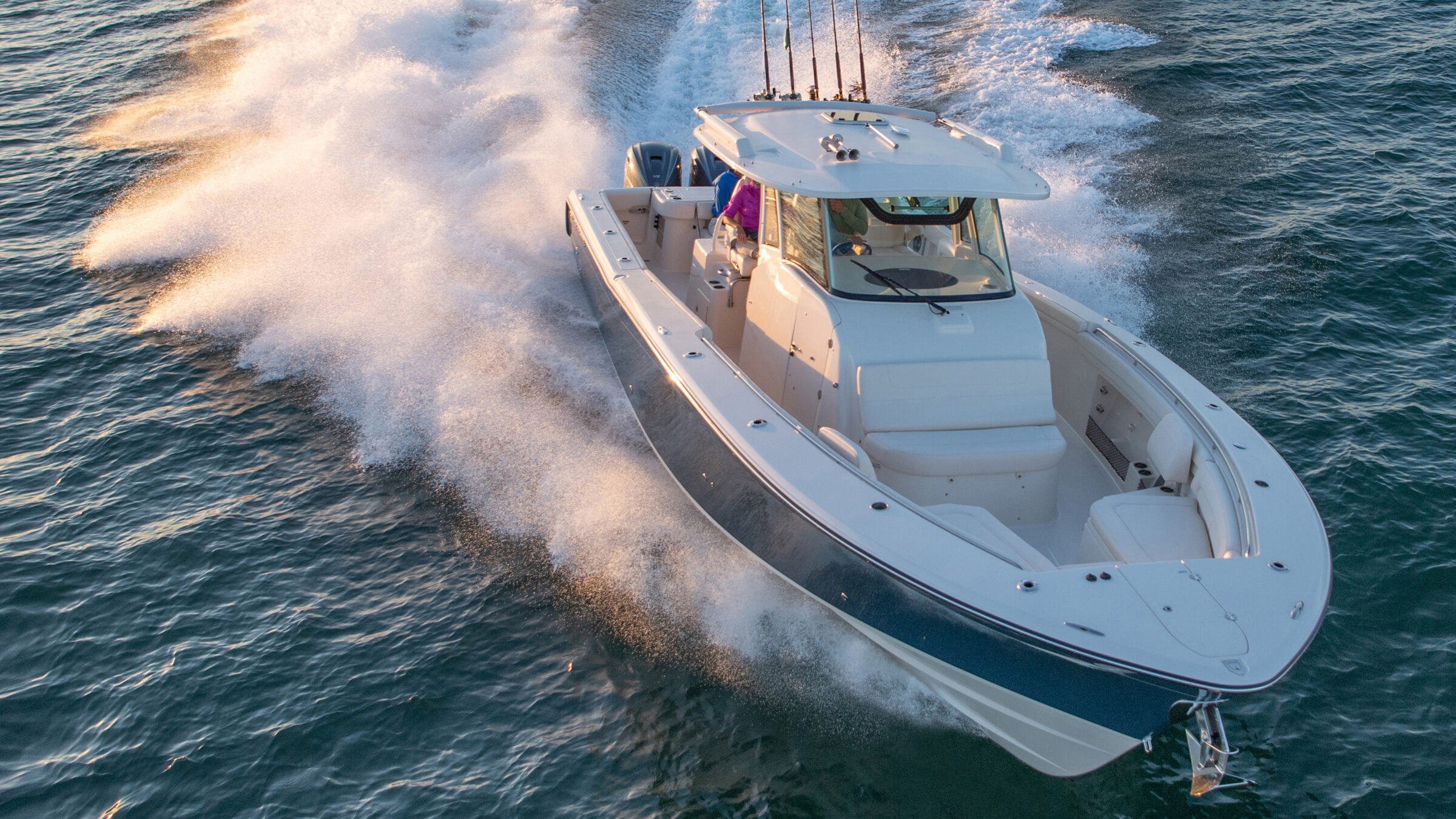
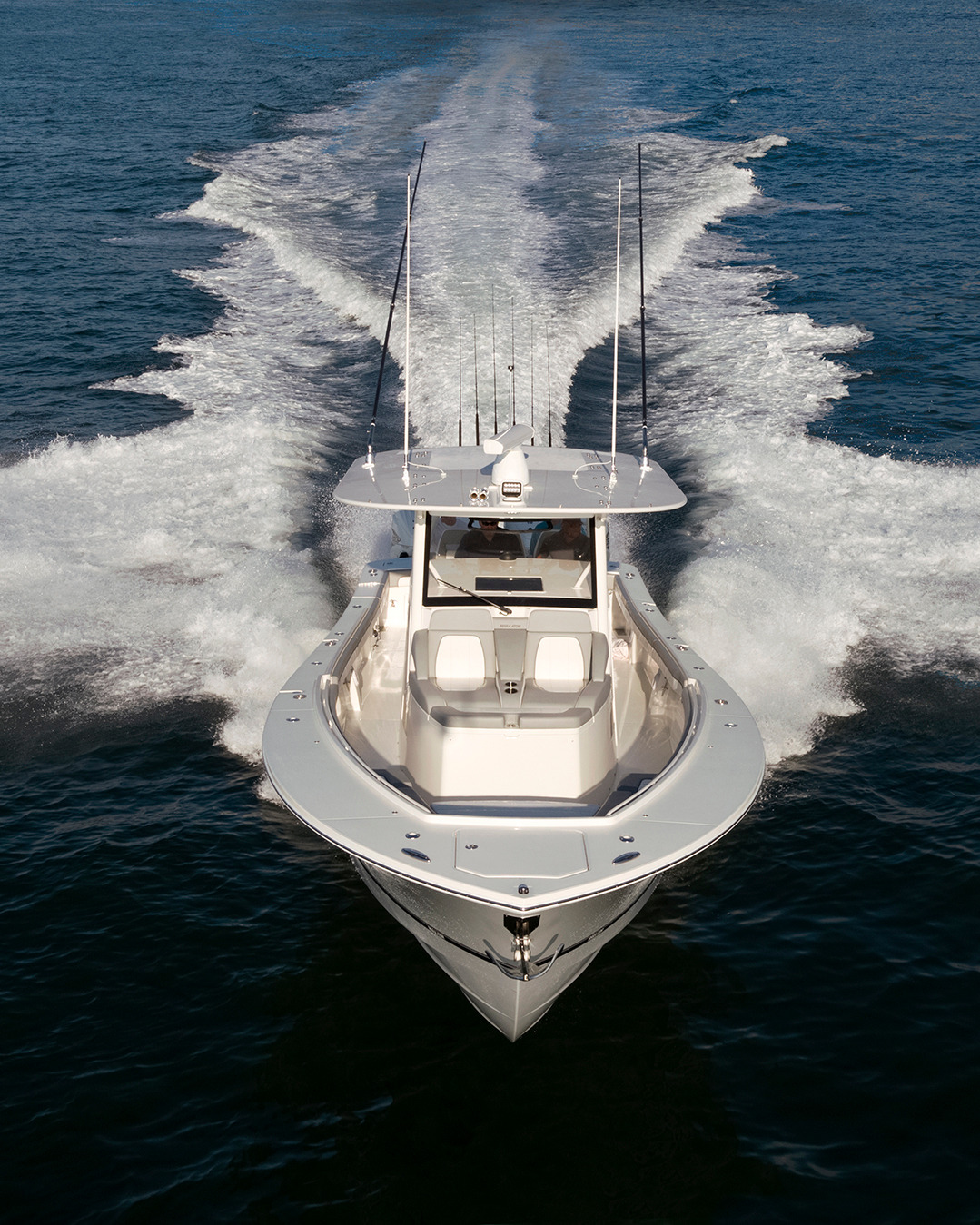
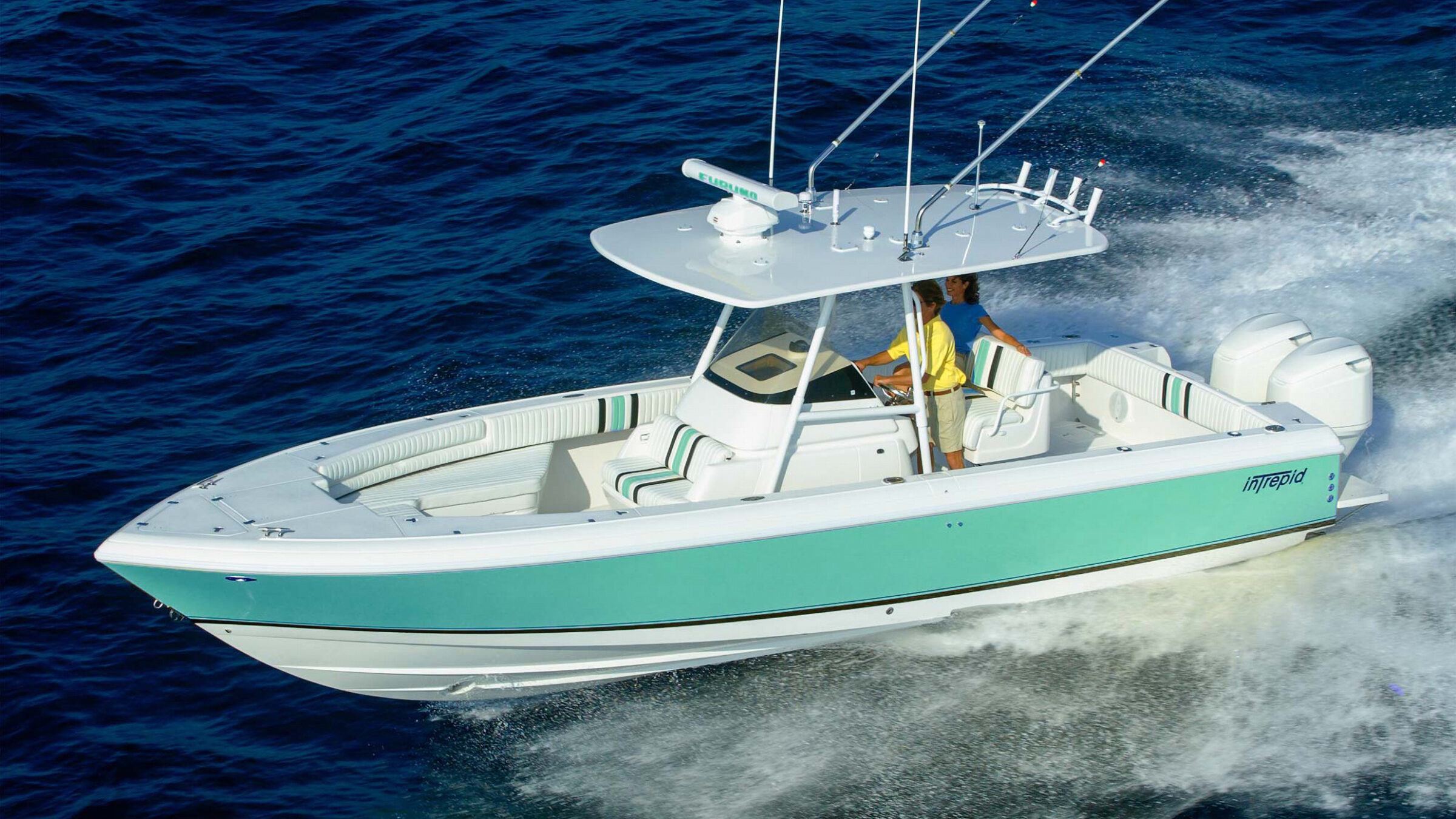
Move the helm to the middle of the boat and something simple happens: the whole deck, from bow to stern, becomes usable. The center console has been built on that idea ever since.
The category was born at Boston Whaler, the company Richard Fisher founded in 1958. The logic was hard to argue with. With the console set in the middle of the hull, an angler could circle the entire boat, and nothing stood between the deck and the water.
More than six decades later, that layout has outgrown its origins. Technology has transformed what these boats can do, and the people who buy them have changed just as much. What began as a practical answer to a fishing problem is now one of the most versatile platforms on the water.
Today the center console sits at an unusual crossroads: still the reference for serious fishing, and at the same time one of the most coveted boats for a fast, well-finished day with friends aboard.
The center console boat still starts with fishing
Fishing remains the heart of the segment, and today's models are better equipped for it than any of their predecessors. Rod holders have become carefully engineered systems, and pressurized livewells deliver a steady flow of water to keep bait alive while eliminating the sloshing that kills it.
Yet the people buying center consoles are changing. More and more of them want a fast, versatile, fully equipped boat for a day with friends, and fishing is only one part of that day, sometimes no part of it at all. Builders have answered with multipurpose versions designed for exactly those owners.
From workboat to object of desire
Center consoles once appealed almost exclusively to the traditional angler: an affordable boat, basic equipment, no pretension. It could fish all day and be rinsed clean at the dock in fifteen minutes.
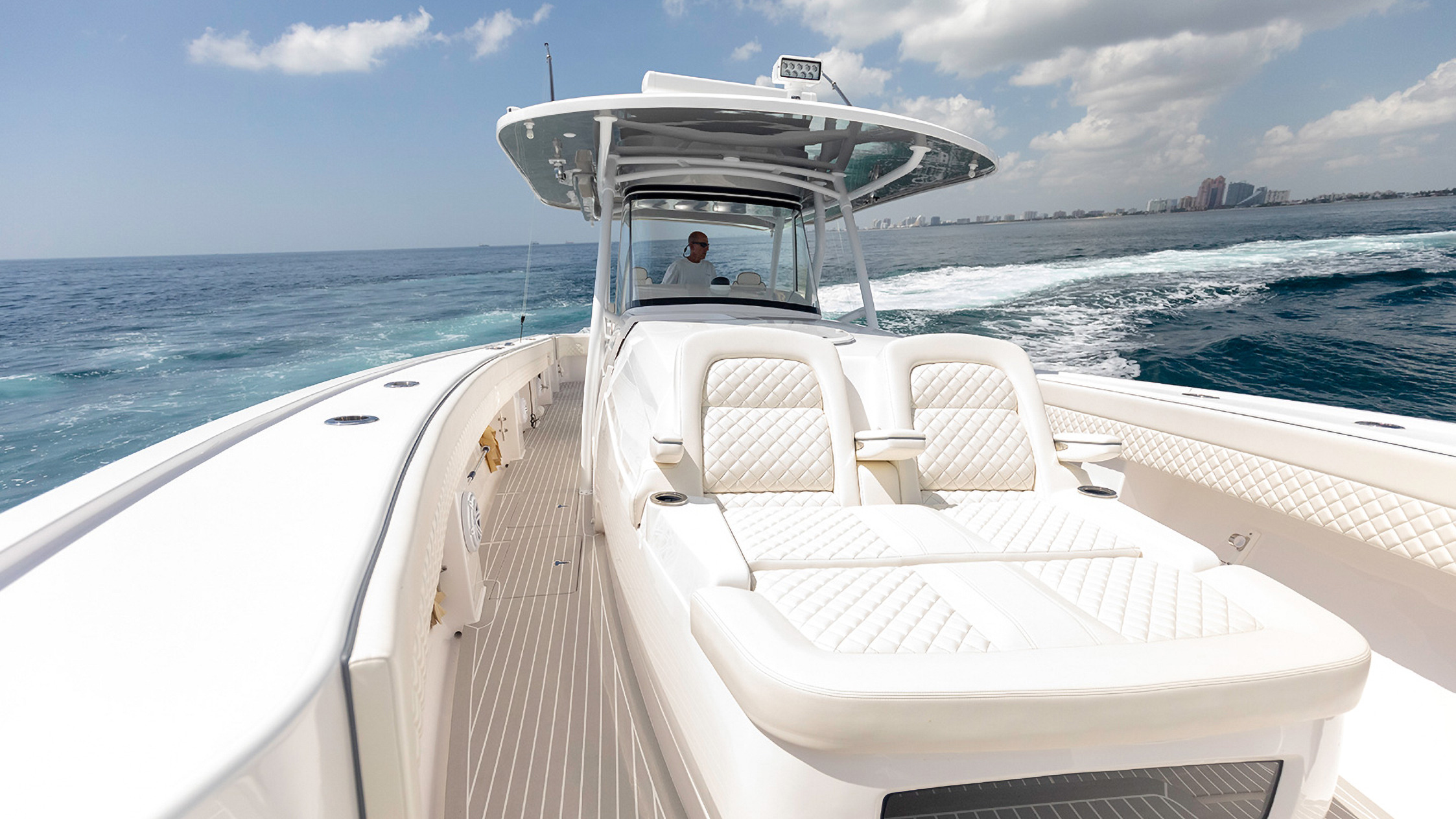
Expectations have moved on. Across today's range of sizes, buyers share a few traits: attention to detail, a demand for better finishes and the wish for a boat that performs well in a wider range of conditions. A boat, after all, can be functional, versatile and fast, and still be beautiful.
The center console stopped being only a fishing boat the moment people saw how much boat it left free.
USA Onboard EditorialWho buys a center console now
Owners who do not fish are a growing share of the market. They choose the center console for its speed, its open deck and the ease of moving around it with friends aboard.
Owners of larger yachts are moving to boats they can run with little or no crew, drawn by simpler, less costly maintenance and a more direct relationship with the water.
Younger buyers, oriented toward life outdoors, value how easy a center console is to handle and how many different days it can deliver.
More room below, within limits
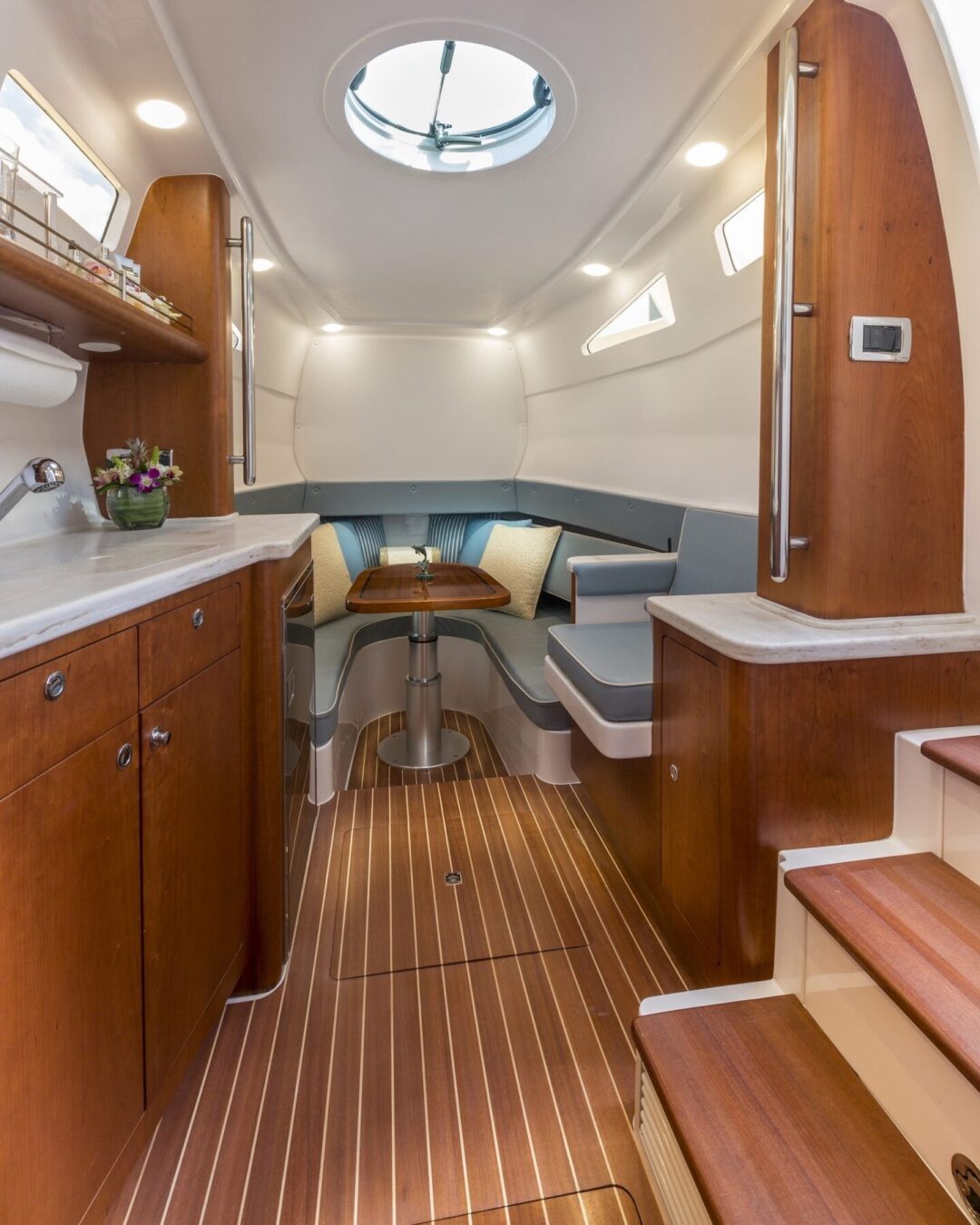
The largest center consoles now offer real cabins, with a galley and a dinette tucked beneath the console. It is a long way from the bare hulls of the early years.
Even so, the space remains modest next to a cabin cruiser of the same length, and below 30 feet the accommodations tend to be small and not especially comfortable. On a center console, the deck is still the main room.
How large can a center console get?
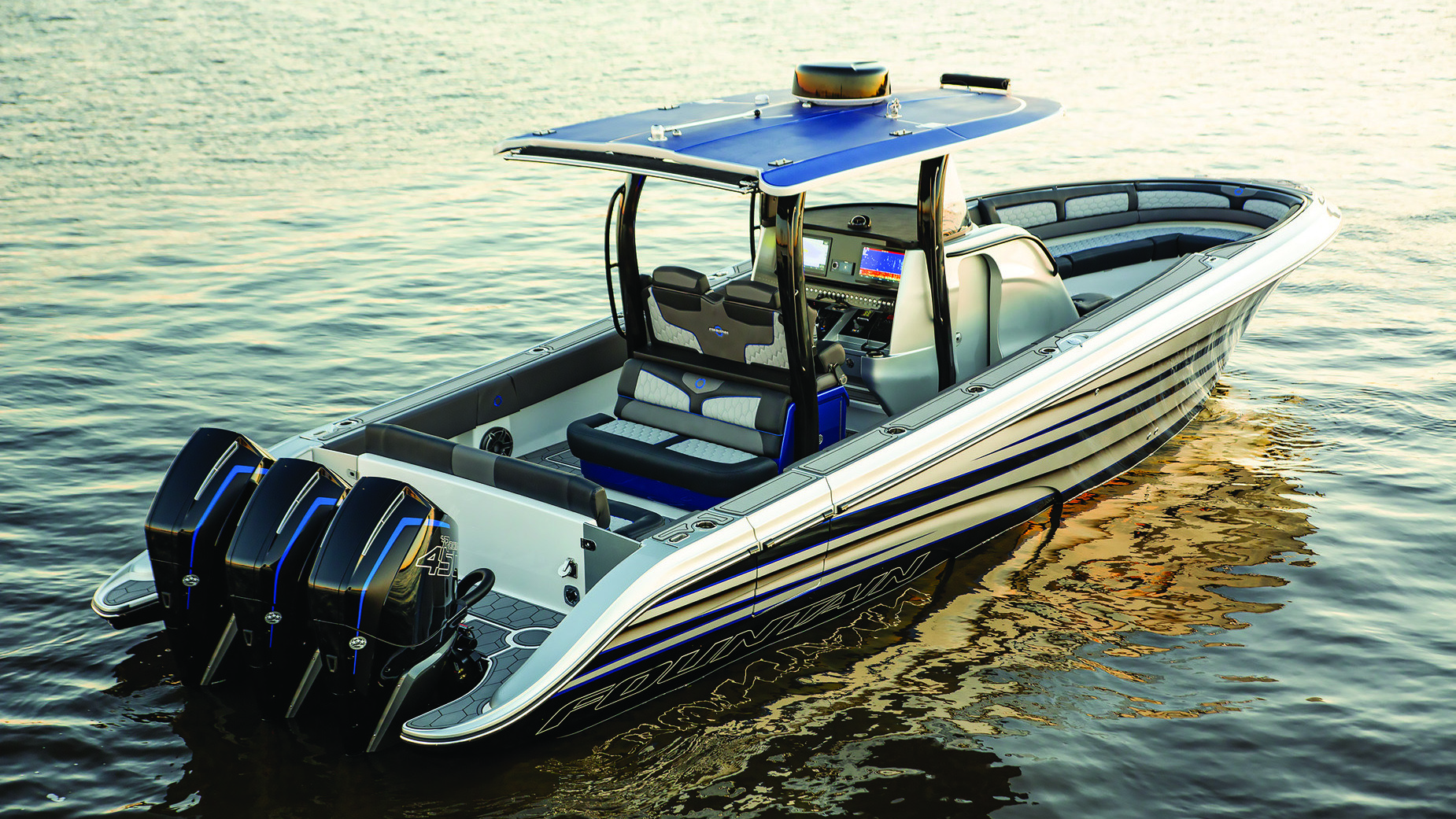
The category keeps growing, and builders have already passed the 60-foot mark: HCB presented its 65 Estrella in 2018 with five outboards on the transom. The constraint seems less a matter of demand than of mechanics: how many outboards a transom can carry, and how much power each one can deliver.
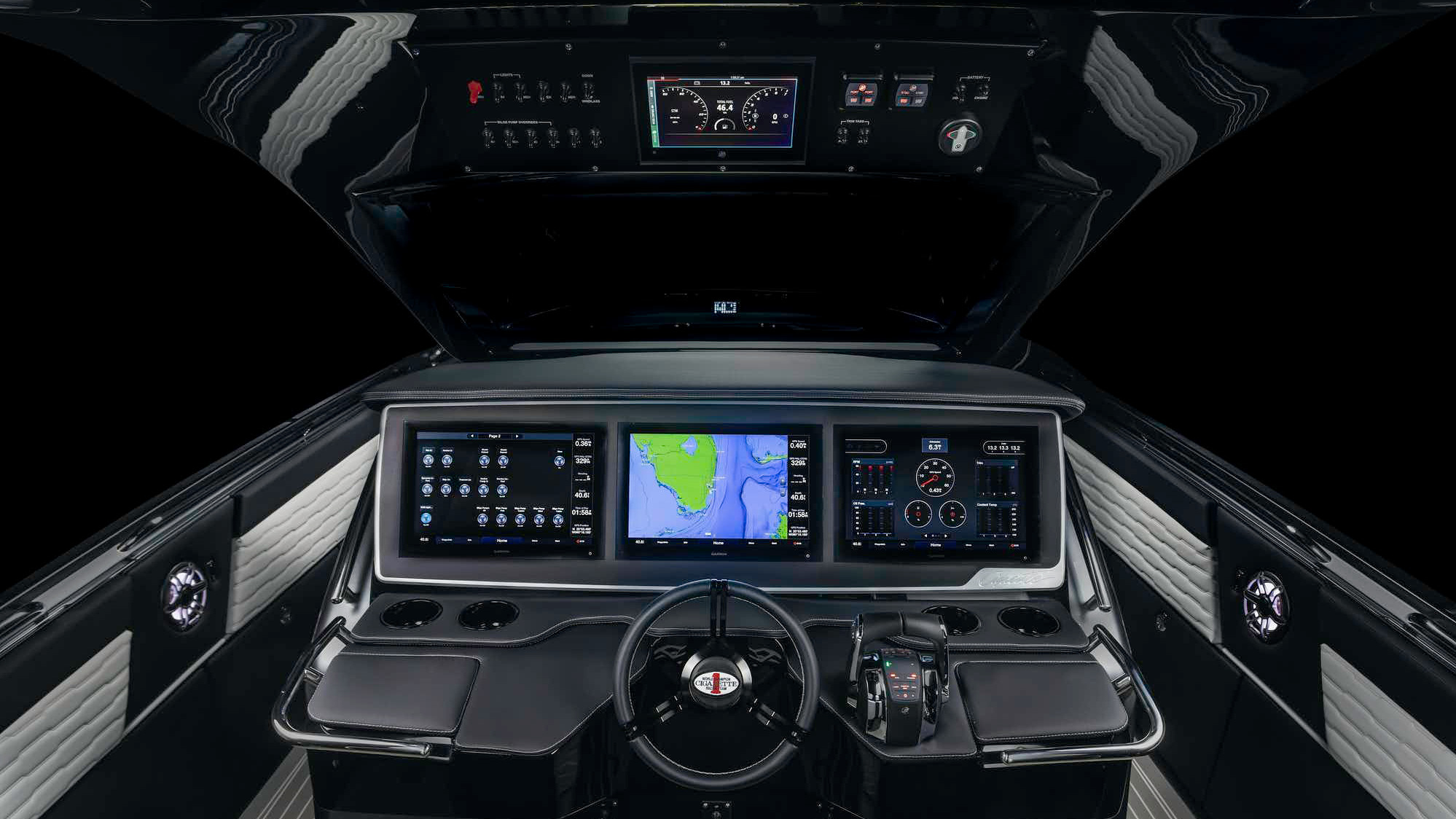
That is also why advances in outboard engines have redrawn the category. More powerful, more refined outboards have made center consoles faster and more capable, while deep-V hulls keep them safe and engaging when the sea picks up.
Is a center console right for you?
A 360-degree view from the helm, with no blind spots when fishing or coming alongside a dock.
The same field of view lets the skipper keep an eye on everyone aboard while under way.
Free movement from bow to stern and from port to starboard while fighting a fish.
Quick to clean, and in many sizes easy to trailer, which simplifies repairs and dry storage through the winter.
Modern outboards and deep-V hulls deliver speed and a confident ride.
Even the largest offer less room than a cabin cruiser of the same length; under 30 feet, space is tight.
Little protection from strong sun, rain or spray from an unexpected sea.
Ample room for ice and catch, but little for larger gear unrelated to fishing.
A small yacht, open to the sky
Once rudimentary and basic, the center console has settled into a privileged place in the industry: something close to a small luxury yacht, more functional and more versatile, still built around the open deck that defined it from the start.
Its success has no single secret. It is the sum of a layout that never stopped making sense and a market that keeps finding new reasons to choose it.
A helm in the middle and a deck open on every side: the simple idea that turned a fishing boat into one of the most desired platforms on the water.