

Cannes Yachting Festival 2026 · The Wrap
Where the Season Begins
Six days, two harbors and nearly 150 world premieres.
The 49th edition closed with a clear reading of where luxury boating stands right now: fewer isolated technology promises, more boats conceived as places to live.
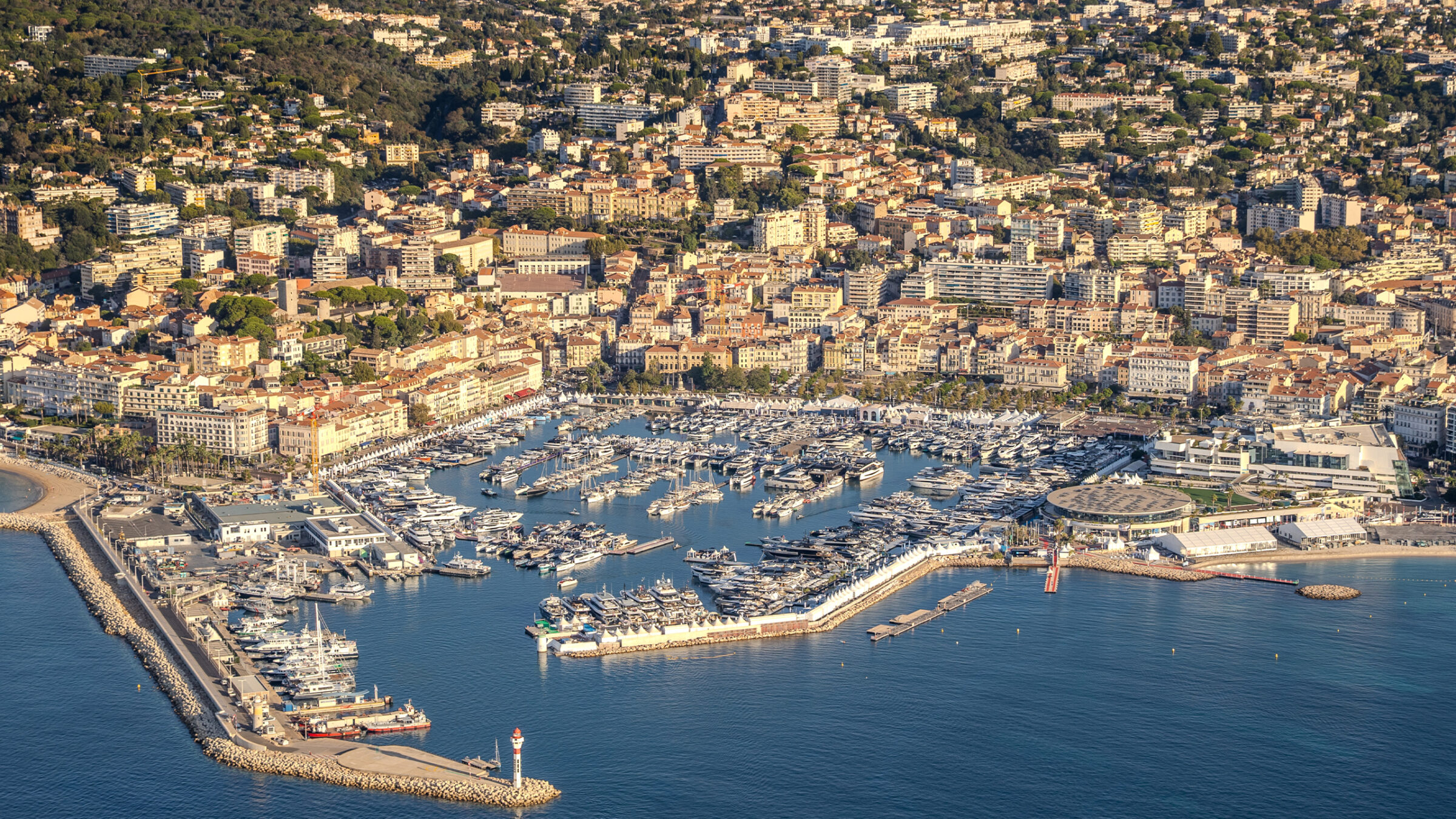
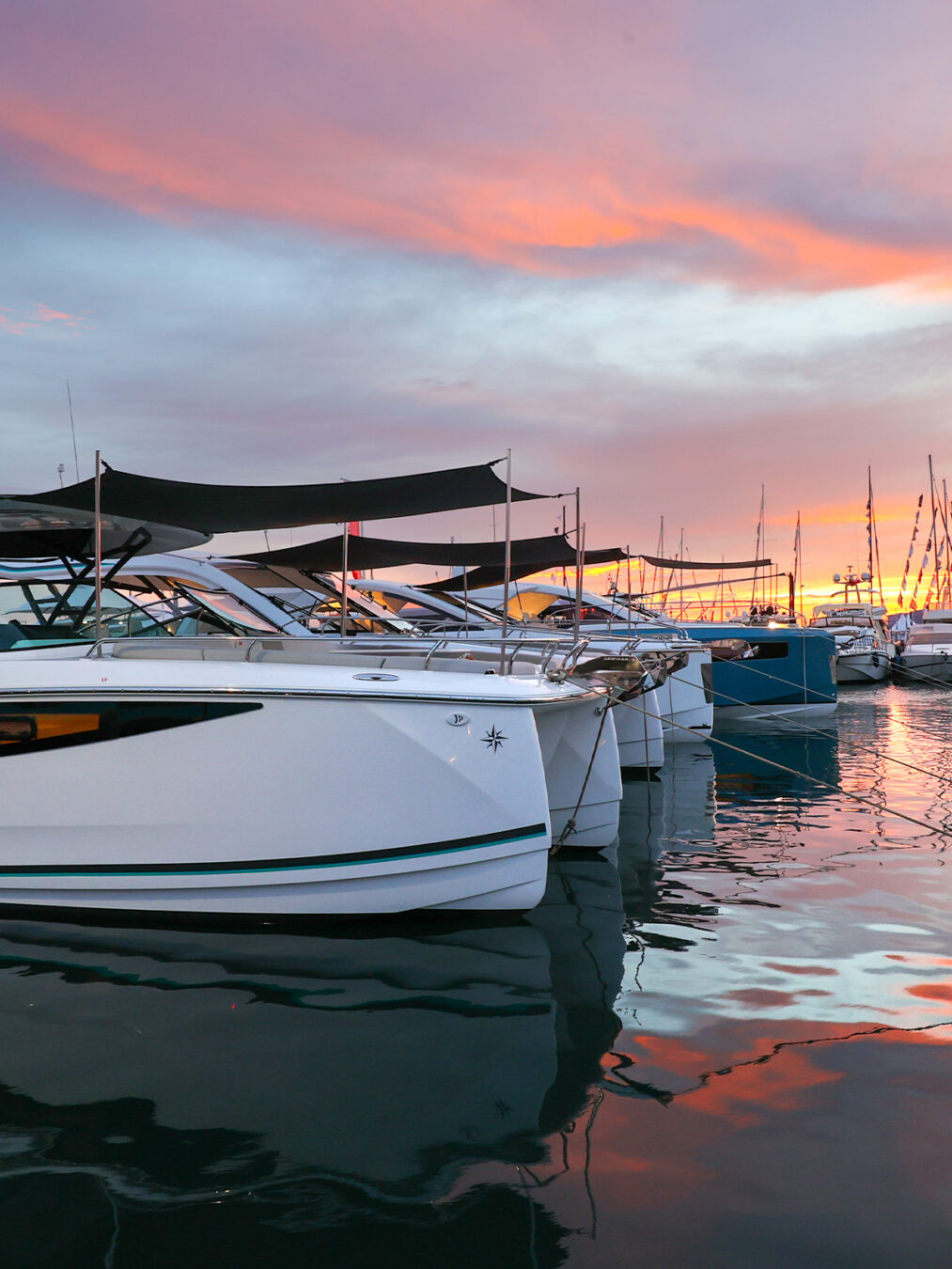
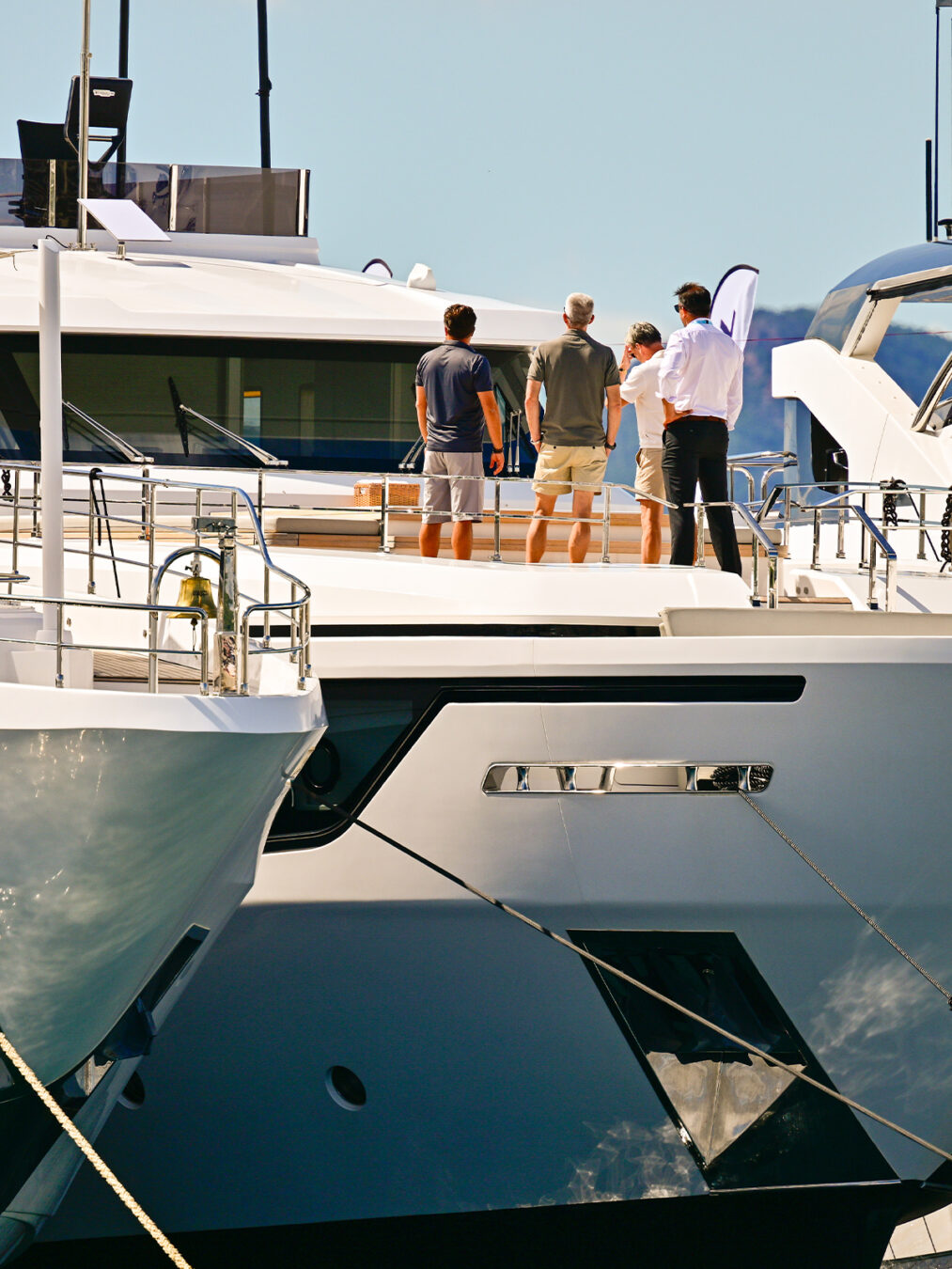
Cannes has a particular way of receiving the boating world. It does not step aside to make room, it absorbs. For six days in September, the Vieux Port and Port Canto stop being two anchorages separated by a strip of coastline and start behaving as a single organism, stitched together by shuttles crossing the bay every fifteen minutes and by a steady flow of people stepping on and off other people's decks with the ease of someone touring open houses.
From September 8 to 13, the 49th edition brought together 660 exhibitors and 700 boats from 5 to 55 meters across 100,000 m² of net exhibition space. Close to 150 of them were shown for the first time anywhere. Organizers counted 56,000 international visitors and 720 journalists from 45 countries, numbers that explain why the show still works as the formal opening of the international boating season.
It was also the first edition under Constance Brément, who took the job with a balancing mandate: preserve the event's DNA while raising the quality of the experience, its international reach and its role as a showcase for the transformations running through the sector.
Two harbors, two temperaments
Numbers on their own say little. What organizes the reading of an edition like this one is geography.
The Vieux Port held the motor side. From the Jetée to the Quai Max Laubeuf, by way of the Quai Saint Pierre, the Pantiero and the Palais des Festivals, 360 boats from 12 to 50 meters lined up alongside stands from engine builders, equipment manufacturers, design studios, marinas and service companies. At the center of the harbor, the Power Cat Village gathered around thirty power catamarans, a category that a decade ago barely justified a space of its own.
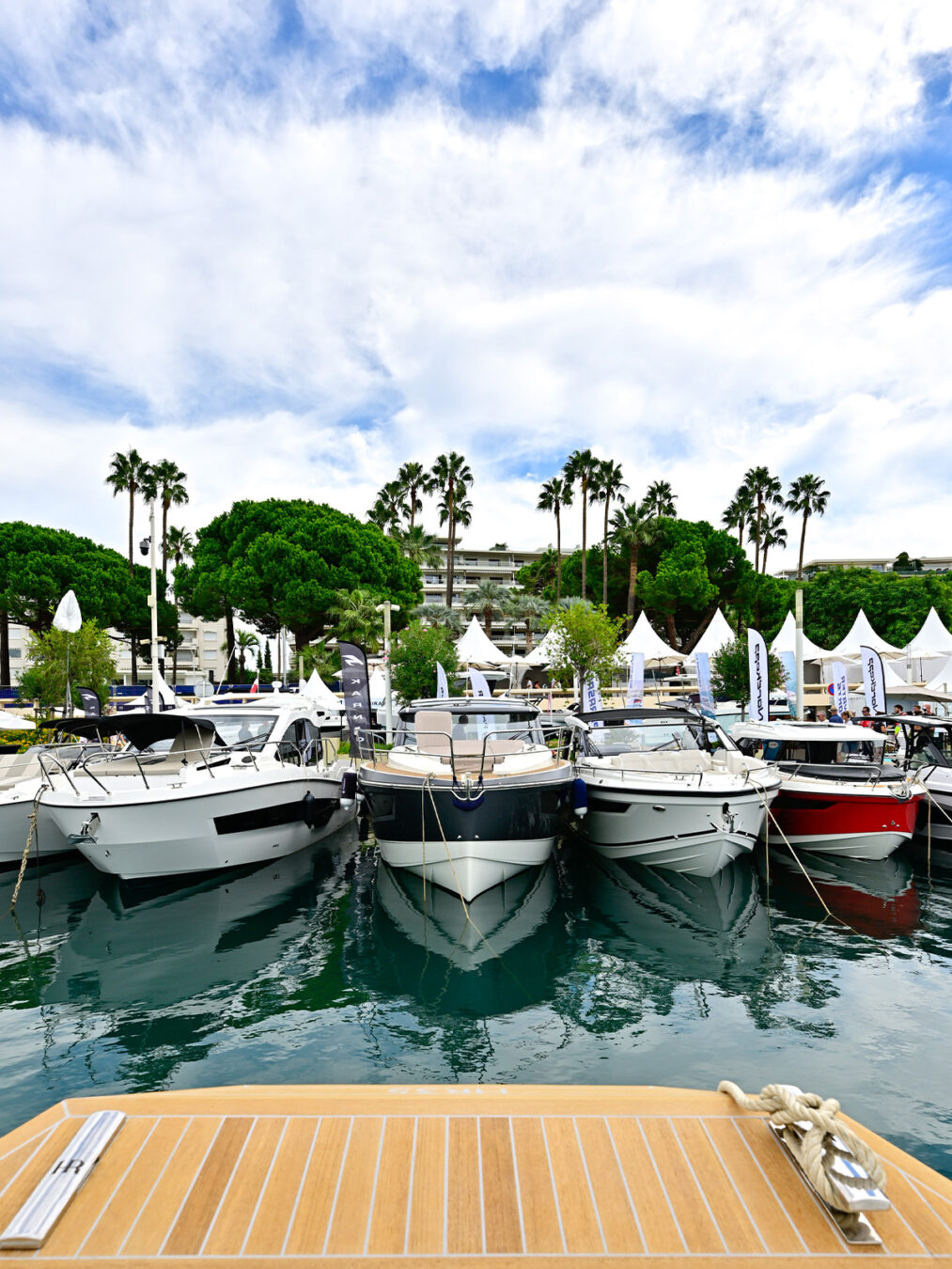
Port Canto took the remaining 340 and a different logic. The Sailing Area presented 120 new sailing boats over 10 meters, monohulls and multihulls alike. The Power Boat Marina gathered 180 boats up to 13 meters, dayboats and rigid inflatables included. The Yacht Brokerage Area showed close to 45 pre-owned yachts over 25 meters, and the Toys Area rounded out the circuit with the gear that now defines a good part of the onboard experience.
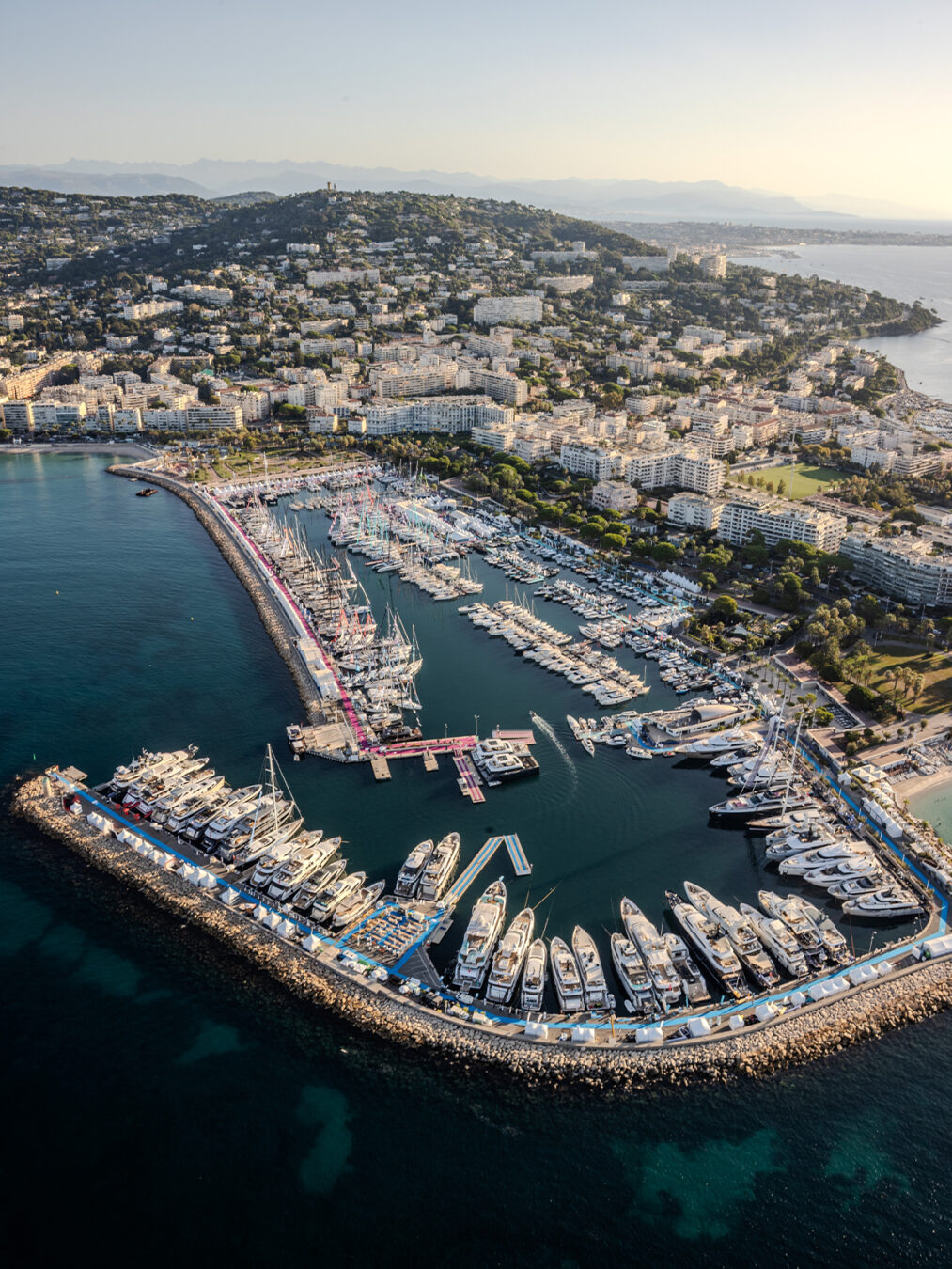
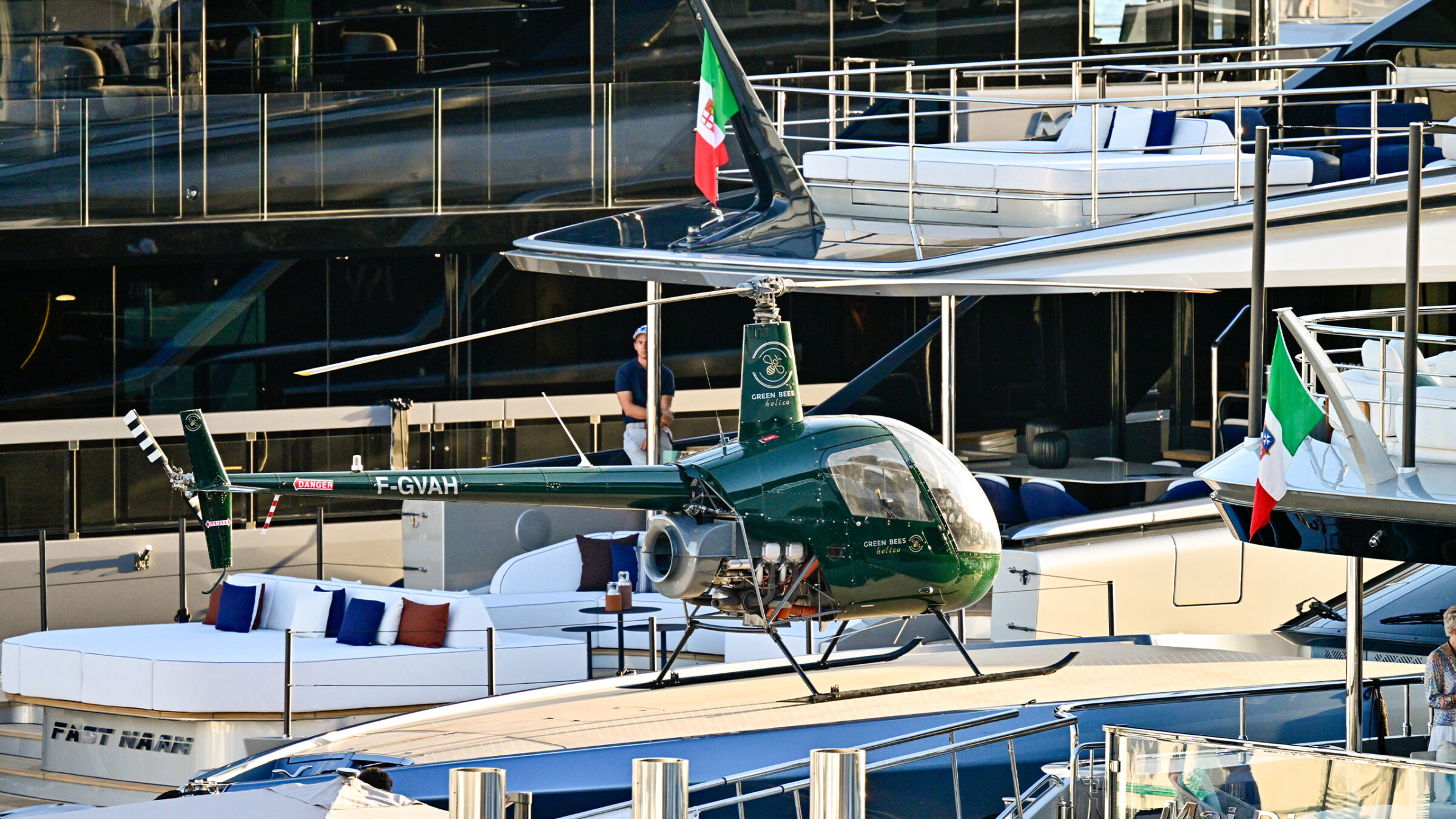
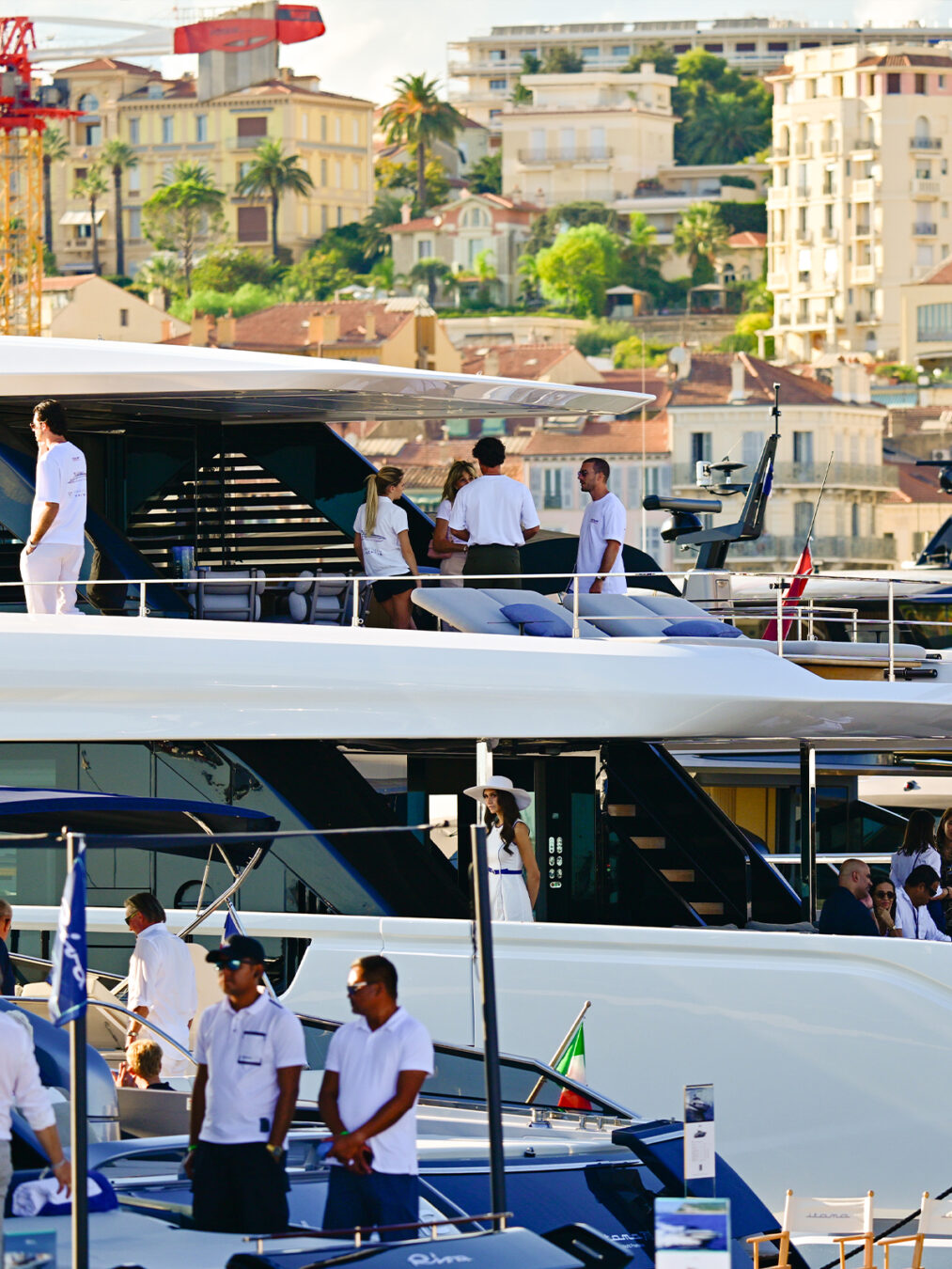
The crossing between the two harbors is made by water, and it is part of the exhibition in its own right. Nothing explains the scale of an in-water show better than seeing it from the outside, in motion, with the fleet turned into a grid across the bay.
That logistics is not a decorative detail. One fleet of service boats moves visitors between the two harbors, another guides the exhibited vessels on their approach to the docks, and a third supports the maritime program across the six days. Staging a show on the water demands a naval operation of its own, invisible to anyone walking the decks and decisive in getting everything there on schedule.
What follows is a reading of that grid: the debuts that actually moved something, the way sustainability stopped being announced and started being installed, the material that marked this year's technical jump, and an idea of luxury that is no longer measured in cubic meters.
02 · The debuts
Nearly one hundred fifty first times
A show with 150 world premieres is not walked. It is filtered.
Most of those presentations are careful evolutions of platforms that already work and that, far from being a flaw, is the clearest sign of a mature market. But a handful of boats moved something real.
Ferretti Group, with the artillery in order
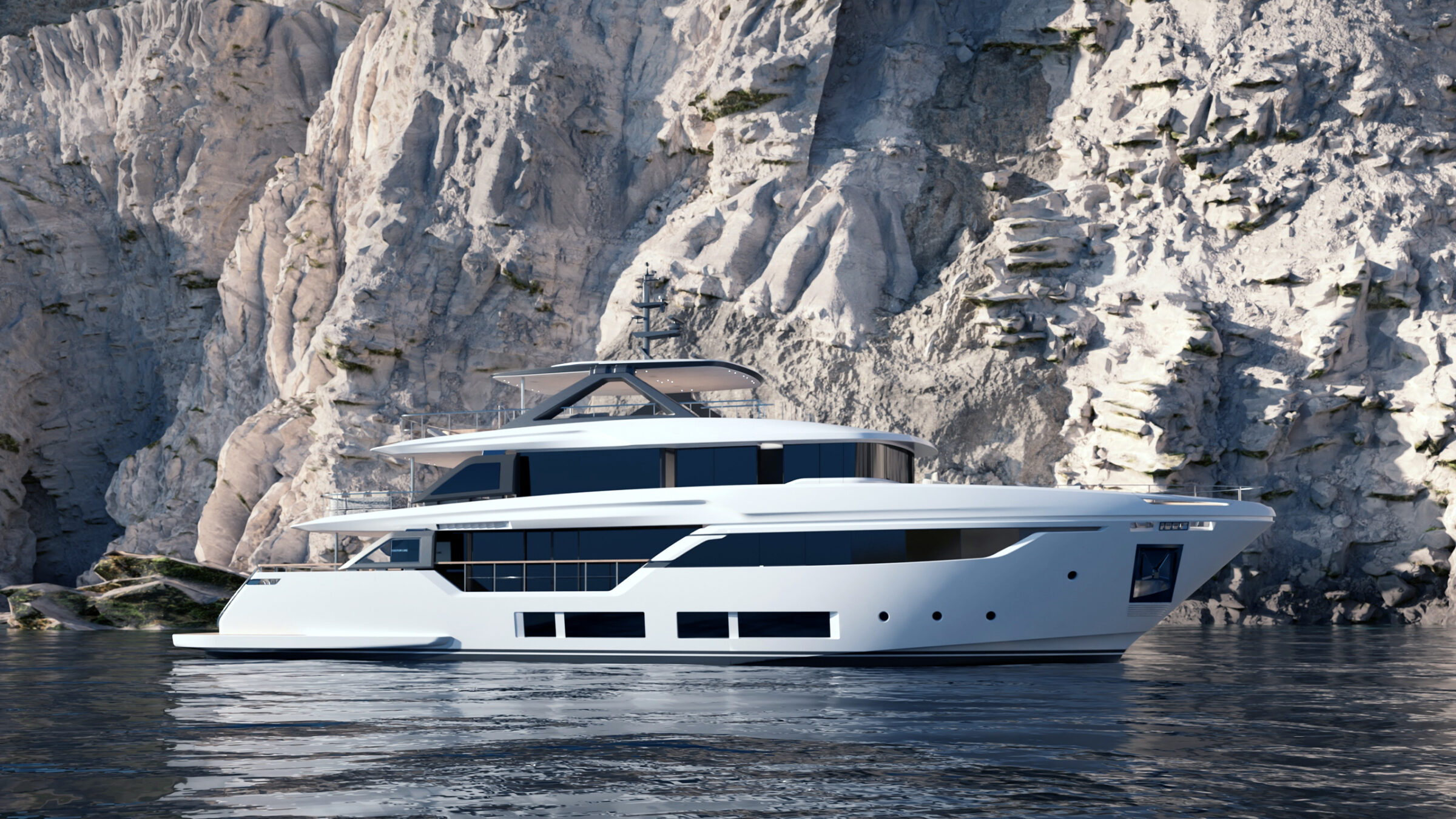
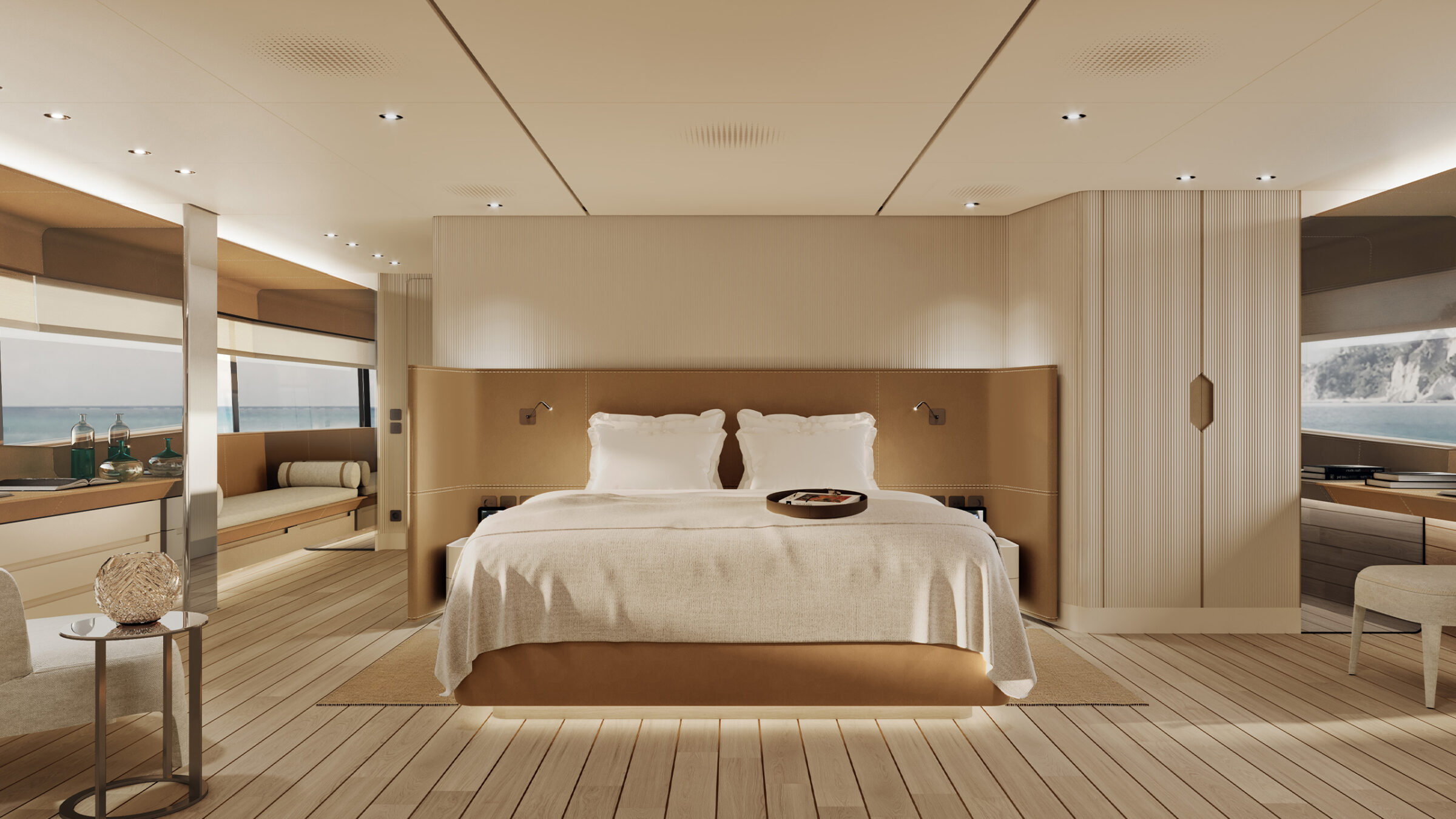
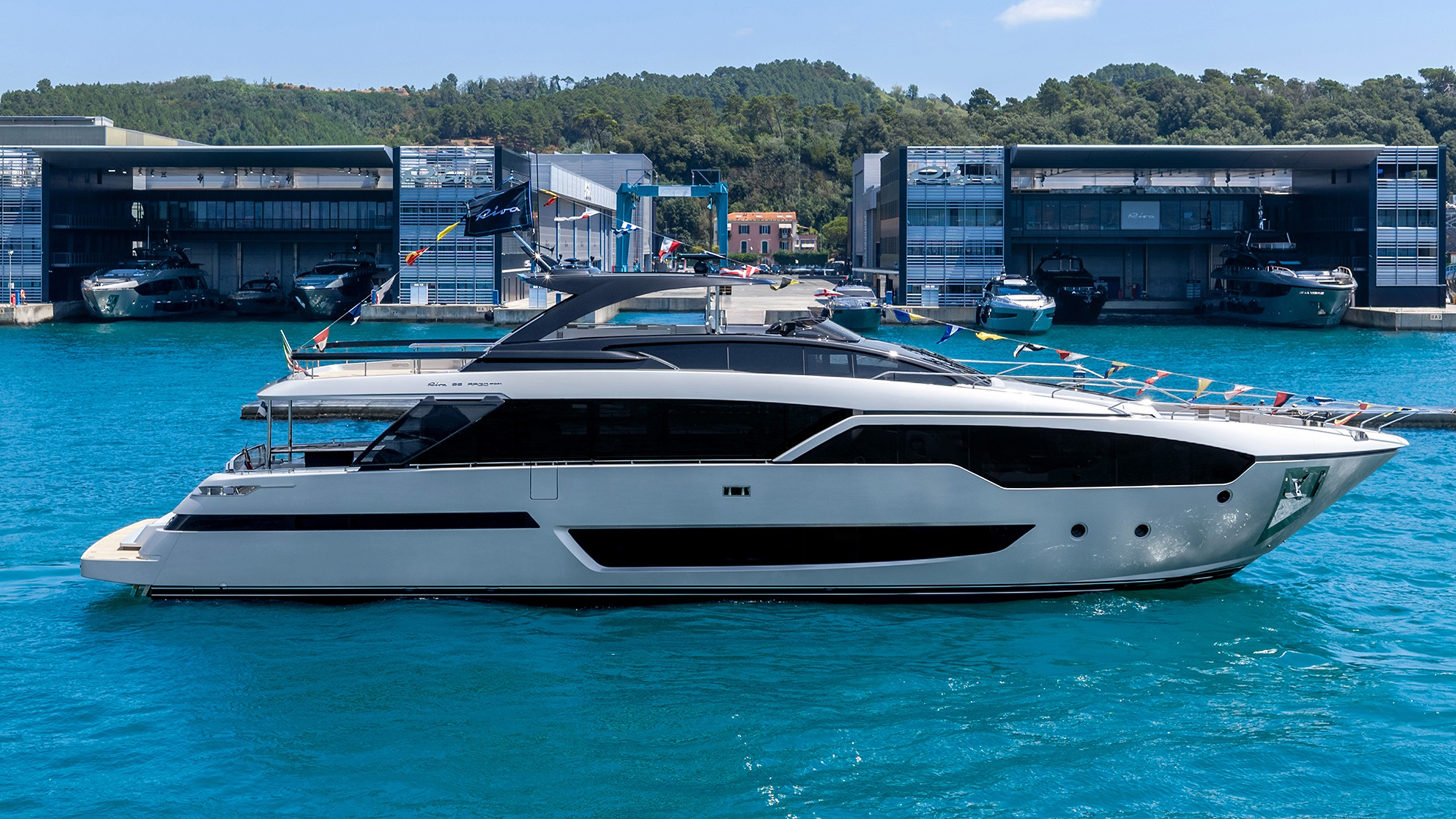
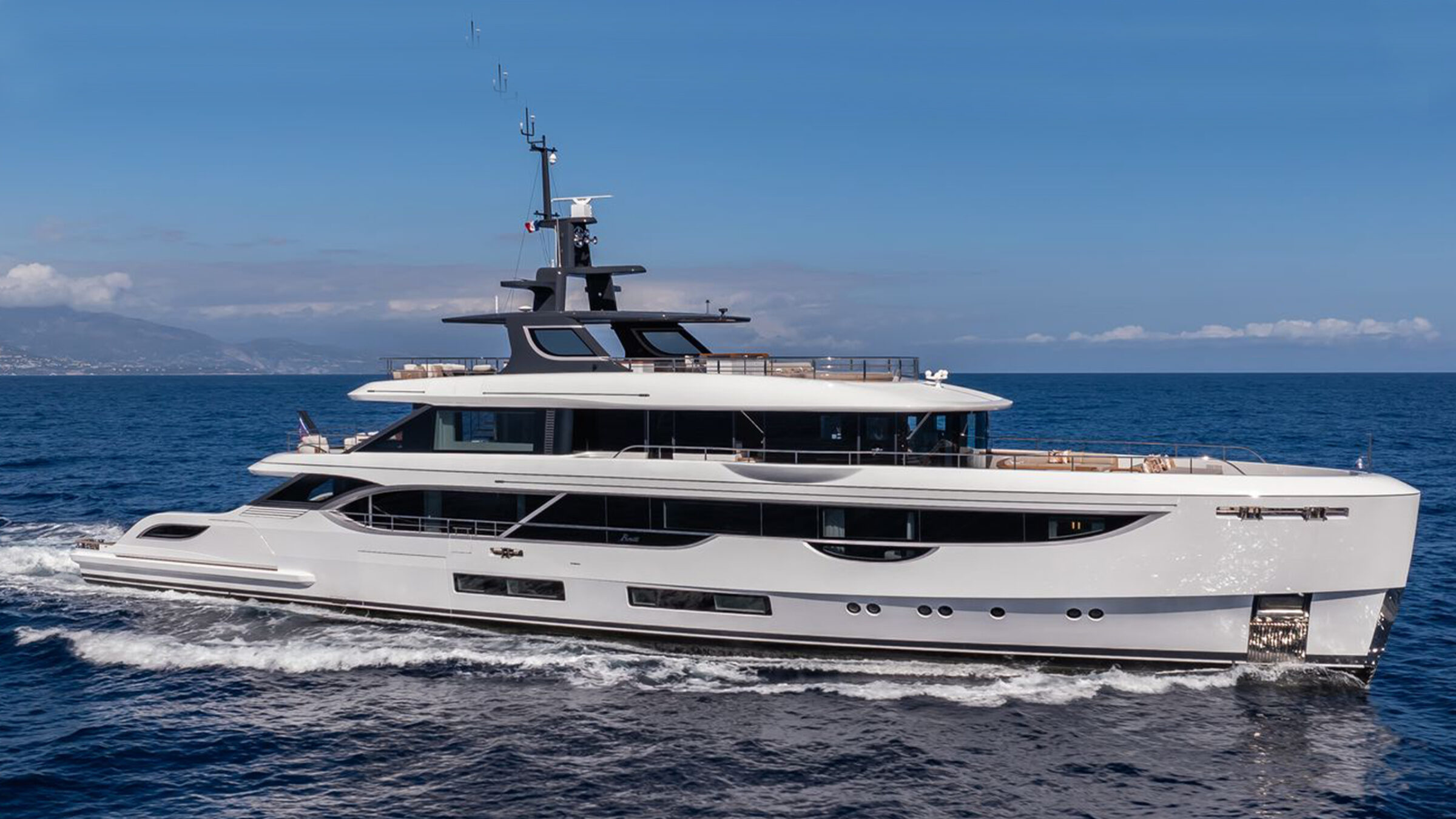
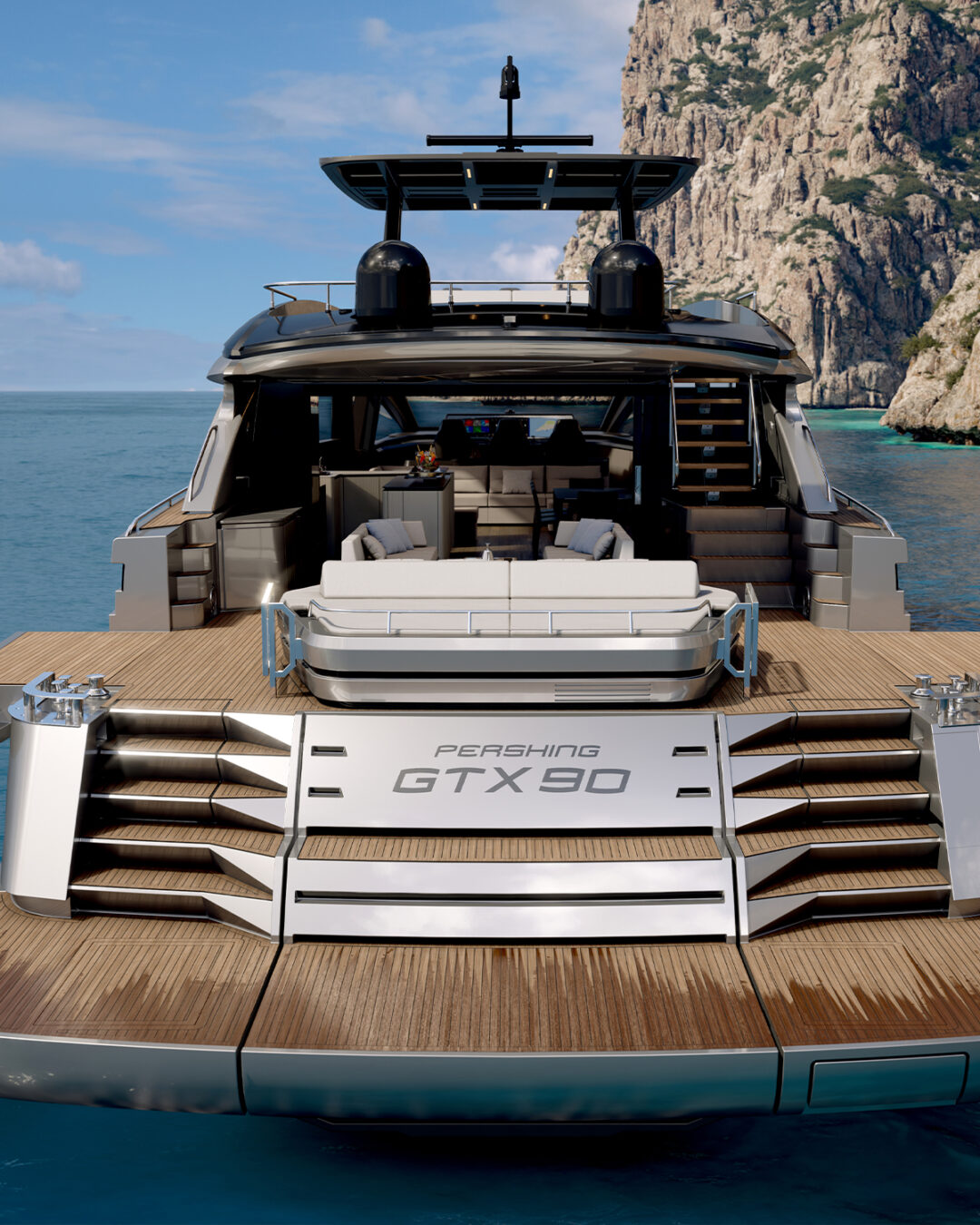
The Custom Line Navetta 35 was the heaviest debut of the show: 34.5 meters of tri-deck with exteriors by Filippo Salvetti and interiors by ACPV Architects, offered with MAN V12 power at 1,400 horsepower or Caterpillar C32 at 1,622. Alongside it, the Riva 96' Argo Super added a new flybridge to the top of the house range, the Pershing GTX90 took the sportbridge concept to ninety feet, and the Itama 70 completed the front with the low, taut line that has defined the brand from the start.
Azimut, beyond the prize
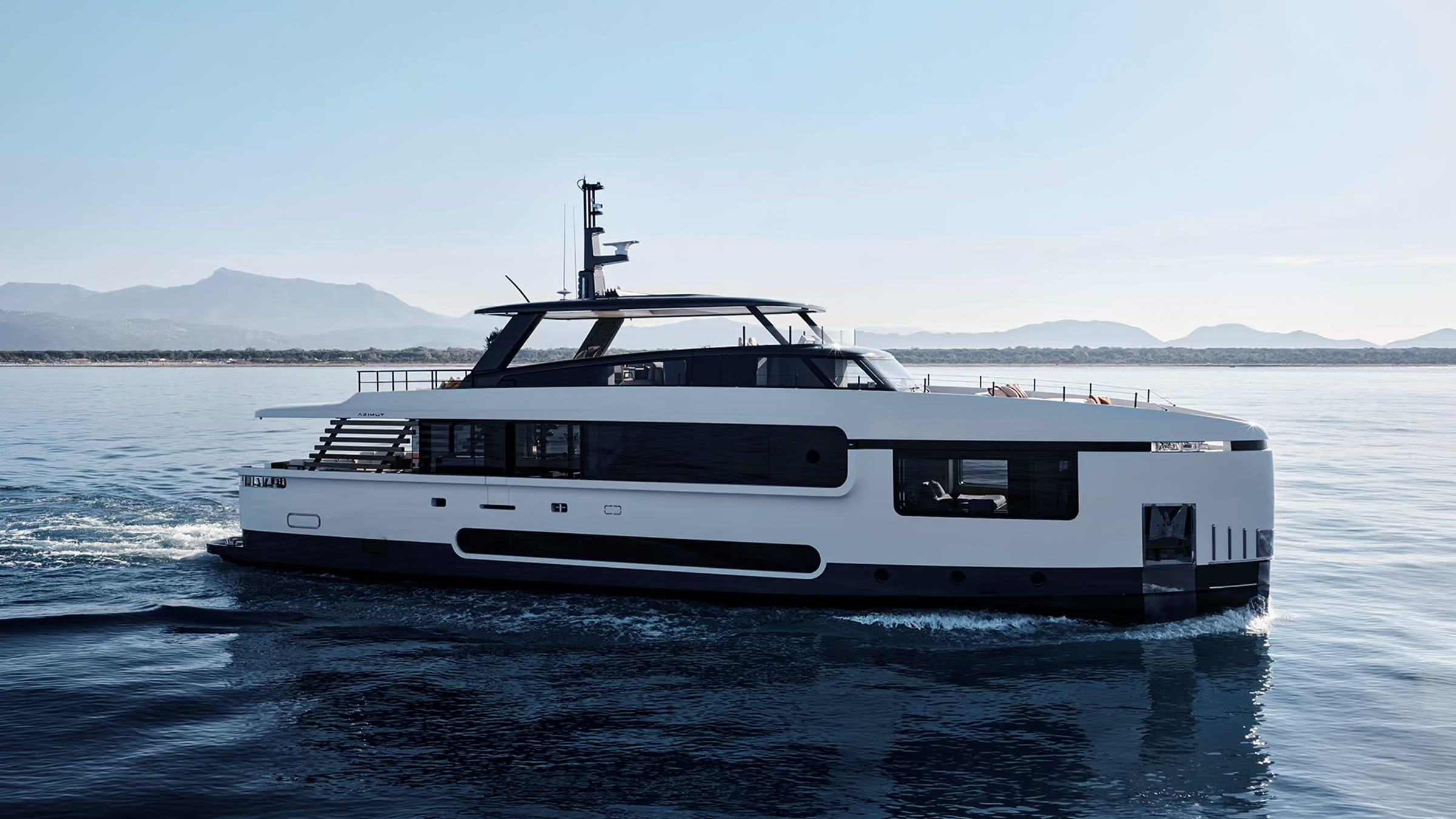
Azimut took the Special Jury Prize with the Grande 44M, but it also presented the Magellano 27M, its first collaboration with designer Jarkko Jamsen and with interiors signed by Michele De Lucchi. It is an unusual crossing: a hull built for long passages resolved by a studio that comes out of top tier Italian industrial and architectural design. The result is not after the immediate effect. It is the kind of boat that reads better on the third visit than on the first.
Turkey, back at the center
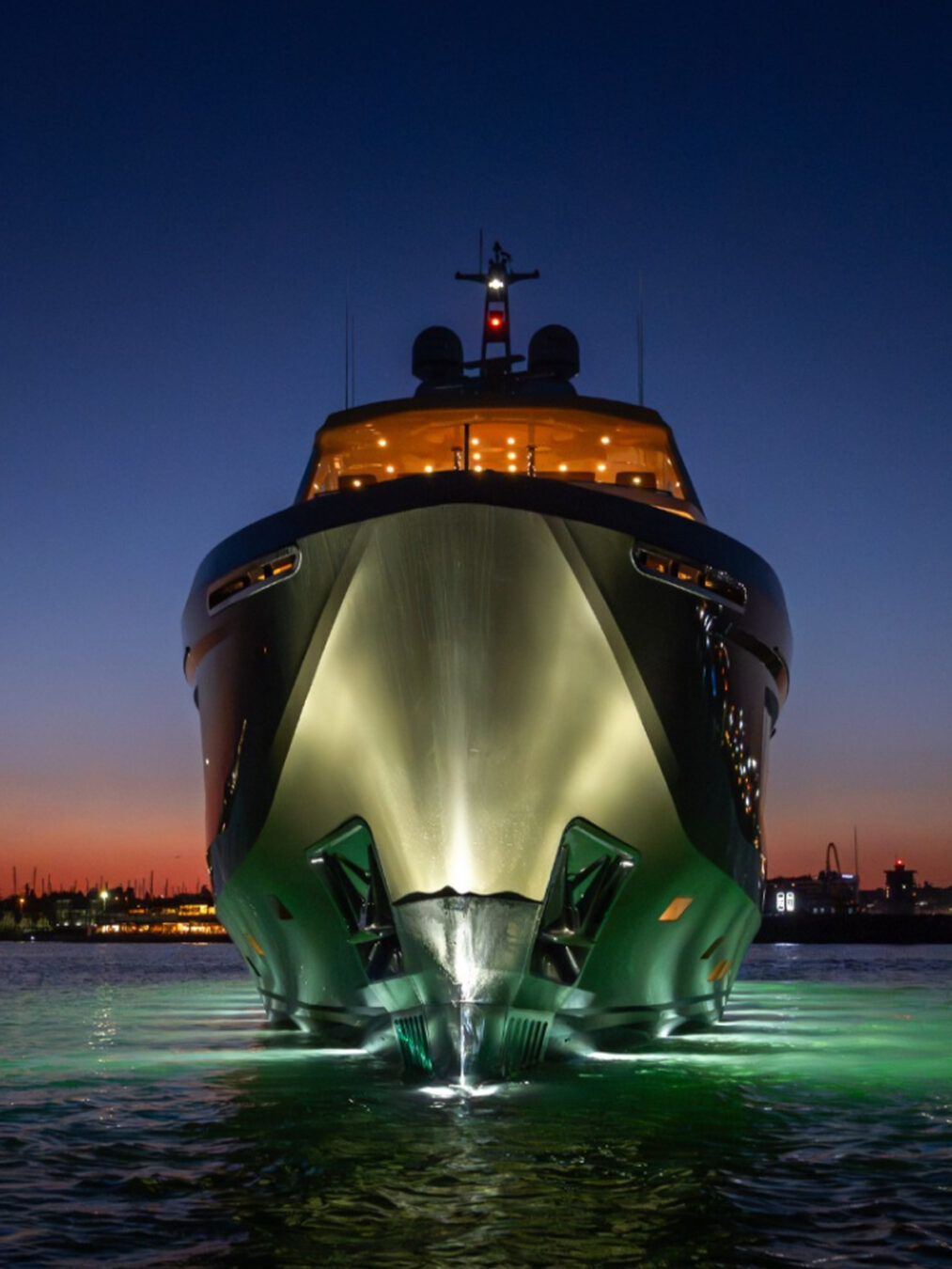
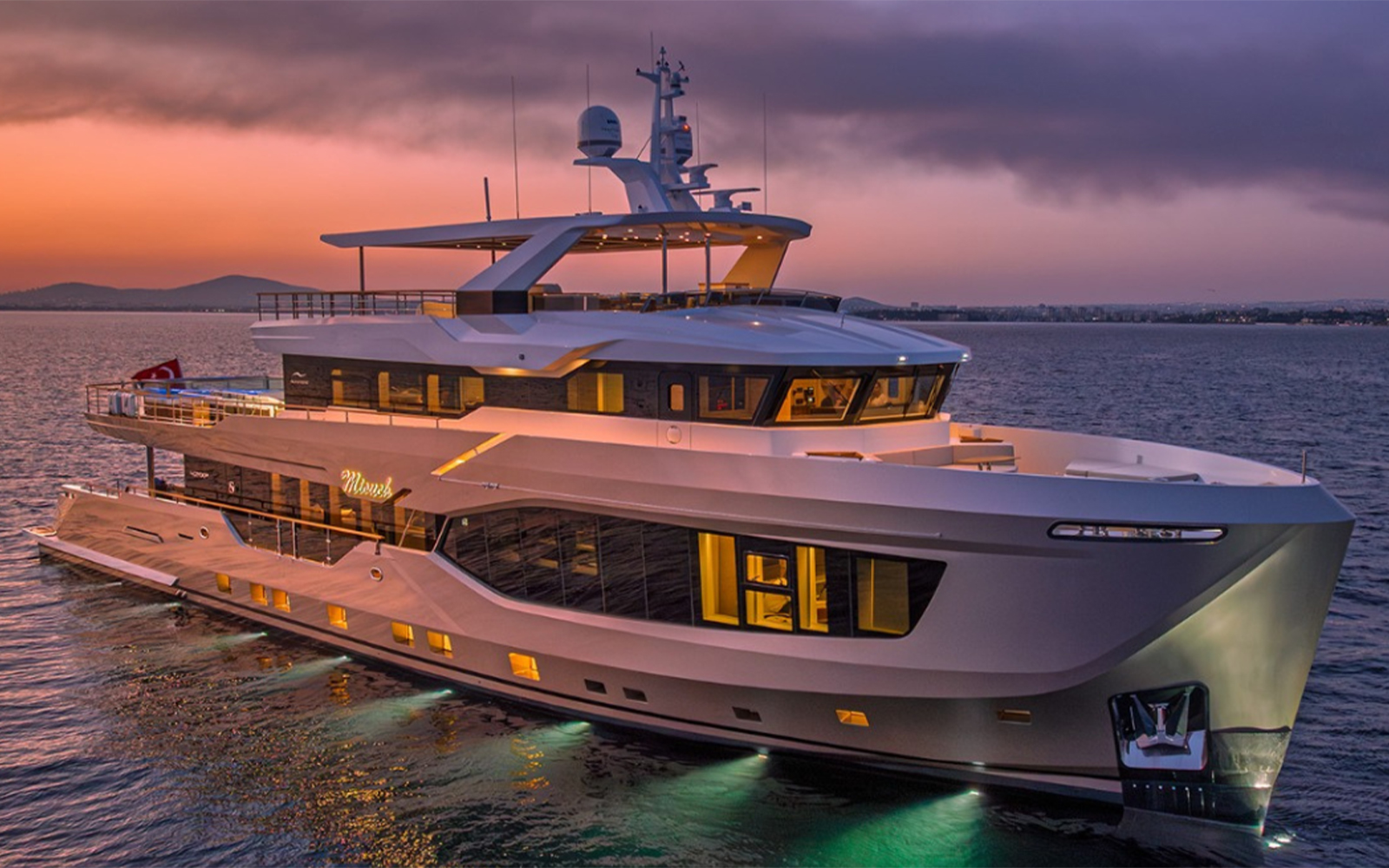
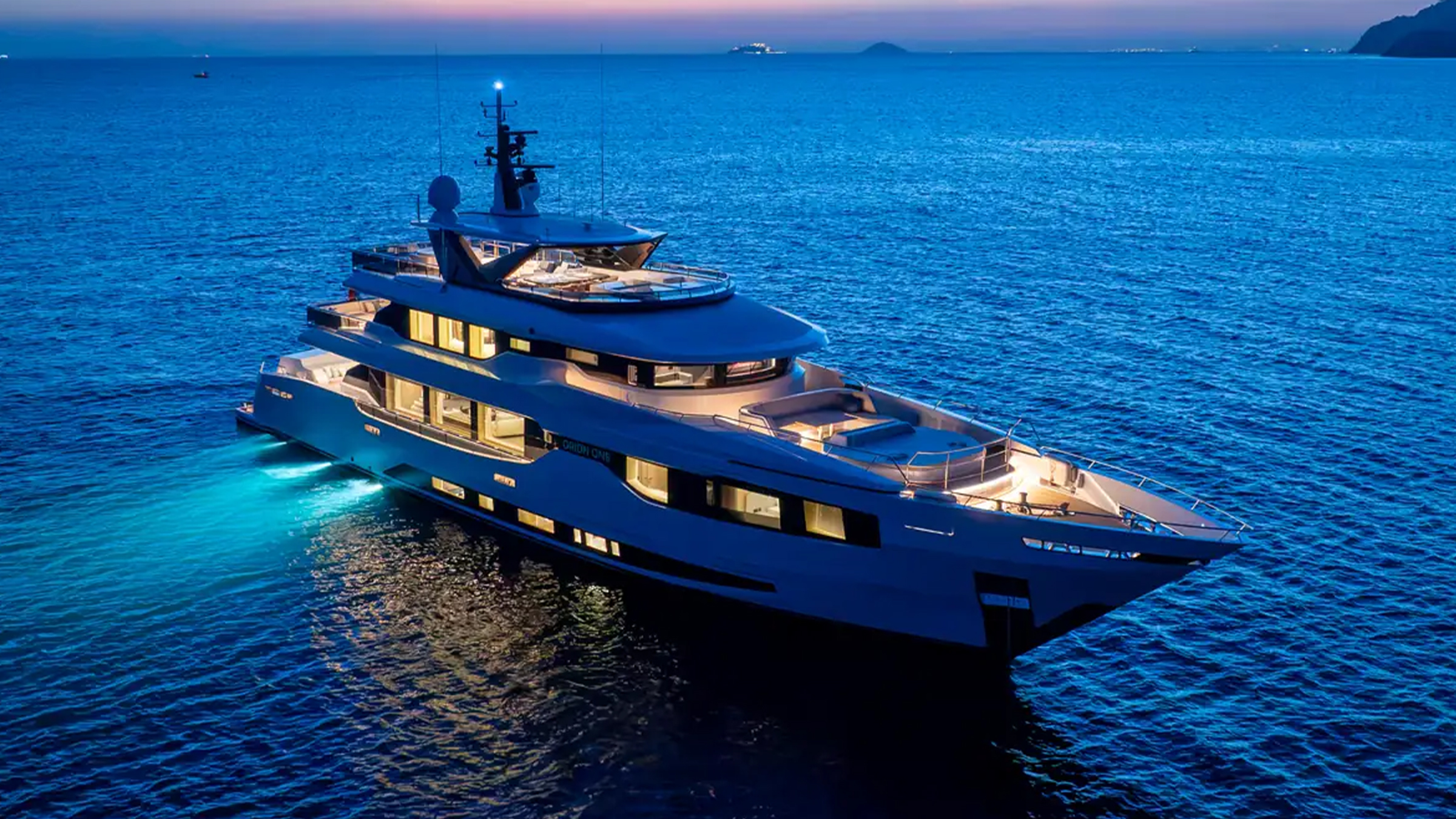
Numarine premiered the 27XP and brought its flagship 40MXP to Europe, two explorers from a yard that has spent years building a clear identity inside a demanding niche. And Orion Yachts presented Orion One, 43.8 meters marking the outright debut of a new builder in the superyacht segment. It is not common for a brand to arrive through the front door with its first hull finished and afloat, and rarer still to do it at the show that opens the season.
Power multihulls stop asking permission
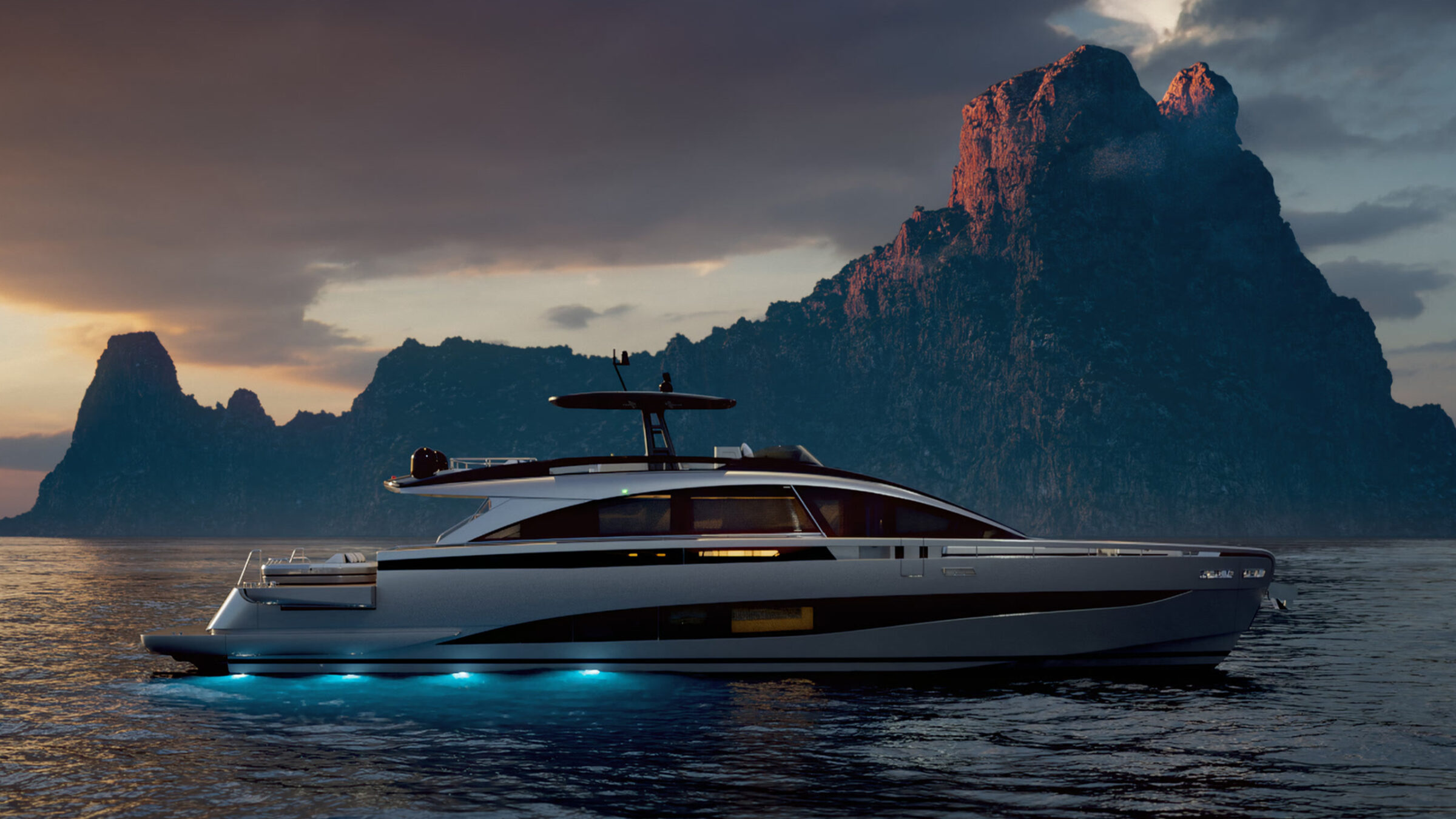
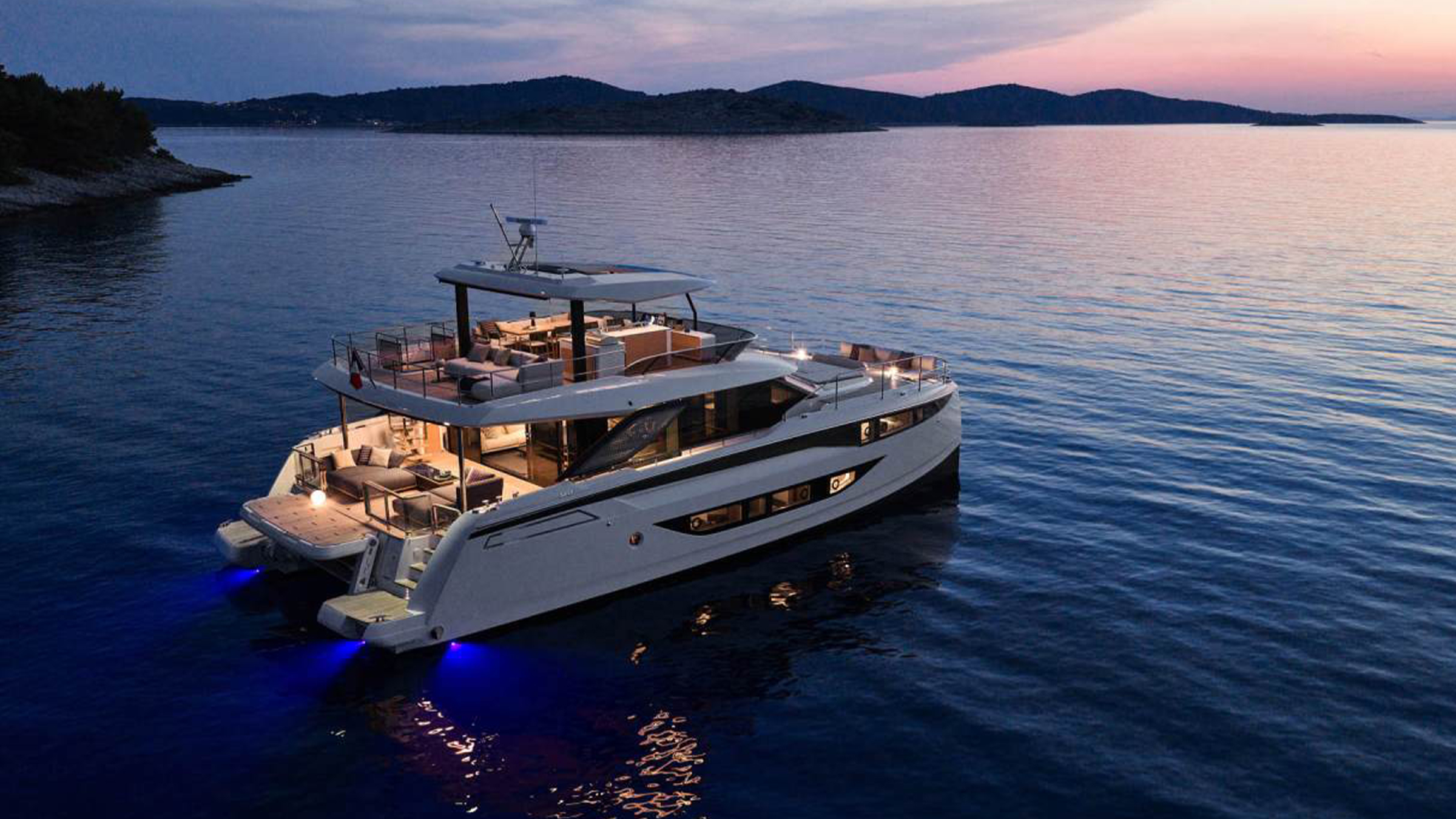
Prestige pushed hard in that range with global debuts of the M6 and the M8 EVO, and added the F6.7 as the new top of its flybridge line. The thirty power catamarans gathered at the Power Cat Village no longer read as an experimental section. They behave like a settled category, with product at nearly every length and buyers who no longer need anyone to explain the proposition.
The list does not end there
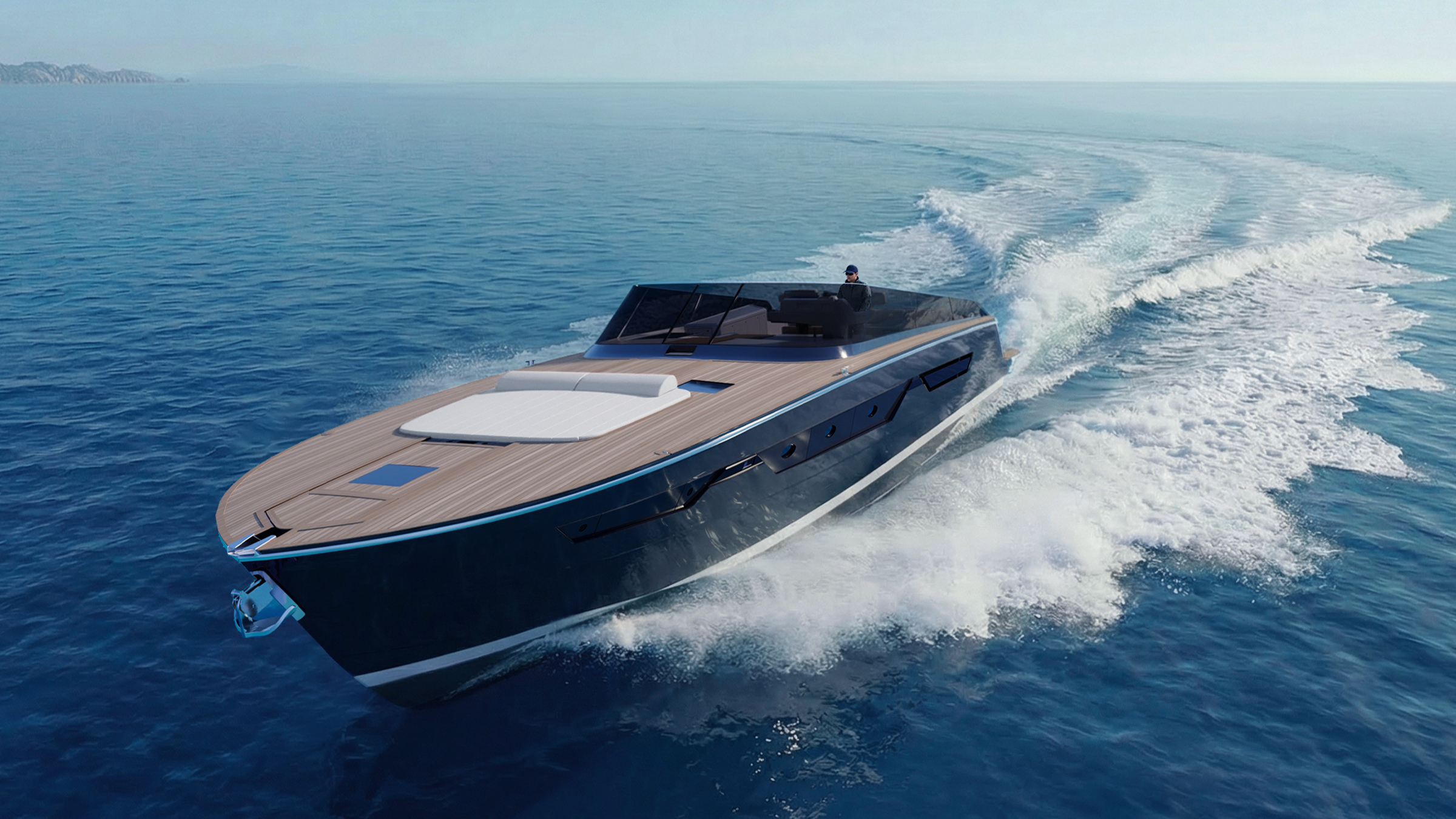
Princess showed the X90, Sunseeker the Manhattan 94, Sanlorenzo the 25.5 meter SHE with a formal language that looks to the sixties, Bluegame the BG64 with exteriors by Zuccon International Project and interiors by Piero Lissoni, Pearl the 73 drawn by Bill Dixon, Pardo the GT65 and Absolute three new Navettas.
The brokerage counterweight
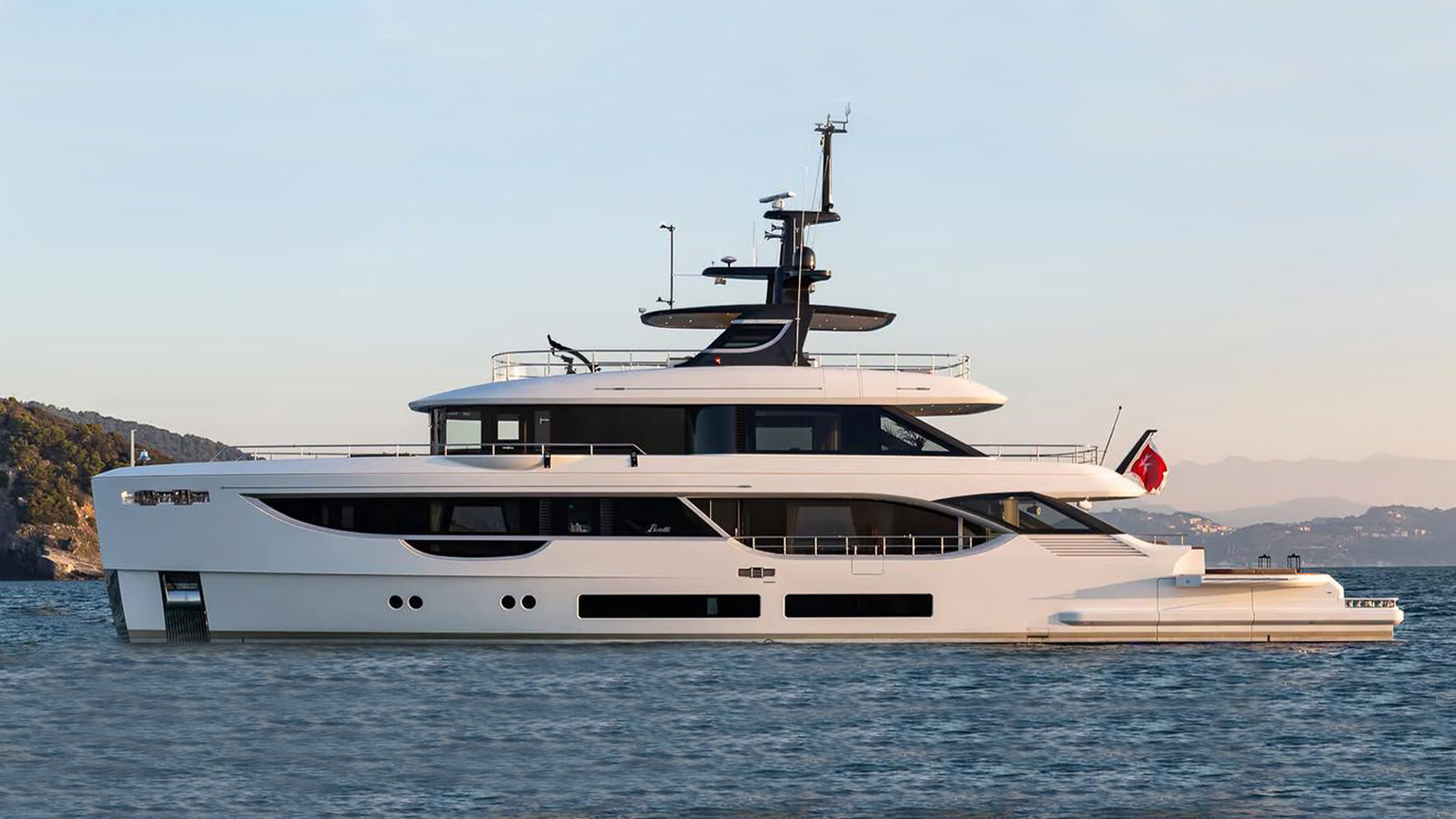
Close to 45 pre-owned yachts over 25 meters were a reminder that the secondary market is where many transactions actually happen. The largest charter yacht on the books was a 55 meter Heesen launched in 2011 and refitted in 2022, with six cabins and a waterfall fed swimming pool.
At the other end of the calendar, two Benettis from this same year, at 41 and 34 meters, measured the distance between a fleet that renews itself and one that recycles. The two conversations took place a hundred meters apart, and a good share of visitors walked both without noticing they were comparing two different ways into the same market.
The figure worth keeping is not which of the two fleets sold better, but that they coexisted without competing. The buyer who comes to Cannes looking for a thirty meter pre-owned yacht is not the buyer who orders a debut, and the show stopped treating them as if they were.
03 · Sustainability
The end of the announcement
For years, sustainability in boating was communicated as a promise of rupture: the boat that was going to change everything.
Cannes 2026 showed something else, less photogenic and considerably more credible. The sector's transition does not rest on one technology but on many complementary solutions advancing in parallel: hybrid propulsion, solar energy, recyclable batteries, hydrogeneration, recycled materials, optimized manufacturing processes and low impact coatings.
The device that organized that reading was the Innovation Route, launched in 2024 and by now the technical filter of the show. Out of 120 applications received, a panel of six industry professionals and specialist journalists selected 47 projects, marked with dedicated signage across both harbors. The winners of the second edition of the awards were announced on September 8.
At a glance · Innovation Route Awards 2026
- Best equipment enhancing the boating experience
- Smart Mooring, by BlueNav
- Best sustainable product
- Suzuki Edge ECoat, by Suzuki Marine
- Best innovative boat
- Excess 11, by Excess Catamarans
- Best CSR initiative
- Biohut, by D-Marin
- Special Jury Prize
- Grande 44M, by Azimut Yachts
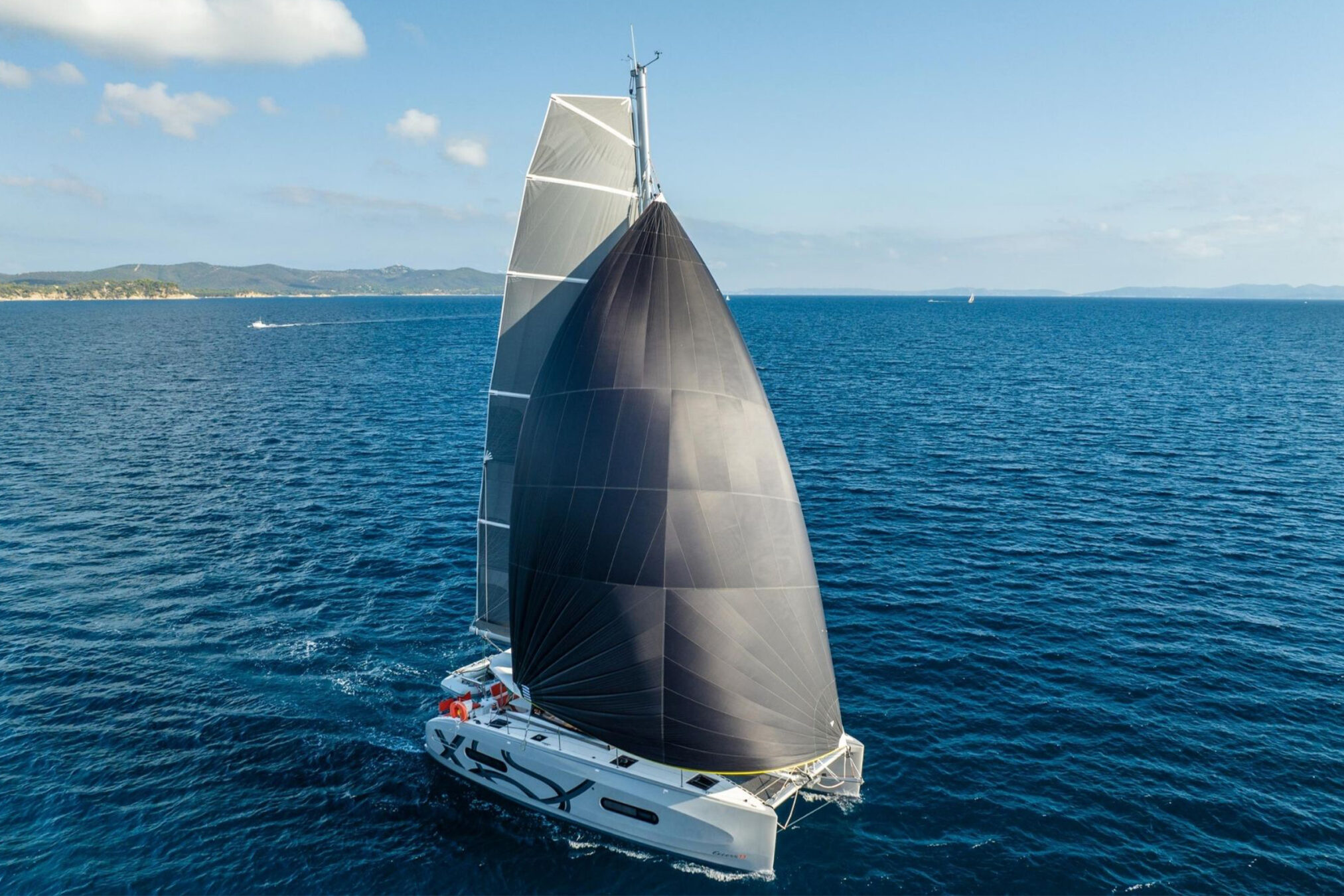
That the most innovative boat award went to a 37 foot catamaran and not to a forty meter prototype is, in itself, the headline. The Excess 11 has twin helm stations and electric propulsion available. It is not a statement of principle. It is a production boat, at an accessible length, that a family can buy. That is exactly the point.
Slow yachting
The other trend the show installed is not measured in emissions but in behavior. Slow yachting, built on comfort, silence, self sufficiency and the quality of the stops, came through strongly in the language of yards and destinations alike. Boats conceived as living spaces before they are machines for moving. Marina networks competing on itinerary and territory rather than on meters of berth.
It is a comfortable trend to communicate, and it is worth saying plainly: much of what now gets labeled slow yachting is energy management and acoustic insulation done well. What is interesting is not the label but that the commercial argument has moved from performance to time at anchor.
The multihull as the natural vehicle
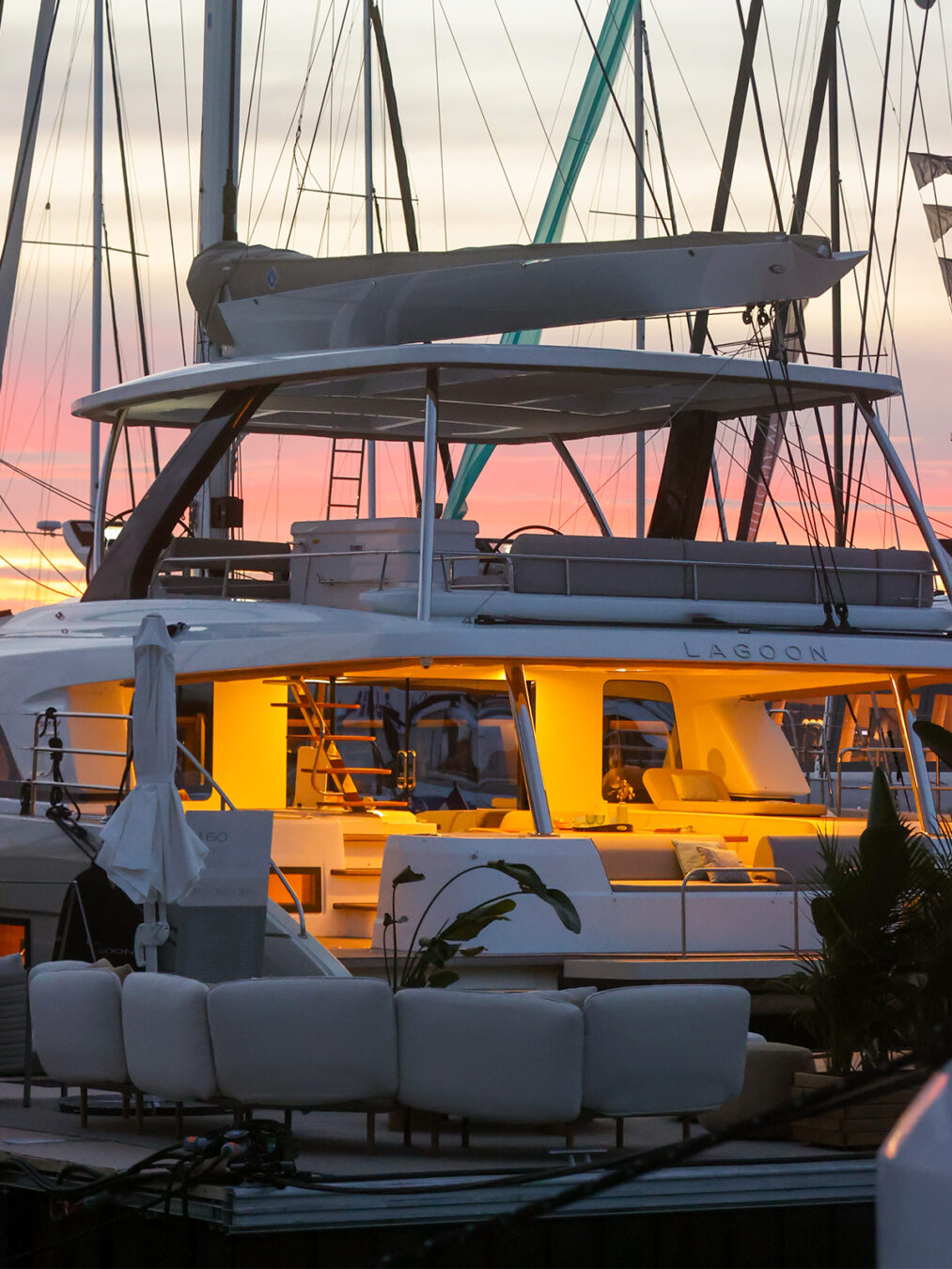
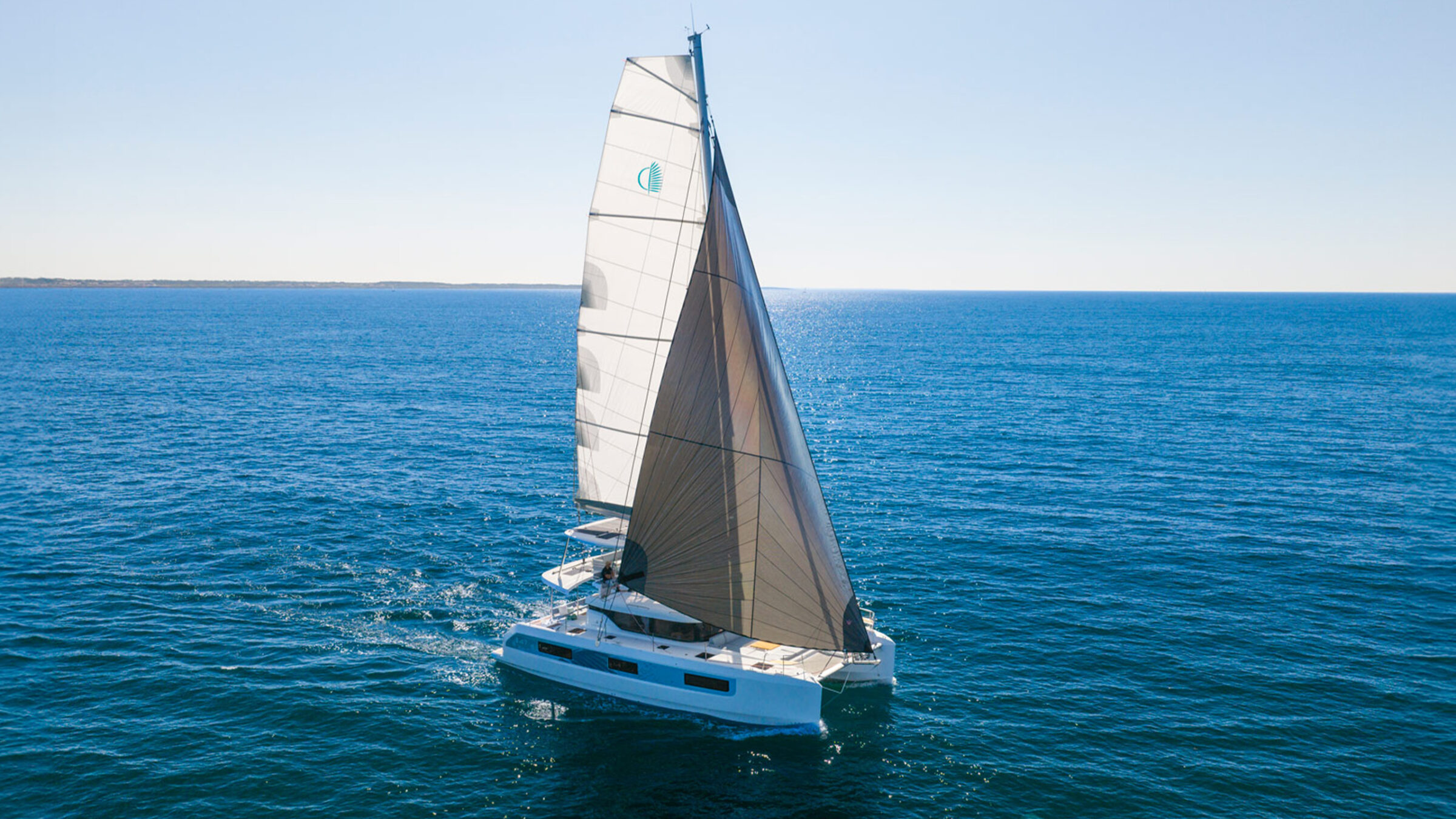
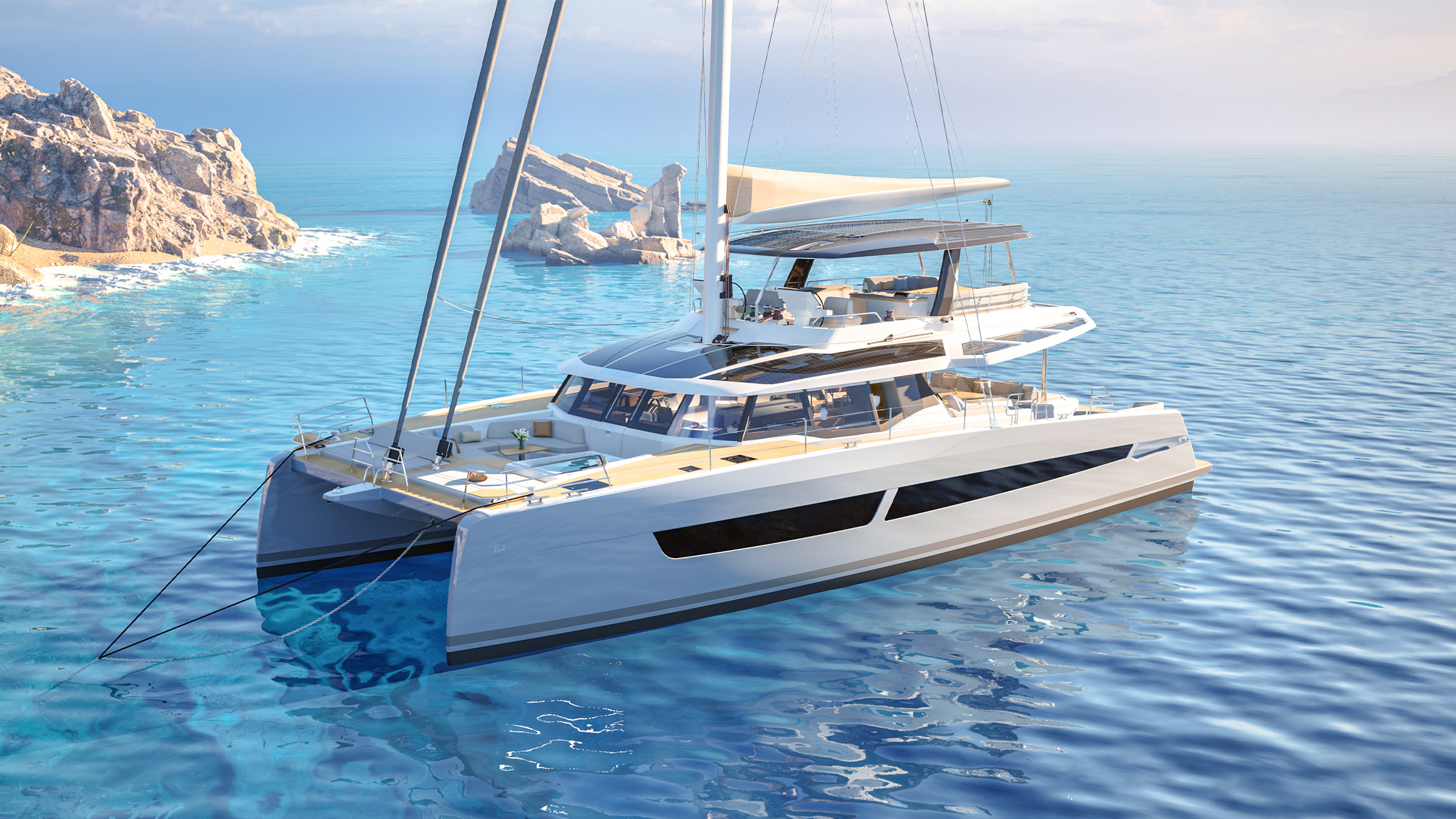
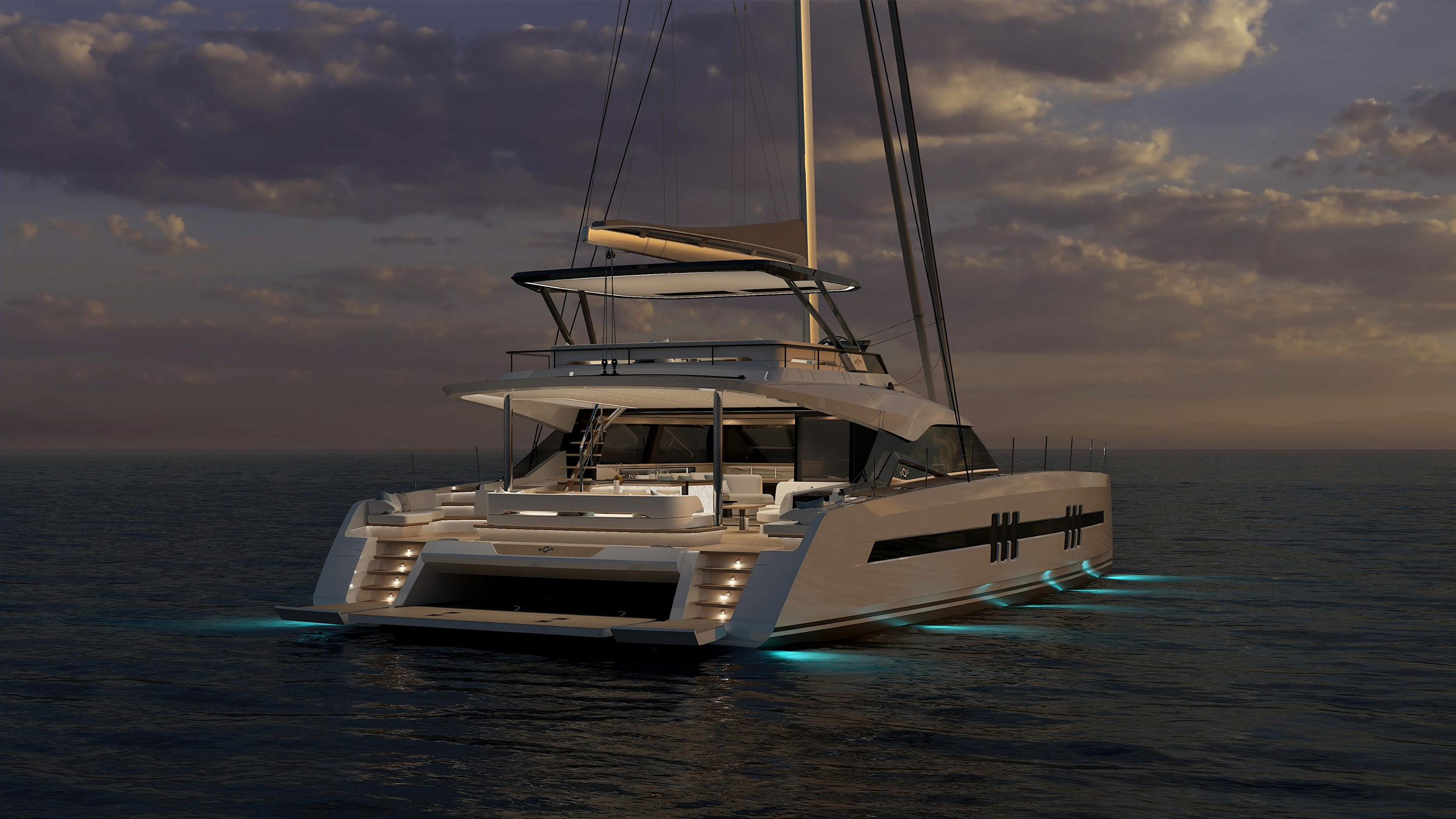
The numbers confirm the direction: 95 catamarans on display, 51 sail and 44 power. At Port Canto, Lagoon premiered the 47 and Fountaine Pajot showed the FPY70S. Both answer the same question at different sizes: how to sustain an ordinary life aboard for weeks without depending on the harbor for much of anything. Oyster presented the C60, its first bluewater catamaran, a meaningful move for a house that built its reputation on passagemaking monohulls.
The monohulls did not retreat
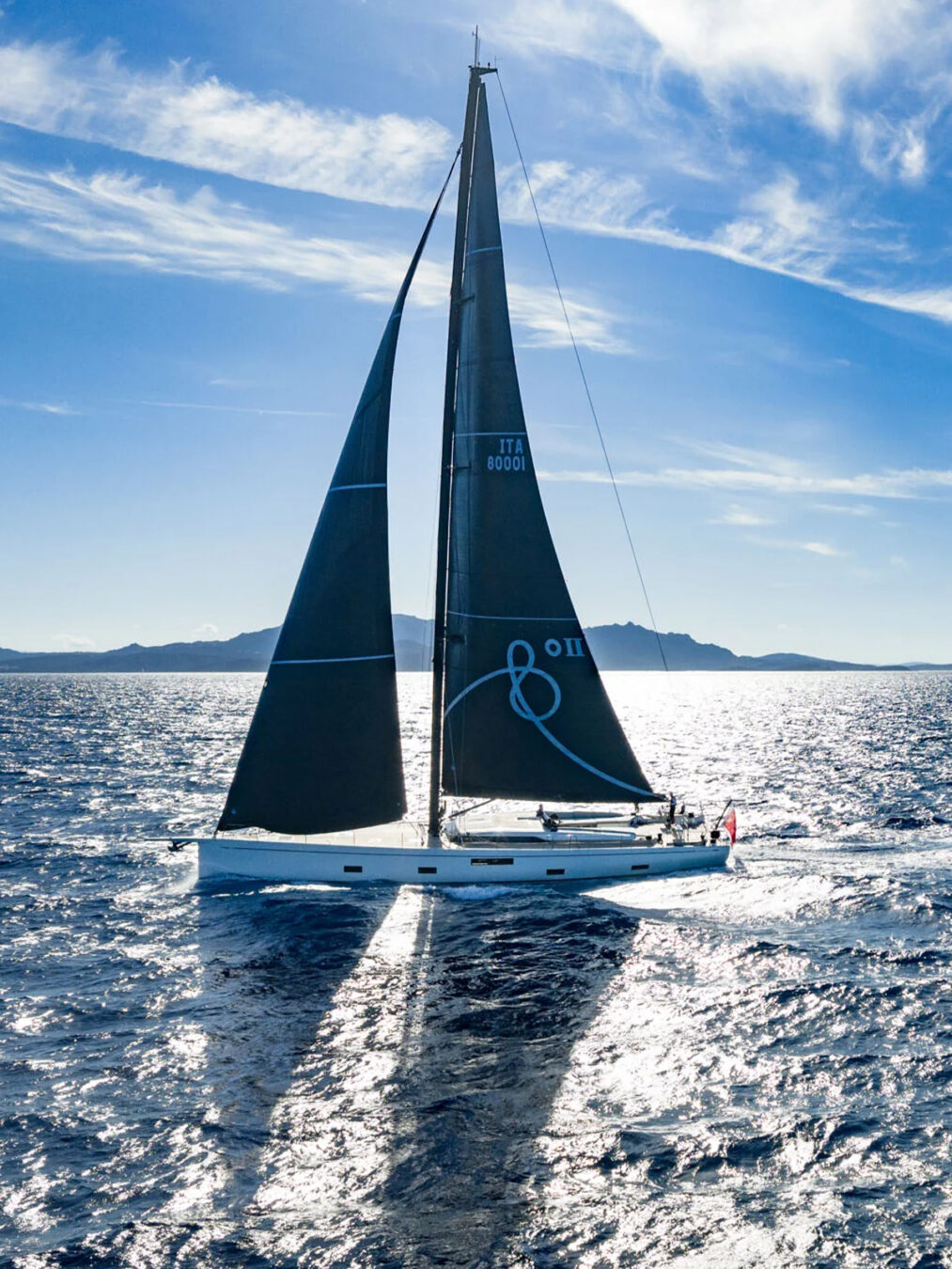
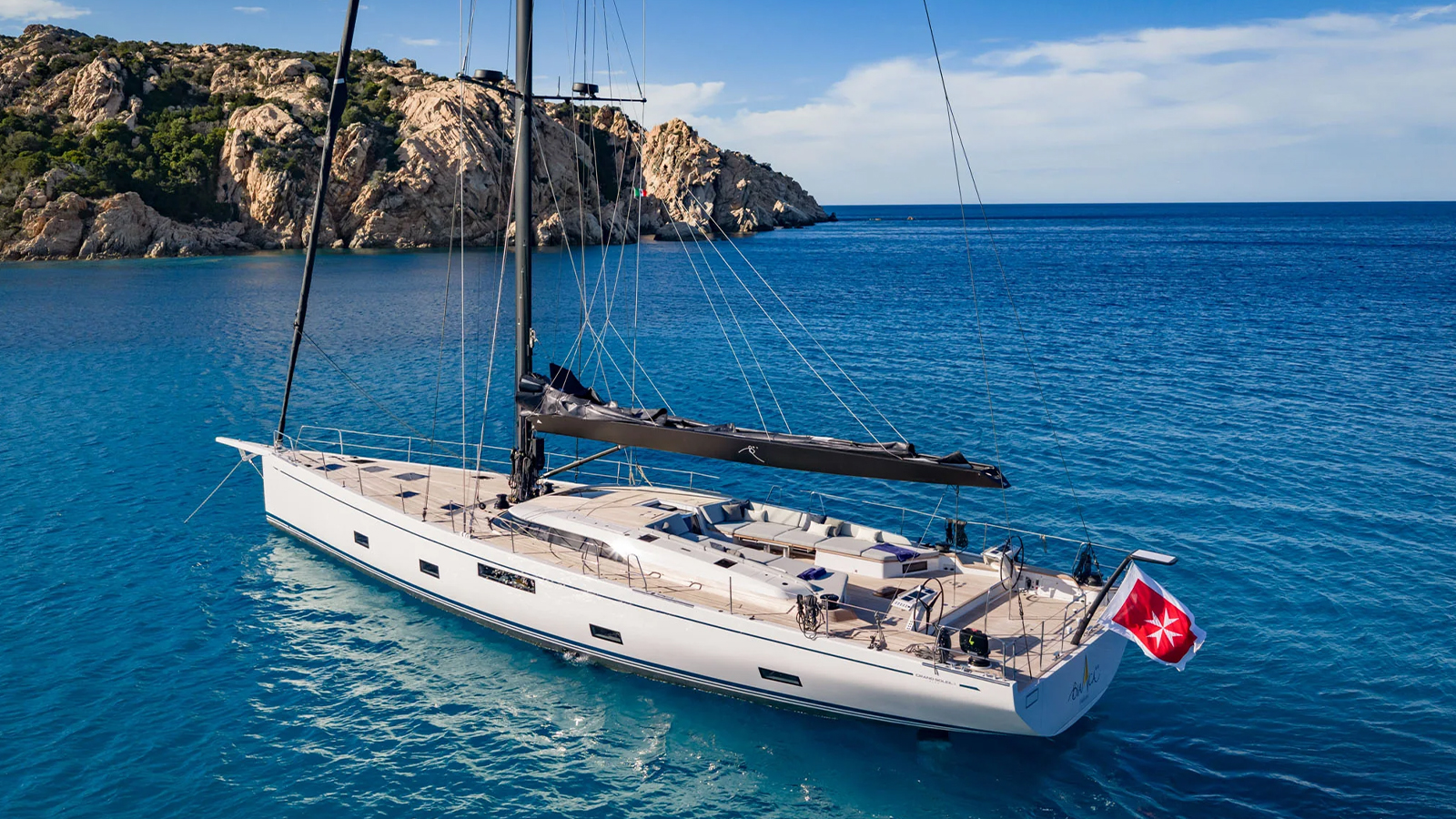
Cantiere del Pardo premiered the Grand Soleil Plus 80 Long Cruise, whose name states its purpose without ceremony, and Nautor Swan marked its sixtieth anniversary by launching the first Swan 80. Two boats answering the same question as the catamarans with a different answer: less living volume in exchange for behavior at sea that their owners are not willing to negotiate.
An award that changed venue
As an institutional closing, the show hosted for the first time the reveal of the 31 finalists for the Best of Boats Award, across seven categories, at a ceremony held on September 9 at the Port Canto VIP Club.
That an international award dedicated to motorboats chose Cannes for that announcement says a good deal about where the calendar's center of gravity sits today. For decades, the season was measured by what happened in the fall, further north. This year's signal is that the conversation starts earlier, and starts here.
04 · Materials
The year of carbon
If one object concentrated the technical attention of this edition, it was the Azimut Grande 44M.
The Innovation Route Special Jury Prize did not go to a battery or to an energy management system. It went to a 43.6 meter yacht with a superstructure built in carbon fiber.
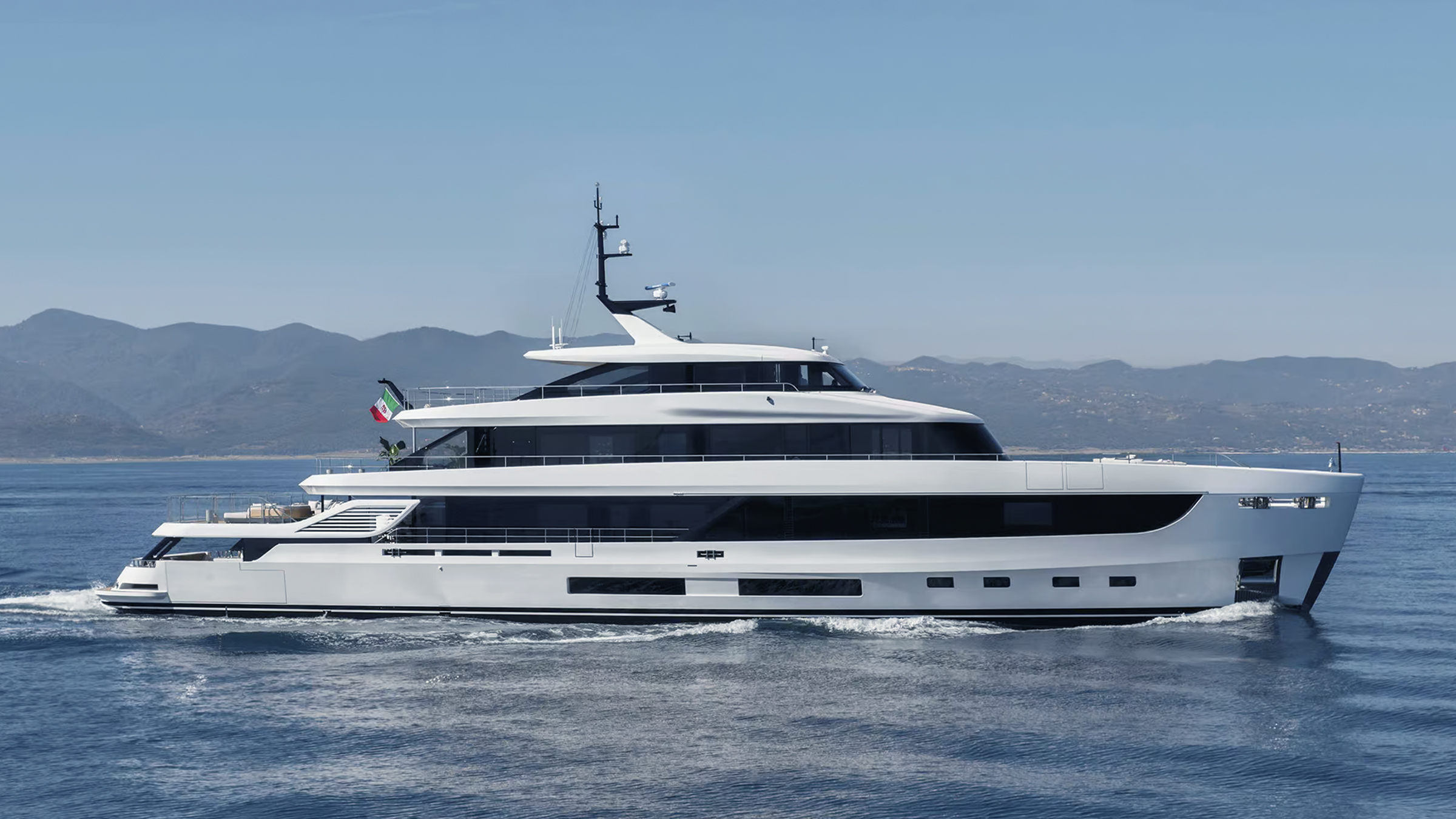
The decision looks aesthetic and is structural. The yard claims a weight reduction of up to 30 percent in that superstructure. Everything saved high on a boat is charged somewhere else: less weight up top improves how the center of gravity behaves, and that opens room for more glass and for volumes that in aluminum or conventional composite would force uncomfortable compromises.
Carbon is not new in boating. It has been in racing sail for decades and has shown up for years in appendages, rigs and structural details on the motor side. What changed is the scale. Taking it to the full superstructure of a 43 meter production yacht calls for a supply chain, a lamination process and a quality control regime that until recently were only justified on one off projects.
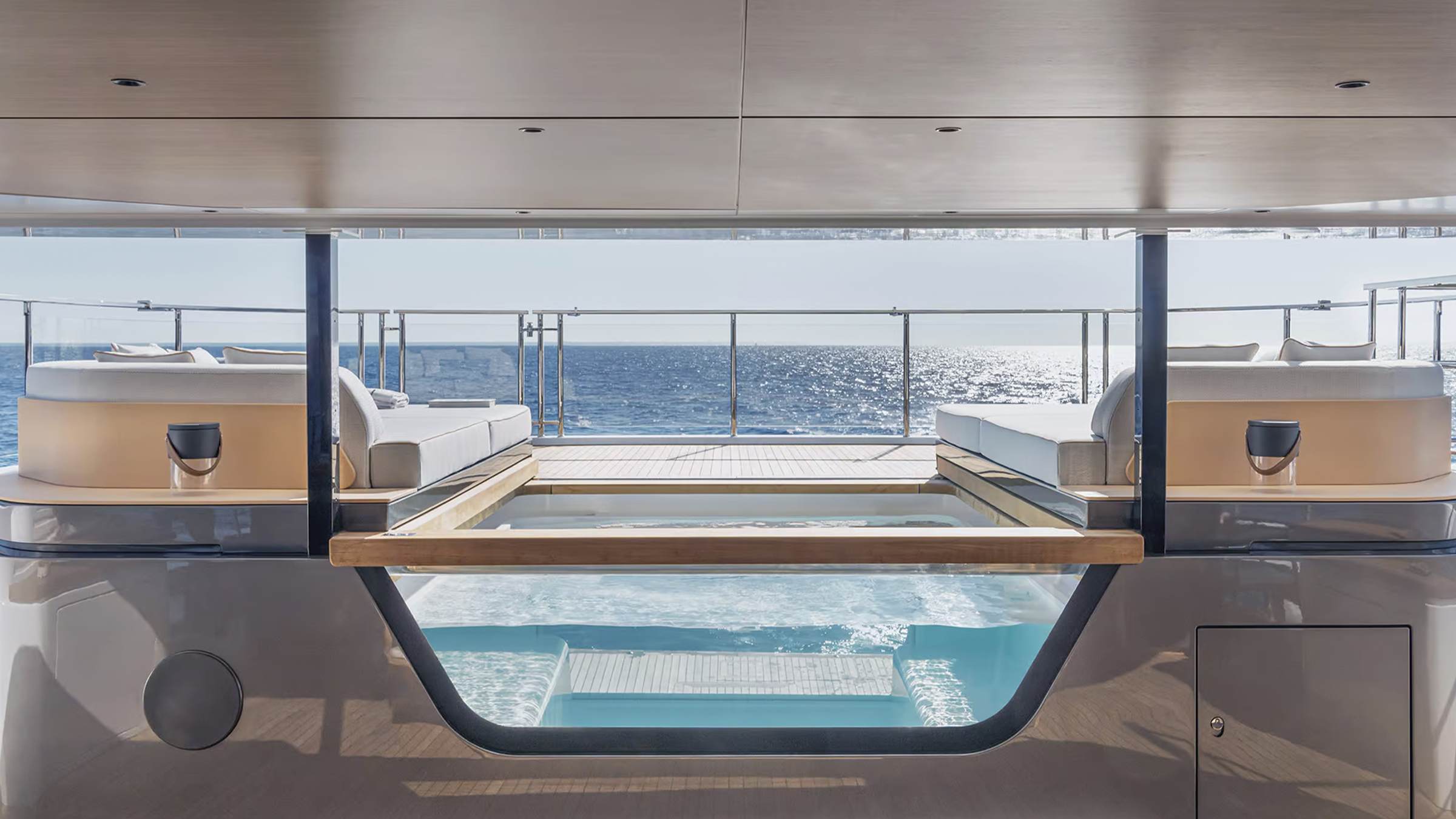
Drawn by Alberto Mancini, the Grande 44M does not disguise that technical condition. It uses it. The upper decks gain open surface, and the aft lounge on the second deck, with its jacuzzi, occupies space that in another construction would have to be negotiated with the naval architect.
A necessary caveat
That 30 percent is a yard figure, referring to the superstructure and not to the boat's full displacement, and there is still no independent fuel data from real operation. It is worth treating as what it is: a manufacturer's number, not a third party measurement.
The verifiable fact is a different one, and it is the one that matters over the medium term. A volume builder decided that carbon is now viable outside the one off project. When a decision like that is taken in series production, the rest of the market tends to follow.
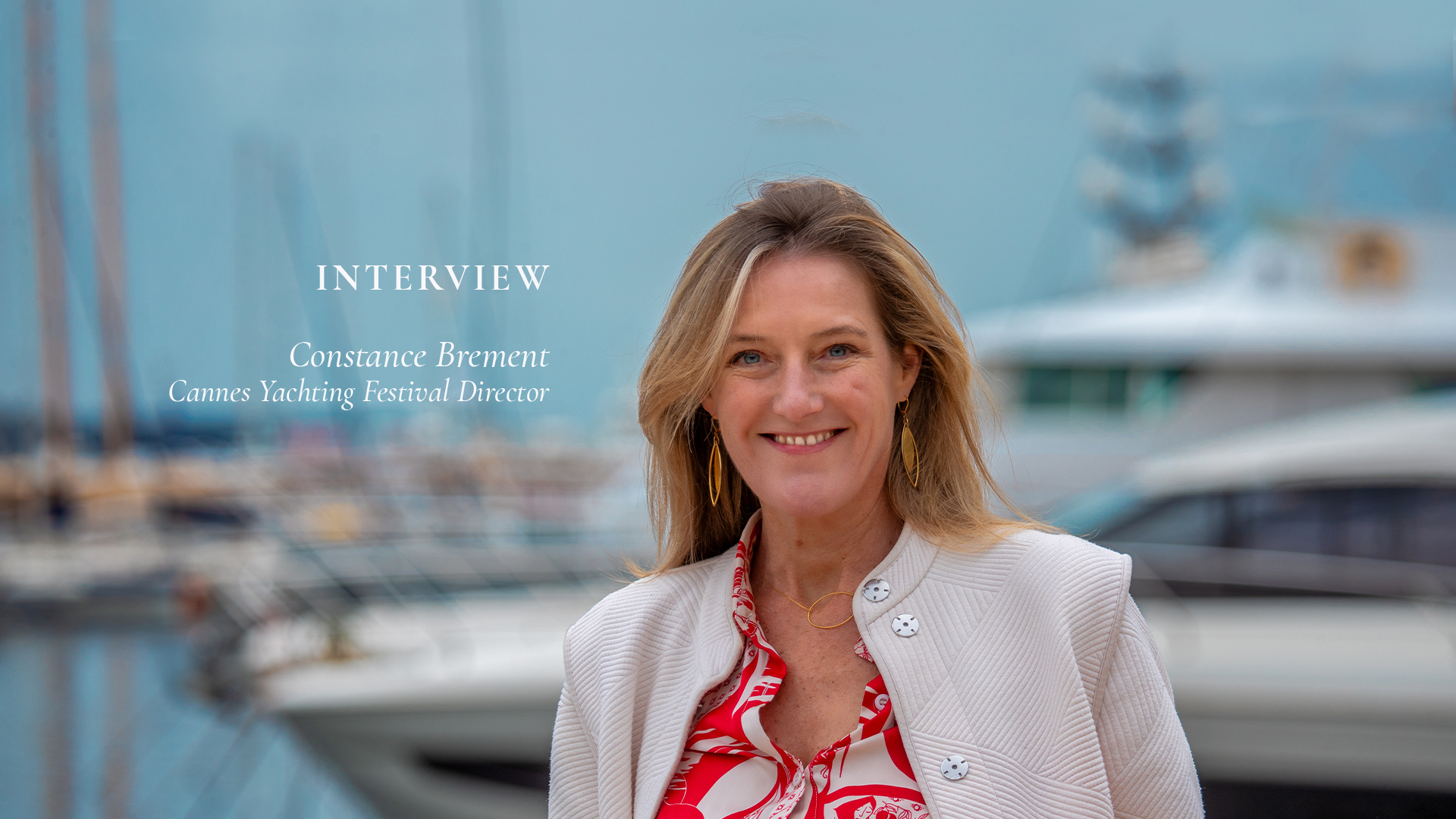
Kick off the international boating season and highlight the major changes in the sector.Constance Brément · Director, Cannes Yachting Festival
 Video · Interview
Watch the full USA Onboard interview with Constance Brément, Director of the Cannes Yachting Festival.
Watch now
05 · Design
Space over volume
For a long time, the conversation about interiors in luxury boating was won with one number: gross tonnage.
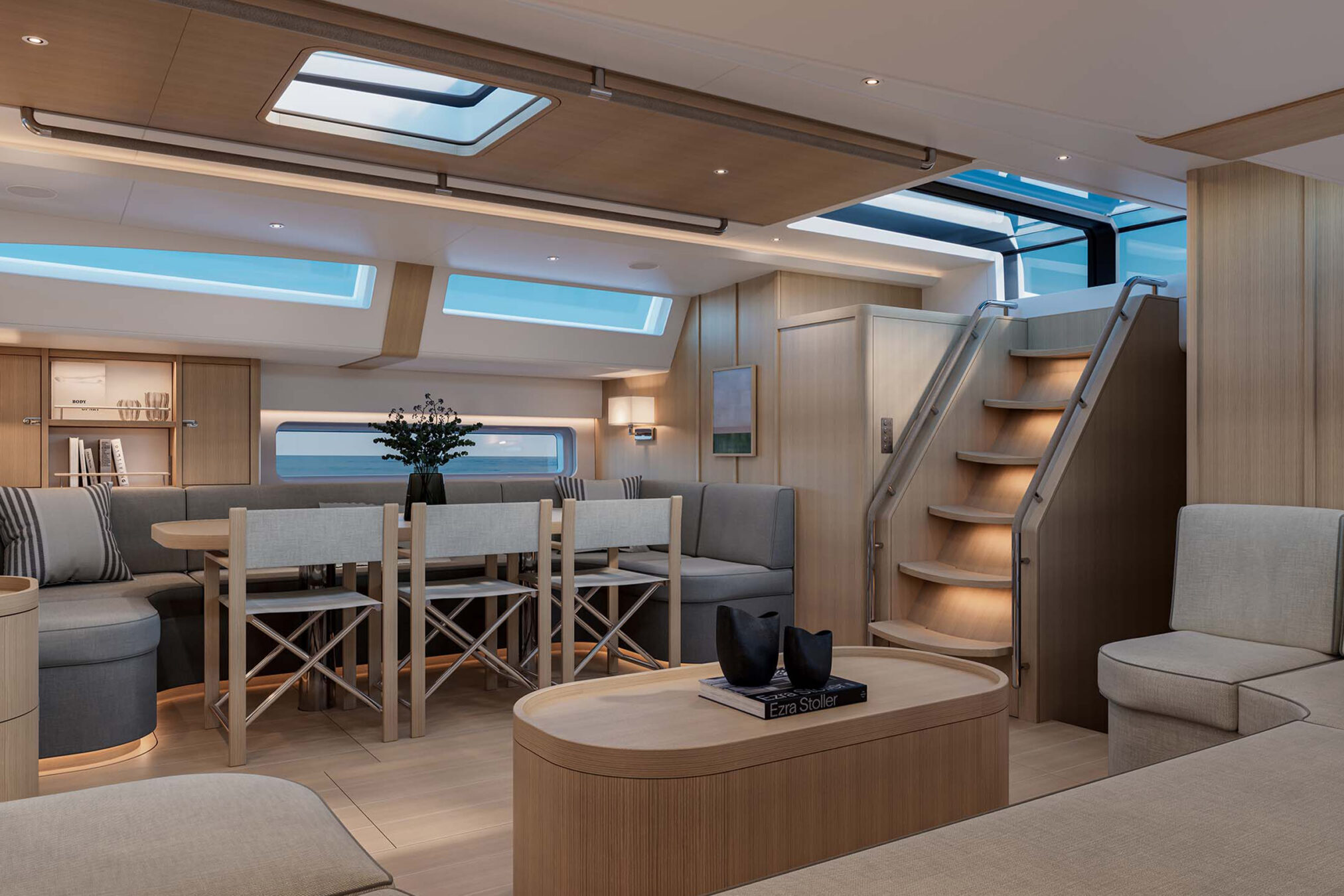
More interior volume meant, without further argument, a better boat. Cannes 2026 made clear that the metric no longer holds. What got discussed this year was something else: circulation, privacy, shade, flexible furniture and the transition between inside and out. Not how much space there is, but how it is crossed, what hour of the day it serves, and how it becomes something else when the use changes.
Sirena 118
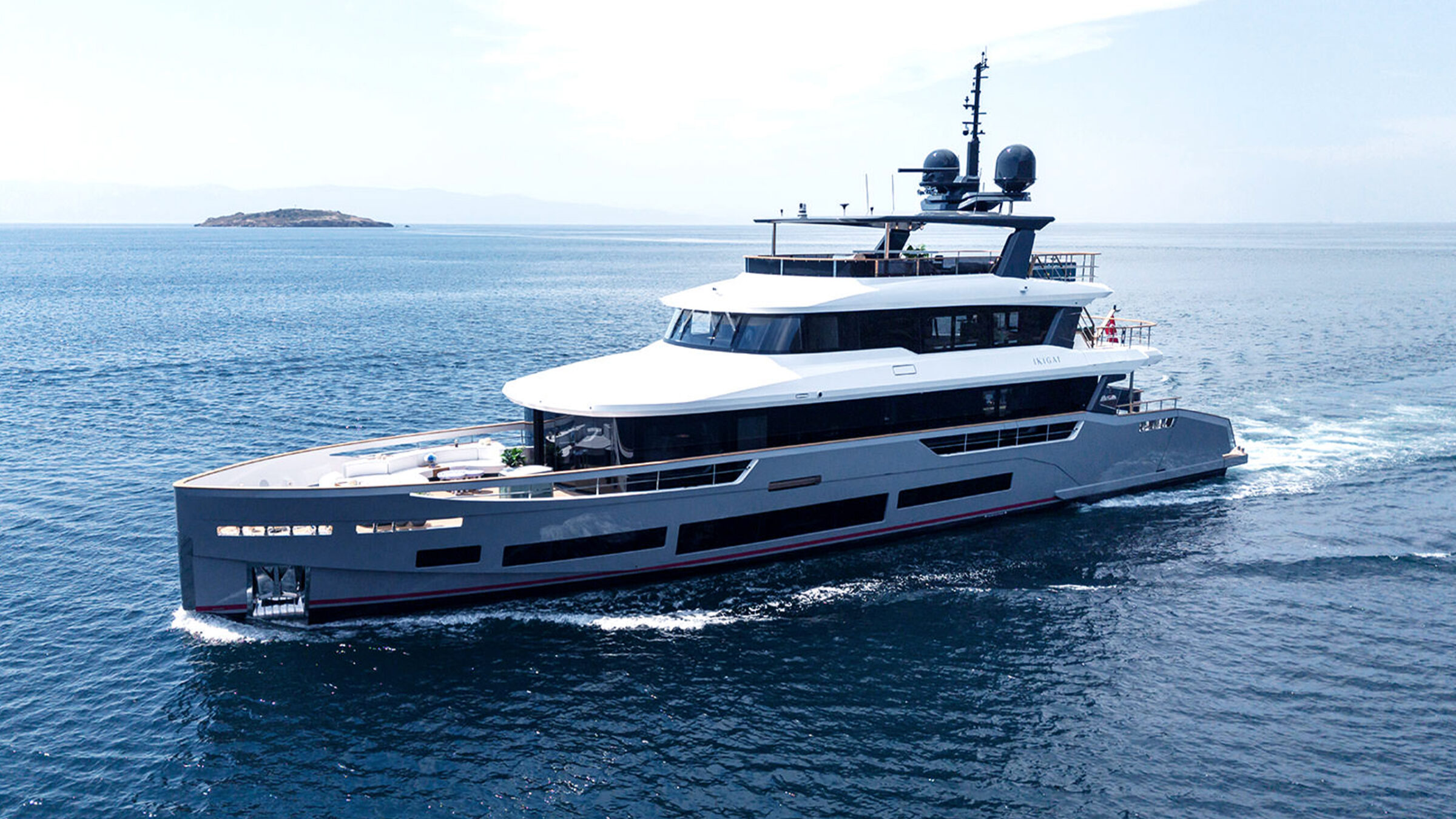
It was probably the clearest example. Thirty six meters with naval architecture by Germán Frers and interiors by Cor D. Rover, resolved with an owner's suite on two levels. It is not a large room. It is a sequence of spaces with a hierarchy of its own inside the same volume, where the owner decides which part of the day to inhabit and the boat answers without asking anyone to move.
Custom Line Navetta 35
It worked the same problem from the other end. Relocating a staircase freed deck surface and added roughly ten gross tons of interior volume. It is a decision invisible on the spec sheet and obvious once you walk the boat, which is where nearly every real difference between two yachts of the same length gets settled. Ten tons of volume are worth little if the route to them runs through the wrong door.
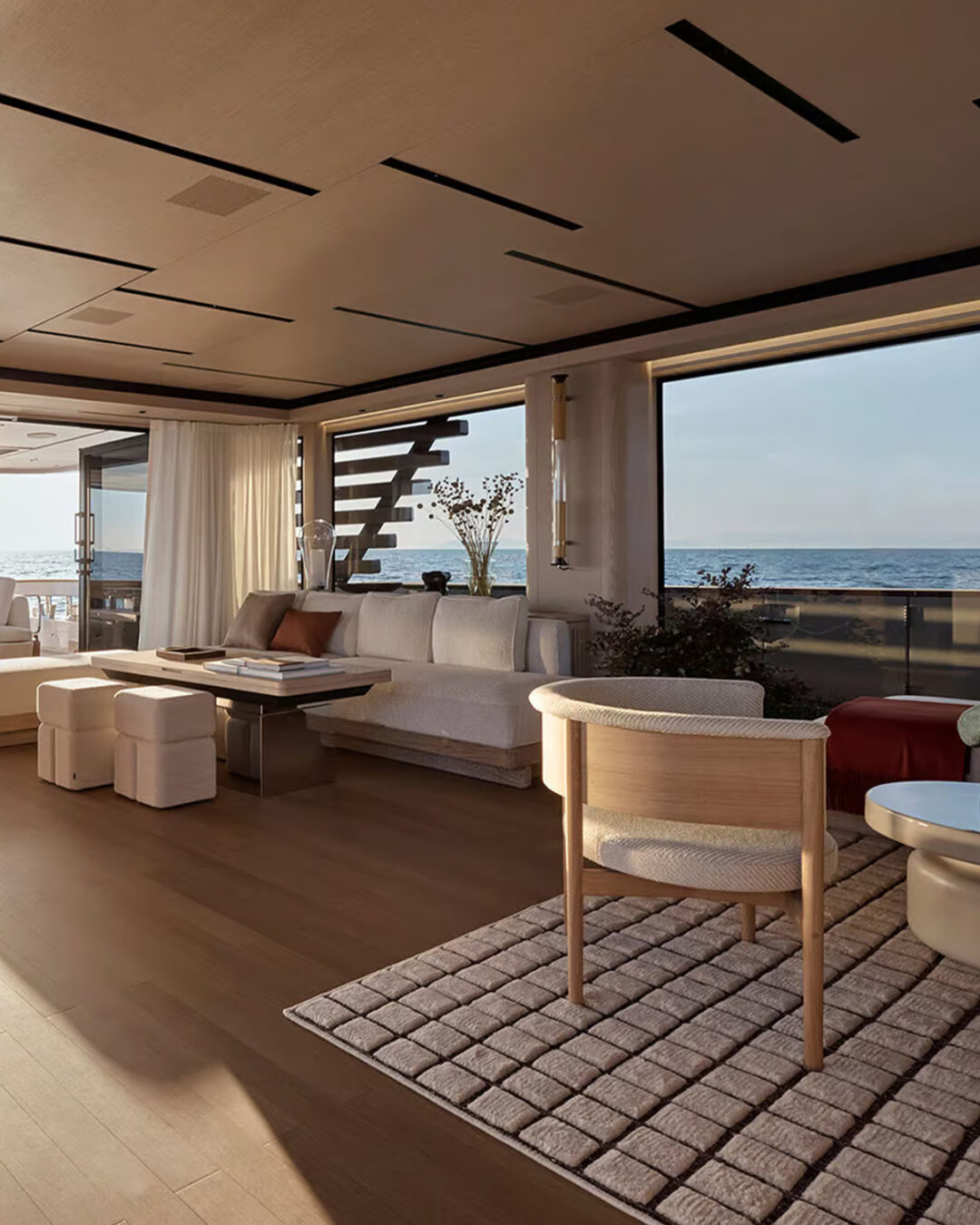
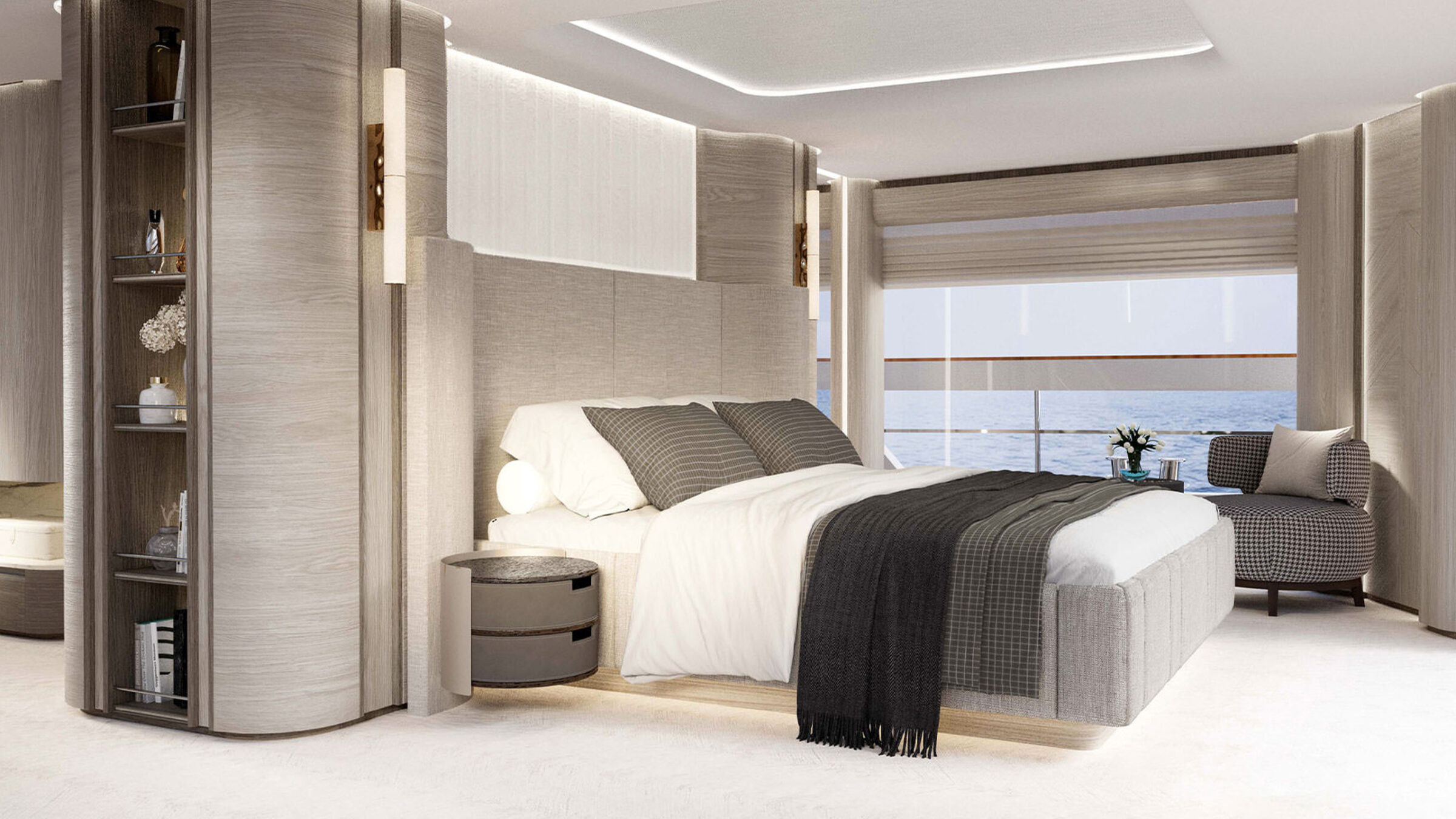
Prestige carried the argument to the multihull with an owner's cabin running the full beam of the M8, a geometry only a catamaran allows without forcing anything. And the Magellano 27M, with interiors by Michele De Lucchi, applied to a passagemaker the logic of a studio used to thinking in buildings: light first, furniture after.
You see it in the interiors, you see it in the way sustainability turned into comfort rather than slogan, and you see it in the carbon, which is not there to show off but to allow something that was not possible before.
Editorial note
Luxury stopped being a question of quantity and became a question of judgment.
The Cannes Yachting Festival returns from September 7 to 12, 2027 to mark its fiftieth edition. Fifty years after 1977, the show reaches that number at the best possible moment to ask the question that ran through everything on display this year. Not which boat is the largest, but which one is best understood.
USA Onboard Editorial · Cannes, September 2026